

Debutante Dress Fabric
White fabrics for debutante dresses: structured silk satins and dupion for ball gowns, soft crepe satin and faille, sheer organza and chiffon for sleeves, and white lace, tulle and trims.
- White silk satin, dupion and organza
- White lace, tulle and trims
- Habotai for lining




 Sold out


Guide
Debutante Dress Fabric: How to Choose and Sew It
White silks, lace and tulle for a debutante dress: which suits each style, and easy tips for sewing your deb dress at home.
Which white fabric?
Our white fabrics for debutante dresses, grouped by the look they give.
| Full skirts and ball gowns | |
|---|---|
| Duchess satin | Very structured, with a low sheen. Great for: sculptural gowns and bodices. |
| Zibeline (mikado) | Stiff, with a fine diagonal weave. Great for: structured gowns and big bows. |
| Queen satin | Soft, but holds its shape. Great for: full, voluminous skirts. |
| Dupion | Crisp, with natural slubs. White is 150 cm wide. Great for: bodices and full skirts. |
| Satin organza | Organza with a satin finish and a sculptural hold. Great for: sculpted skirts and sleeves. |
| Soft and draped | |
| Crepe satin | Satin on one side, matte crepe on the other, with a weighty fall. Great for: draped and bias-cut gowns. |
| Faille | Heavy silk, matte on both sides. Great for: draped dresses and skirts. |
| Crepe de chine | Soft and matte, with a gentle drape. Great for: softer dresses and tops. |
| Stretch georgette | Semi-sheer, with stretch. Ivory. Great for: fitted sleeves and bodices. |
| Sheer layers and sleeves | |
| Organza | Sheer and crisp; in white and silk white. Great for: puffy sleeves and overskirts. |
| Satin chiffon | Soft and semi-sheer, with a satin lustre. Great for: draped overlays. |
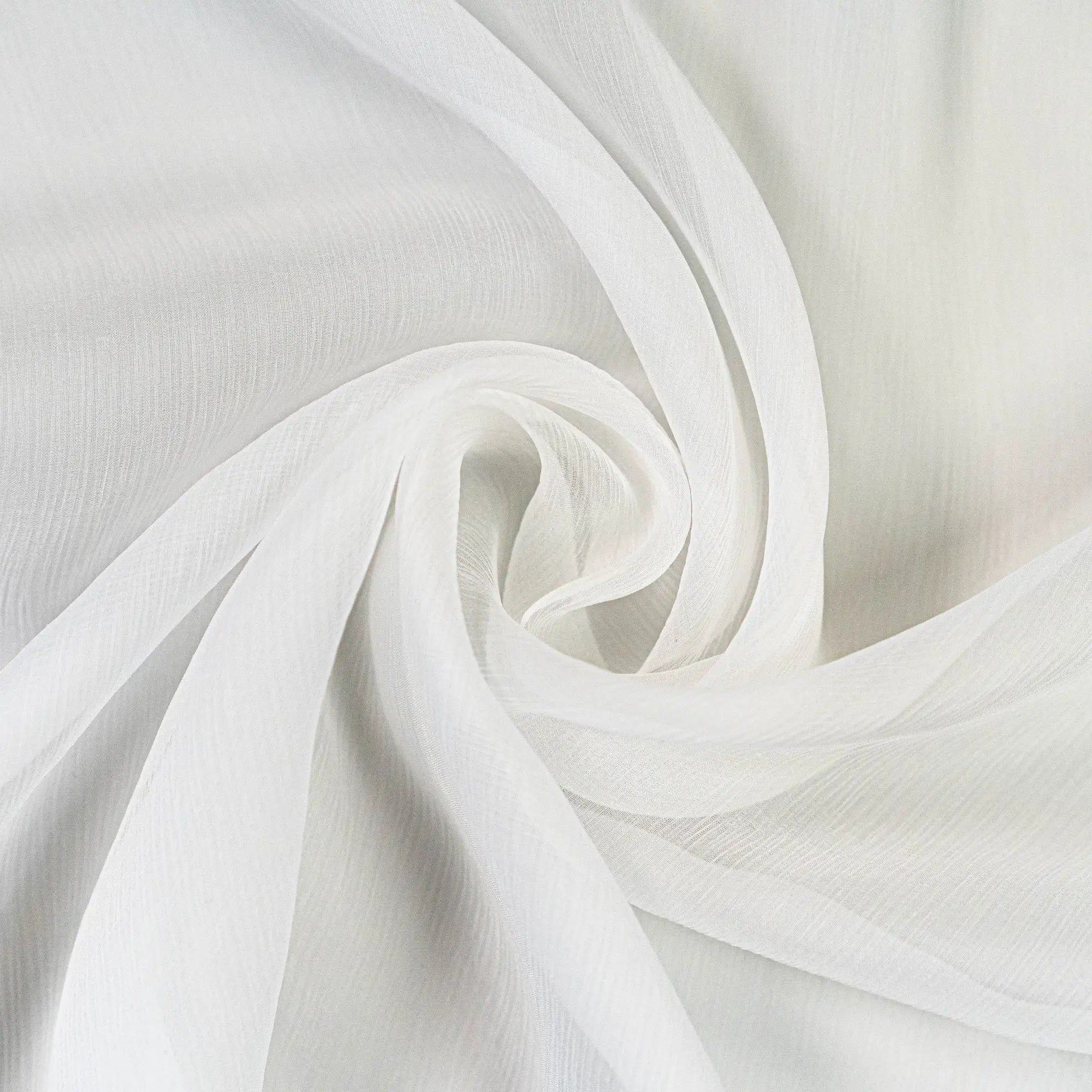
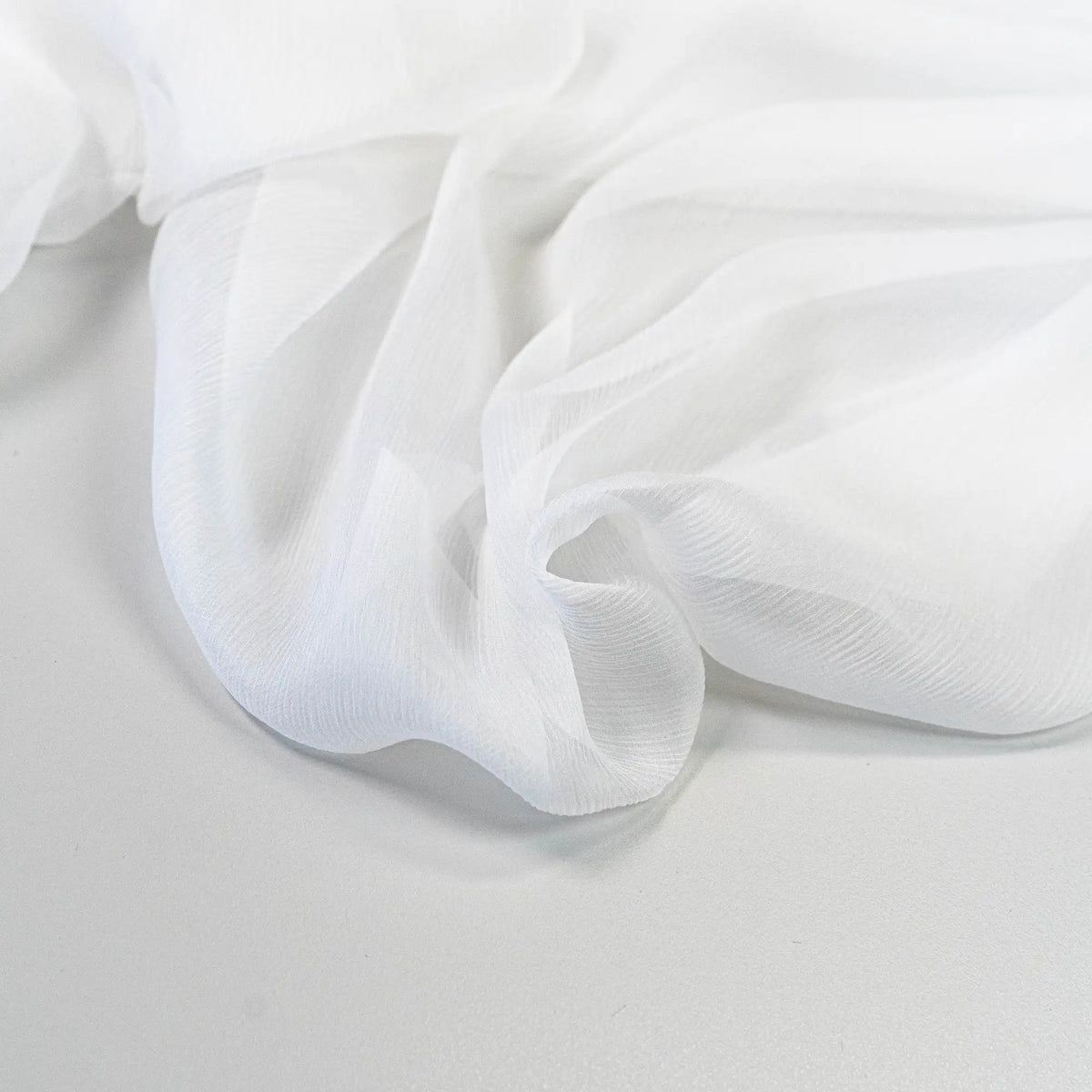
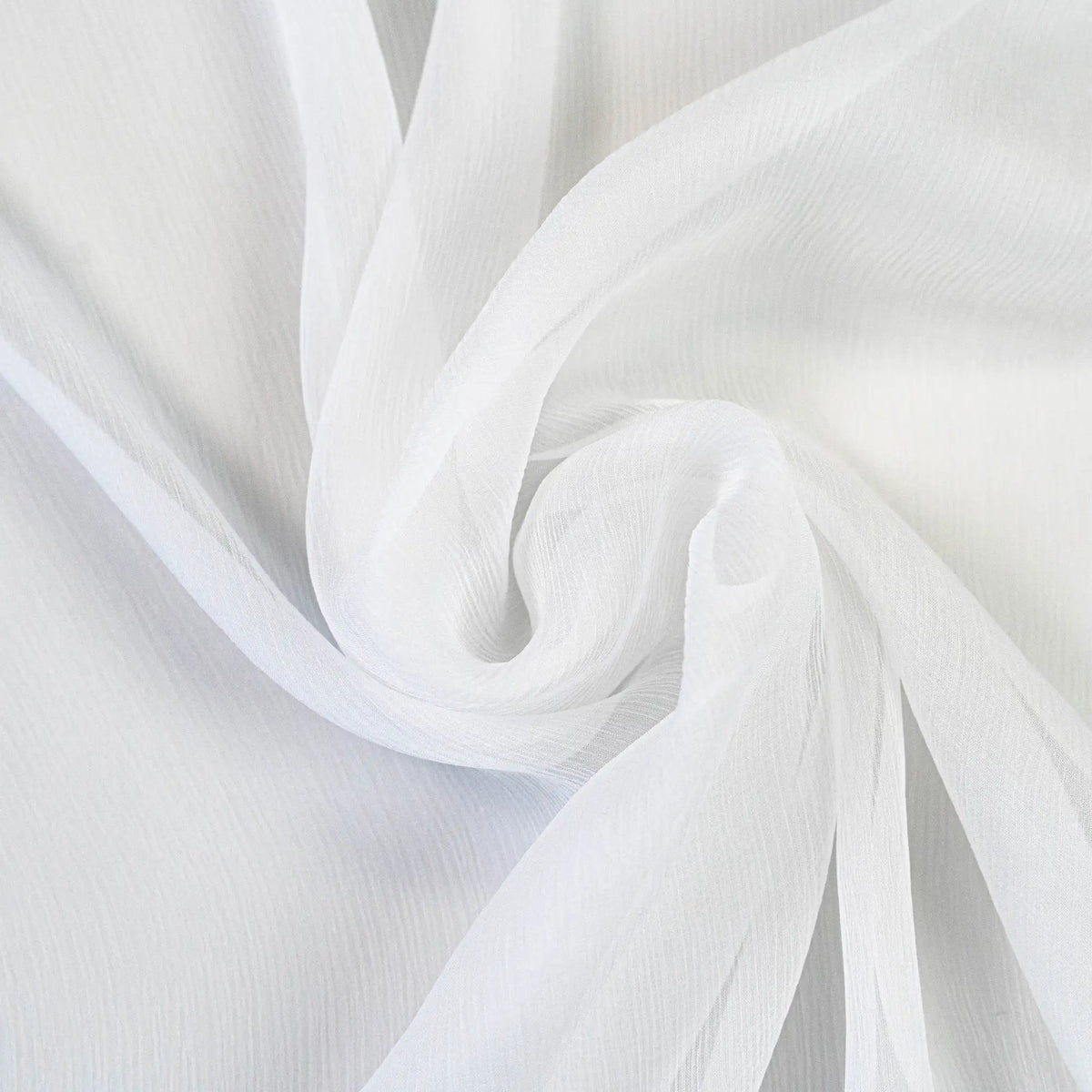
| Crinkle chiffon | Feather-light, with a soft crinkle. Great for: soft layers. |
| Lace, tulle and sparkle | |
| Lace | Including 3D floral and corded floral motif lace in white, and white lace trims. Great for: bodices, sleeves and hems. |
| Embroidered and ruffled tulle | Tulle with embroidery, ruffles or soft sequins. Great for: skirts and overlays. |
| Sequin georgette | Georgette covered in sequins, in white. Great for: a sparkling bodice or overlay. |
| Lining | |
| Habotai | Light and smooth. The classic silk lining. Great for: lining the bodice and skirt. |
What to make with it
- A full-skirted ball gown
- A fitted, draped or bias-cut gown
- Puffy or sheer sleeves
- Lace bodices and overlays
- Gloves, wraps and hair bows
Cutting
- Make a test version in calico first, and fit it before you cut into your silk.
- Cut satin and slippery silks as a single layer, with all the pieces facing the same way, as satin can look different from each direction.
- Cut lace flat as a single layer, and place the scalloped edge along hems and sleeve ends.
- Pin only inside the seam allowances: pins can mark satin.
Sewing
- Sheer and light silks (organza, chiffon, crepe de chine): use a fresh, fine needle (size 60 or 70) and a fine mercerised cotton thread. Polyester thread is stronger, but it can make fine silk pucker. Silk thread is lovely for tacking and hand sewing. French seams look neatest on sheer fabric.
- Satins, dupion, zibeline and faille: use a fresh needle (size 70 or 80) and a good-quality polyester or mercerised cotton thread. Silk thread is lovely for tacking and hand sewing.
- Stretch georgette: use a fresh stretch needle (size 70) and a good-quality polyester thread, which has a little give, so the seams stretch without snapping. Sew with a narrow zigzag or a stretch stitch, and let the fabric feed through on its own without pulling it.
- Lace: for invisible joins, overlap two pieces, stitch around the outline of a motif, then trim away the extra lace.
- Underline with silk organza: hand tack it to the wrong side of each piece and sew the two as one. It adds support without weight.
Hems
- Duchess and queen satin: a deep hem, 4 to 8 cm, with the raw edge bound in a bias strip of silk habotai and blindstitched by hand. On a curved hem, a faced hem sits flatter.
- Dupion and faille: a bound hem, 4 to 5 cm, blindstitched by hand.
- Zibeline: a deep hem interfaced with a bias strip of cotton organdy, so it holds the shape.
- Organza: a deep double hem on a structured skirt, or a hand-rolled hem on sleeves and frills.
- Chiffon: a hand-rolled hem, after letting it hang overnight.
- Lace: use the scalloped edge.
White, silk white and ivory
We sell white, silk white and ivory, and each fabric's white is a little different, so we always recommend ordering samples and comparing them side by side, especially if you're pairing lace with a silk.
Pressing
- Silks: press from the wrong side on the silk setting, through a pressing cloth, with no steam: water drops can leave marks. Test on a scrap first.
- Lace: face down on a thick, clean towel, on a low setting, through a pressing cloth, so the motifs sink in rather than flatten.
- Sequins and beads: never iron directly on them, as heat can curl or melt sequins. Press face down on a thick towel, on a low setting, through a pressing cloth.
Questions
What fabric is best for a debutante dress?
For a full ball gown, duchess satin, zibeline or queen satin. For a softer, draped dress, crepe satin or faille. Add organza or chiffon for sleeves, and lace for the bodice.
Do debutante dresses have to be white?
Traditionally, yes, and our debutante range is white, silk white and ivory. Check with your school or ball organiser.
White or ivory?
Each fabric's white is a little different, so order samples and compare them side by side.
What should I line a deb dress with?
Silk habotai is the classic silk lining: light, smooth and comfortable.
Wholesale for fashion labels, bridal studios and designers buying in bulk. Apply for an account