

Crinoline
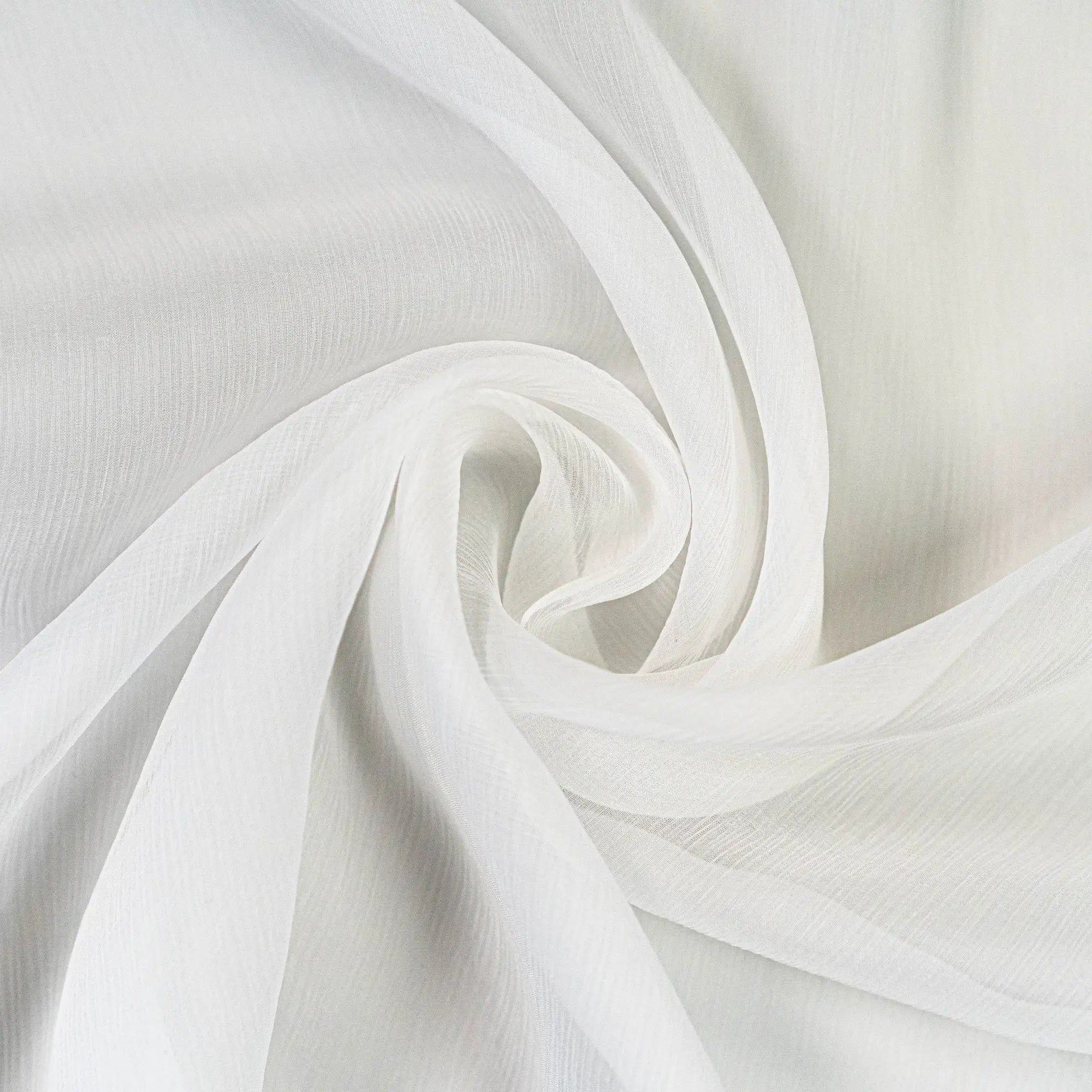
Crinoline by the metre for petticoats and volume: a stiff, firm crinoline, a softer and bouncier organza crinoline, and a double-sided gold and silver metallic crinoline.
- 4 colours
- 150 cm wide
- 100% Nylon
- From $17.60 per metre


 Sold out
Guide
Crinoline: Uses and How to Sew It
Our crinolines and how they compare with stiff net and bridal net, how to keep them comfortable to wear, and couture tips for sewing them.
Our crinolines
- Crinoline. A stiff, firm nylon that holds a skirt out.
- Organza crinoline. Softer and bouncier, with a smoother, less coarse look, in off white, nude and black.
- Metallic crinoline. Stiff and double sided, gold on one side and silver on the other, for sculptural pieces.
Crinoline or net?
Our firmer fabrics for adding volume and shape.
| Crinoline | Organza crinoline | Metallic crinoline | Stiff net | Bridal net | |
|---|---|---|---|---|---|
| Feel | Stiff and firm | Softer and bouncy, less coarse | Stiff, gold on one side and silver on the other | Stiff, holds its shape | Firm, holds its shape |
| Great for | Petticoats and sculptural skirts | Petticoats and skirts with a smoother look | Sculptural garments and statement details | Petticoats and structured skirts | Petticoats under bridal skirts |
What to make with it
- Petticoats and built-in skirt support
- Structured flounces and hems
- Firm, lightweight support inside bodices
- Sculptural skirts, sleeves and costume
Keeping it comfortable
- Crinoline should never touch the skin. In couture it's built in as an inner layer, sandwiched between the fashion fabric and a smooth silk lining, rather than worn as a separate layer against the body.
- Its cut ends are stiff and sharp, and they'll prickle through a single layer of binding or lining. Seal every cut edge before you enclose it: encase it in bias ribbon, or wrap the ends tightly with thread. You can also gently heat-seal the fibres, testing on a scrap first in a well-ventilated space.
- Plan your pieces so outer edges fall on a fold rather than a cut edge wherever you can.
- Trim back the seam allowances inside the layers, and stagger them so stiff ends don't stack up in one place.
Cutting
- Crinoline is stable, so you can cut a few layers at once.
- Use sharp, heavy scissors, and mark with tailor's chalk.
Sewing
- Use a fresh needle (size 80 or 90) and a fine thread in a matching colour.
- For a firm bodice, two layers of crinoline stitched together over a light base give strong support with less boning.
- For a structured flounce or hem, mount the skirt on an underlining of silk organza or cotton organdy, then hand-stitch the crinoline to the underlining only. The stitches won't show on the outside or the lining.
- Ease the crinoline very slightly along curved edges. If it sags, the edge buckles; if you stretch it too hard, it warps.
Pressing
Crinoline can take a warm iron through a pressing cloth. Organza crinoline and metallic crinoline are more delicate: press seams only, dry, on the lowest setting, through a pressing cloth. Don't use steam on any of them, as it can soften the stiffness. Test on a scrap first.
Questions
What is crinoline used for?
Petticoats and built-in skirt support, structured flounces and hems, and firm, lightweight support inside bodices.
Crinoline or organza crinoline?
Crinoline is stiffer and firmer. Organza crinoline is softer and bouncier, with a smoother, less coarse look.
How do I stop crinoline scratching?
Seal and encase every cut edge, then build the crinoline in between the fashion fabric and a smooth lining, so it never sits against the skin.
Can I iron crinoline?
Crinoline can take a warm iron through a pressing cloth. Organza and metallic crinoline need the lowest setting, dry, through a cloth. Don't use steam.
Wholesale for fashion labels, bridal studios and designers buying in bulk. Apply for an account