

Lace Fabric
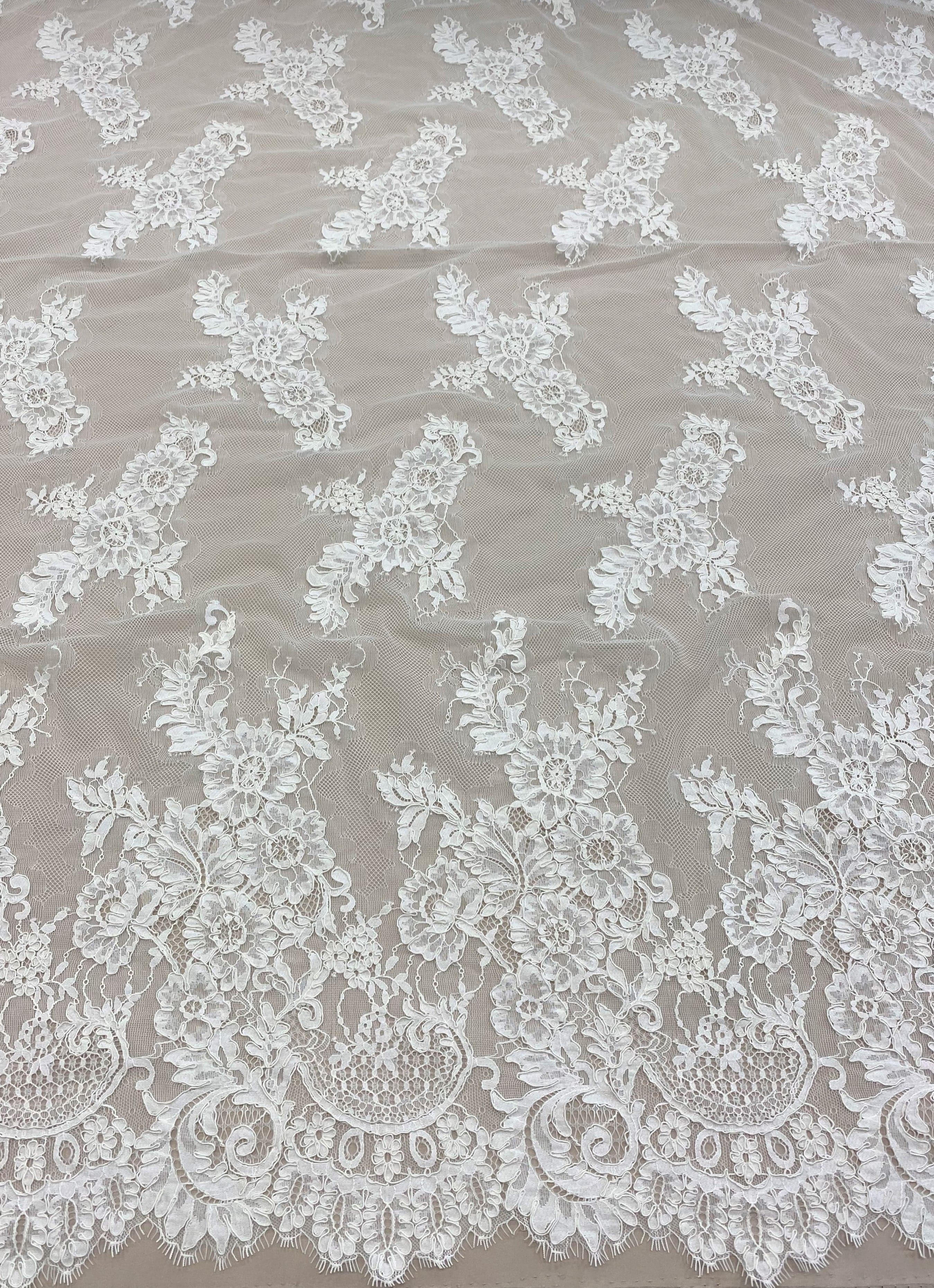
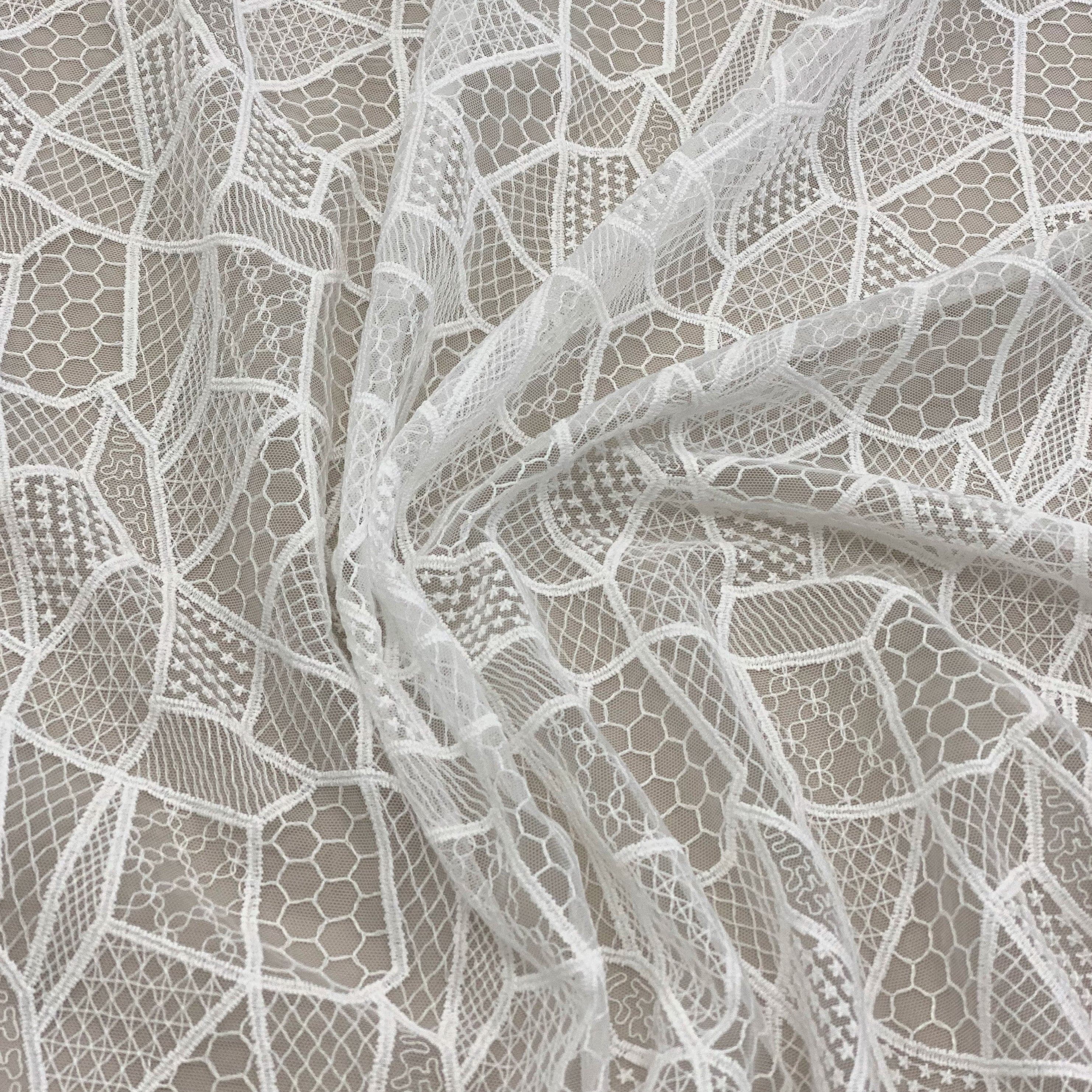
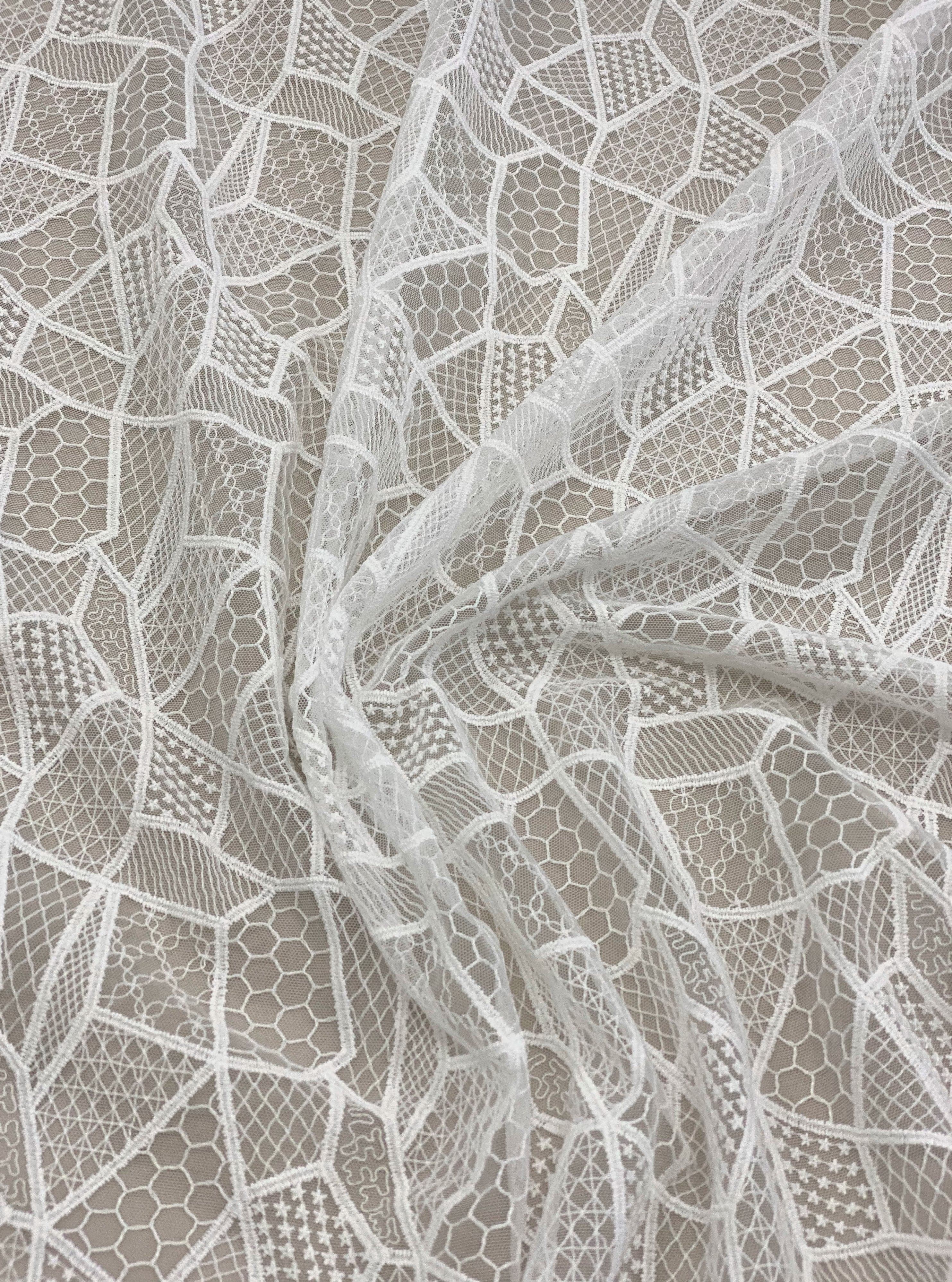
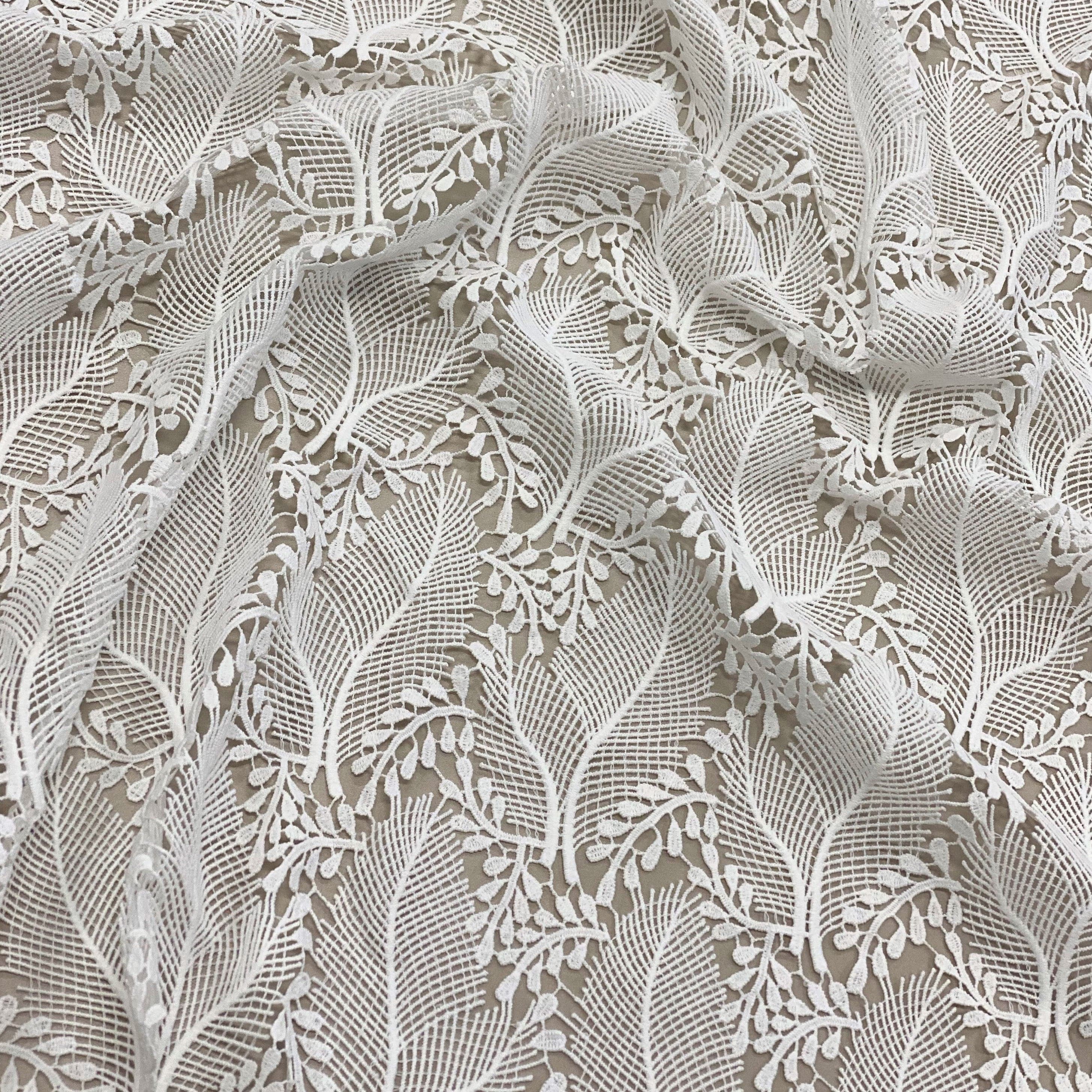
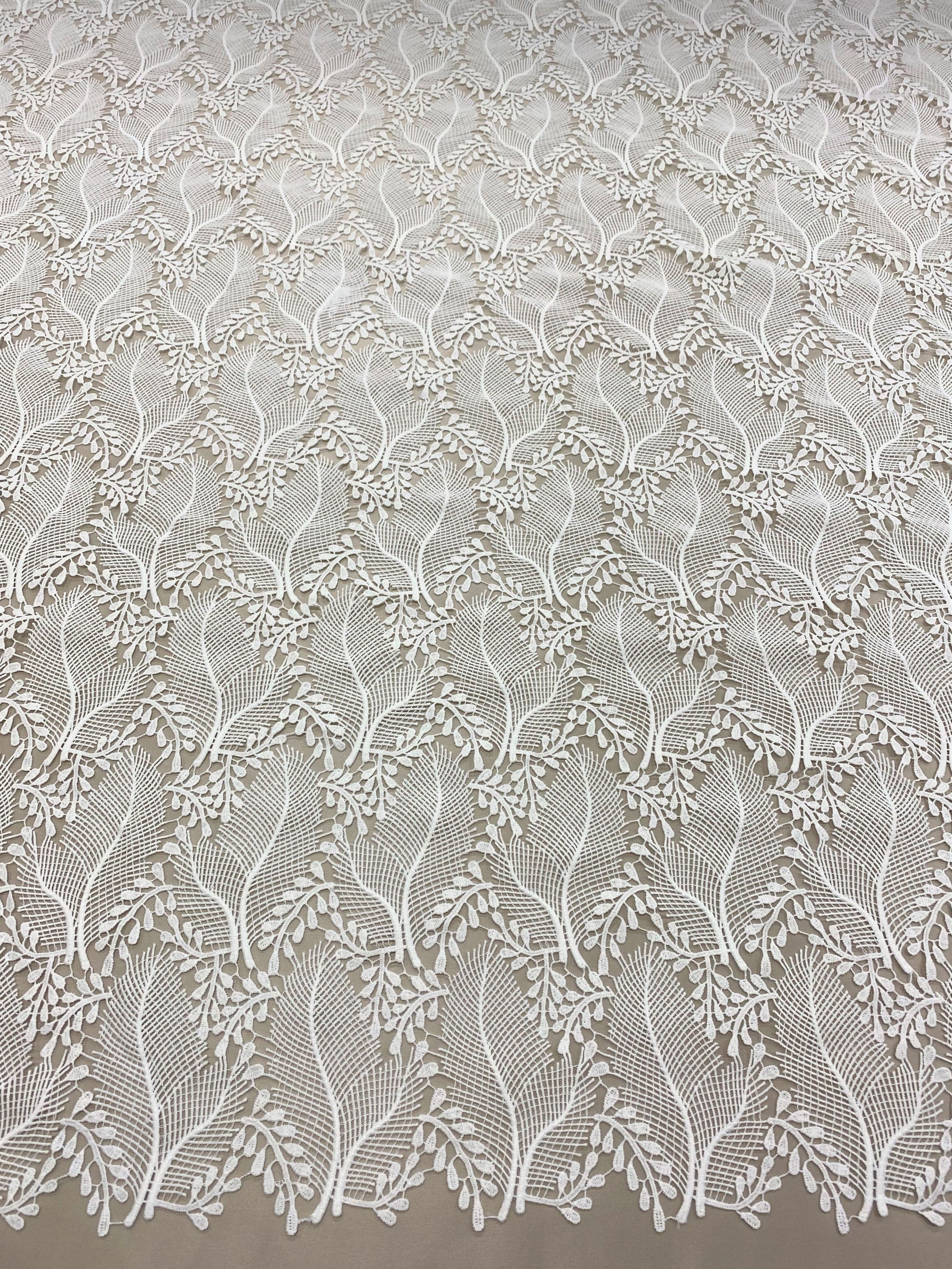
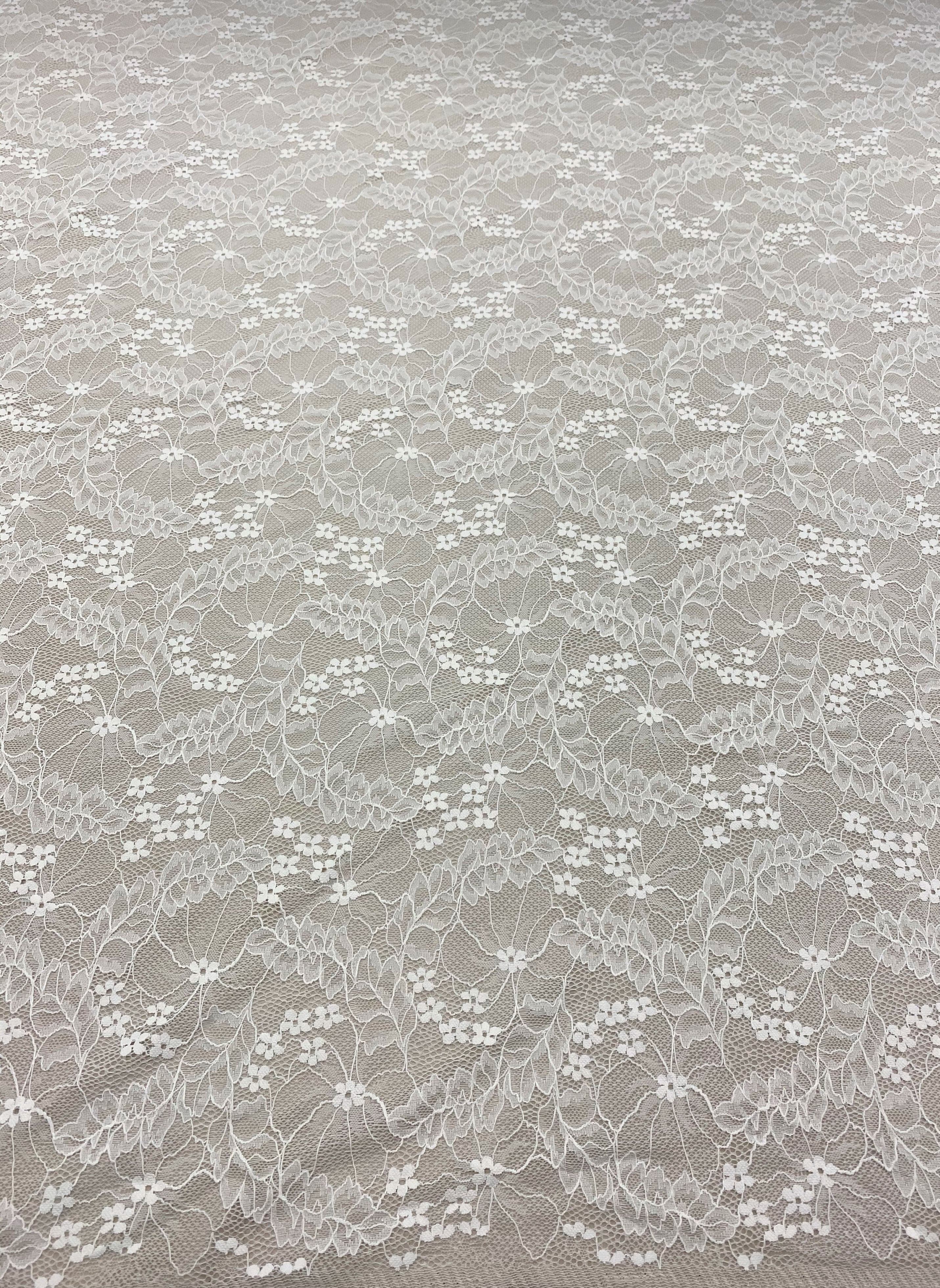
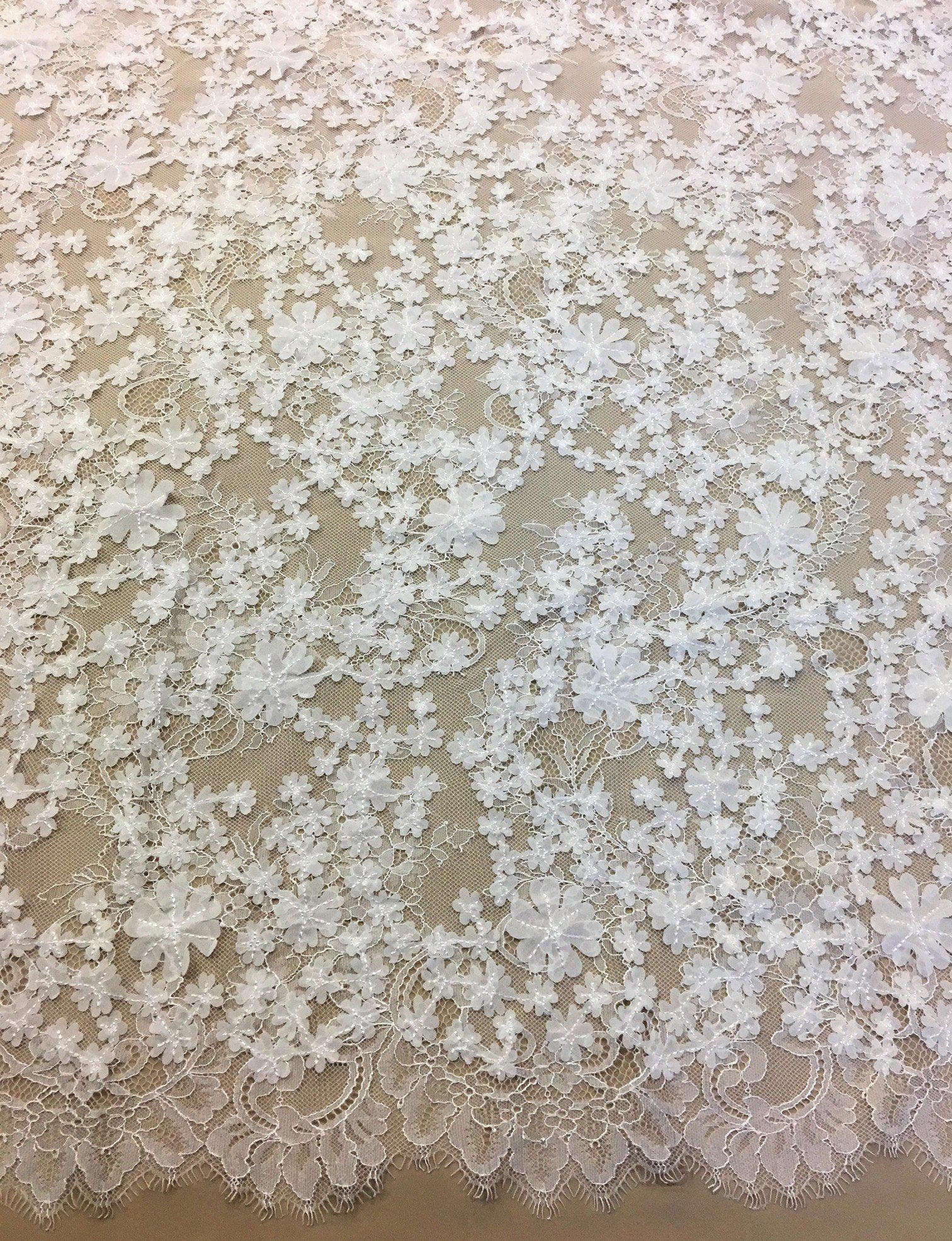
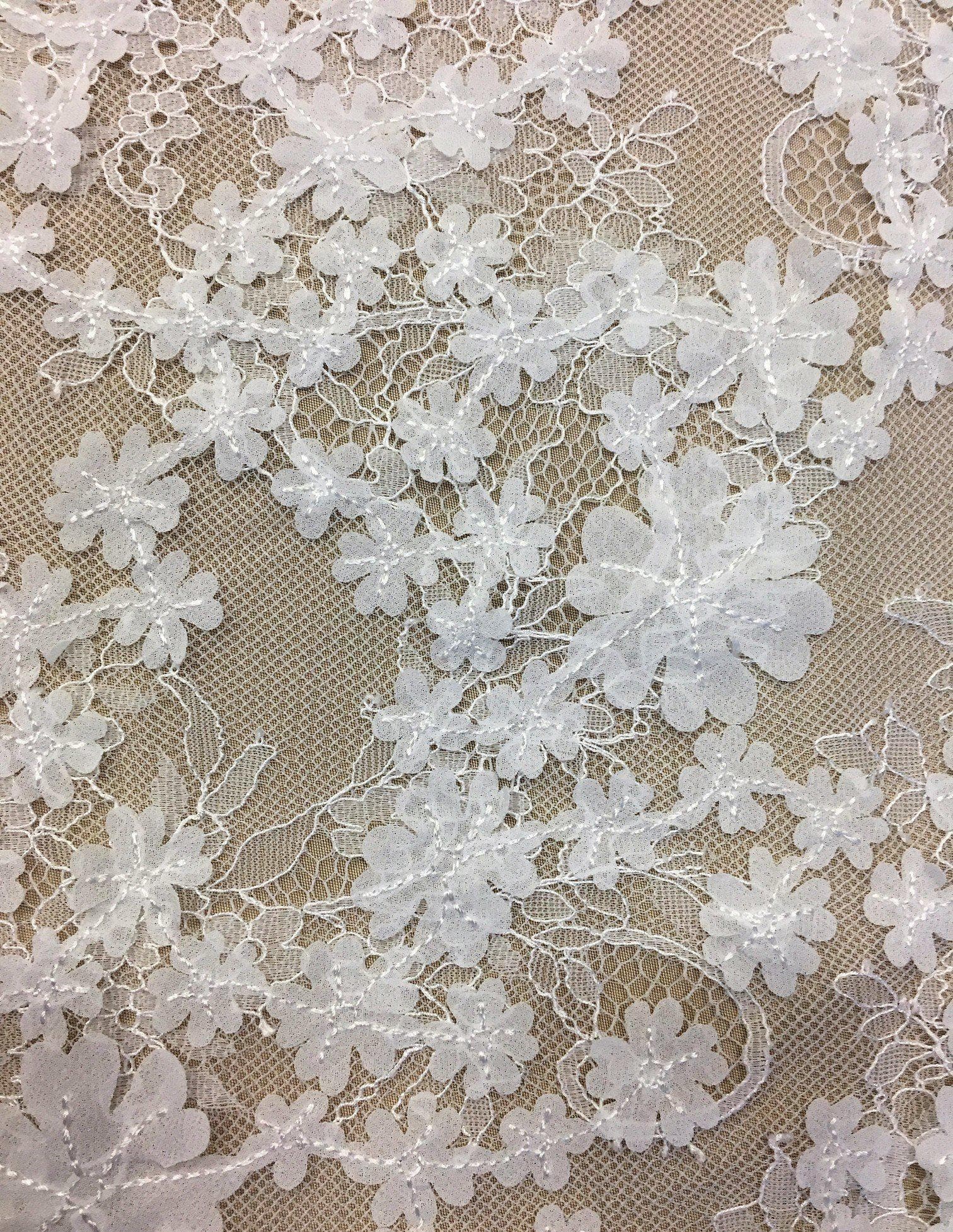
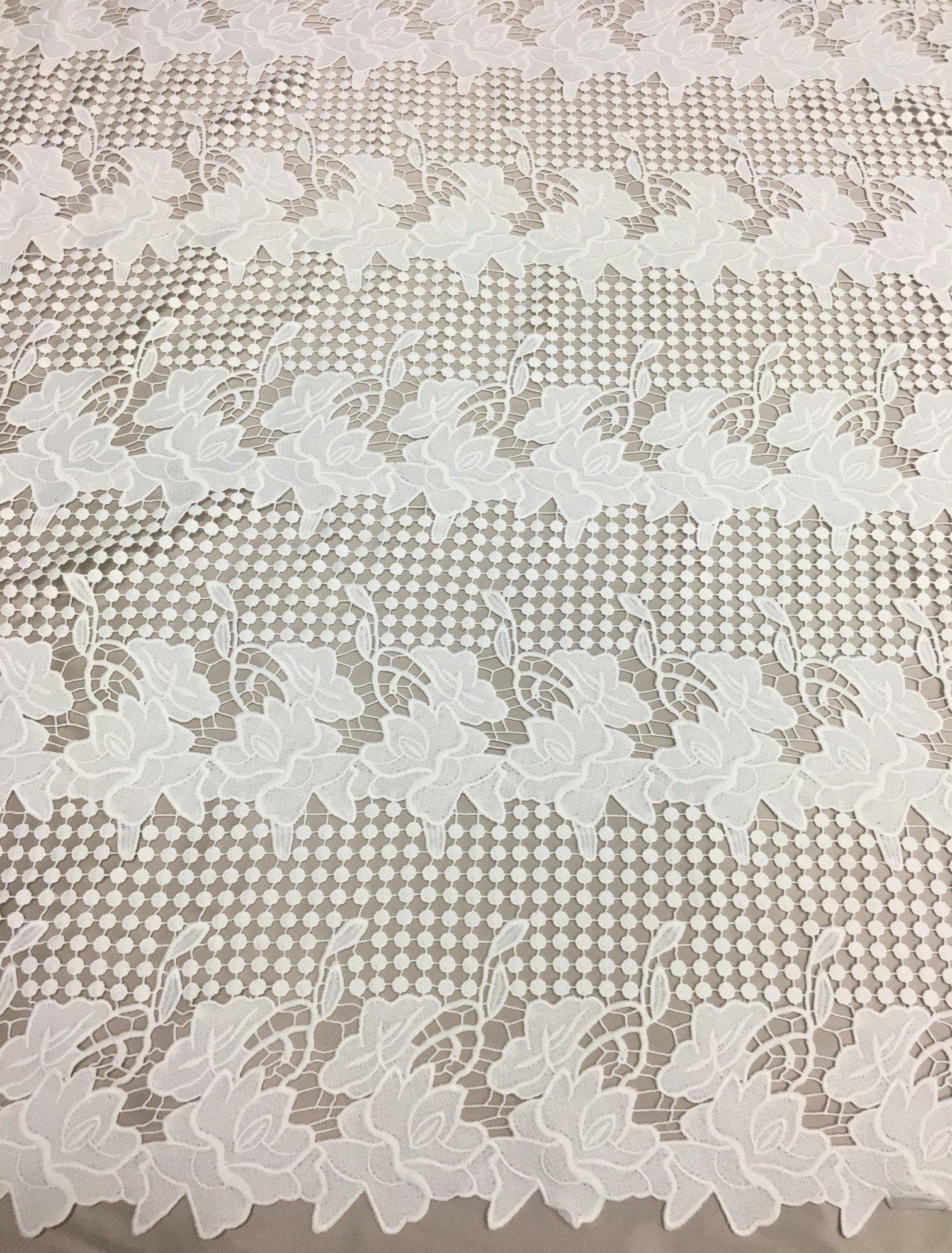
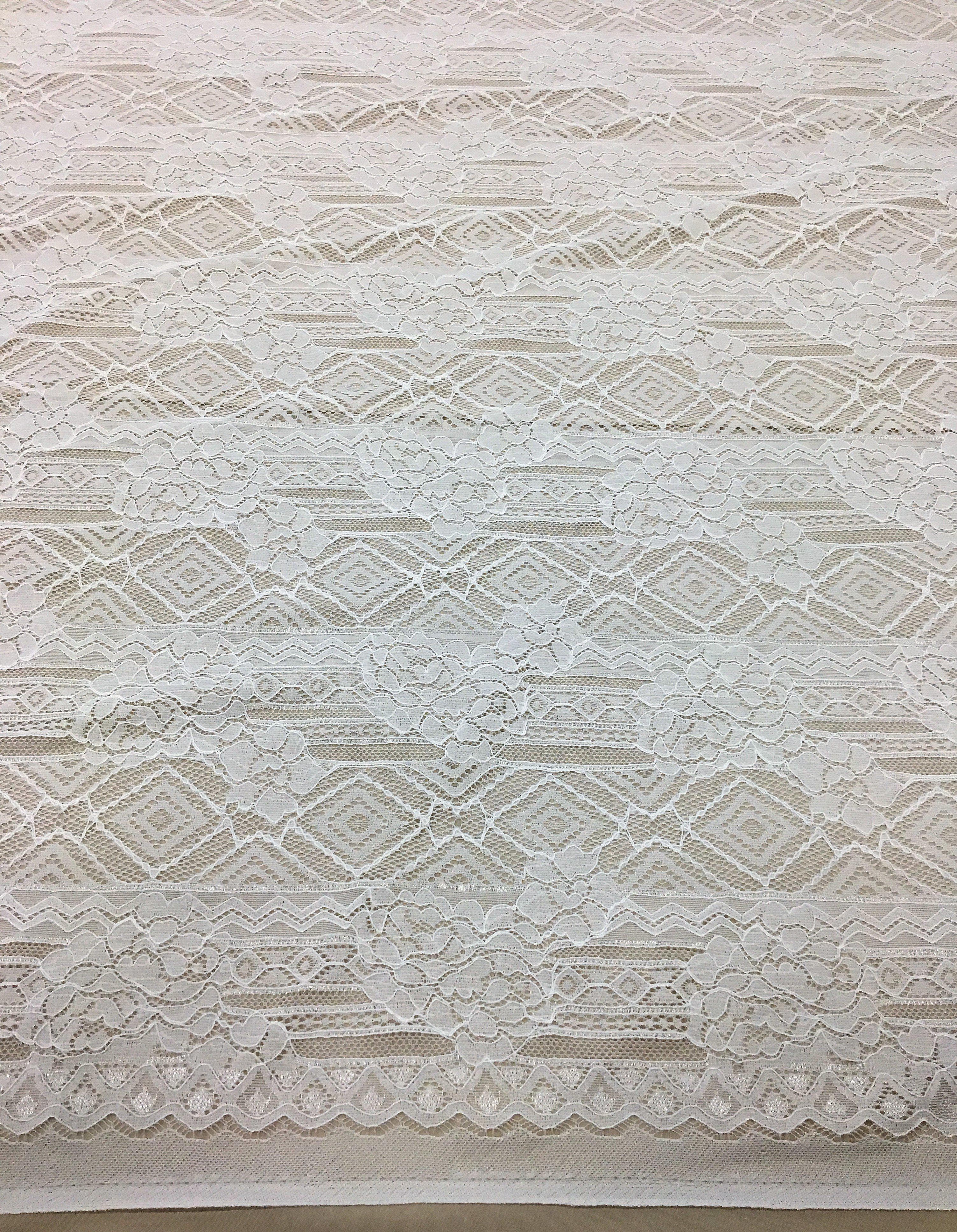
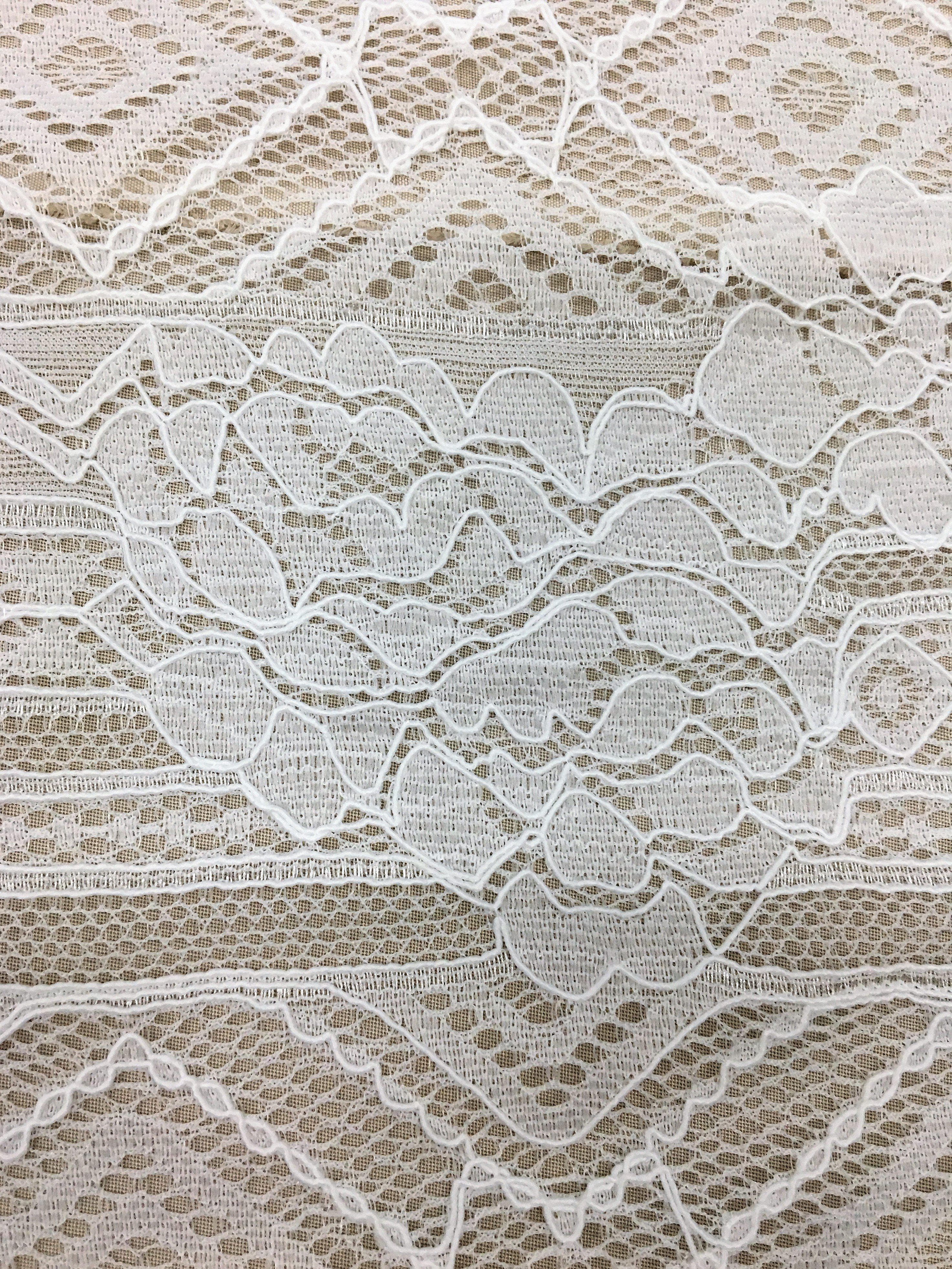
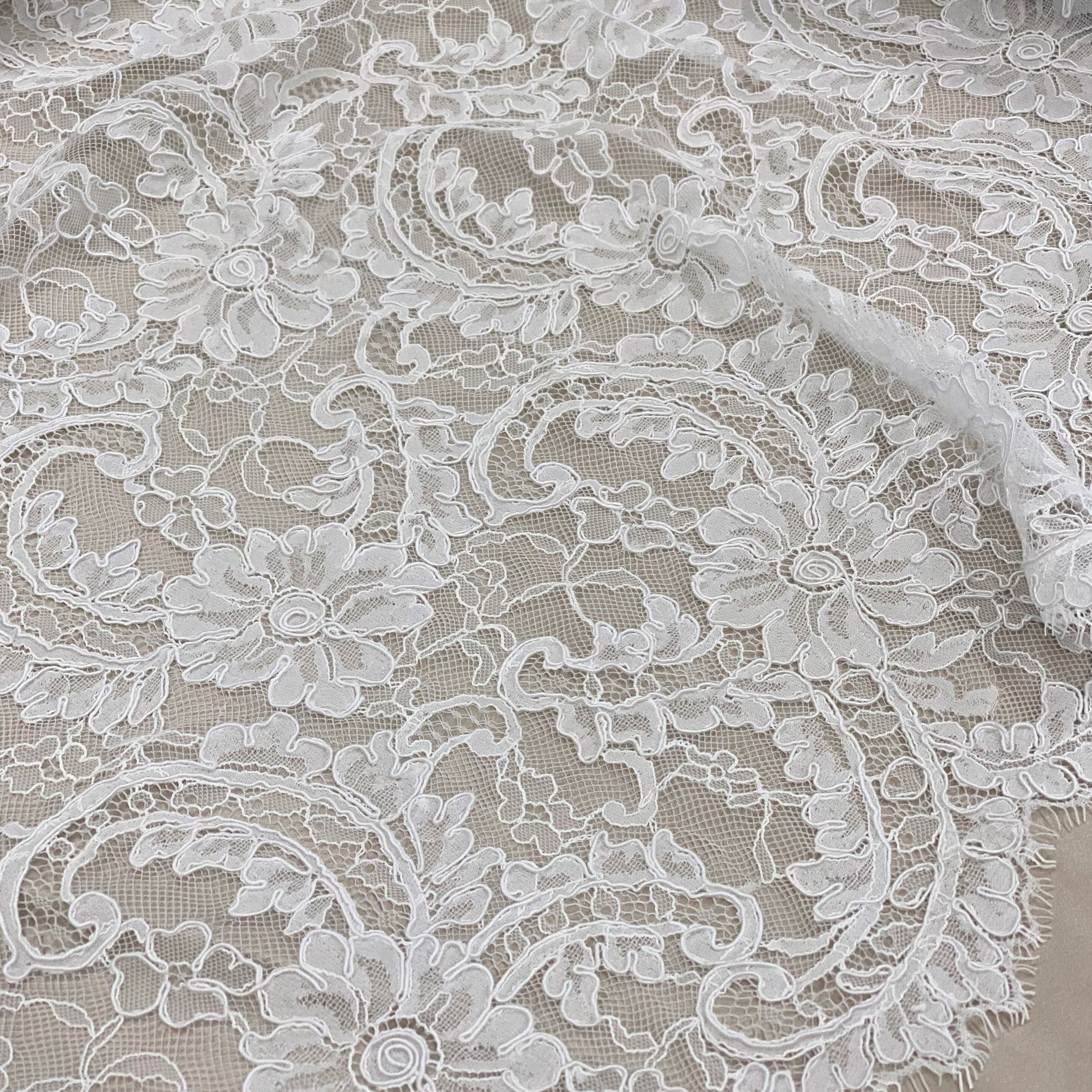
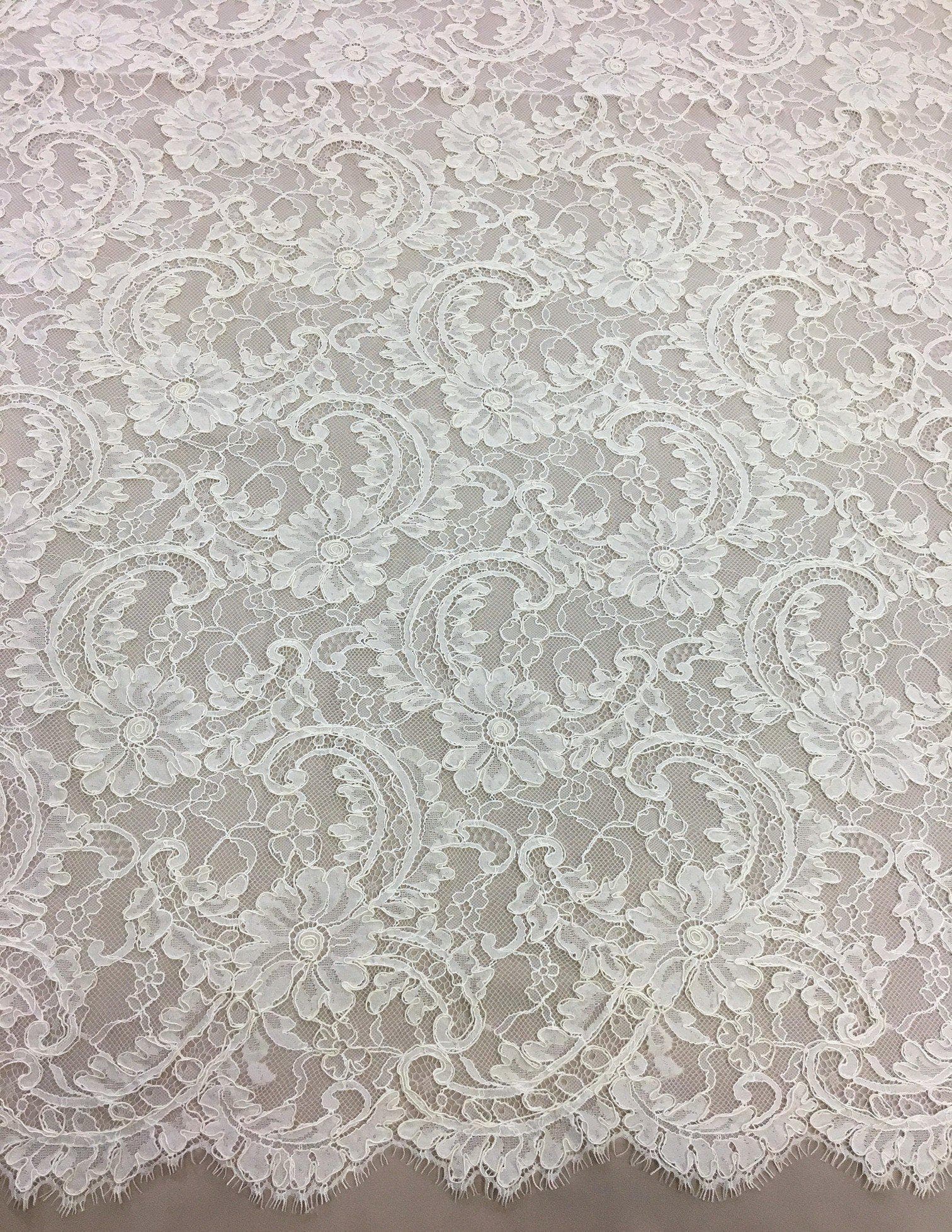
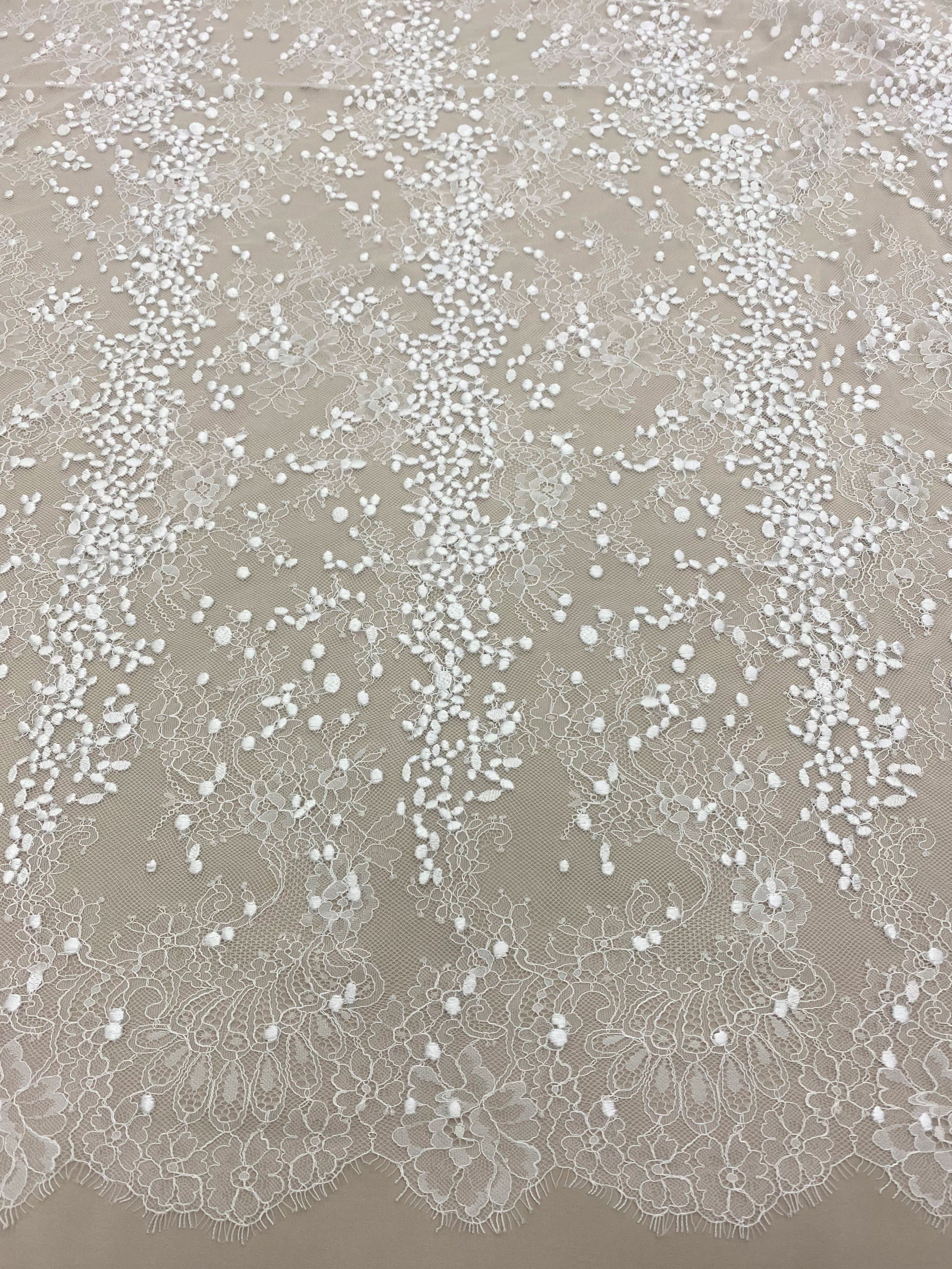
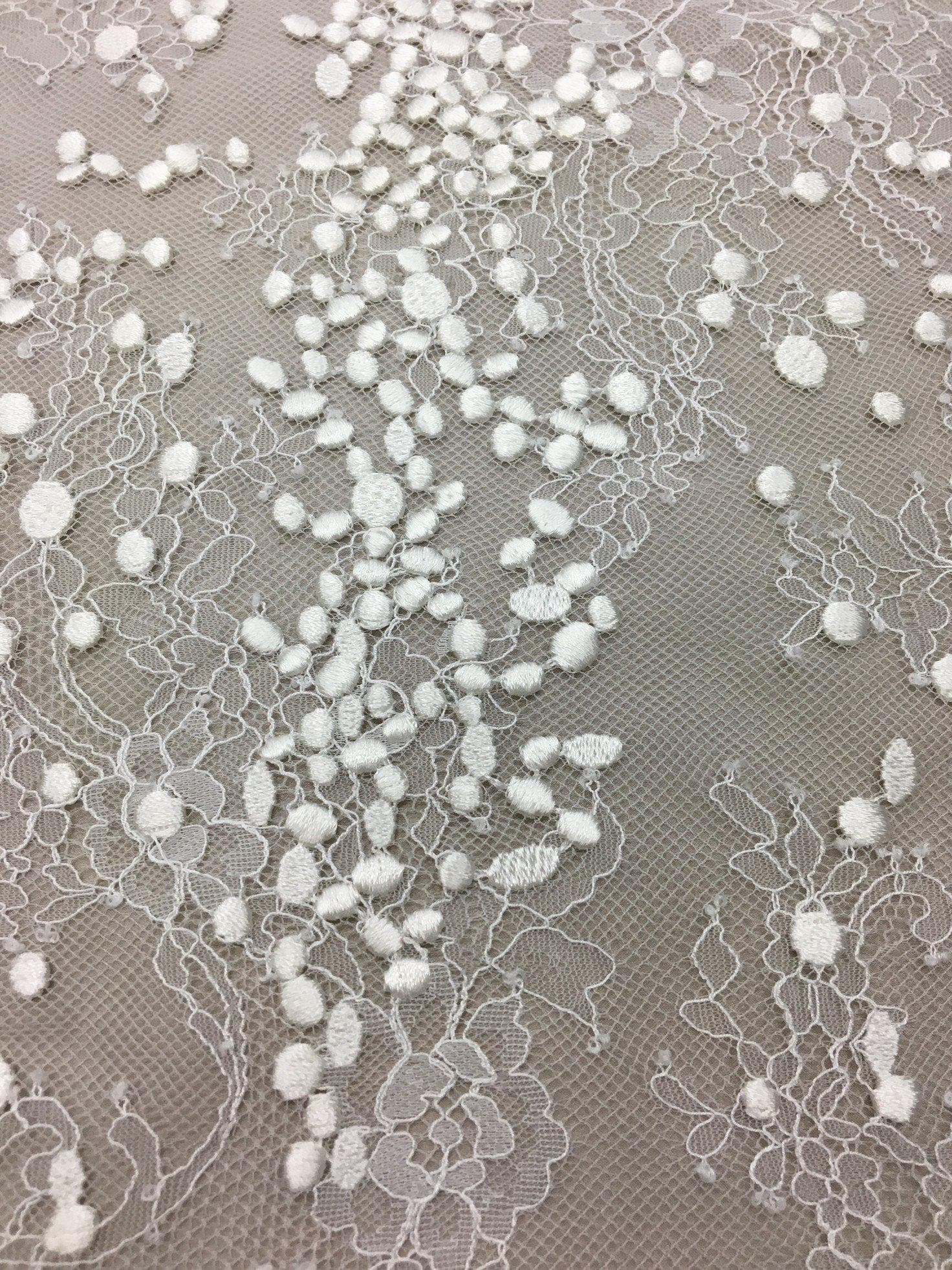
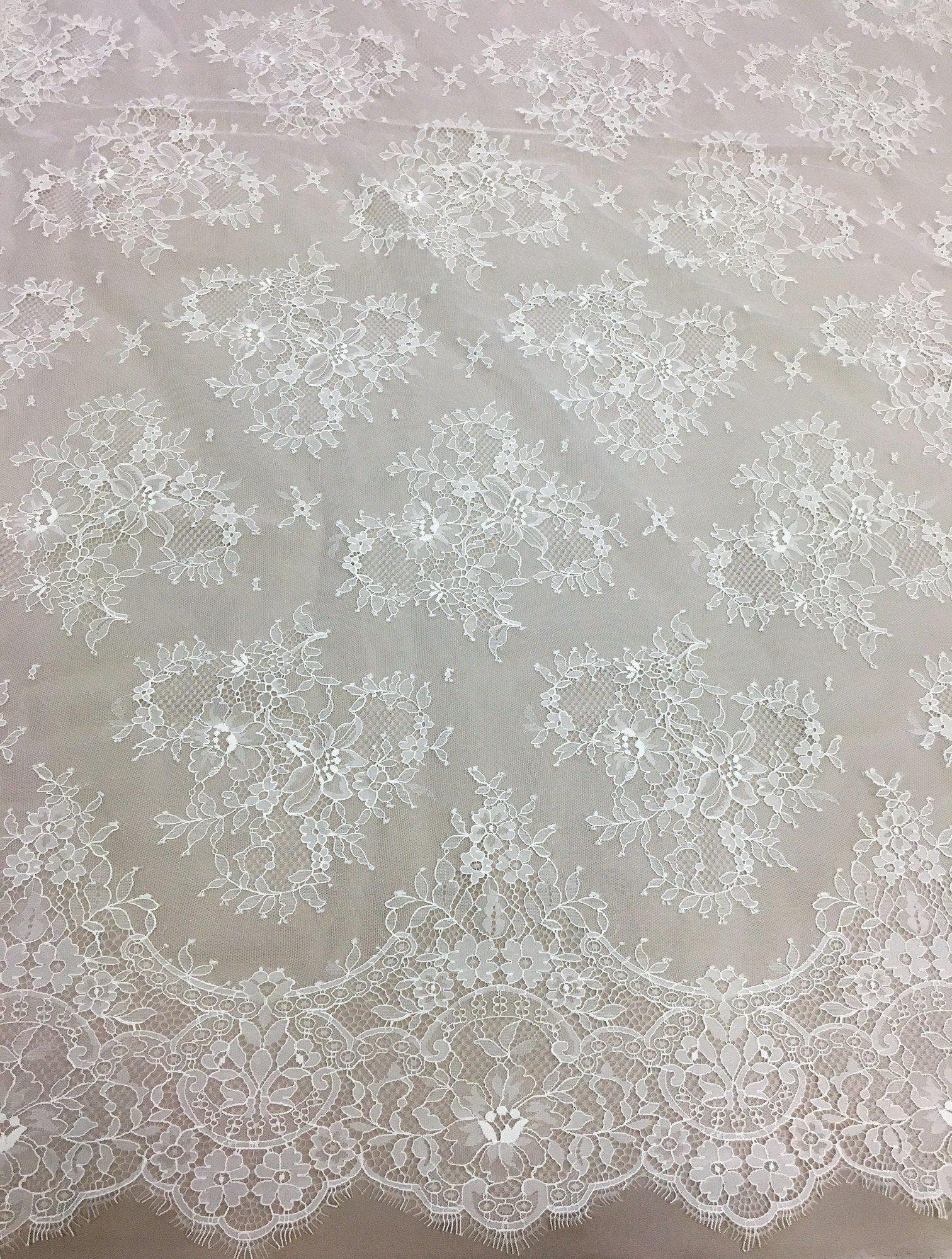
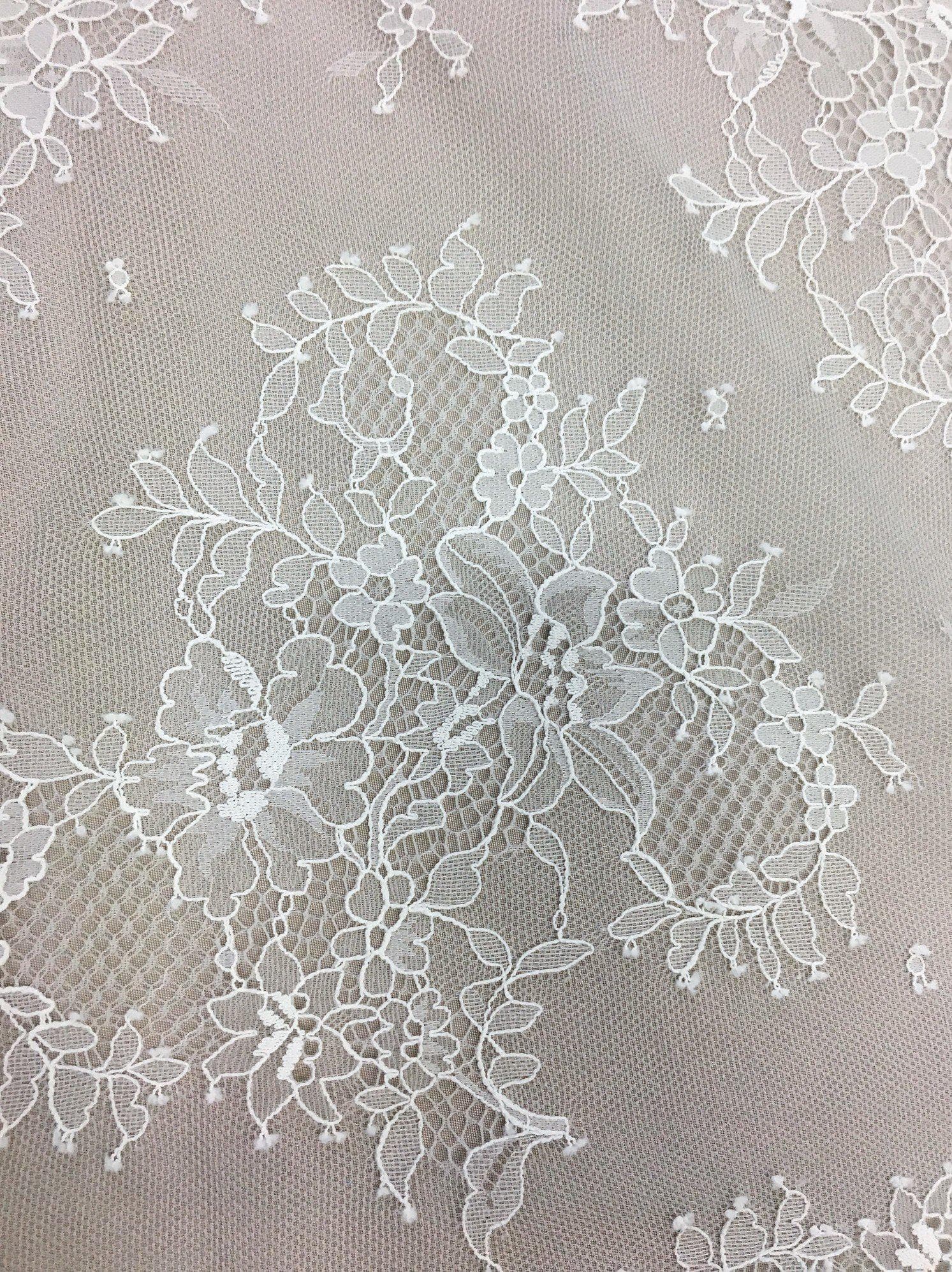
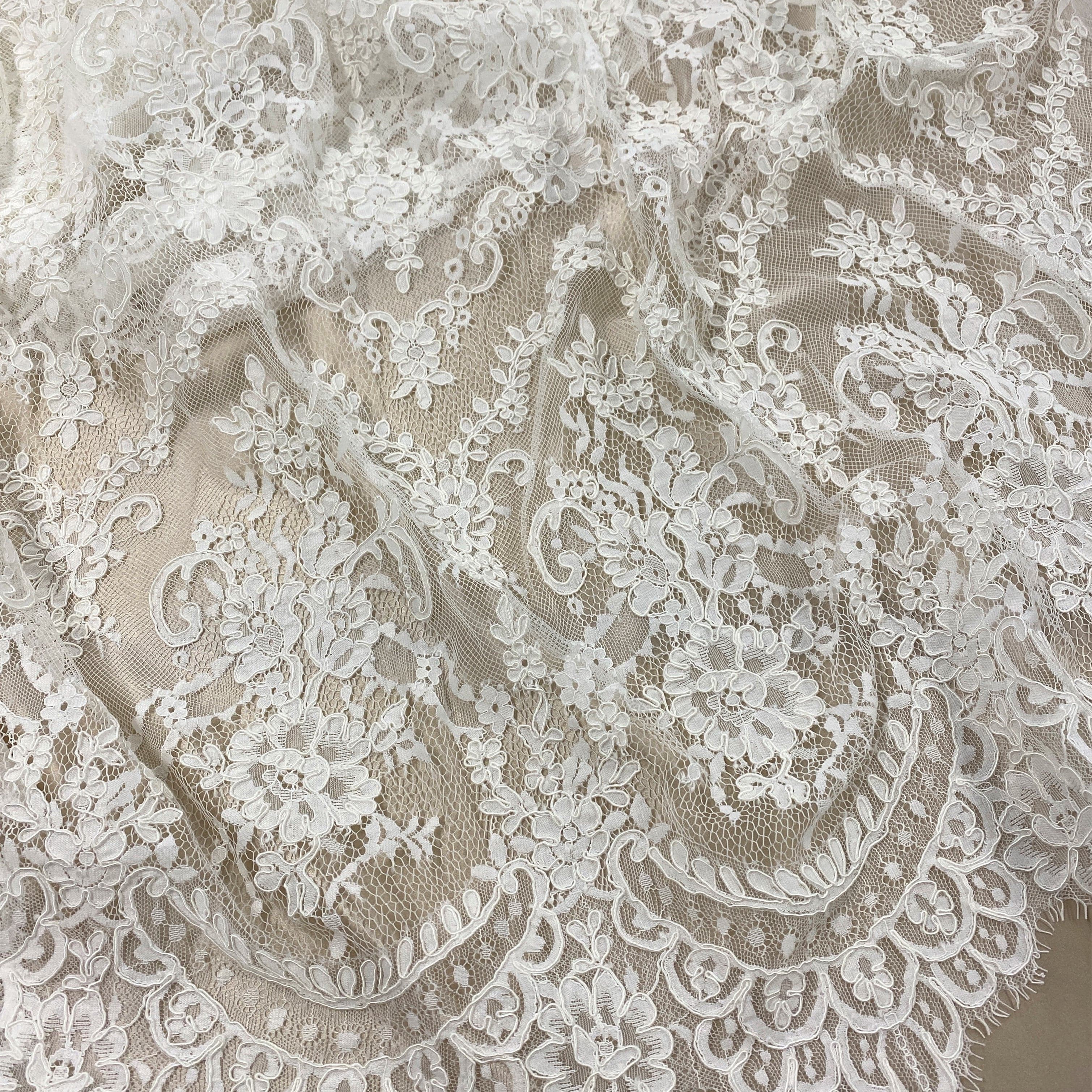
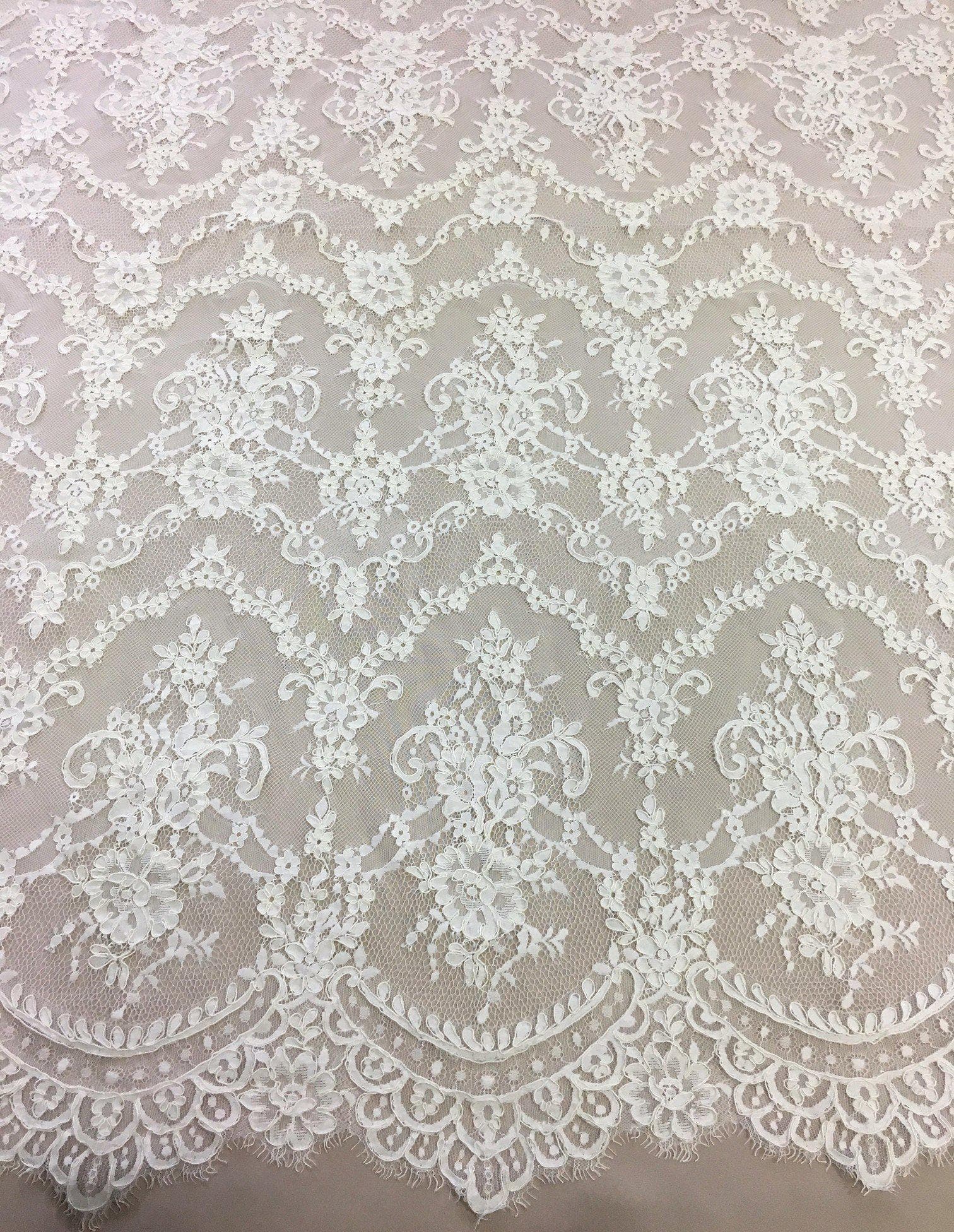
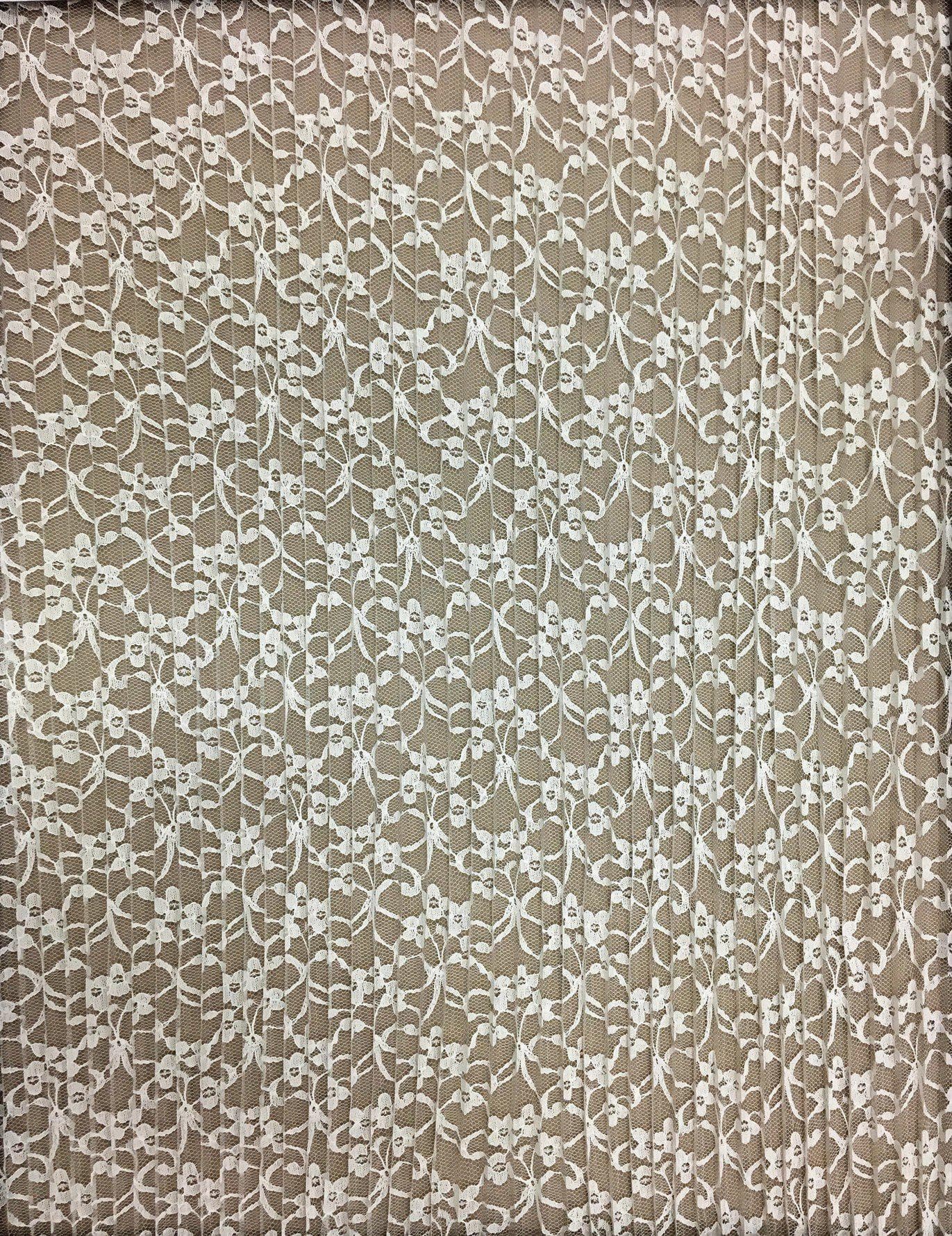
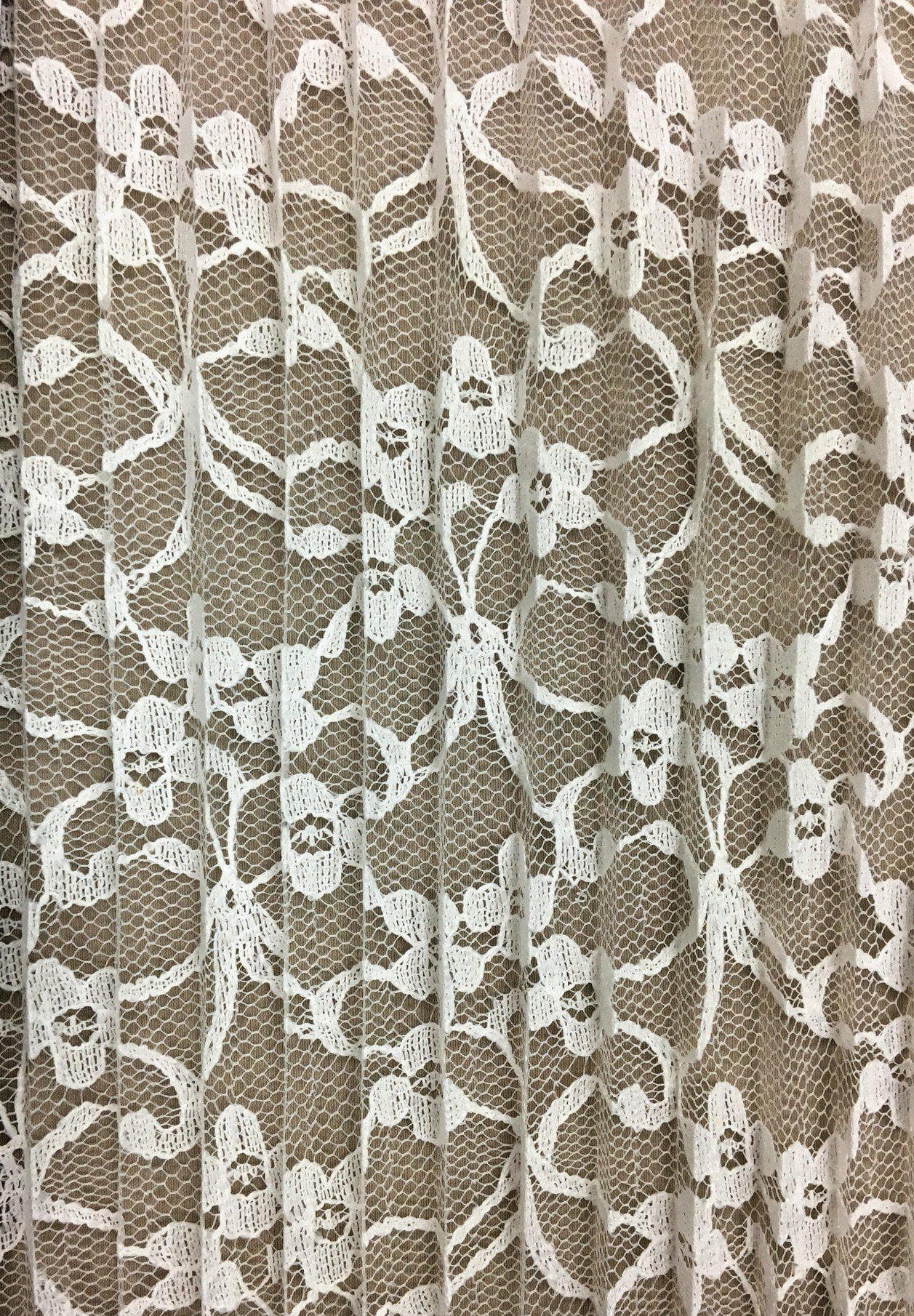
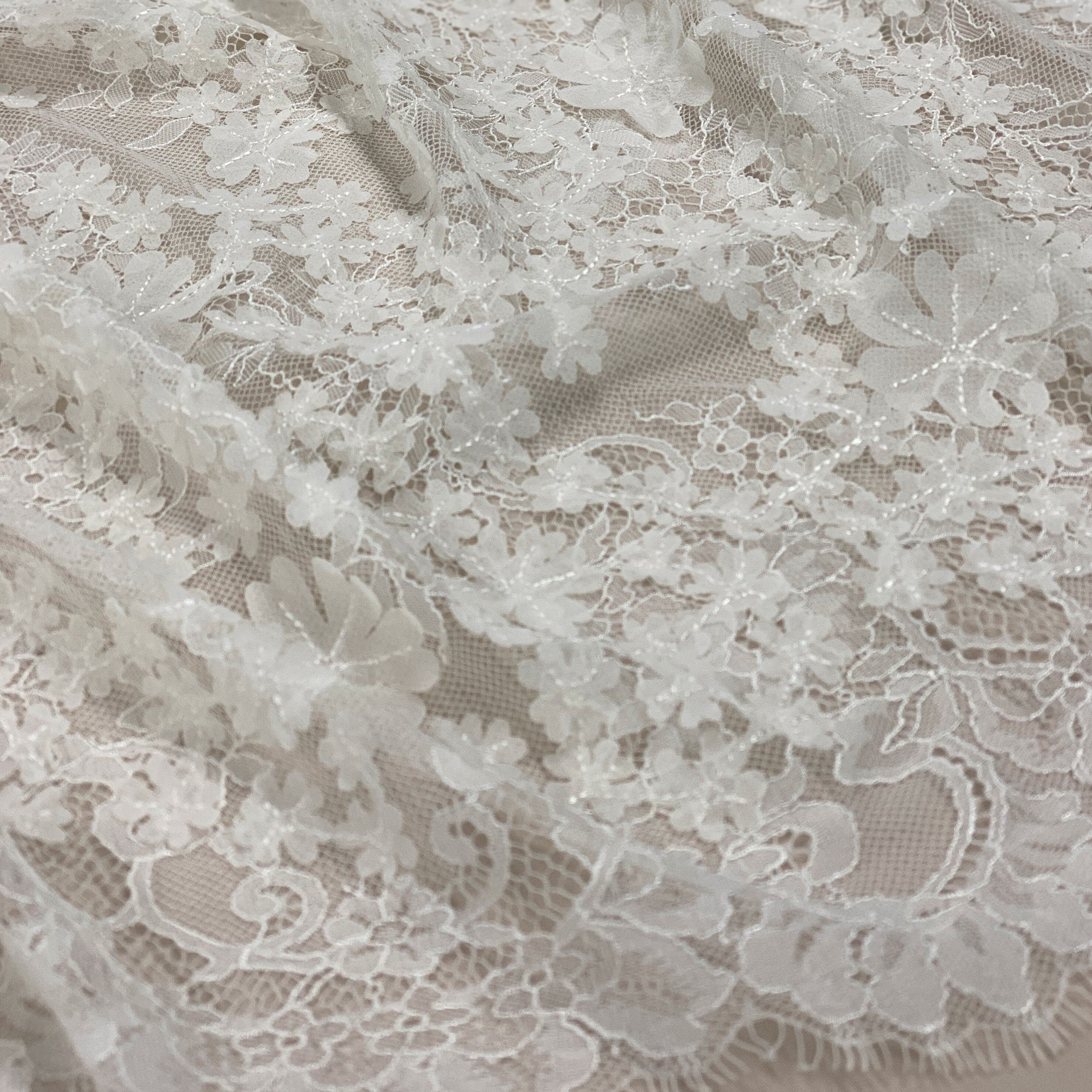
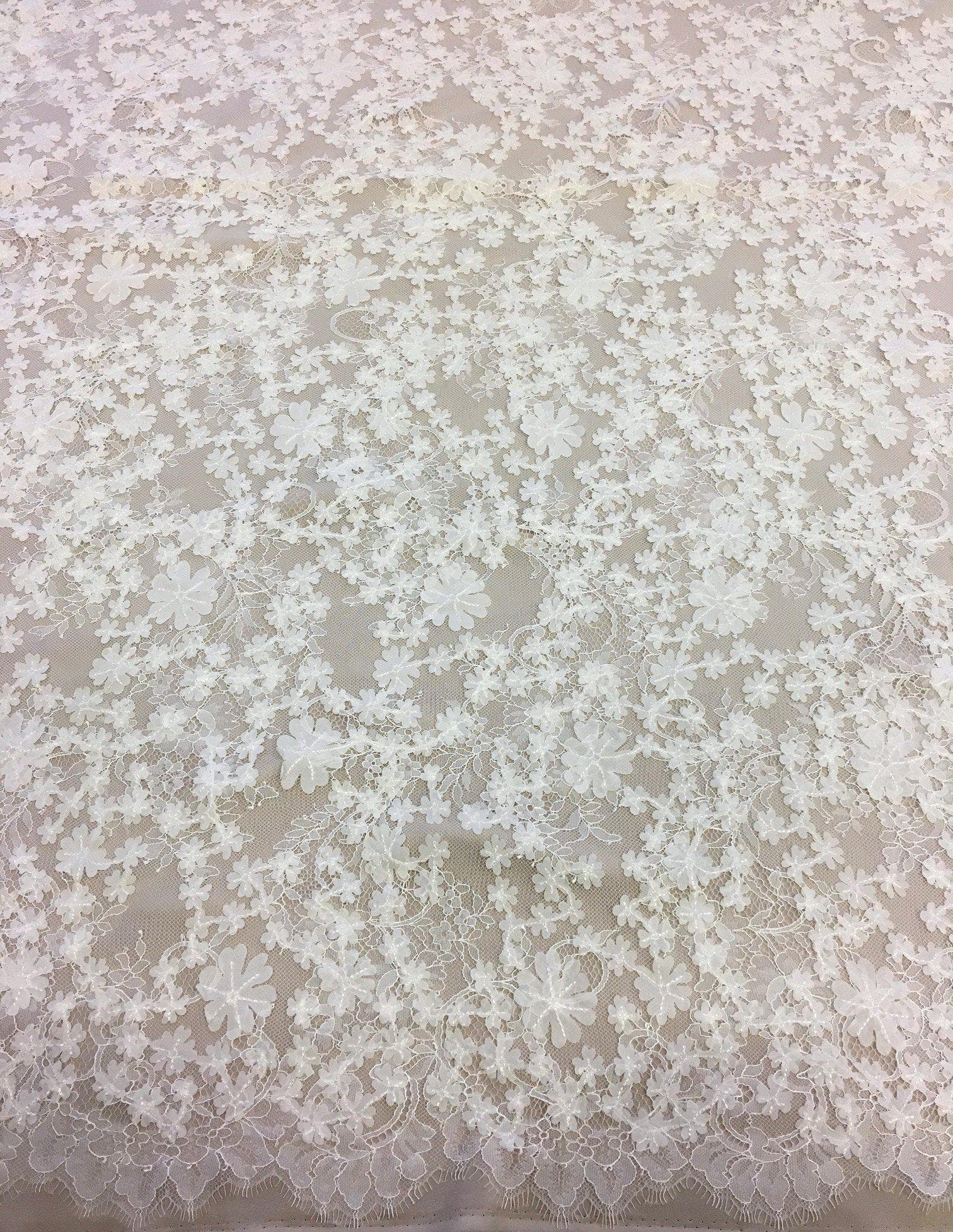
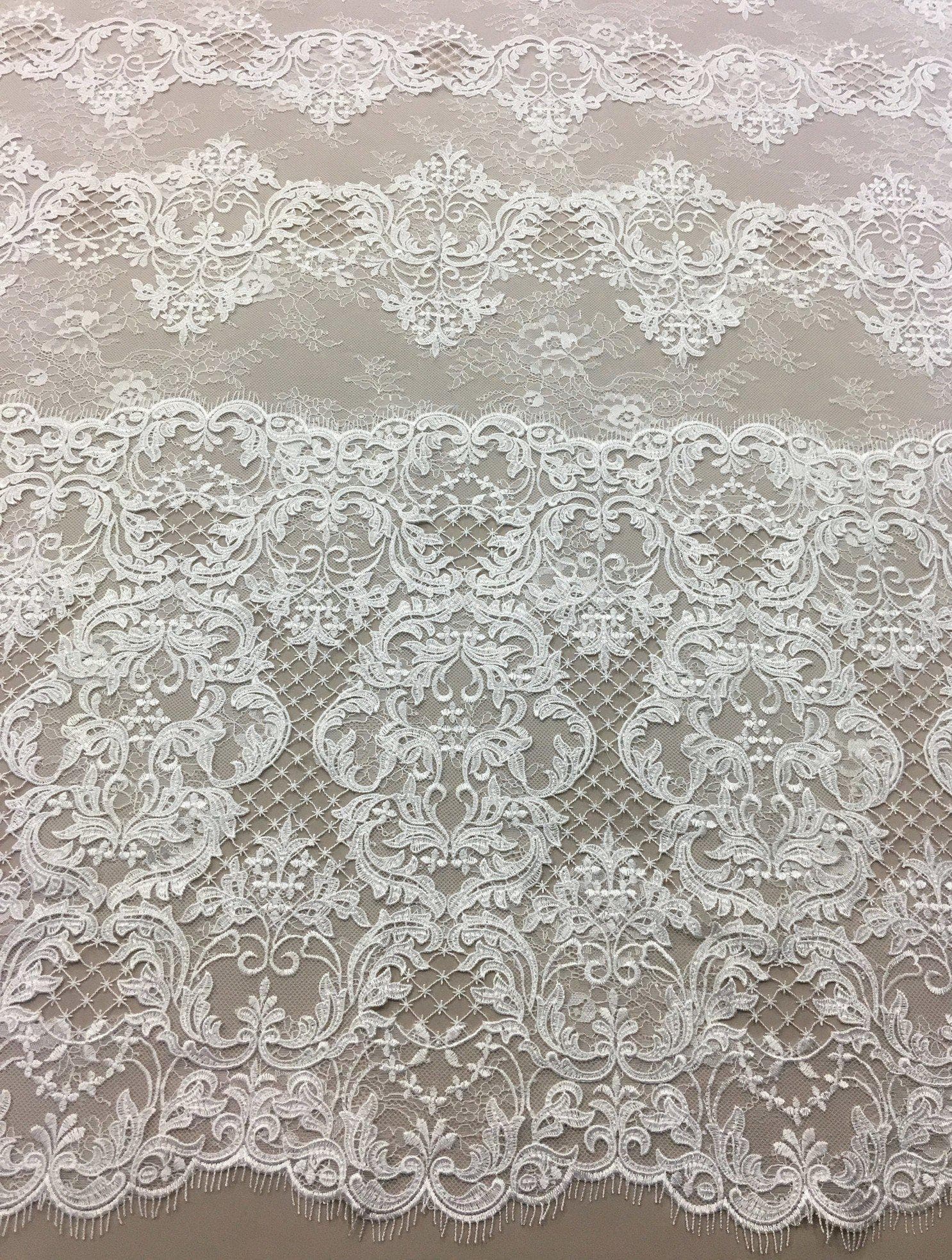
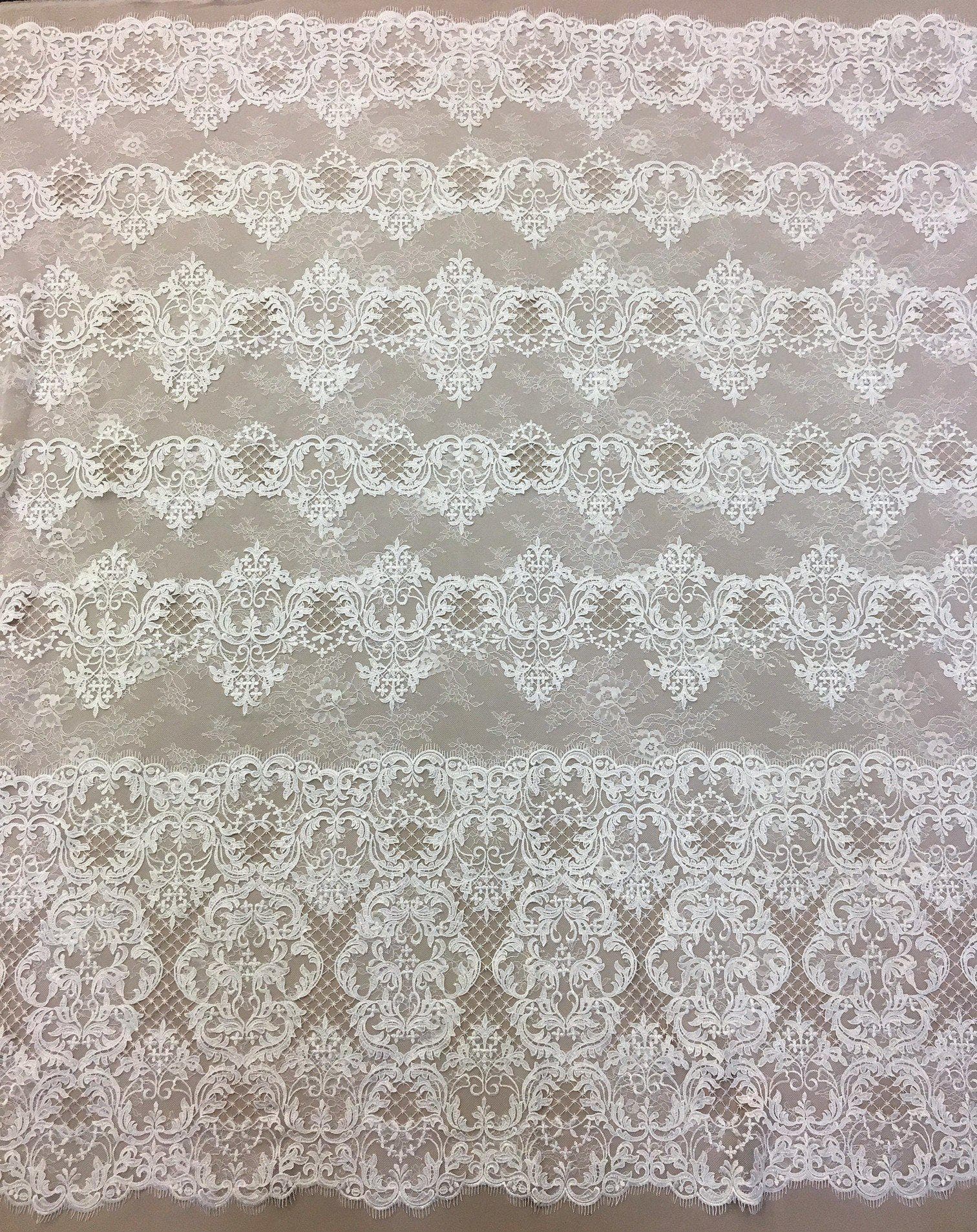
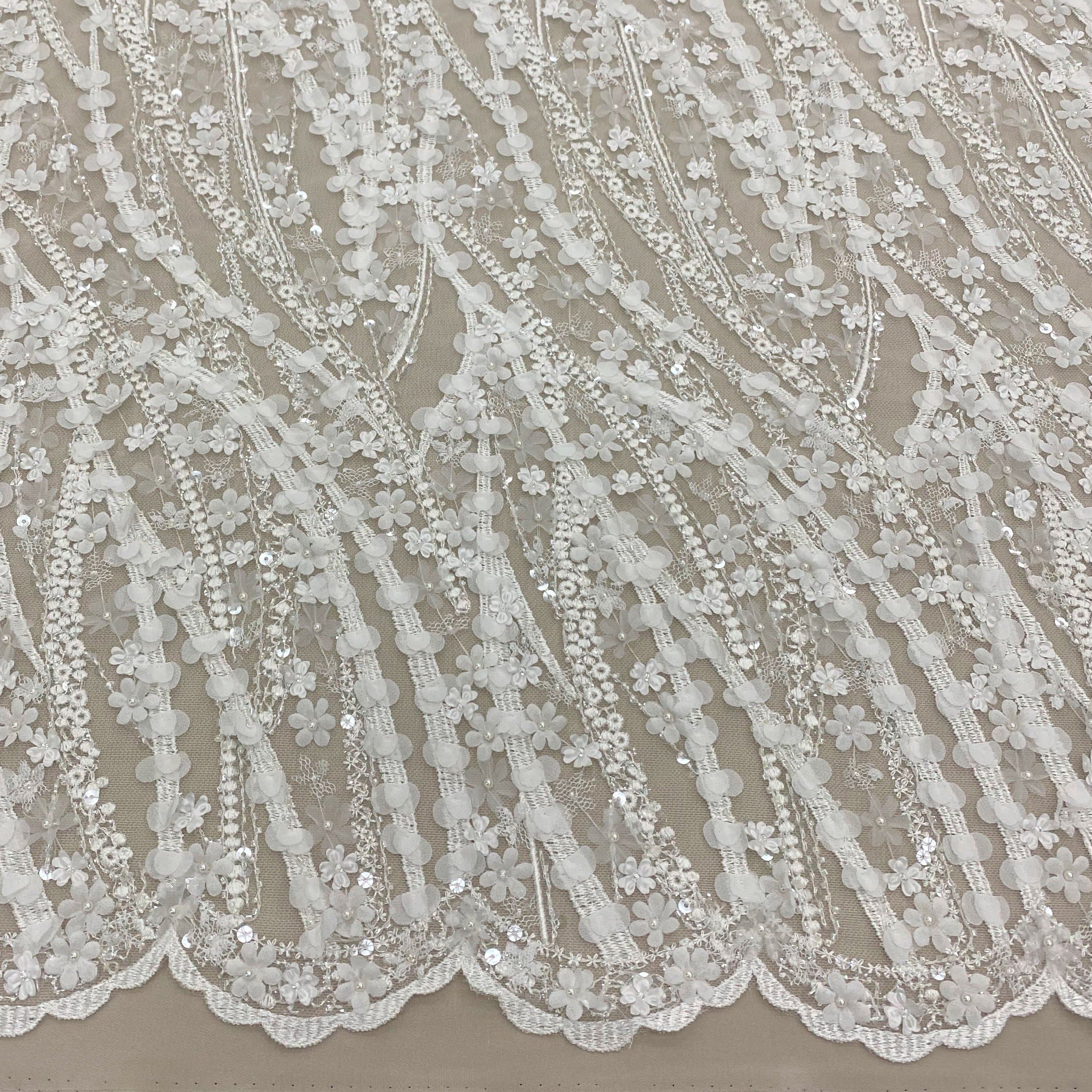
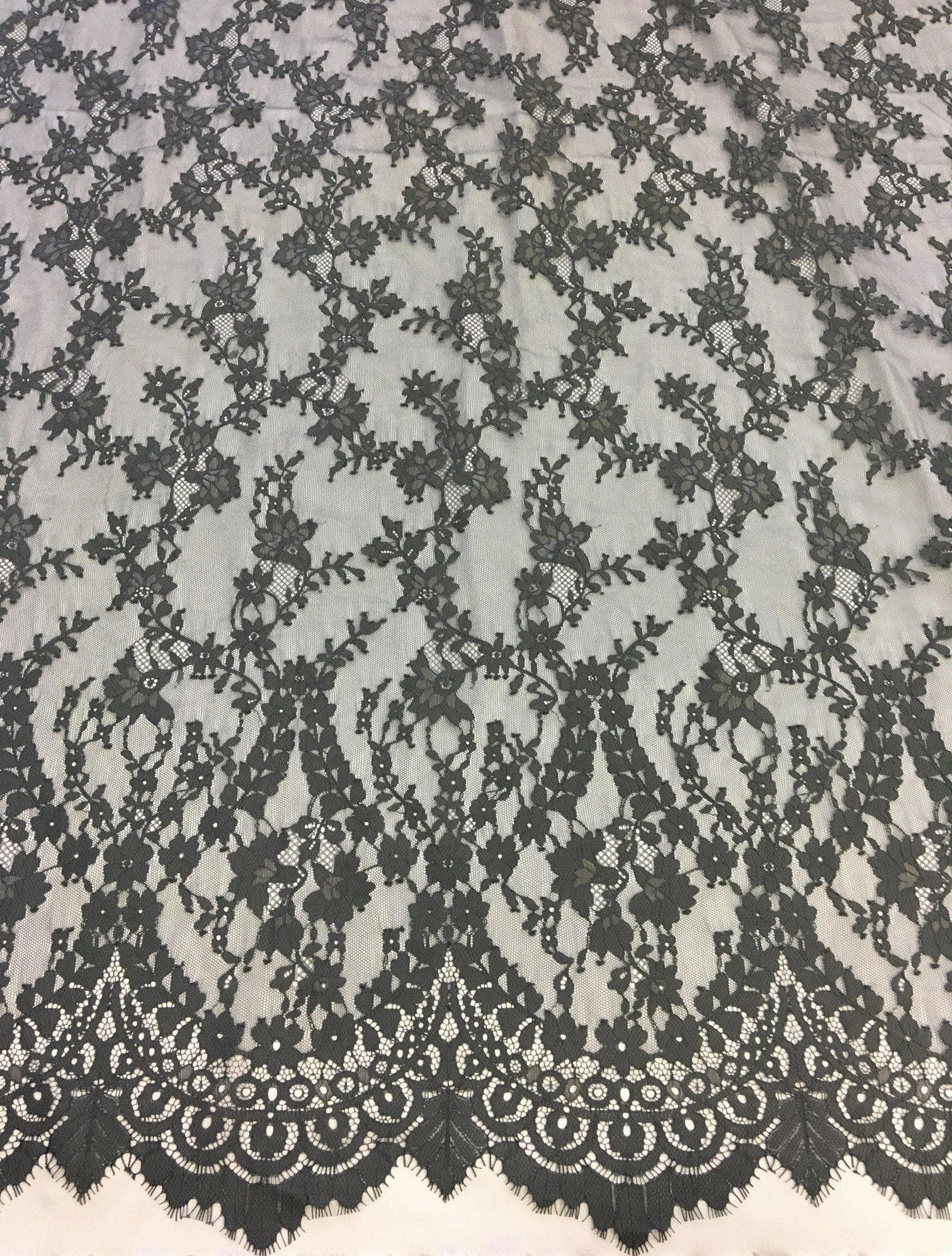
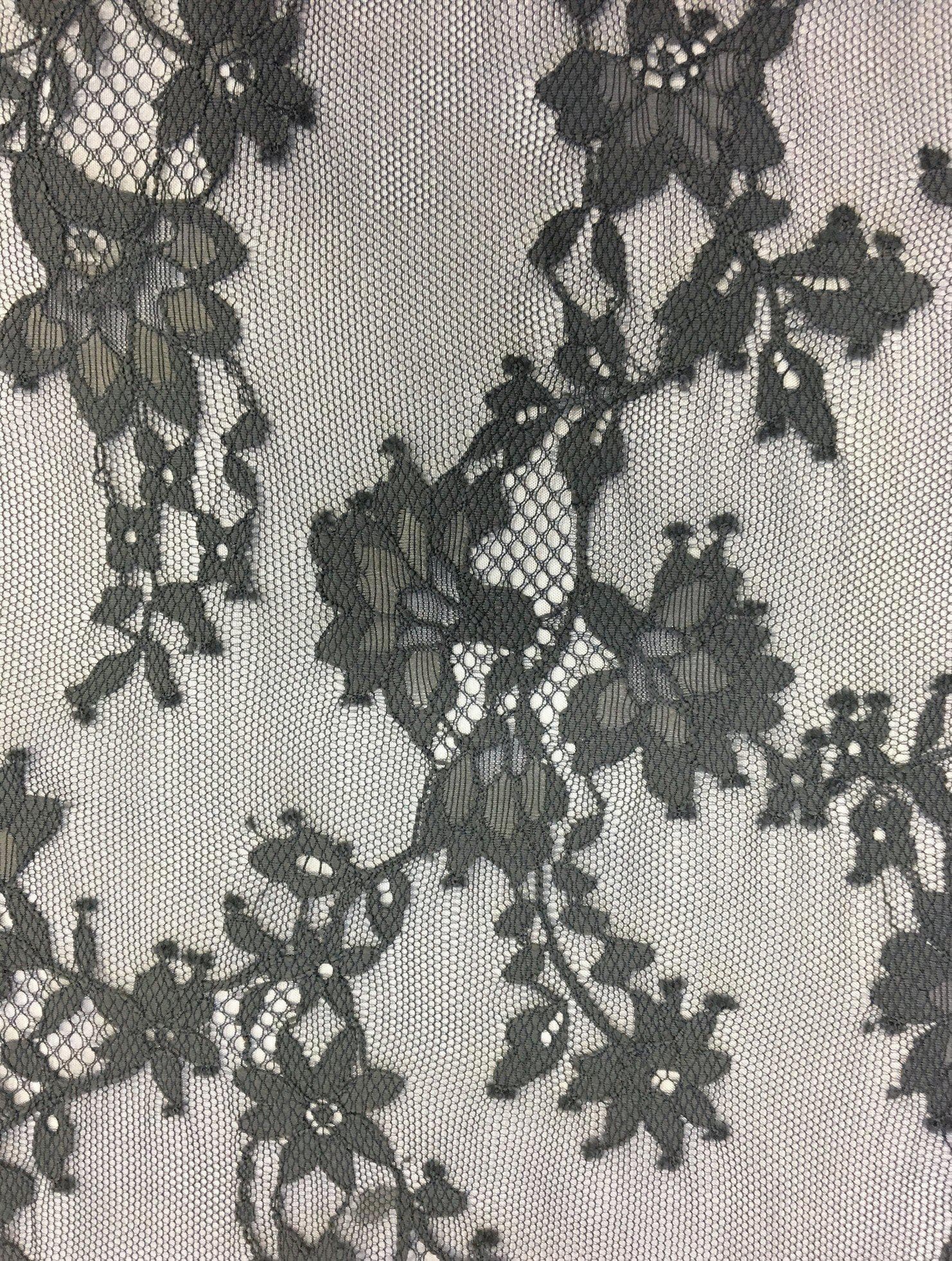
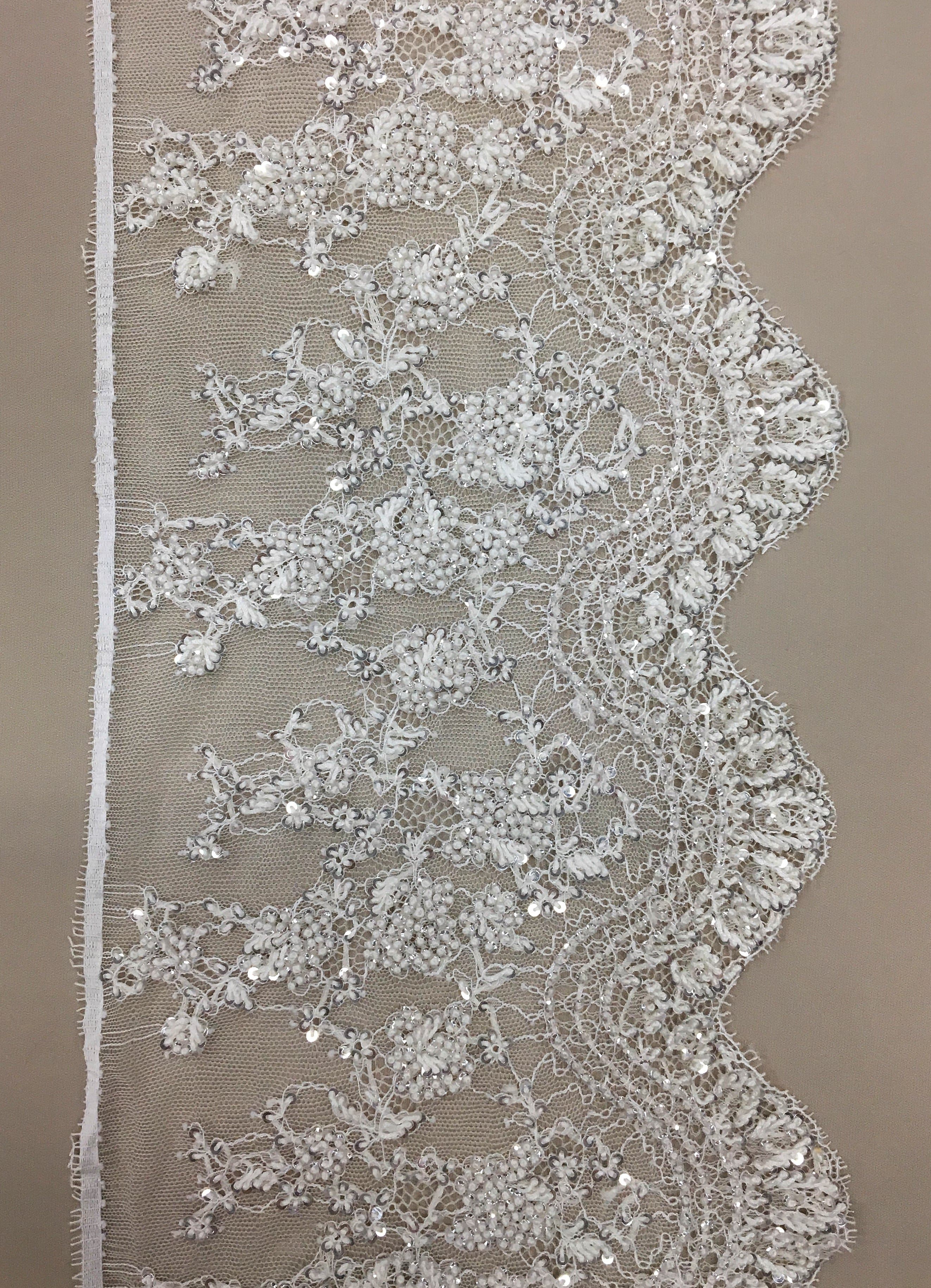
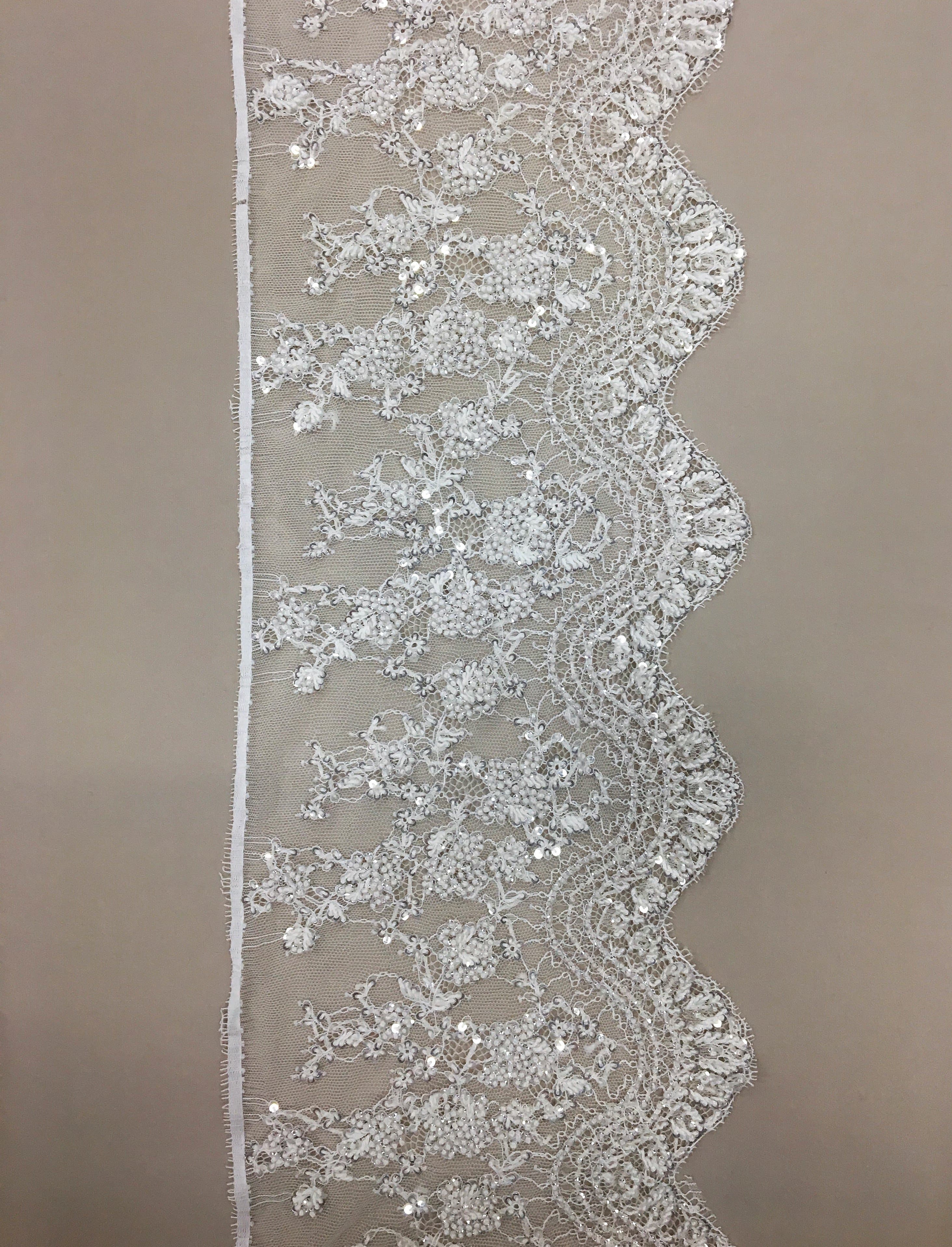
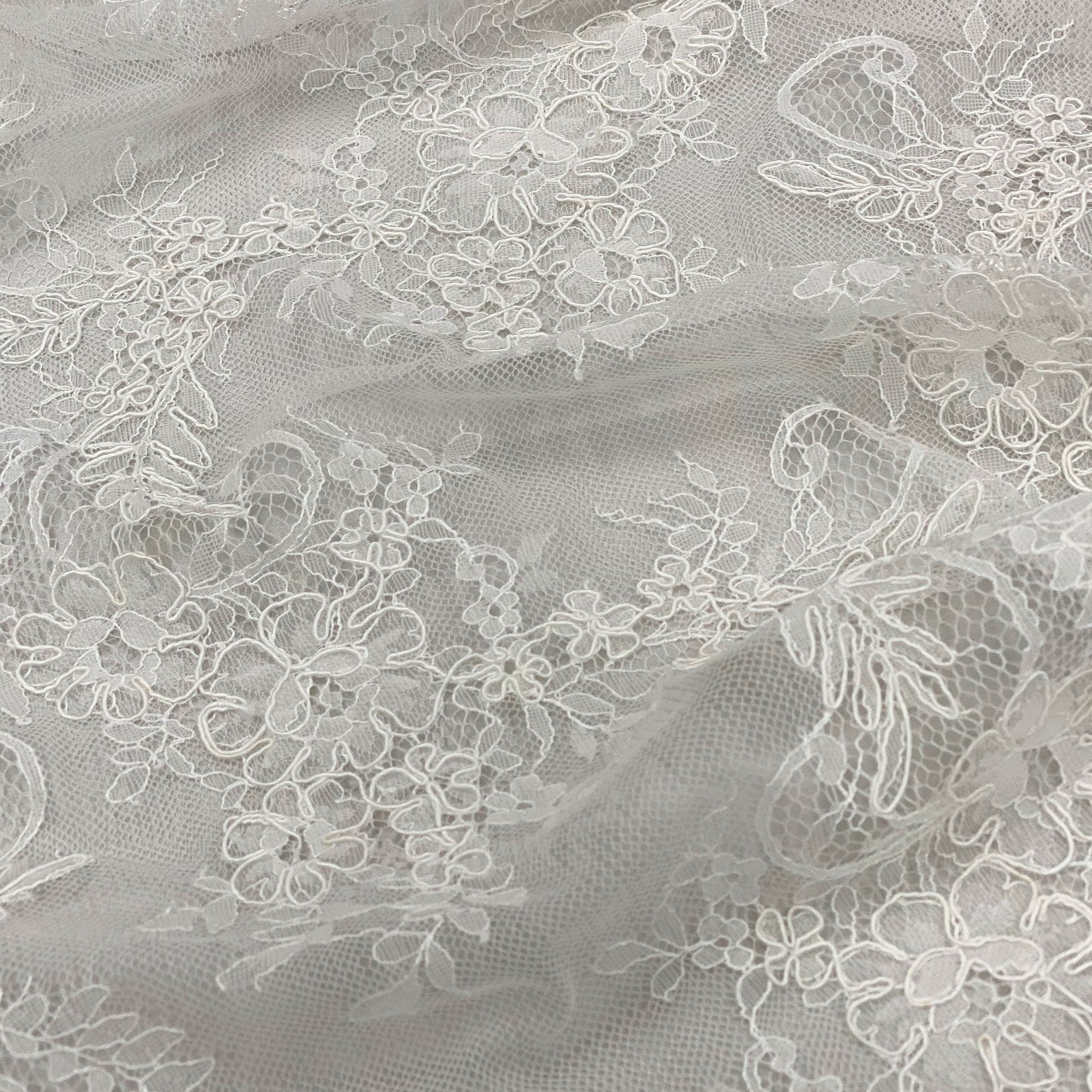
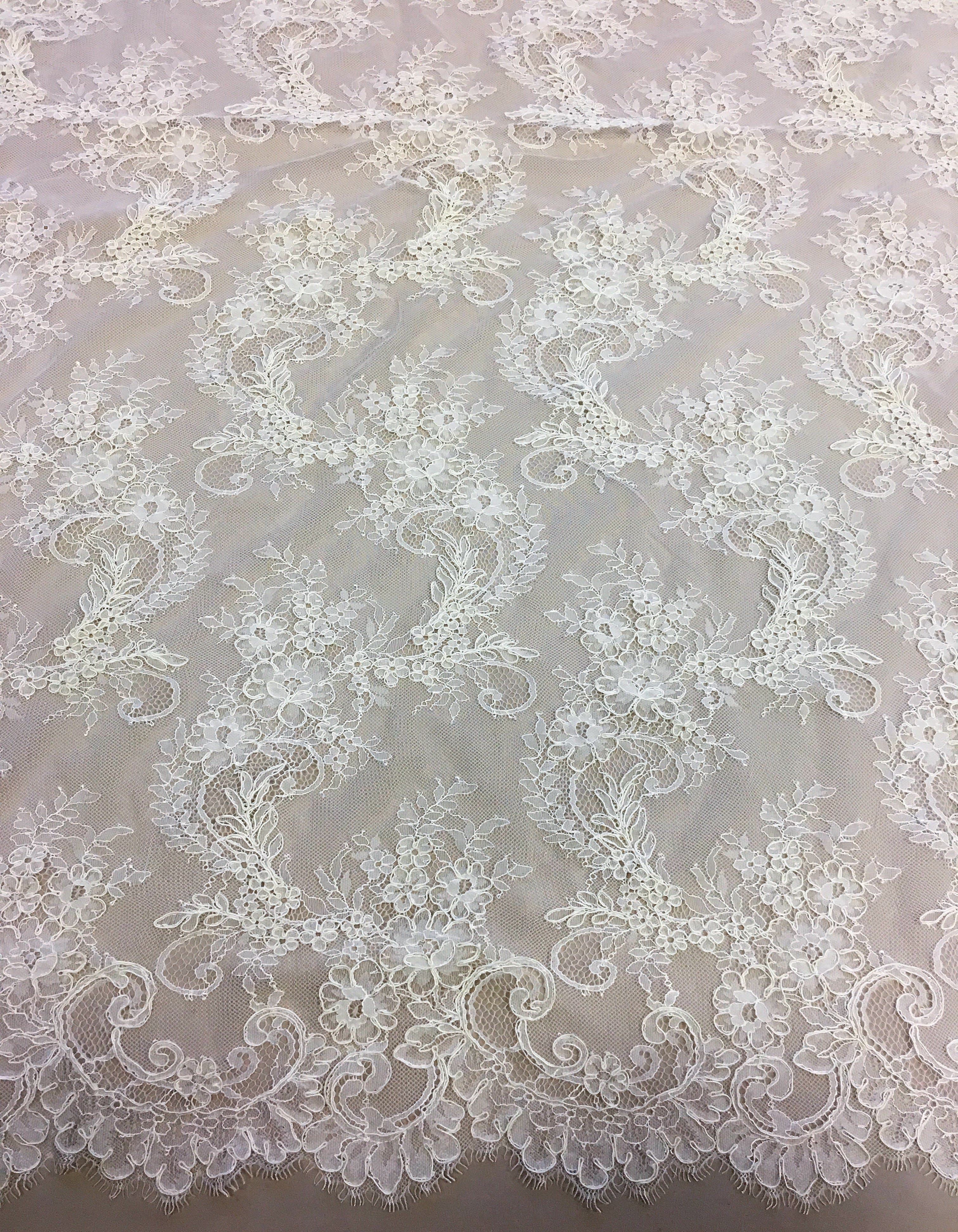
Chantilly, corded, guipure, beaded and stretch lace for bridal gowns, evening wear and special occasions, many with finished scalloped edges.
- Most lace sold in whole metres
- Panels about 3 m long
 Sold out
 Sold out
 Sold out
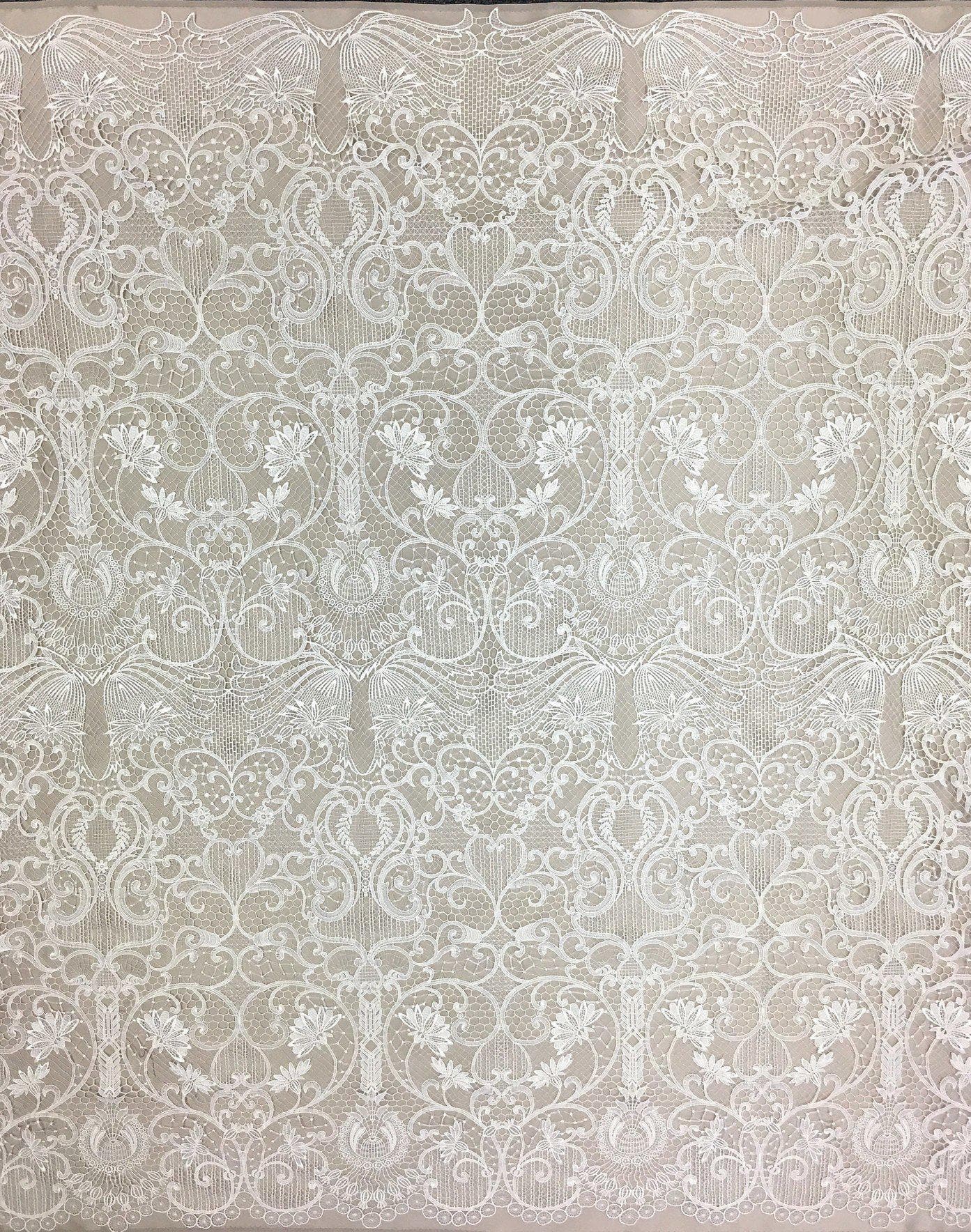
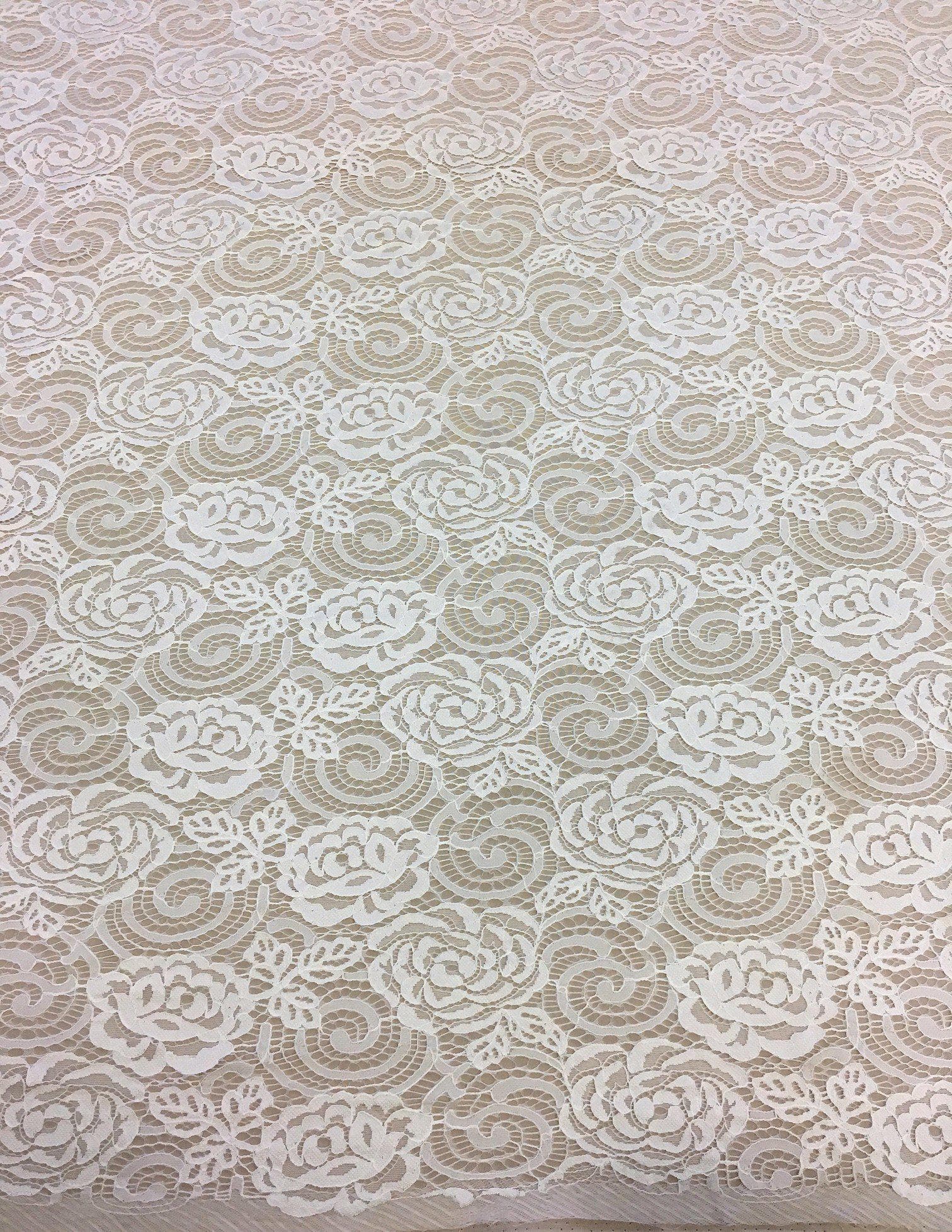
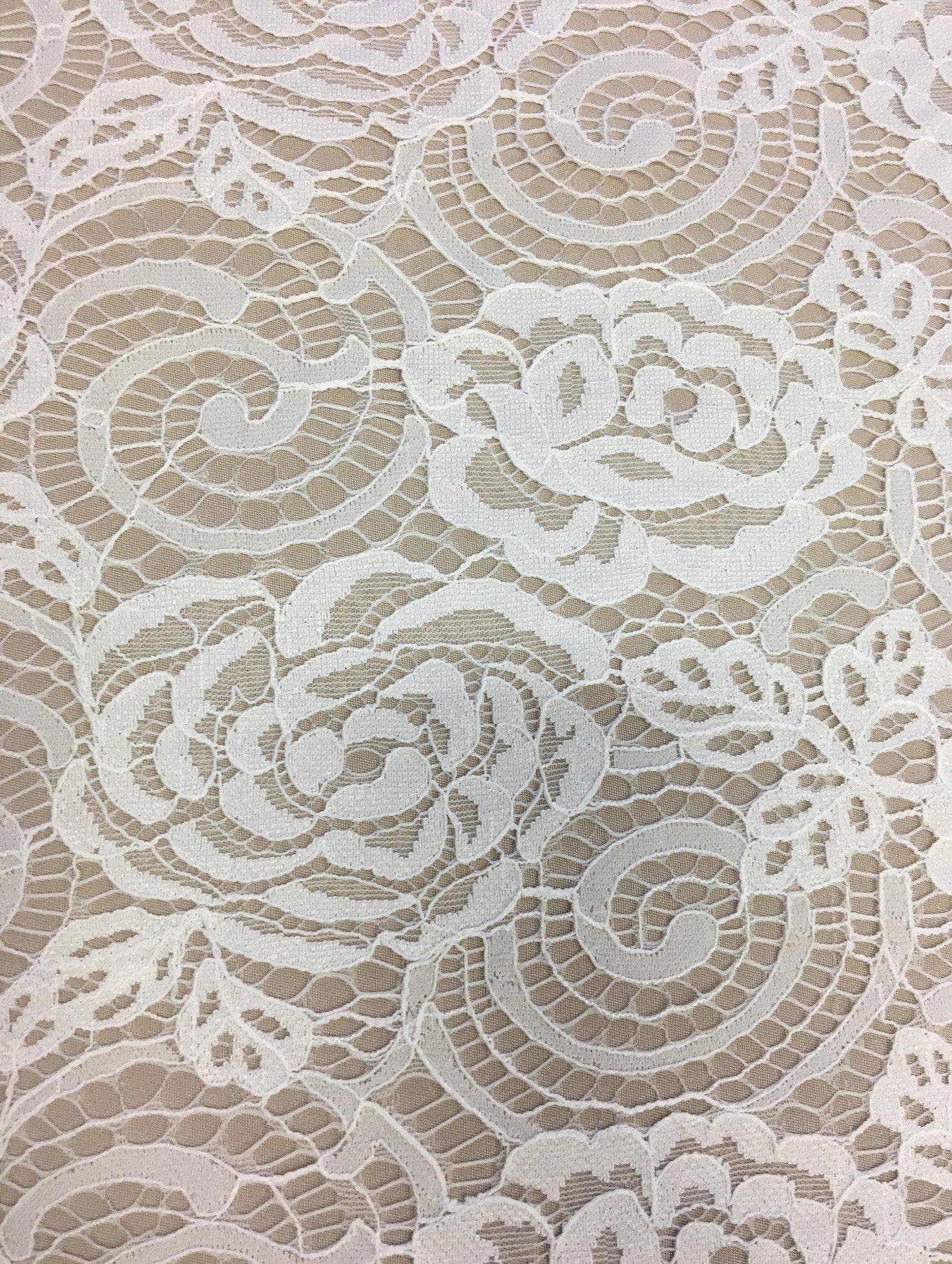

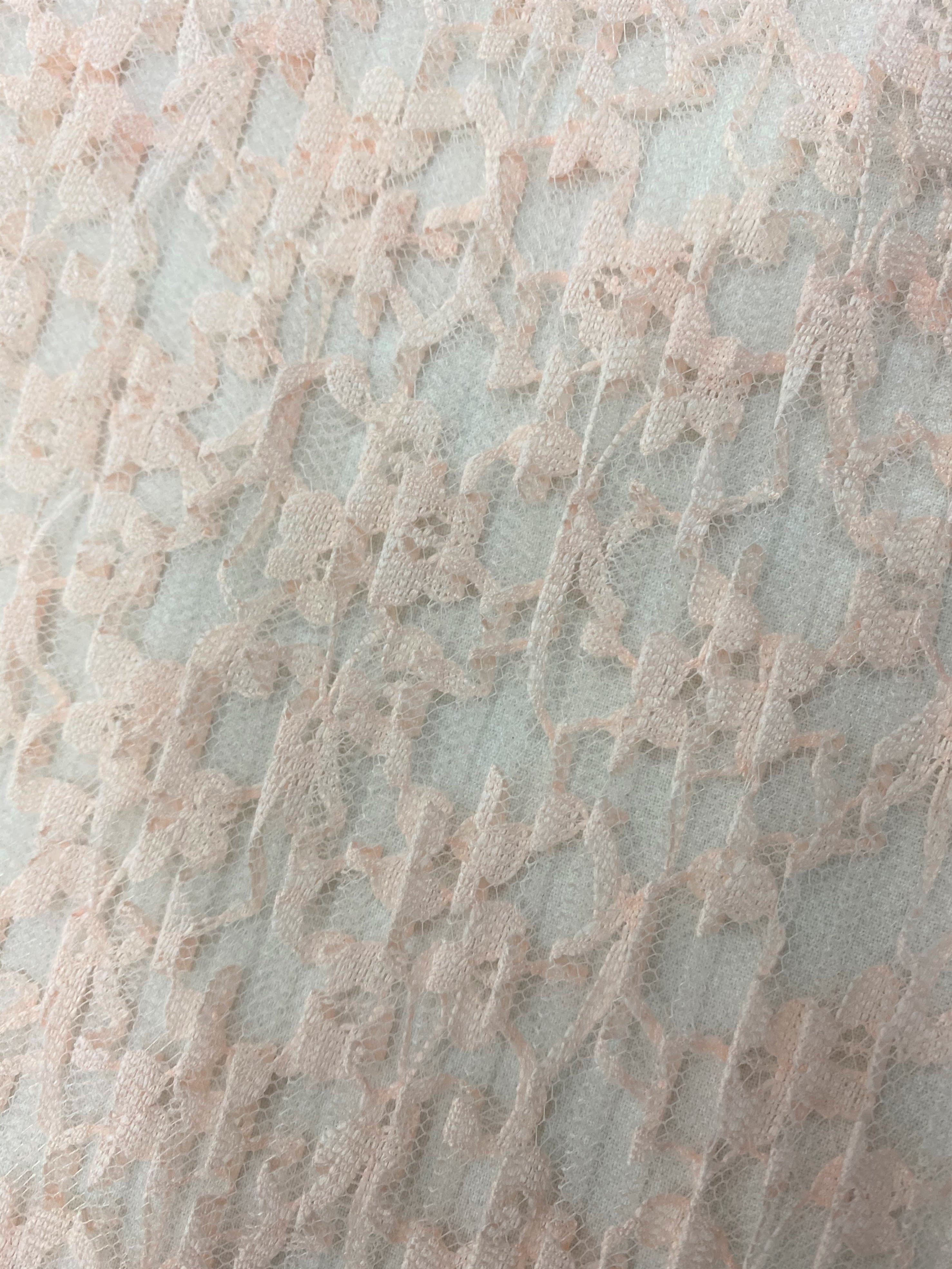 Sold out
Guide
Lace: Uses and How to Sew It
The difference between Chantilly, corded, guipure, beaded and stretch lace, what to make with each, and easy tips for sewing lace at home.
The lace types
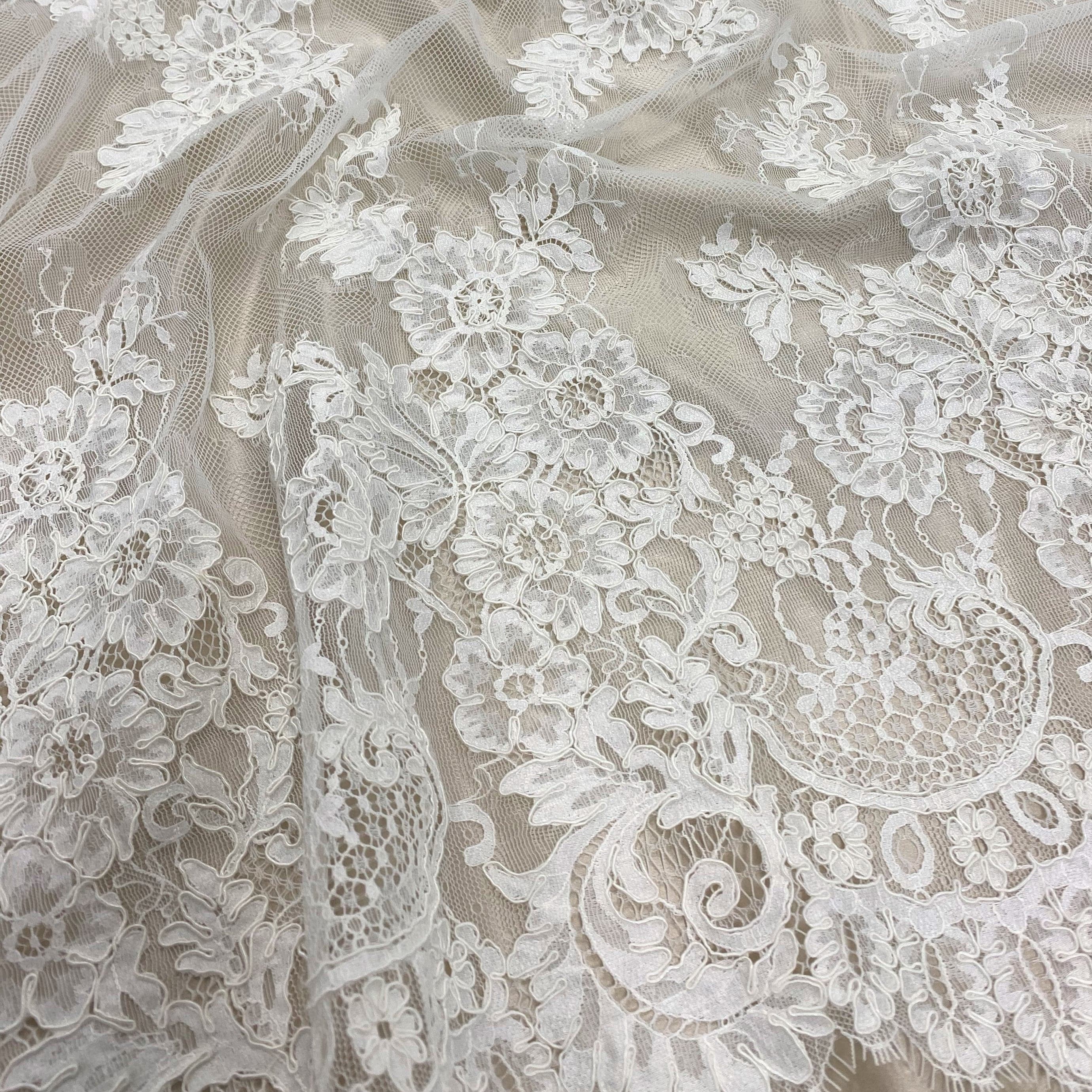
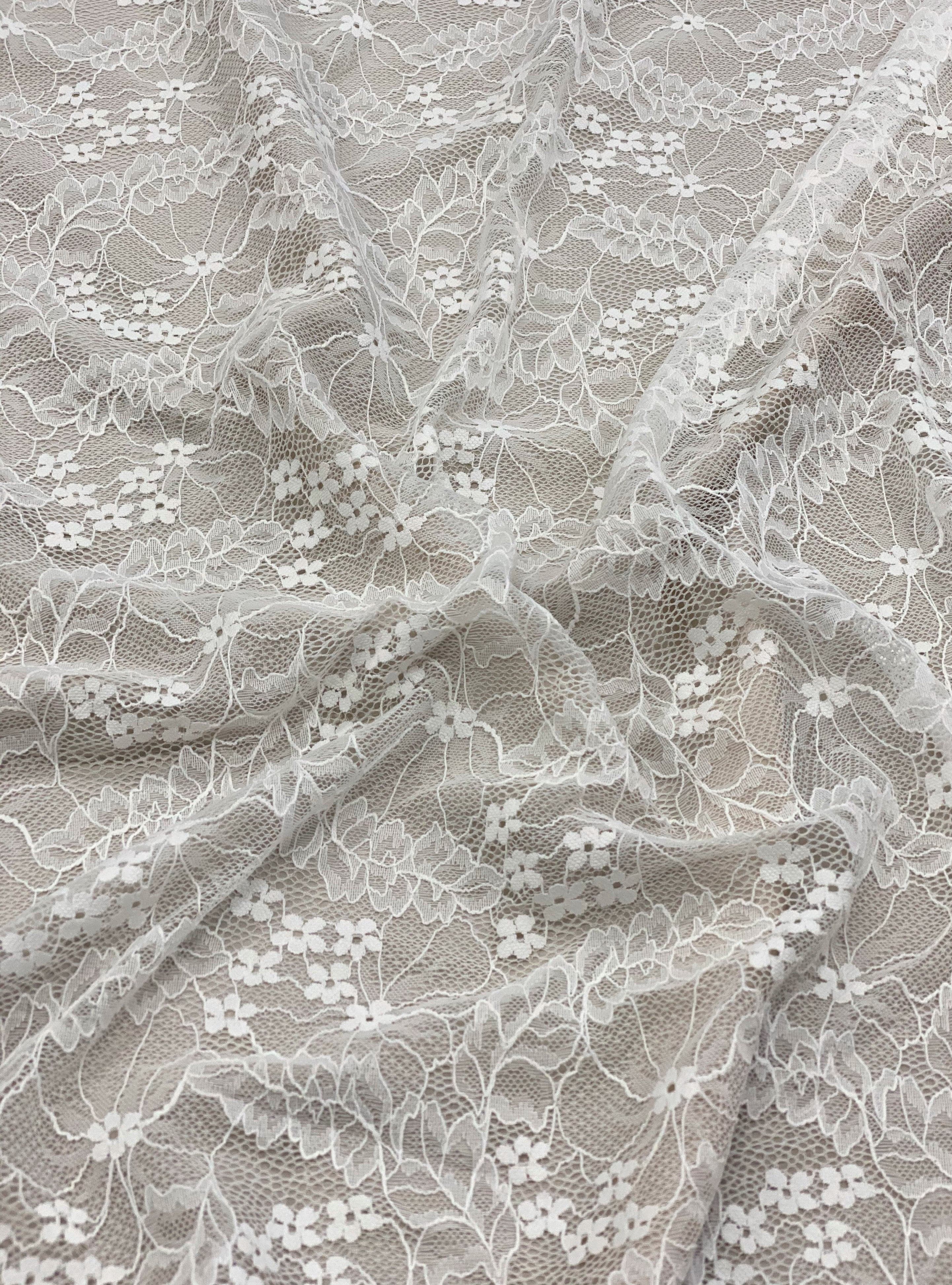
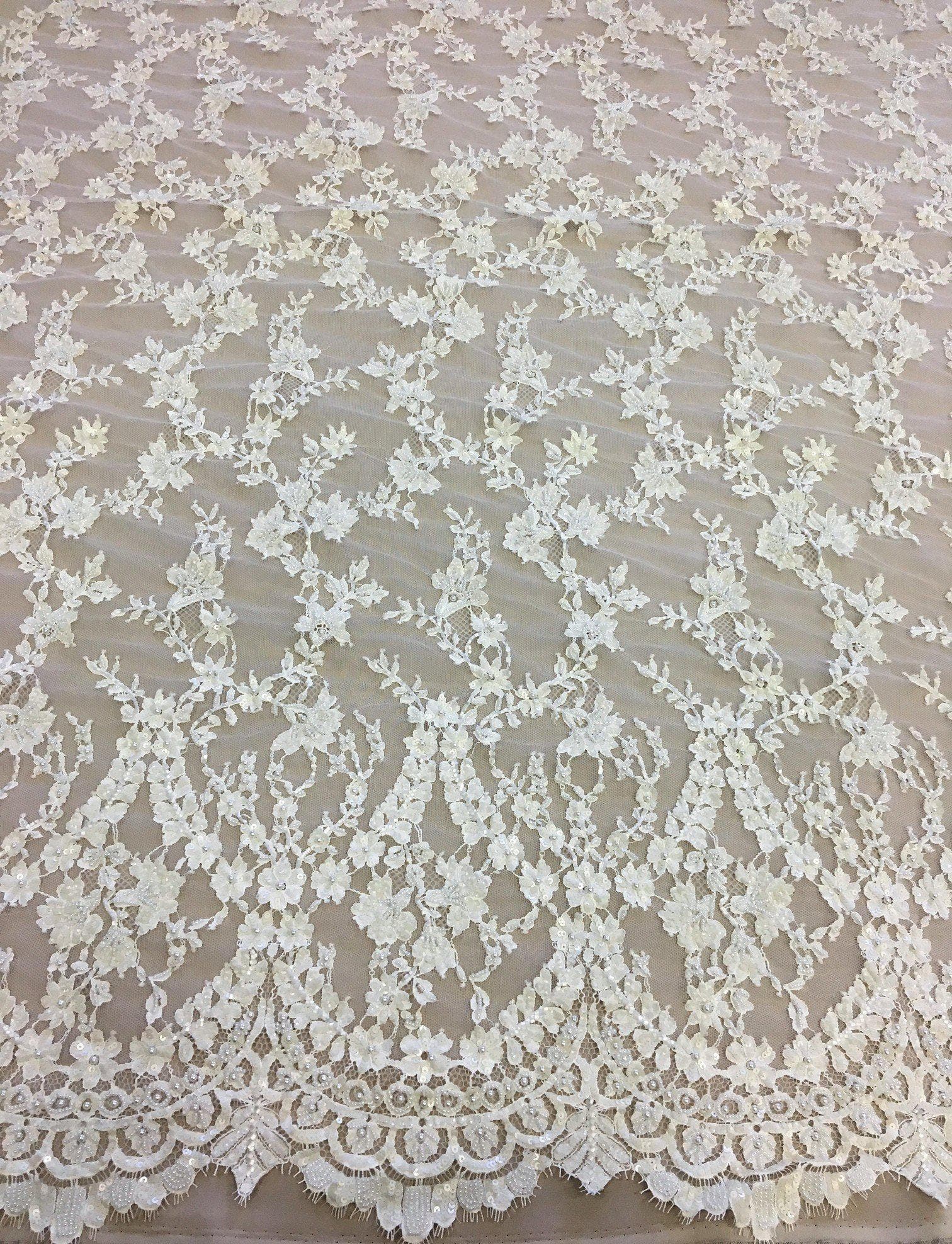
- Chantilly and fine lace. Delicate flowers and leaves on a fine, soft net. It's light and sheer, often with an eyelash or scalloped edge, and drapes beautifully for sleeves and soft gowns.
- Corded lace. A fine lace with a raised cord stitched around each motif, so the pattern stands out and has a little more body. A classic for bridal bodices and gowns.
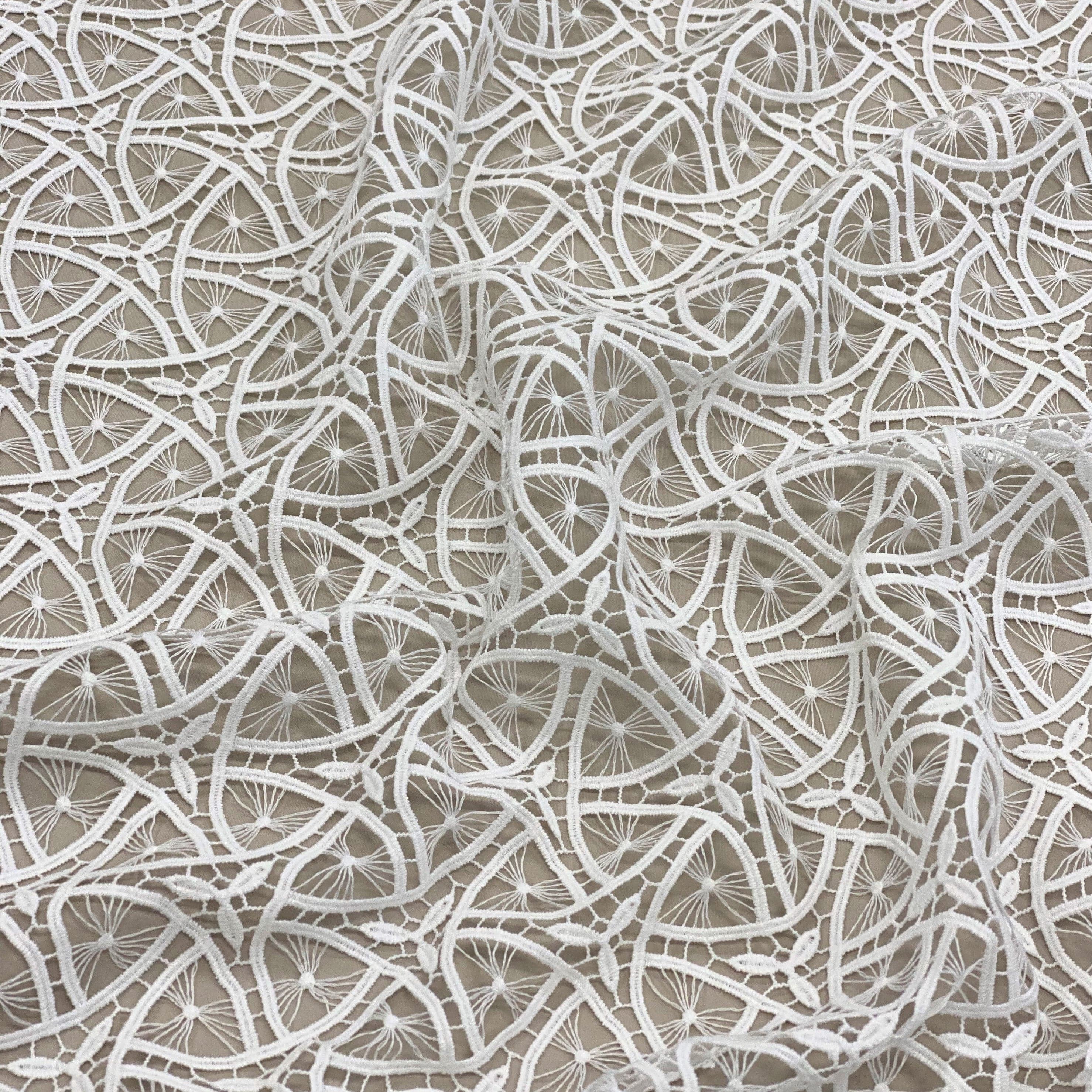
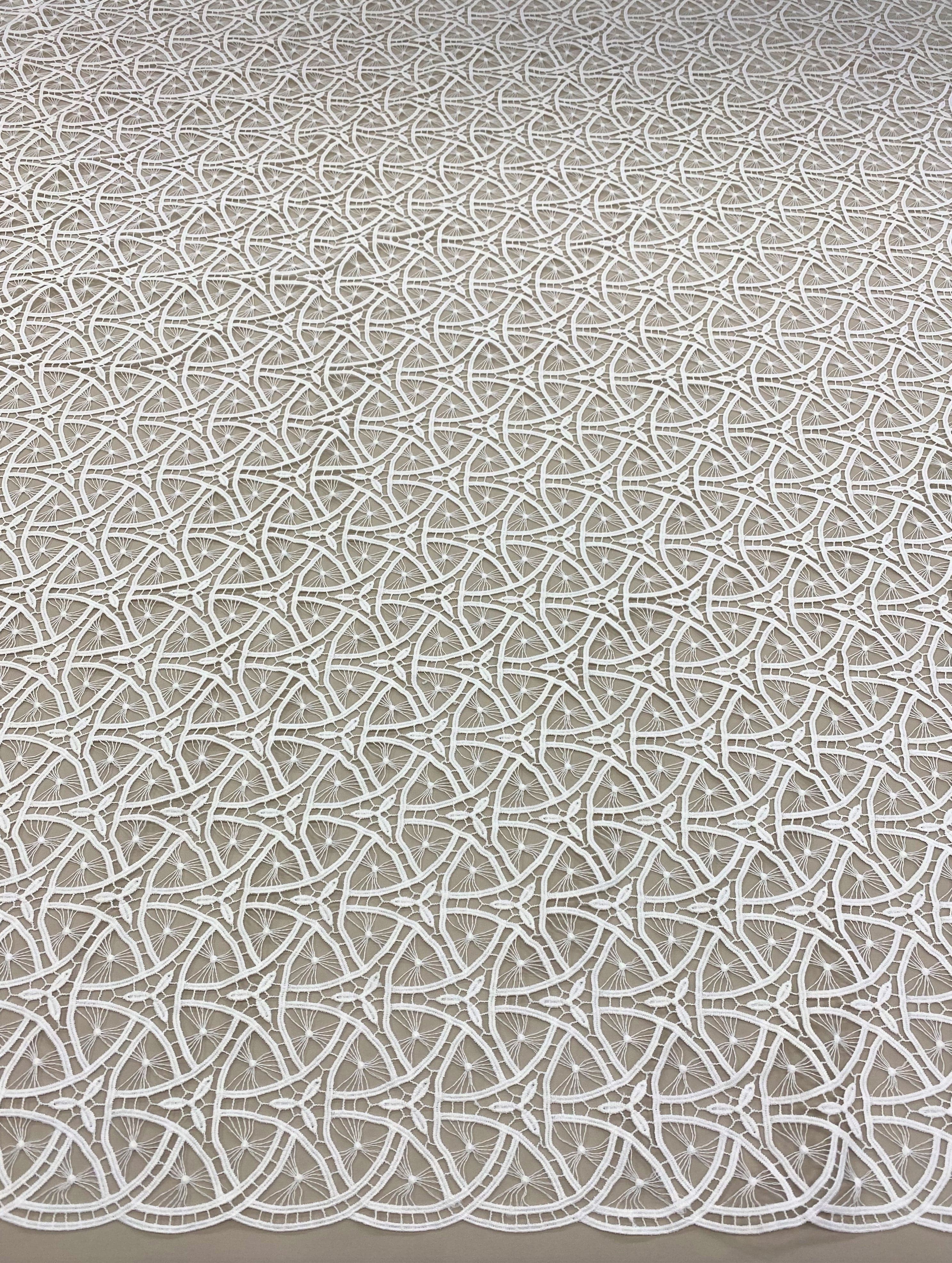
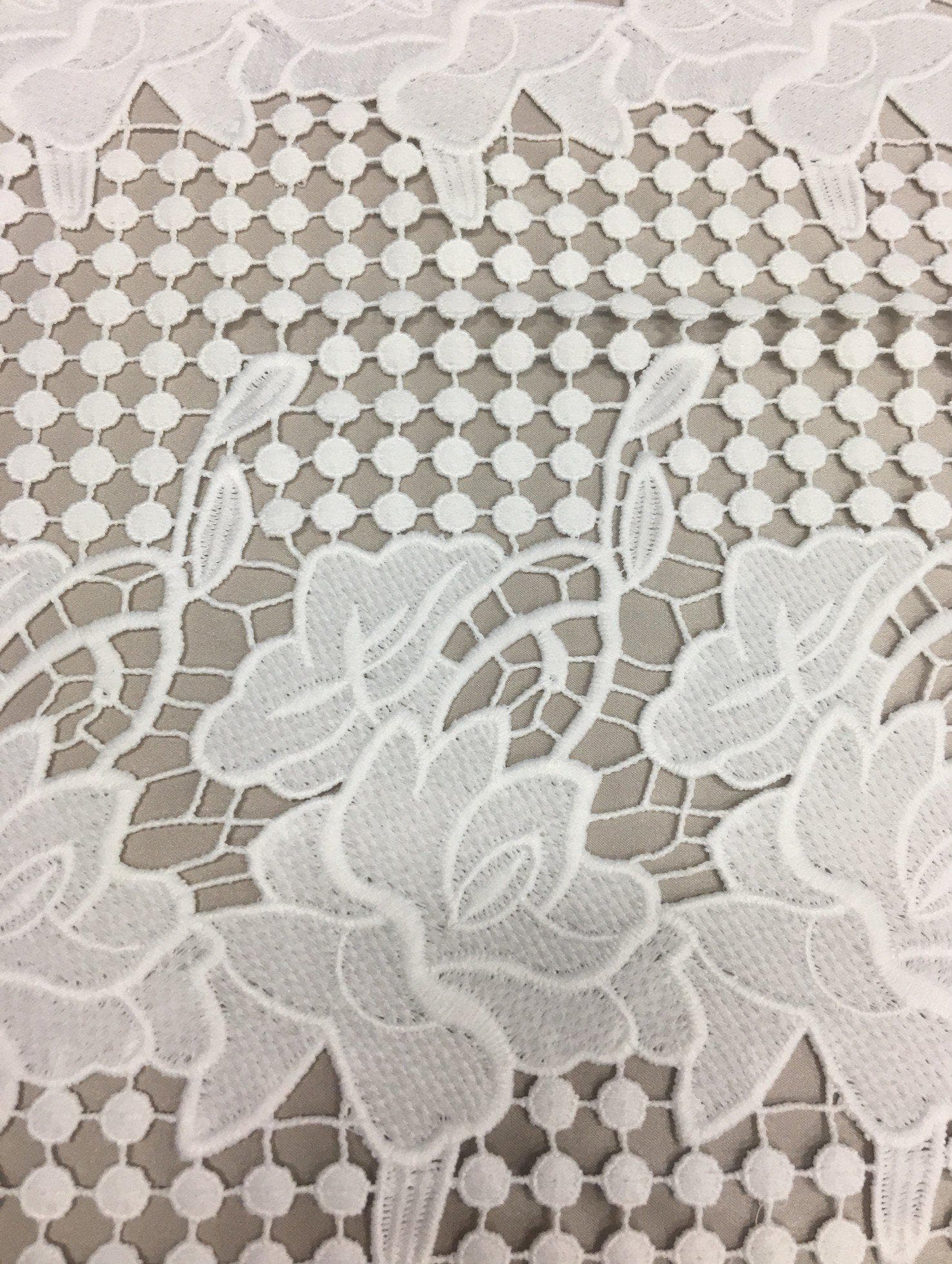
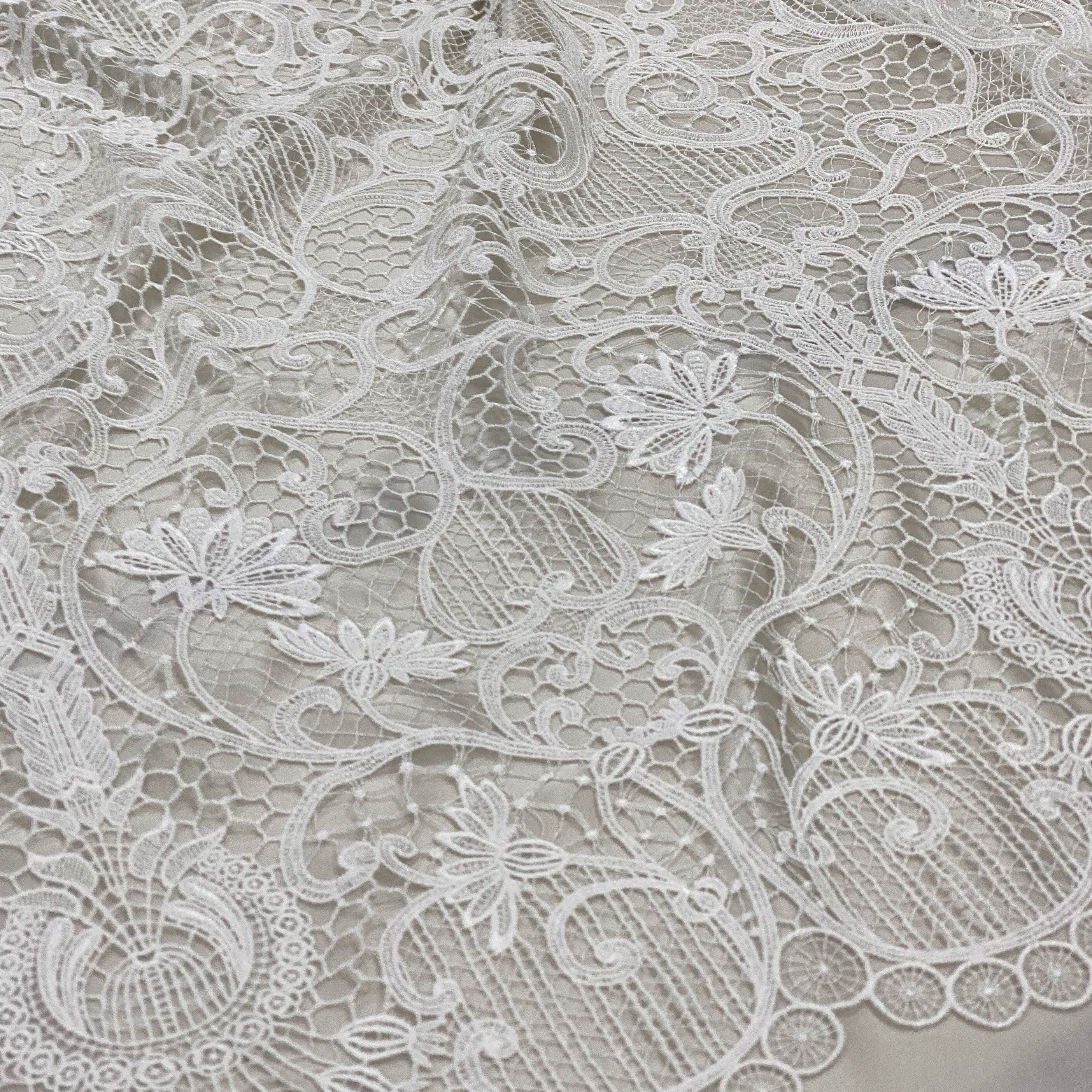
- Guipure lace. Bold motifs joined to each other, with no net behind them. It's heavier and makes a strong statement, but with no net or solid foundation it can shift and stretch, and the open gaps between the motifs can't be sewn.
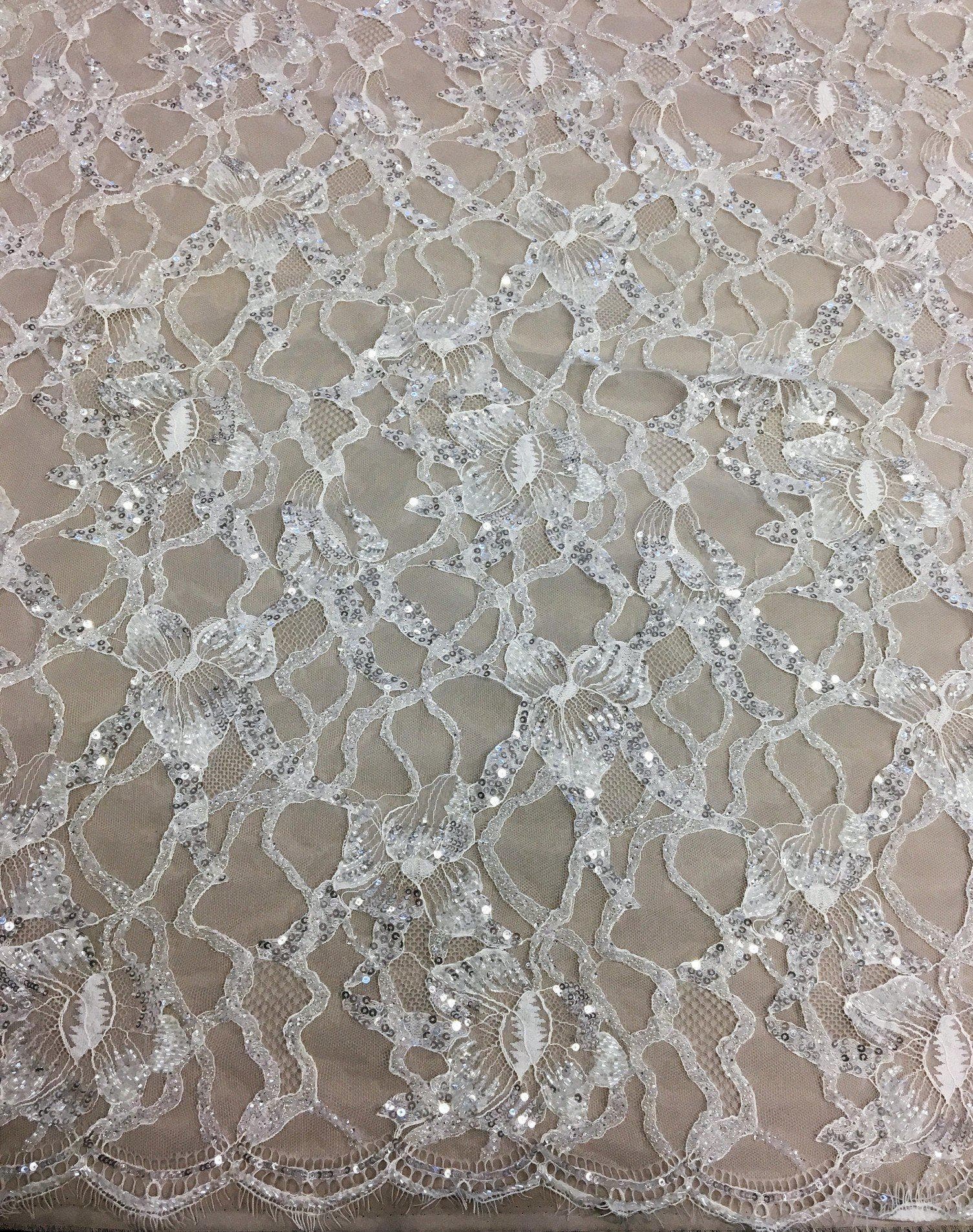
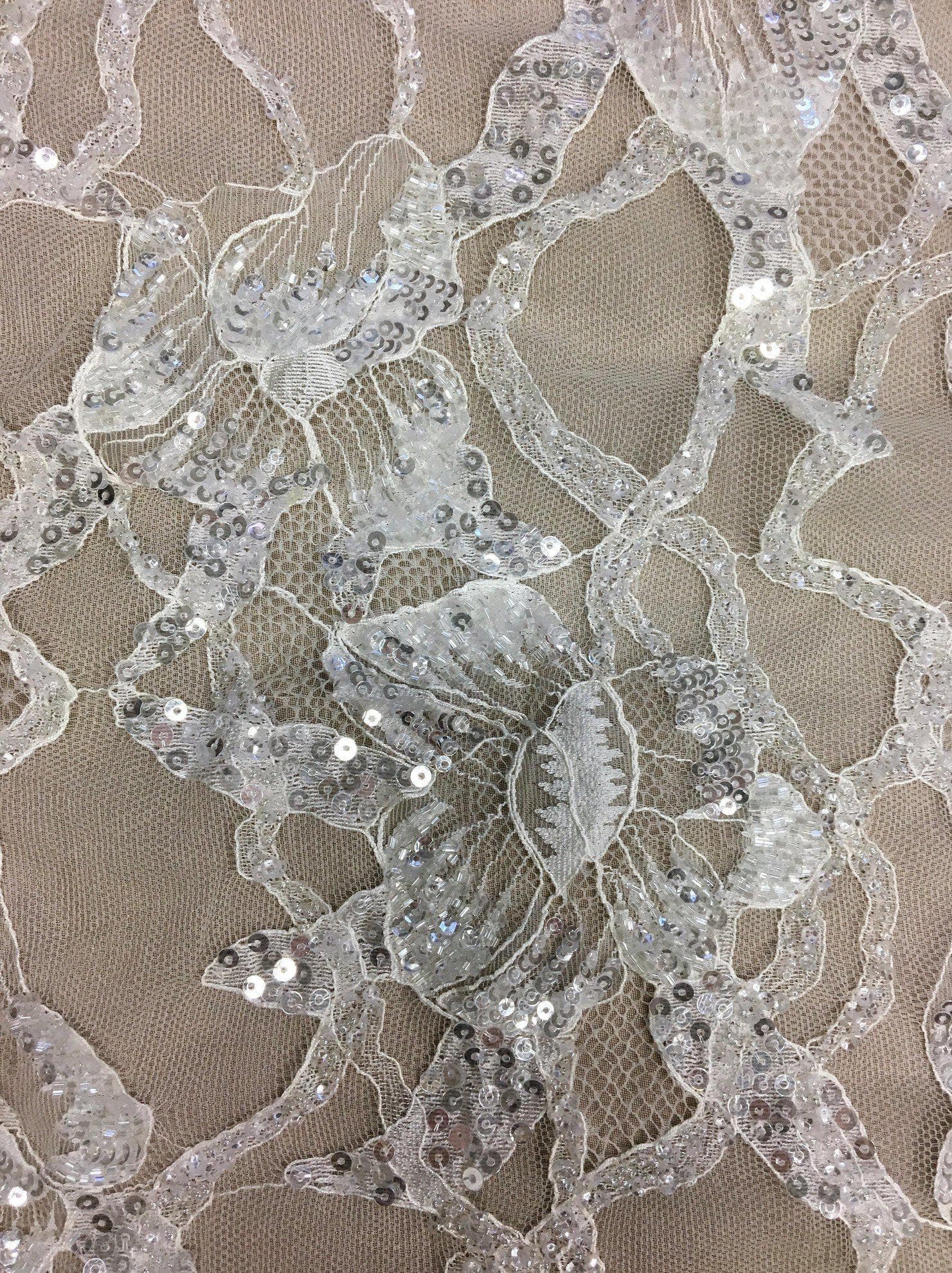
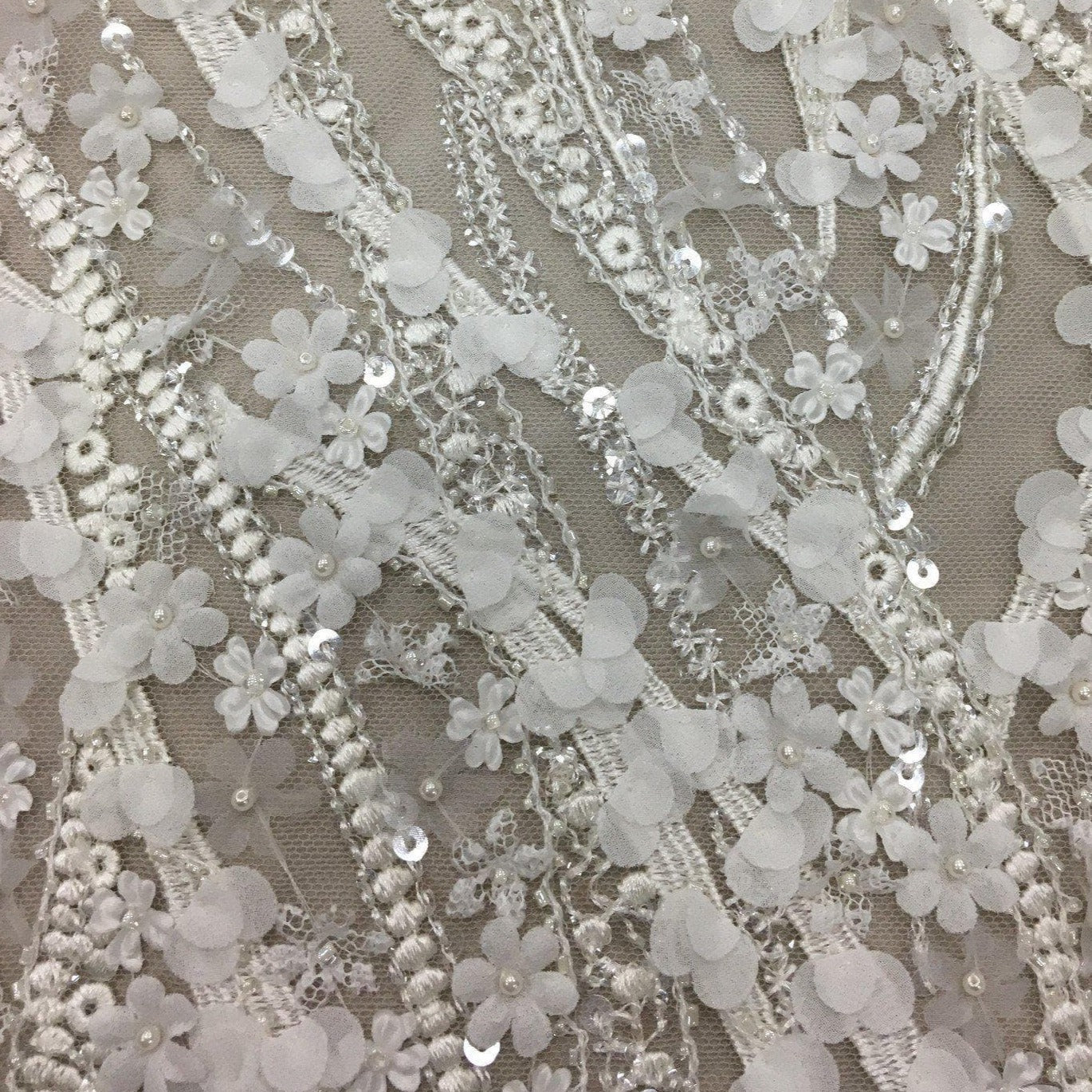
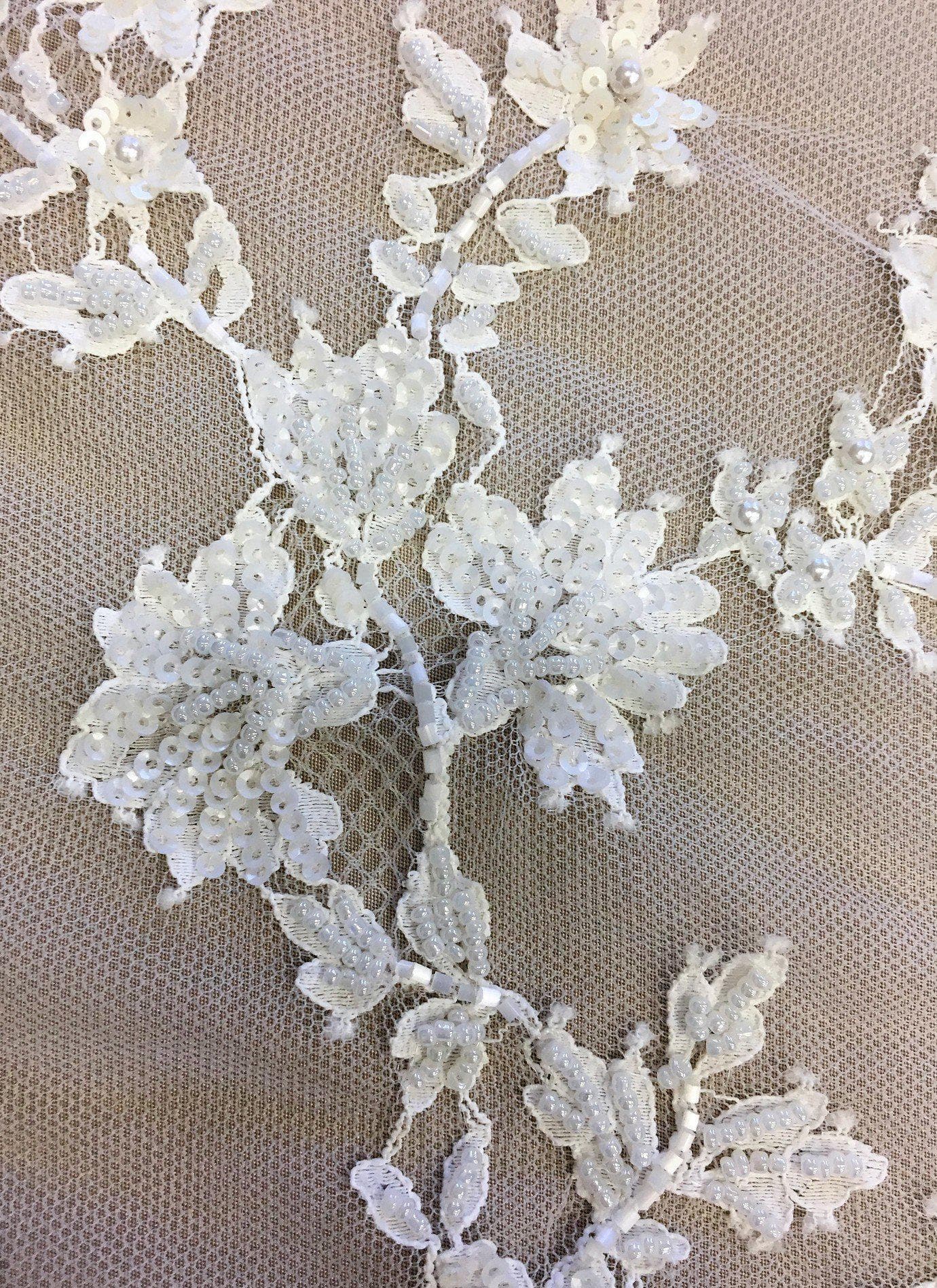
- Beaded lace. Lace embellished with beads, sequins or pearls for sparkle and texture. Heavier and the most dramatic, for bridal and evening wear.
- Stretch lace. A soft lace with a little elastane, so it moves with the body. Ideal for fitted bodices, tops and bodysuits.
Side by side
| Chantilly & fine | Corded | Guipure | Beaded | Stretch | |
|---|---|---|---|---|---|
| Look | Delicate motifs on a fine net | Motifs outlined with a raised cord | Bold motifs, no net | Beads, sequins or pearls | Fine lace with stretch |
| Feel | Soft and light | Defined, a bit more body | Firm and heavier | Weighty, with sparkle | Soft and stretchy |
| Sheerness | Very sheer | Sheer | Open, with gaps between motifs | Sheer net, dense beading | Sheer |
| Great for | Sleeves, overlays, soft gowns | Bridal bodices and gowns | Statement dresses and tops | Bridal and evening bodices | Fitted bodices and tops |
| To sew | Easy to moderate | Moderate | Tricky: no net, so it shifts and stretches | Trickiest: beads in the seams | Moderate: needs a stretch stitch |
Buying lace
Most of our lace isn't woven in long bolts like our other fabrics. Each lace panel is made about 3 metres long, so it's sold in whole-metre pieces. Because it's made in pieces, if you order more than the length of one panel, it may come in more than one piece.
Guipure lace, stretch lace, our Schiffli-style fine lace (1599) and our sequinned floral corded lace (1683BD) aren't made in panels, so they come in longer lengths.
What to make with it
- Sleeves, yokes and sheer overlays
- Bodices and full lace gowns
- Skirts and tops with a scalloped hem
- Cut-out motifs to sew onto a veil or gown
Cutting
- Always cut the lace flat on the table as a single layer: don't fold it and cut double.
- Lay it right side up, so you can see the pattern.
- Place the scalloped edge along hems, necklines and sleeve ends before you cut.
- Line up the main motifs across the front, back and sleeves, and allow extra for matching.
- For invisible joins, overlap two pieces, stitch around the outline of a motif, then trim away the extra lace.
Sewing
- Use a fresh, fine needle (size 70) and a slightly shorter stitch. Sew over tissue paper if fine lace catches.
- Beaded lace: unpick the beads and sequins from the seam allowances before sewing, and keep them to sew back on.
- Guipure: keep it flat and handle it gently so it doesn't stretch. Join pieces by overlapping the motifs and zigzagging around their outline, or sew a straight seam over a strip of tulle. See our guipure lace guide for step-by-step tips.
- Stretch lace: use a stretch needle and a narrow zigzag so the seams stretch with the lace.
- Lace panels on a fitted dress or jacket: lay the lace over each garment piece before you sew. Pin it well in from the edges, trim it back to the seam allowance plus about 1 cm, tack the two layers together by hand, then sew them as one. The seams frame the lace. This works best on structured shapes like a sheath dress or fitted jacket, with a base fabric that has enough body to hold the lace.
What to put under it
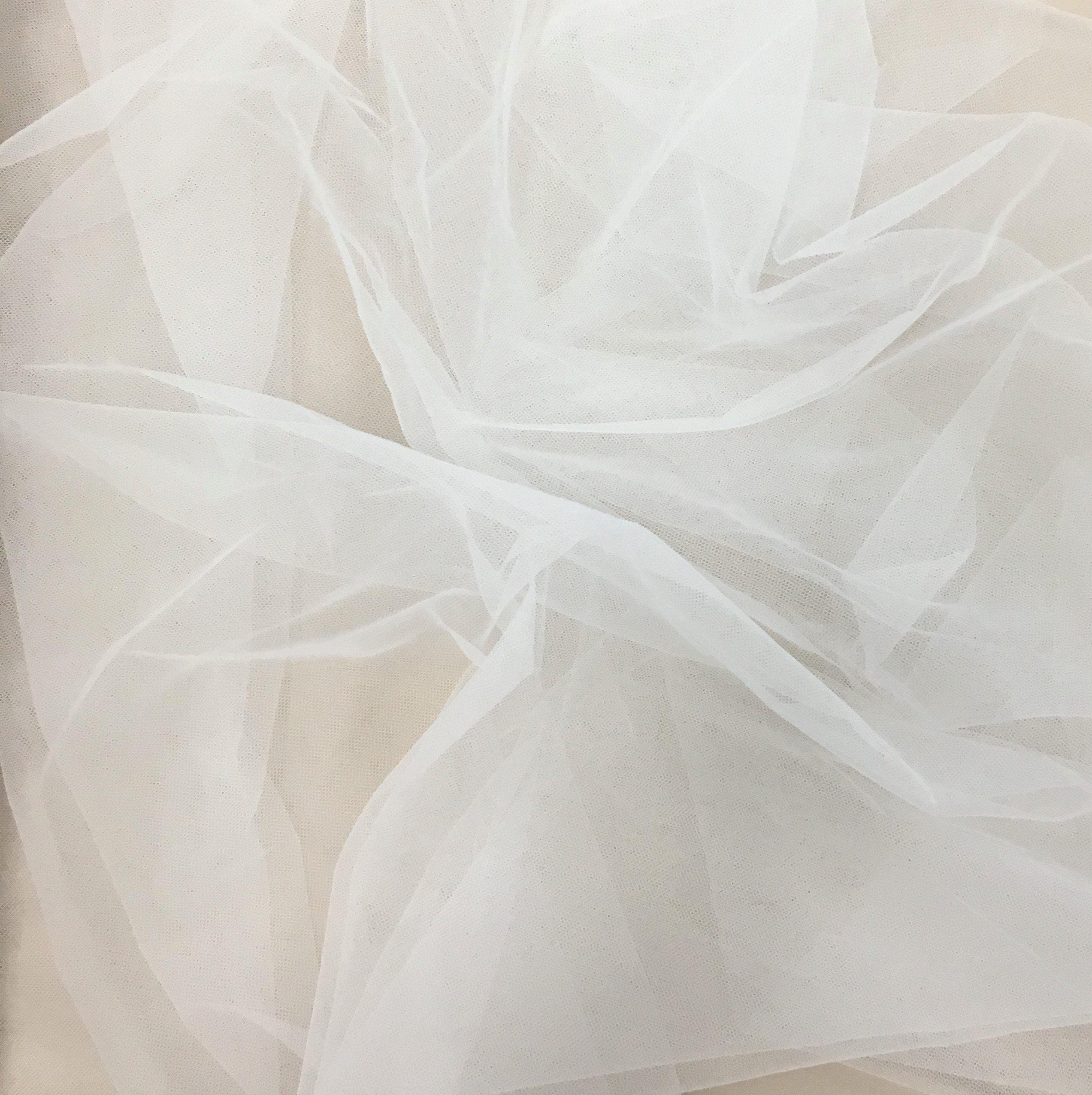
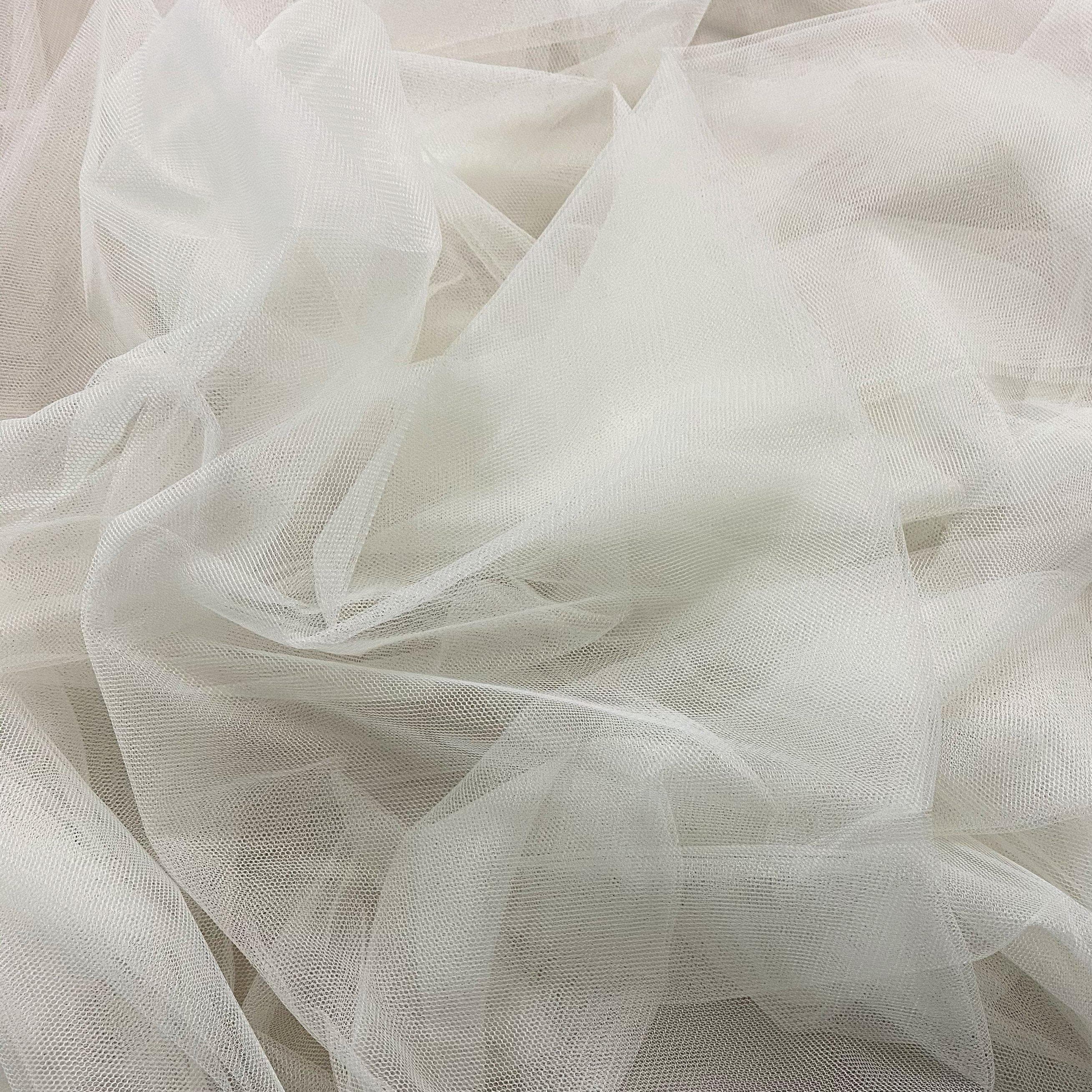
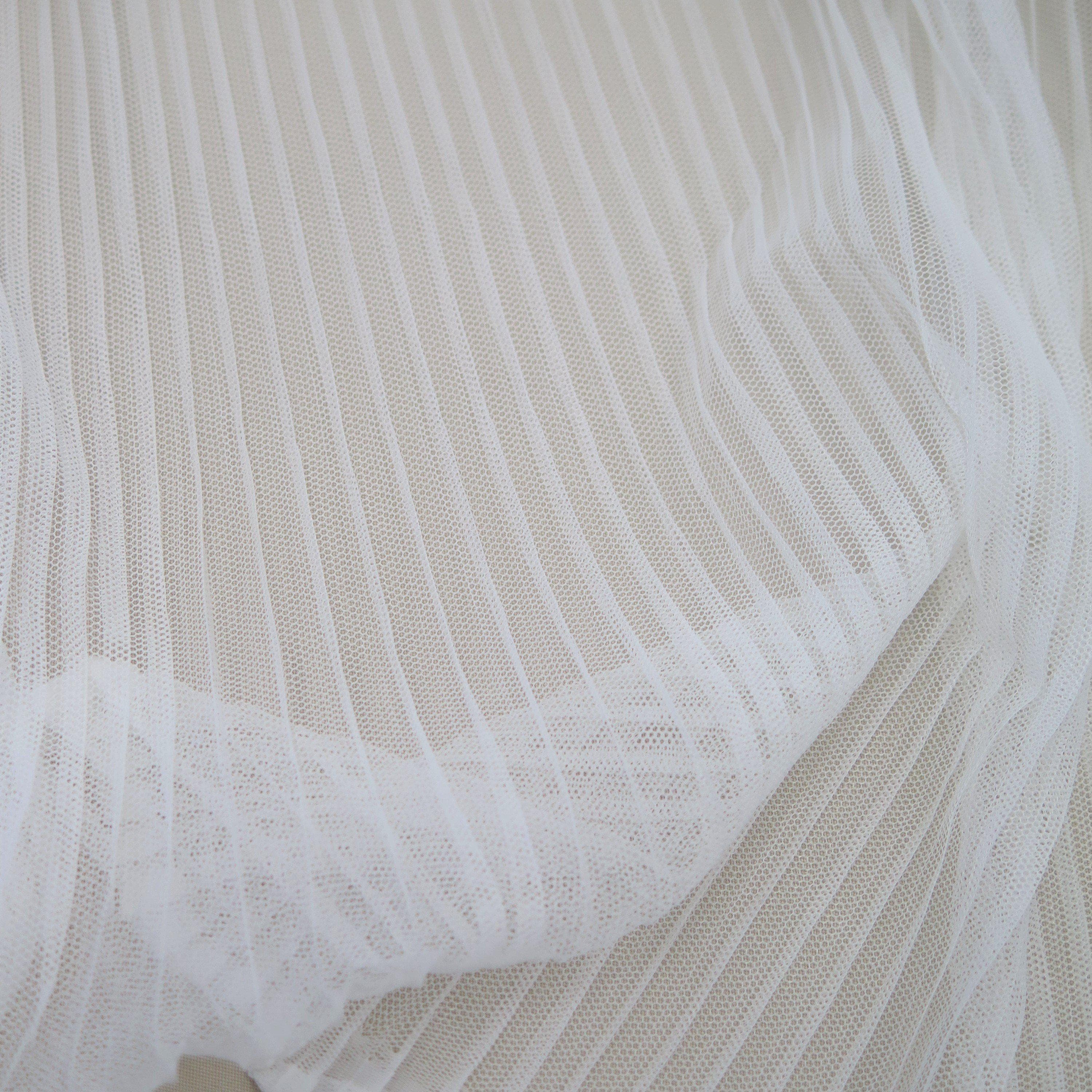
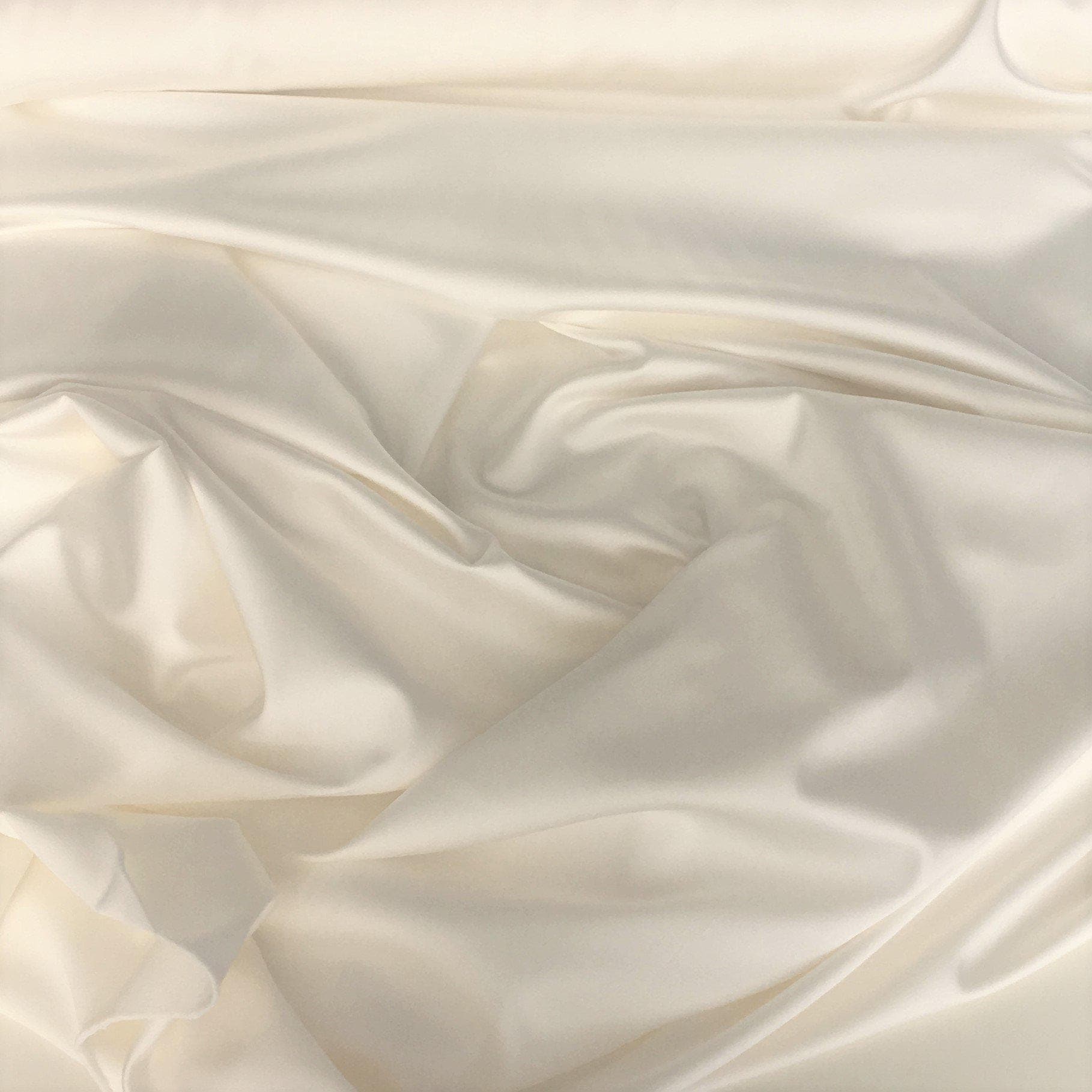
Most lace is worn over another layer. Silk organza gives it body, silk satin adds a soft glow, and a soft tulle in a skin tone gives a barely-there look.
Edges and hems
With a scalloped or eyelash edge there's nothing to hem: just use the finished edge. Where you need a scallop somewhere else, cut one from the edge of the lace and stitch it on along the motif outline.
Pressing
Press face down on a thick, clean towel, on a low setting, through a pressing cloth, so the motifs sink in rather than flatten. Test on a scrap first.
Questions
What's the difference between Chantilly and corded lace?
Chantilly is soft and flat, with delicate motifs on a fine net. Corded lace has a raised cord around each motif, so the pattern stands out more and the lace has more body.
How much extra lace do I need?
Allow extra so you can match the pattern across seams and place the scalloped edges where you want them. If you're not sure, send us your pattern and we'll help.
Do I need to line lace?
Usually, yes, unless you want a sheer look. A lining or underlay also helps the lace hang well.
Wholesale for fashion labels, bridal studios and designers buying in bulk. Apply for an account