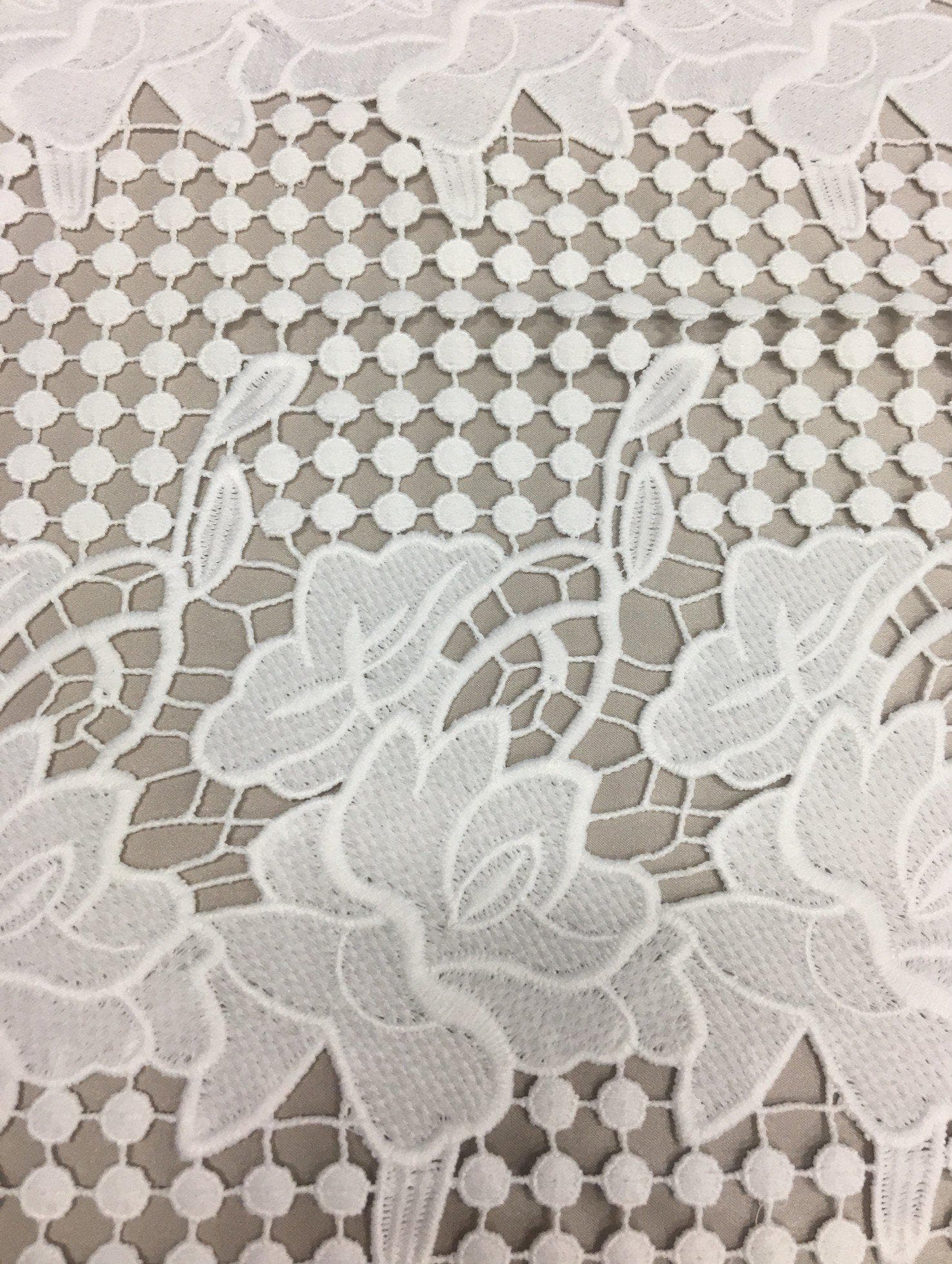
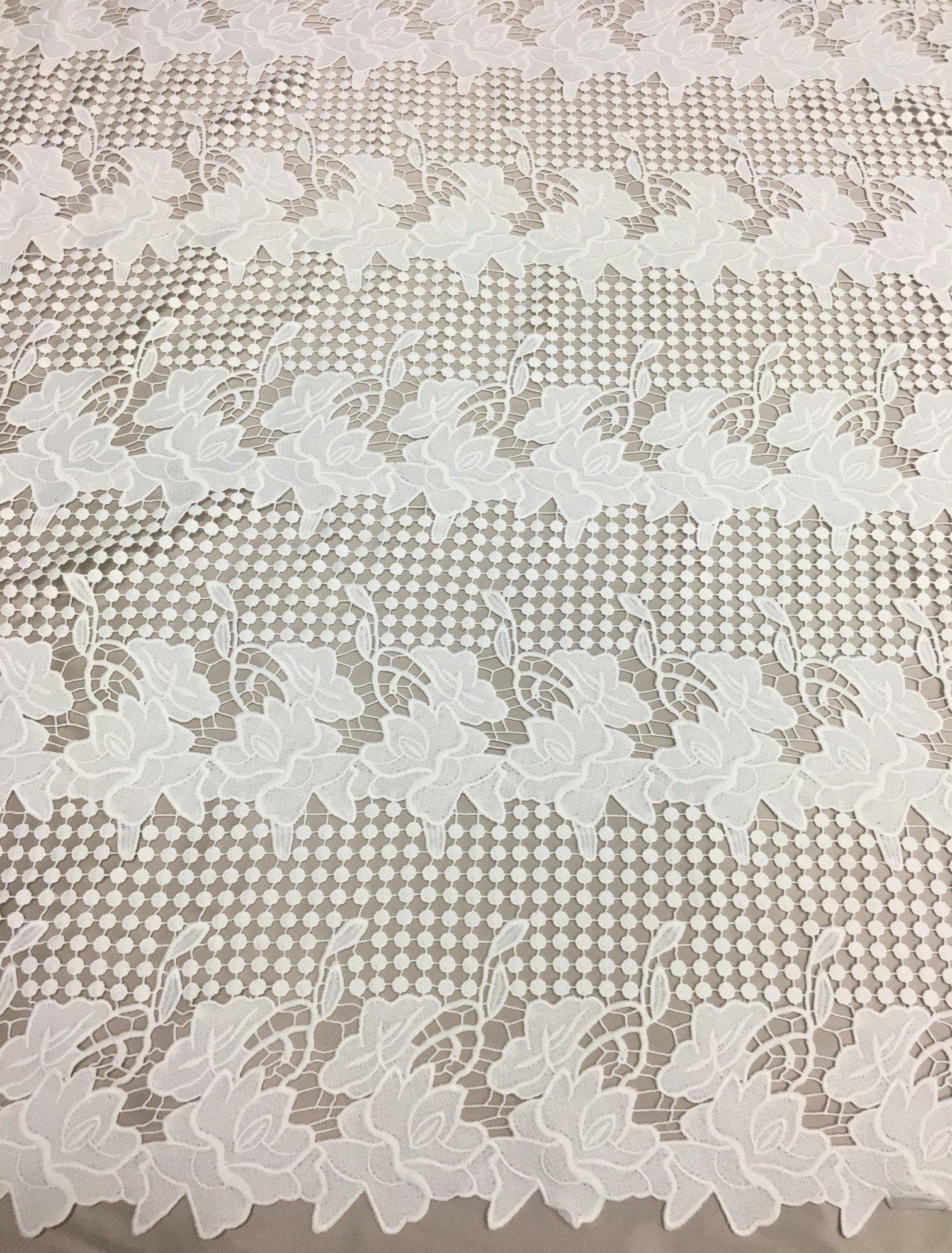
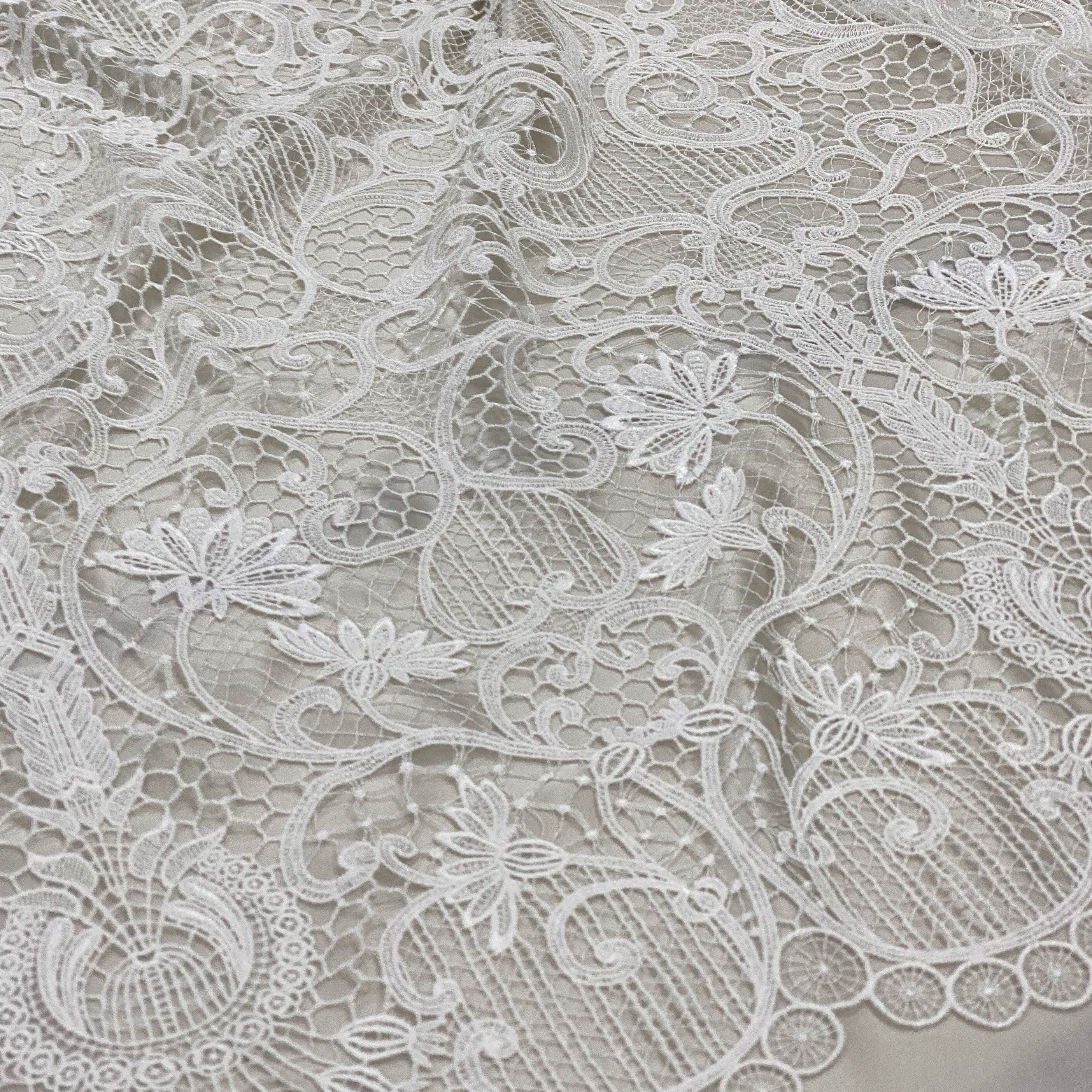
Guipure Lace Fabric
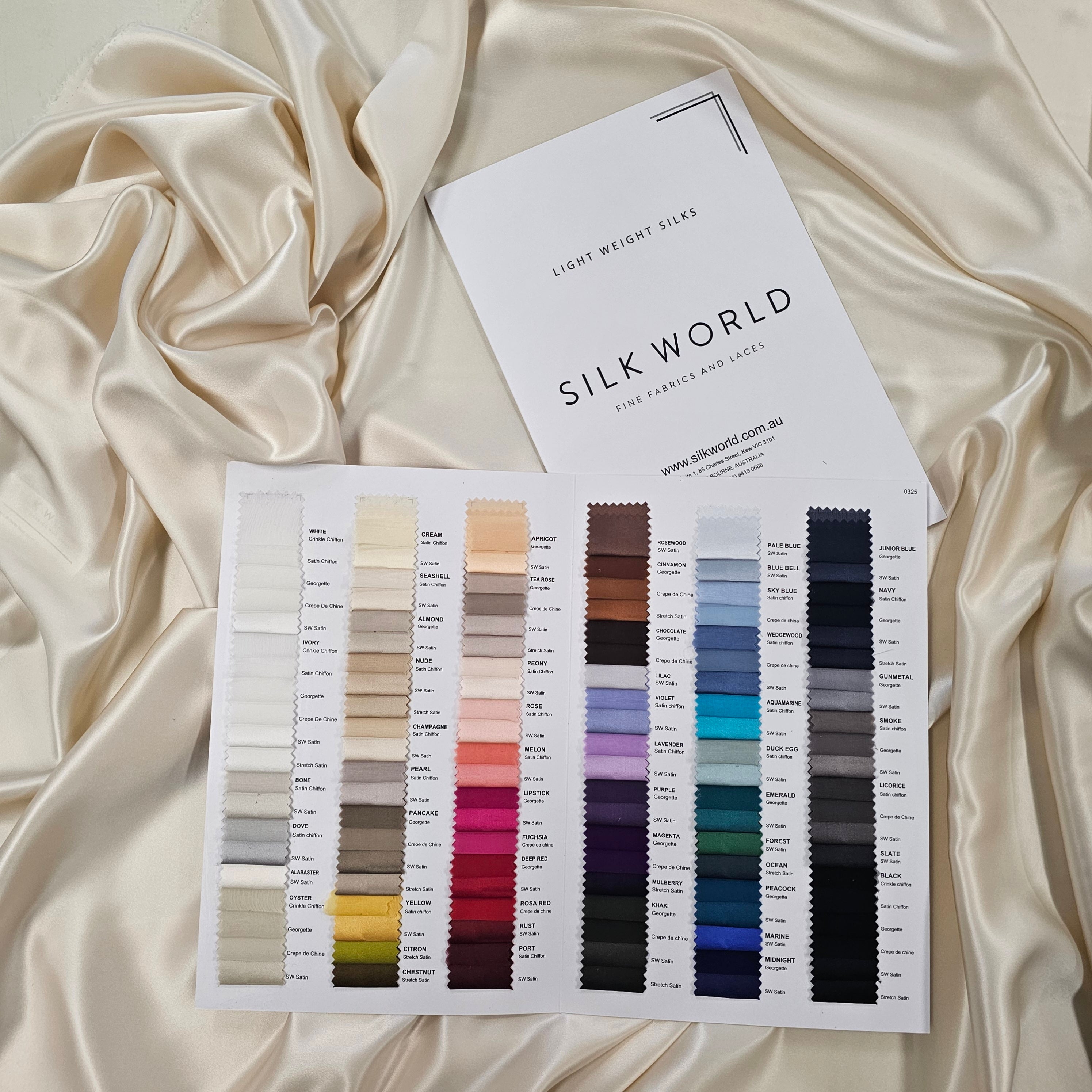
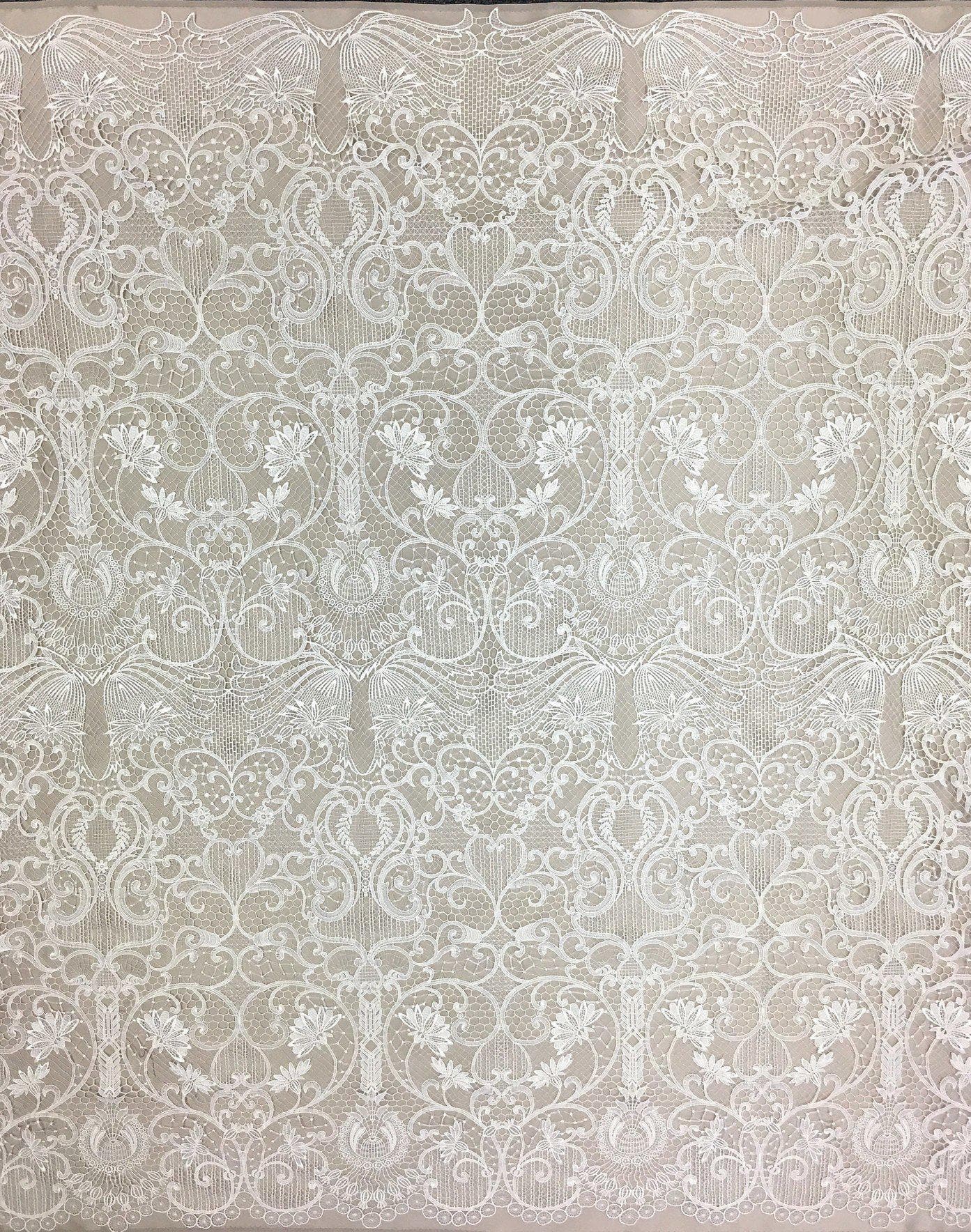
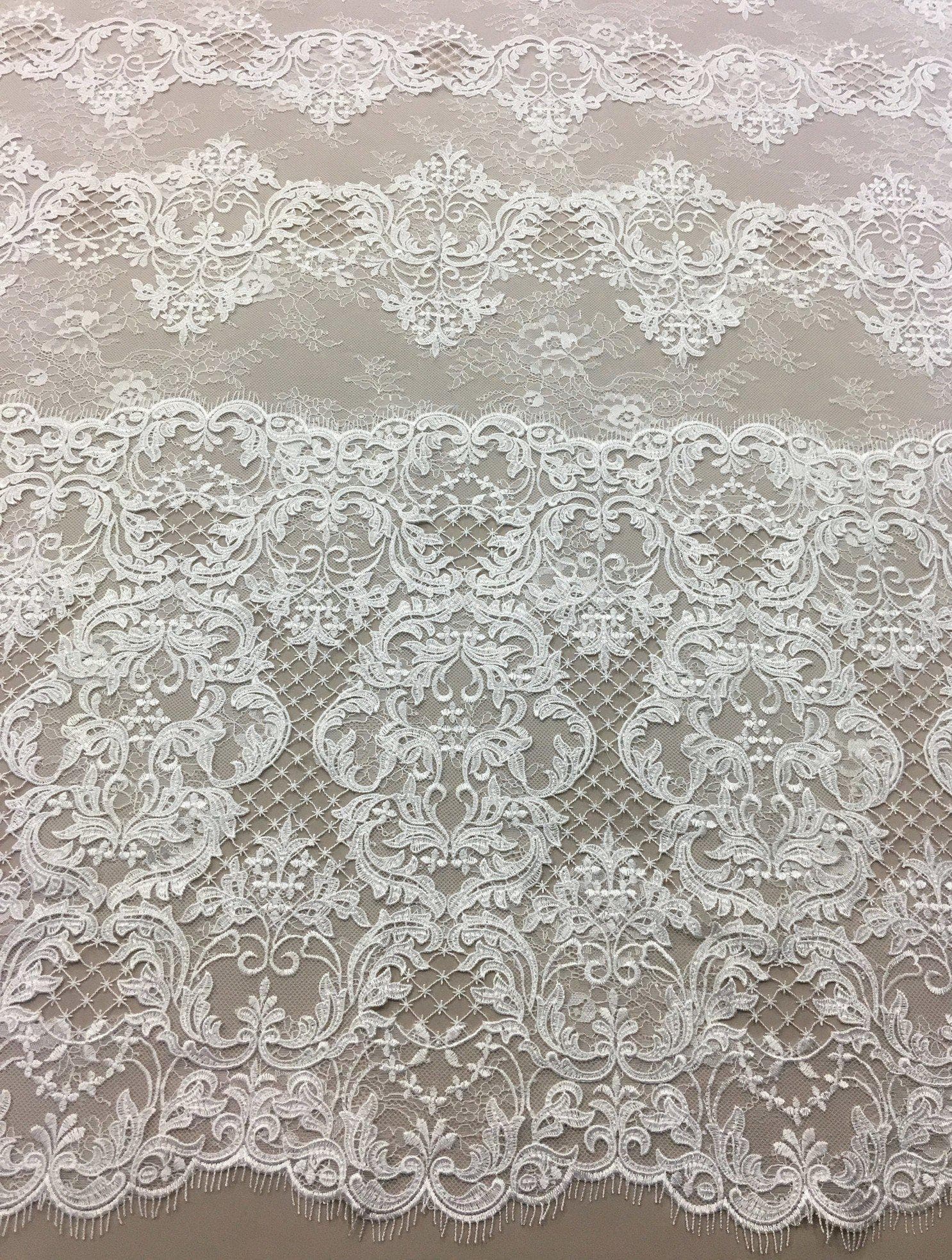
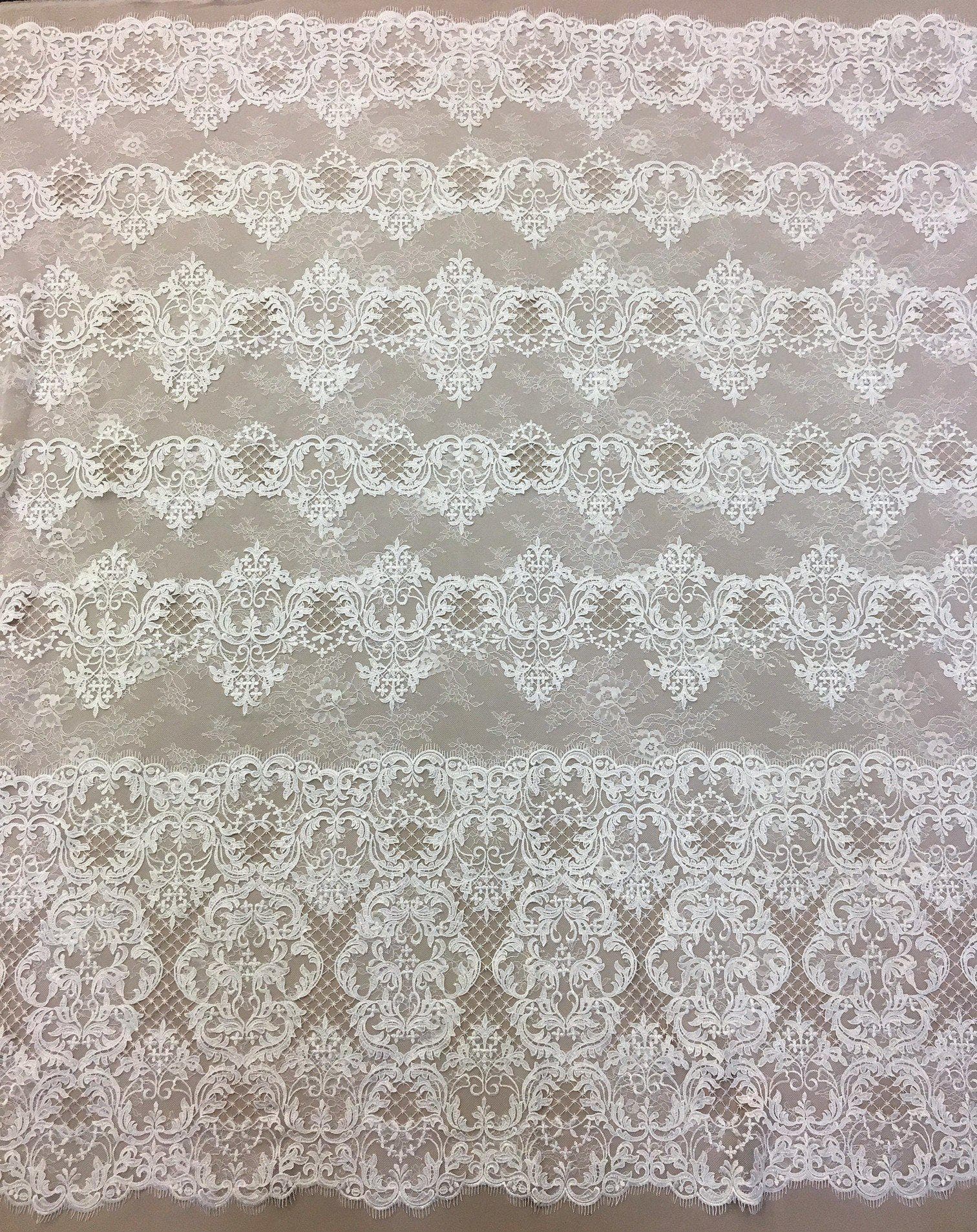
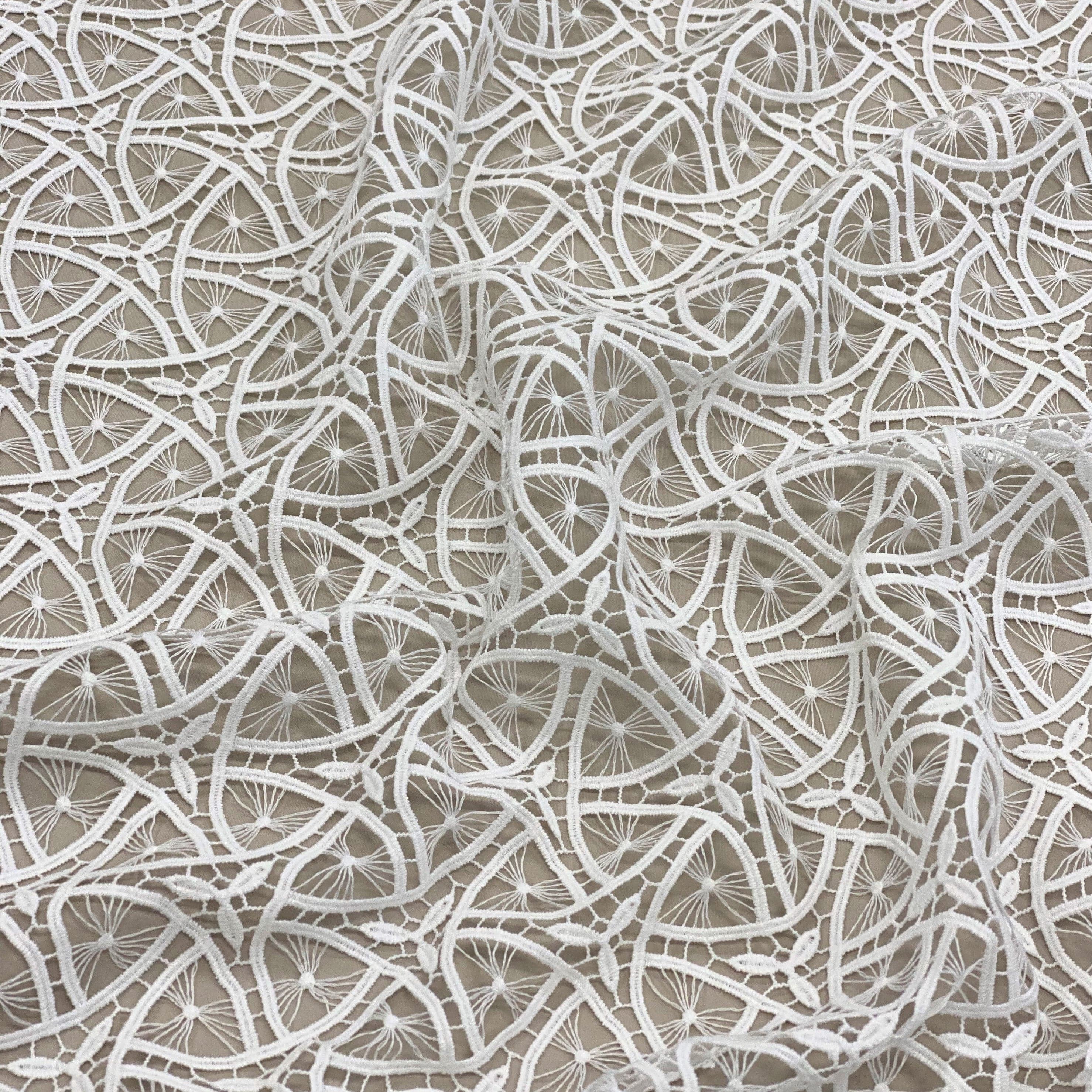
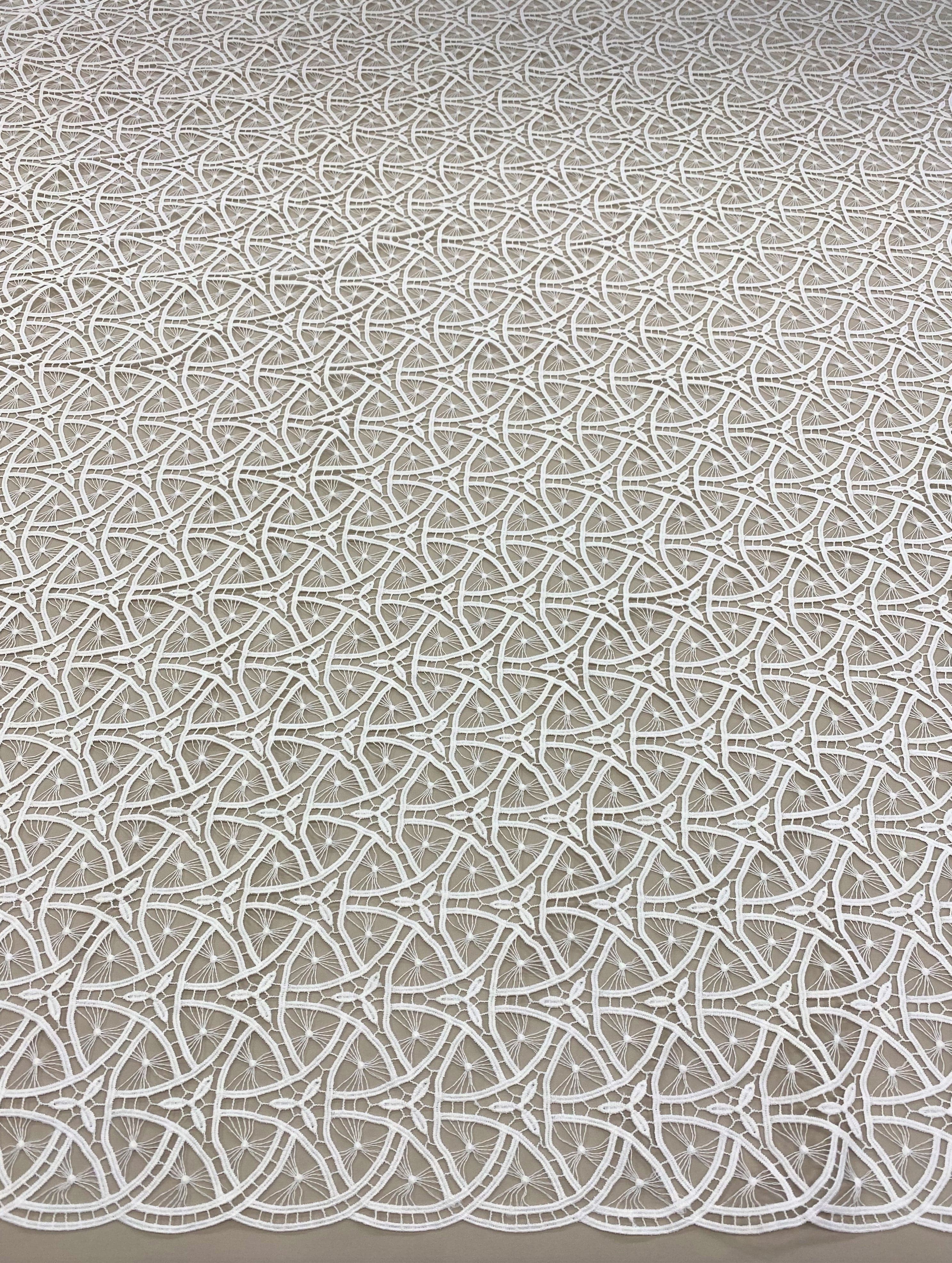
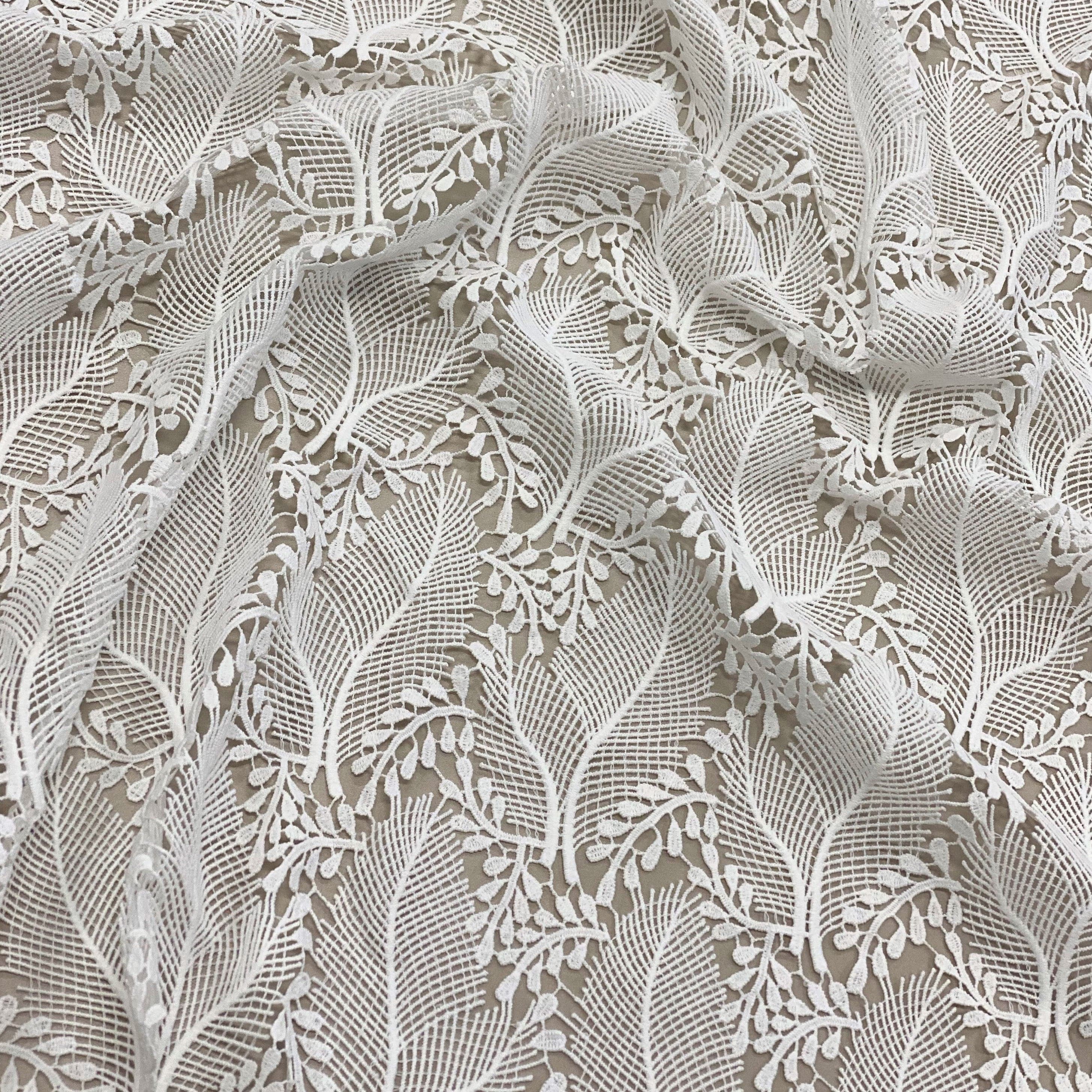
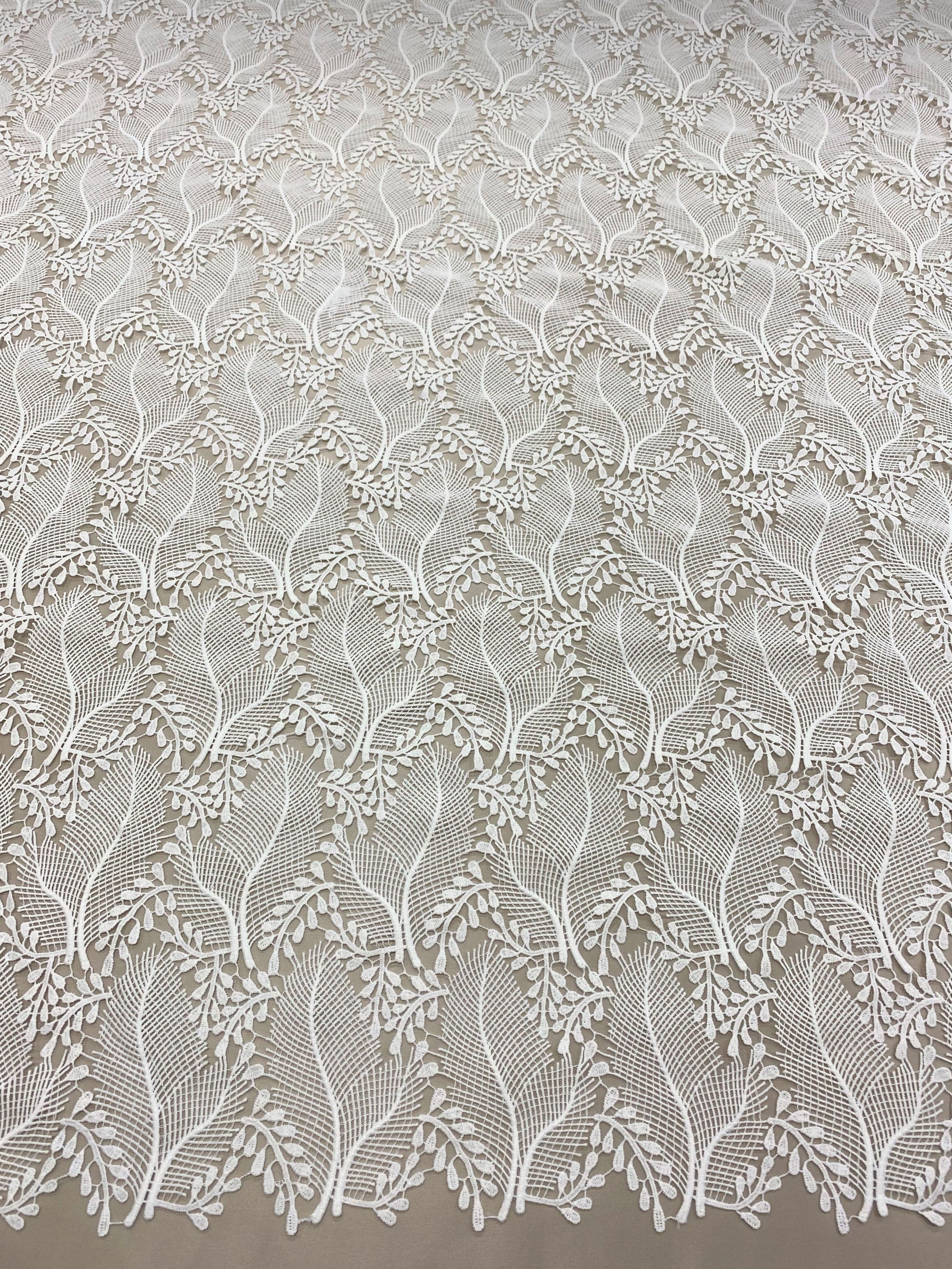
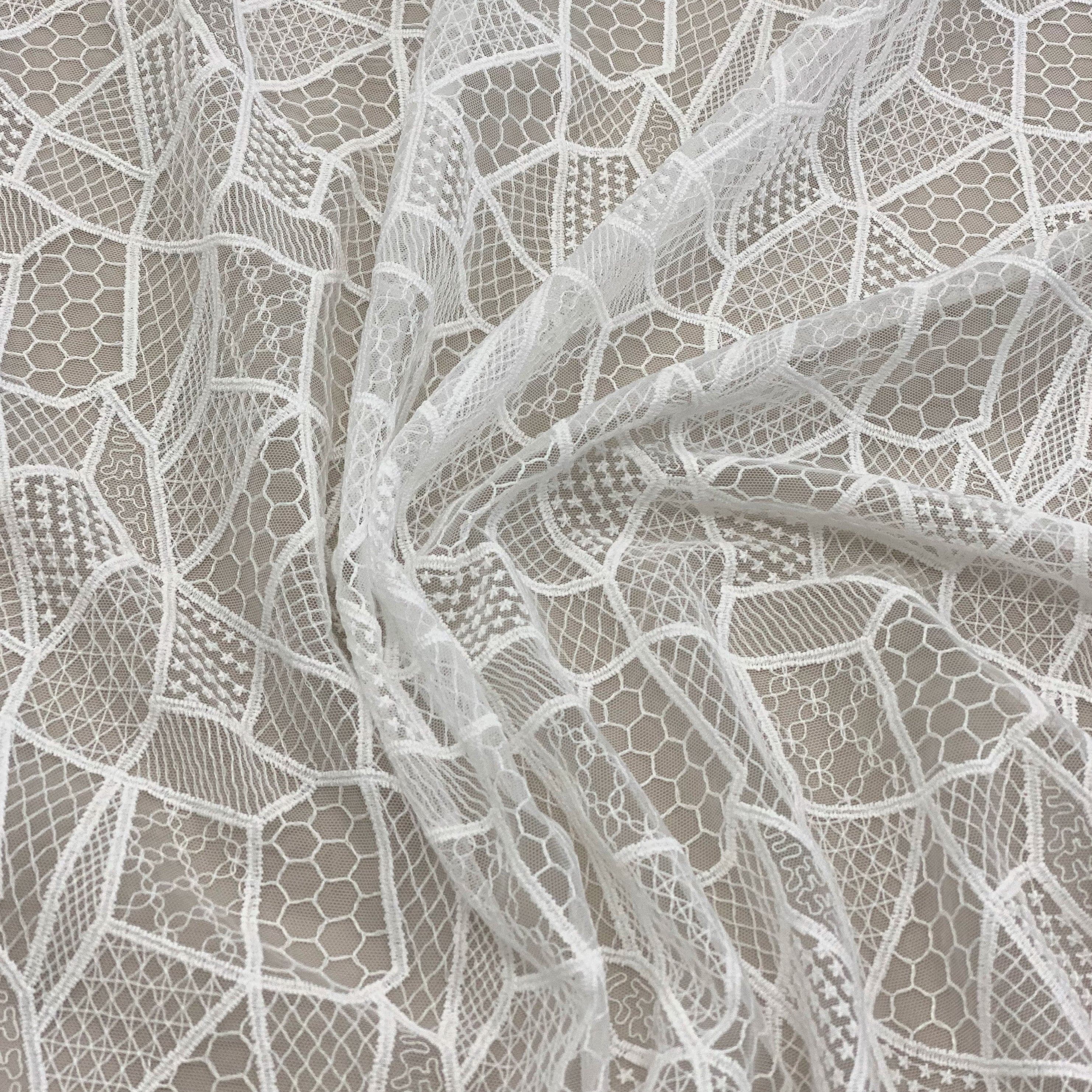
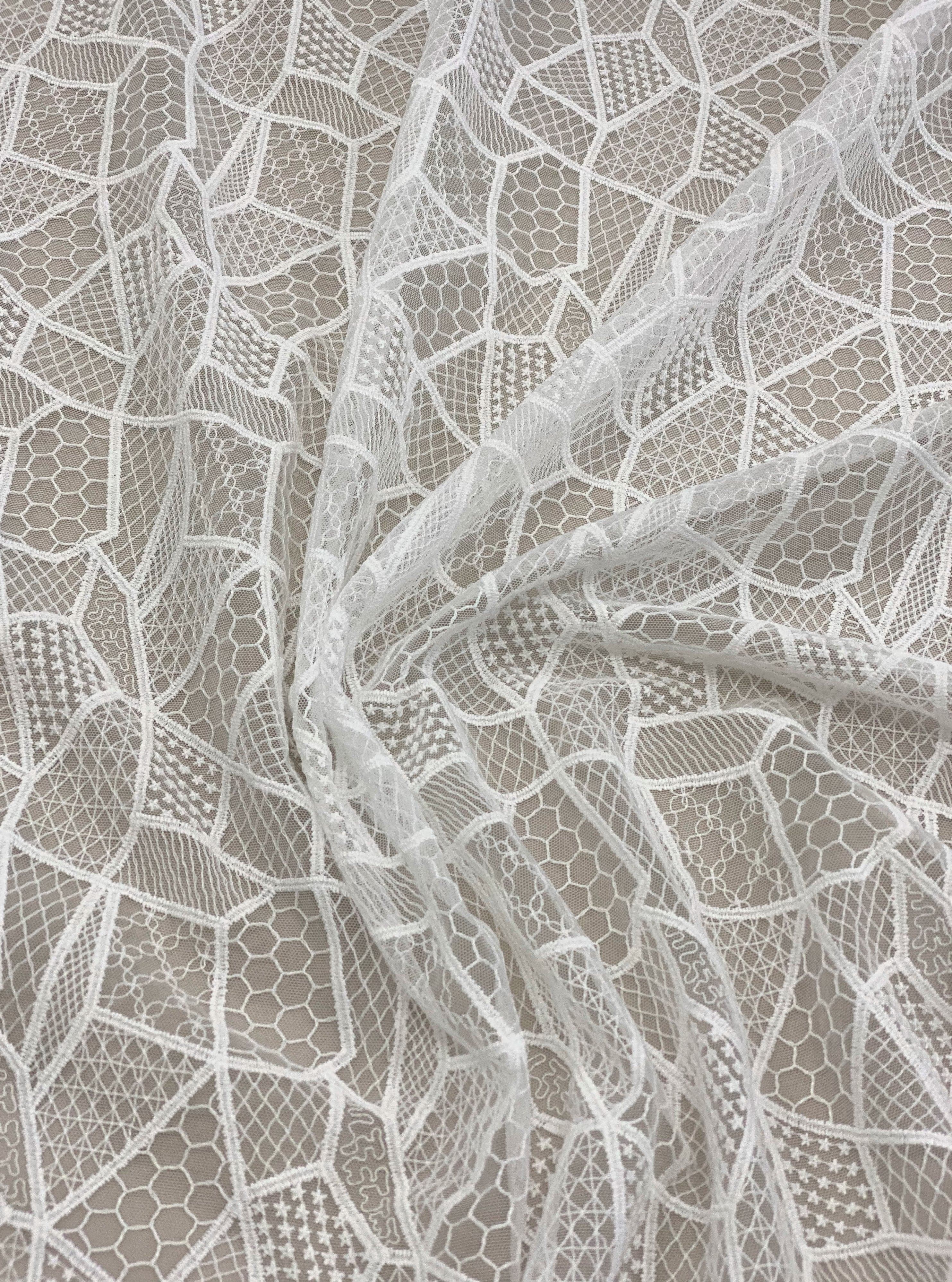
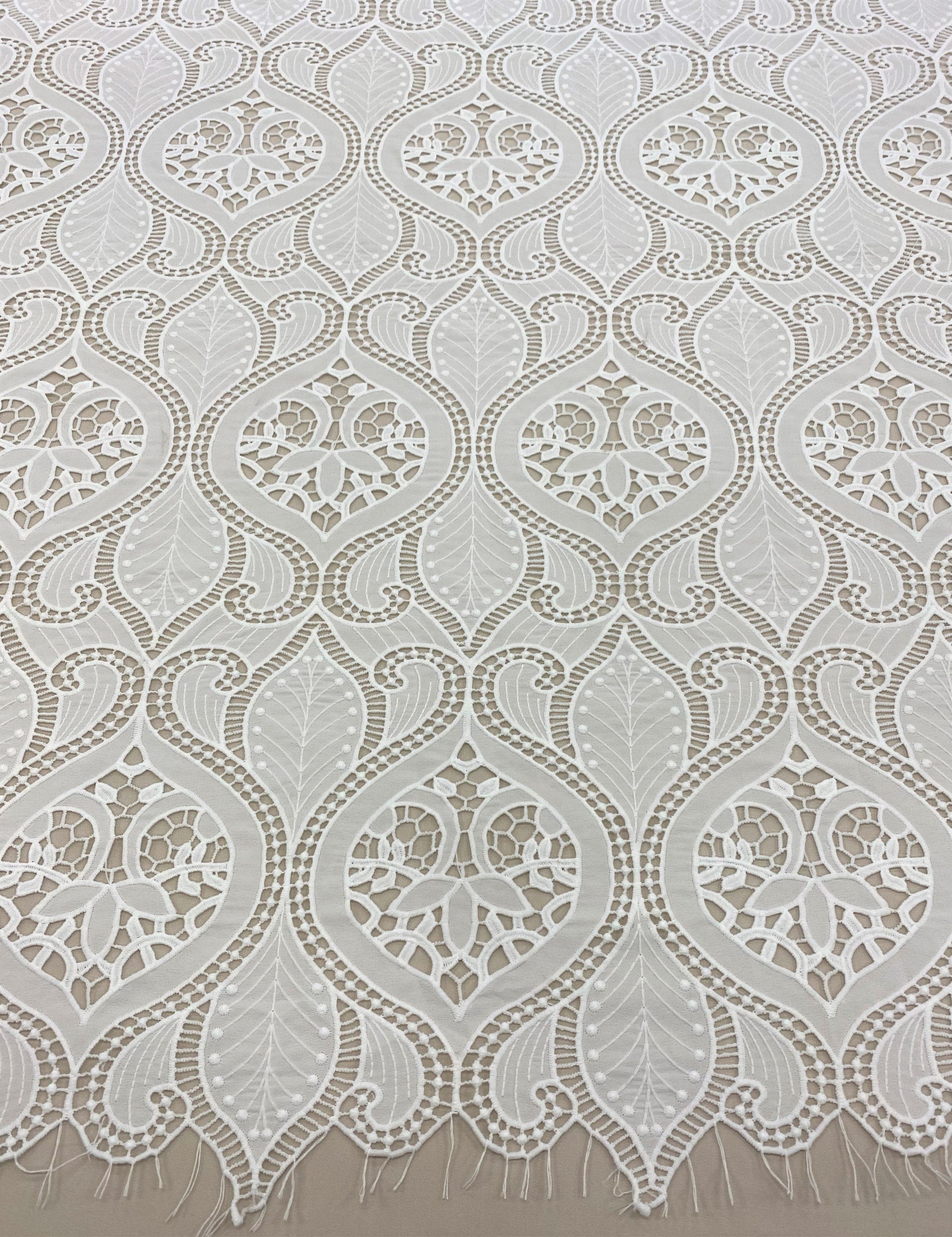
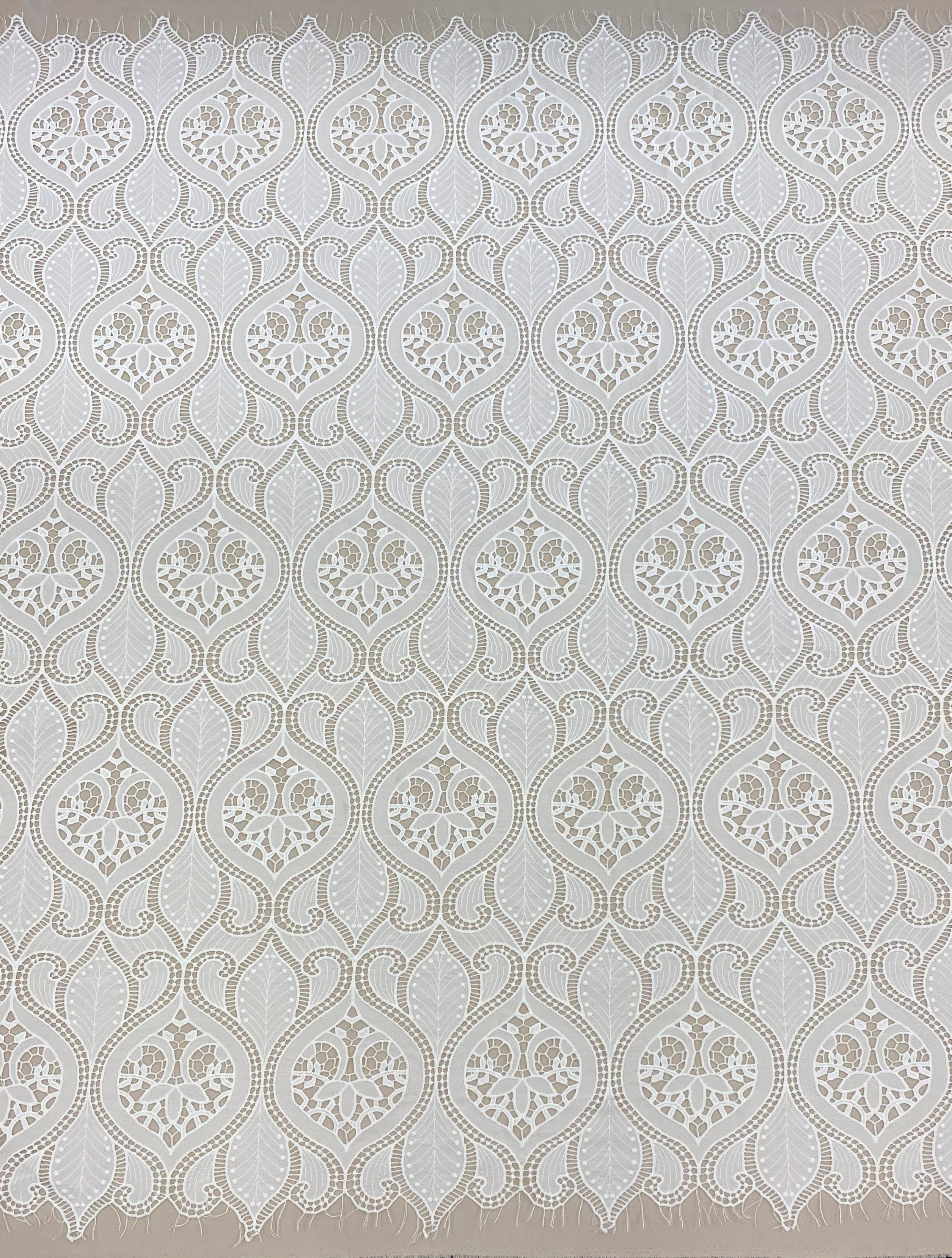
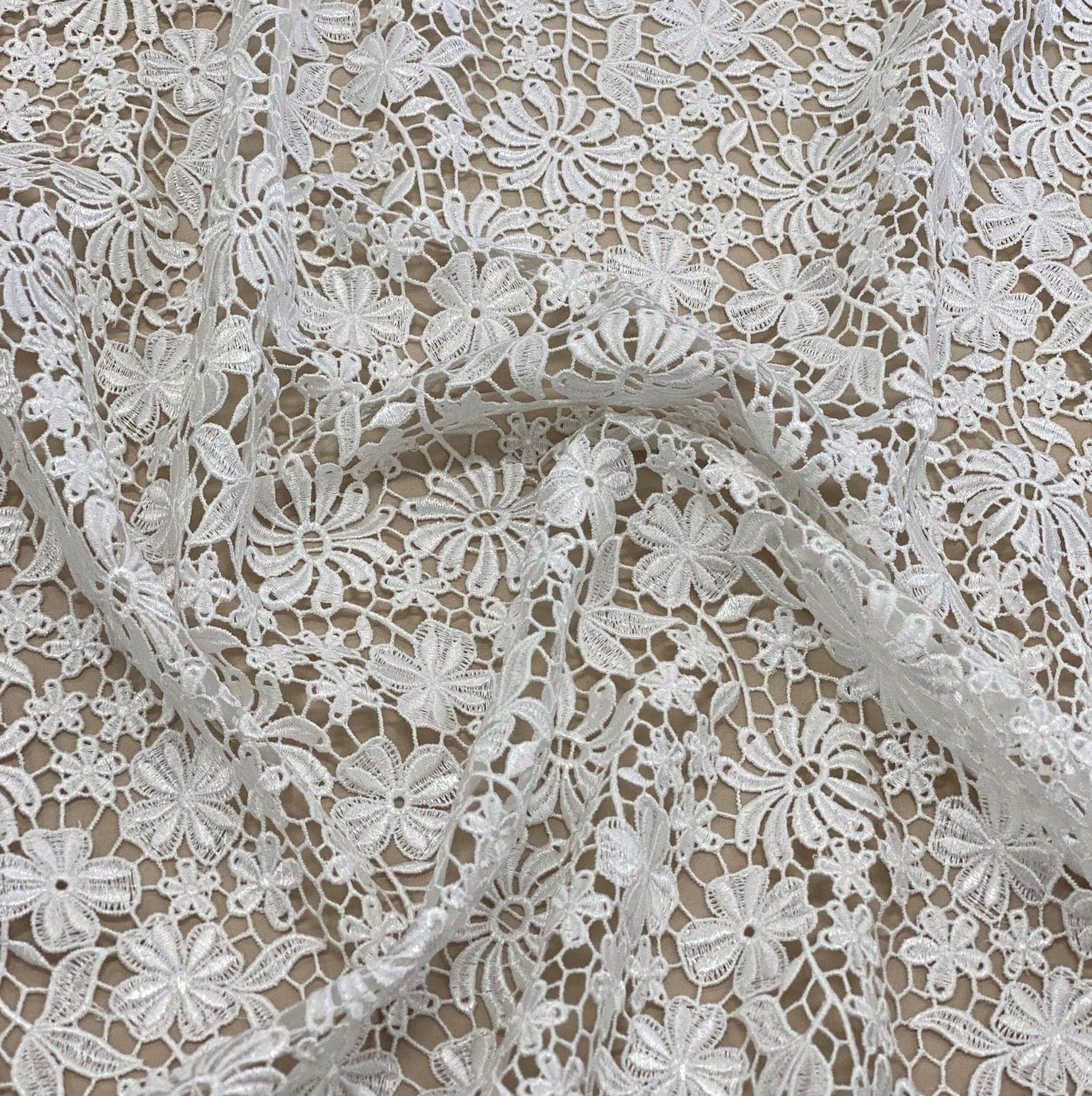
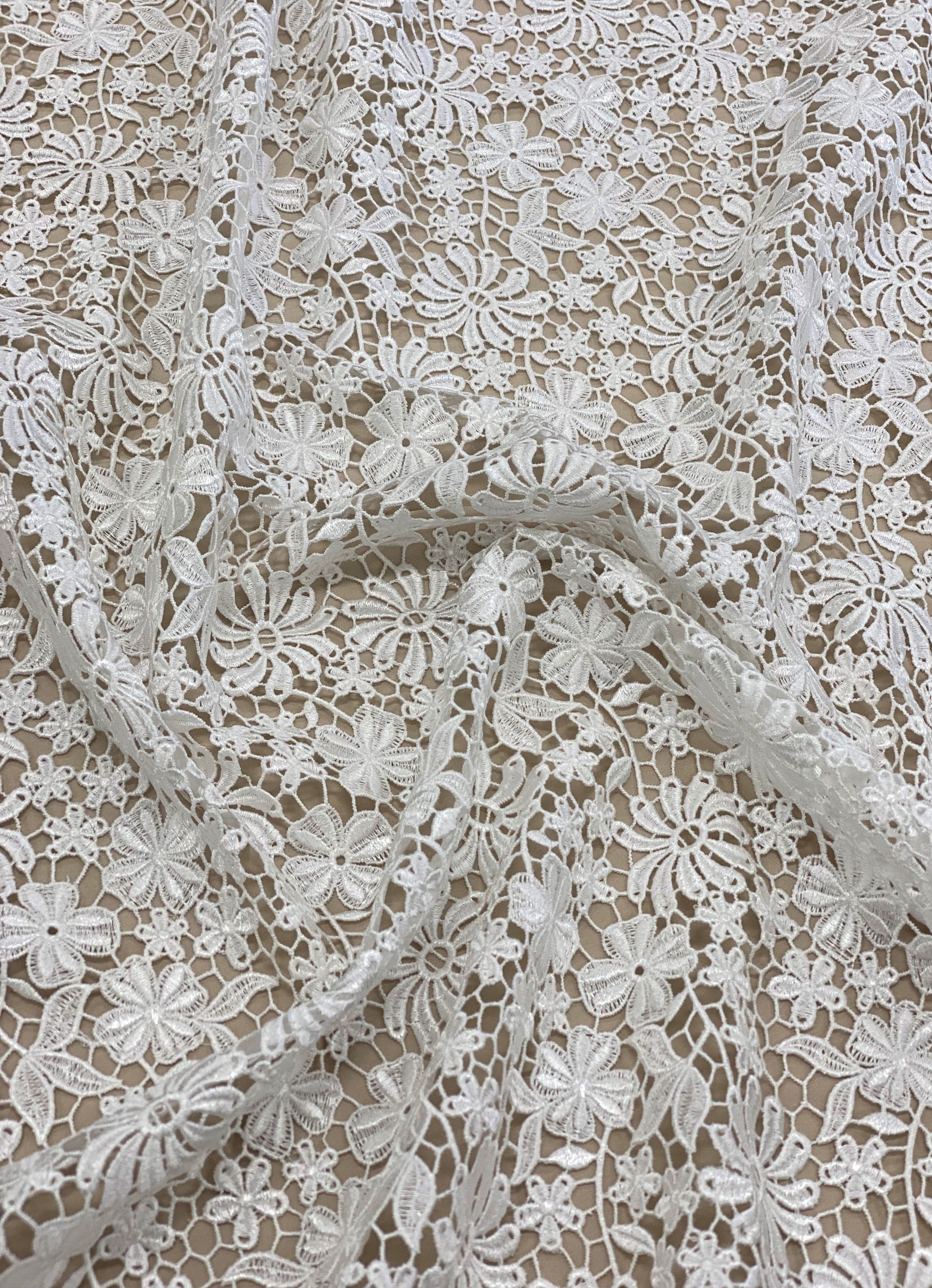
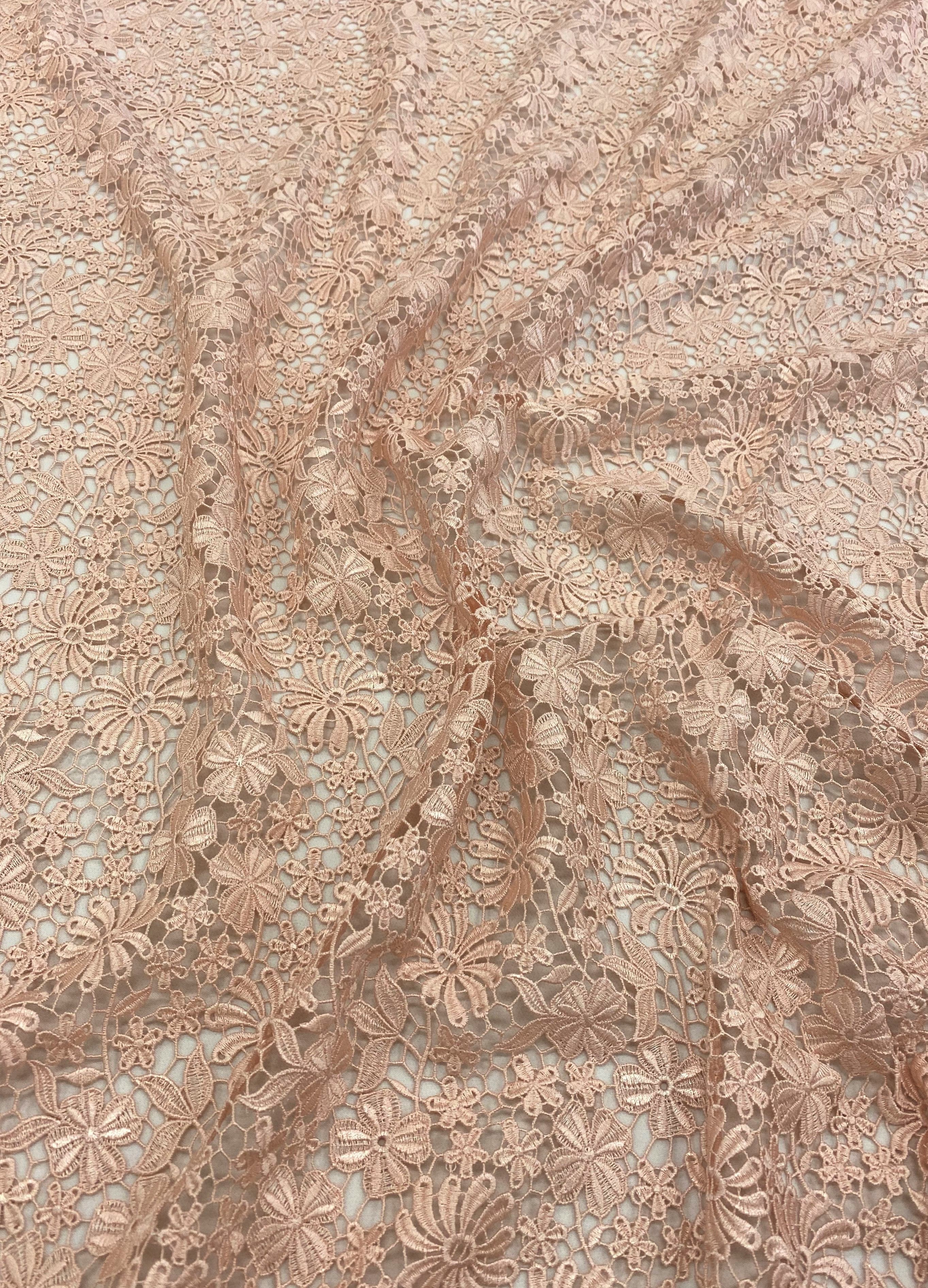
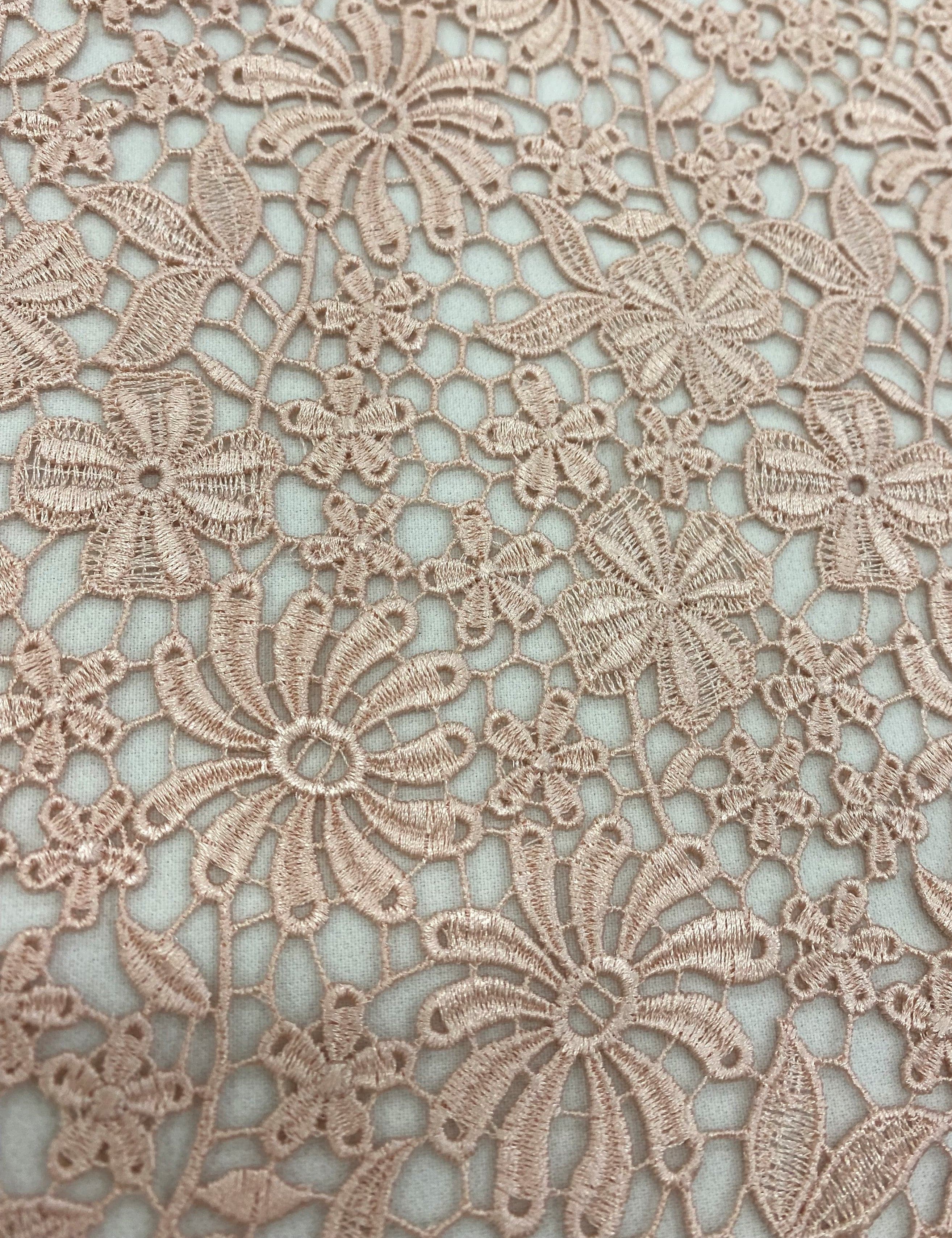
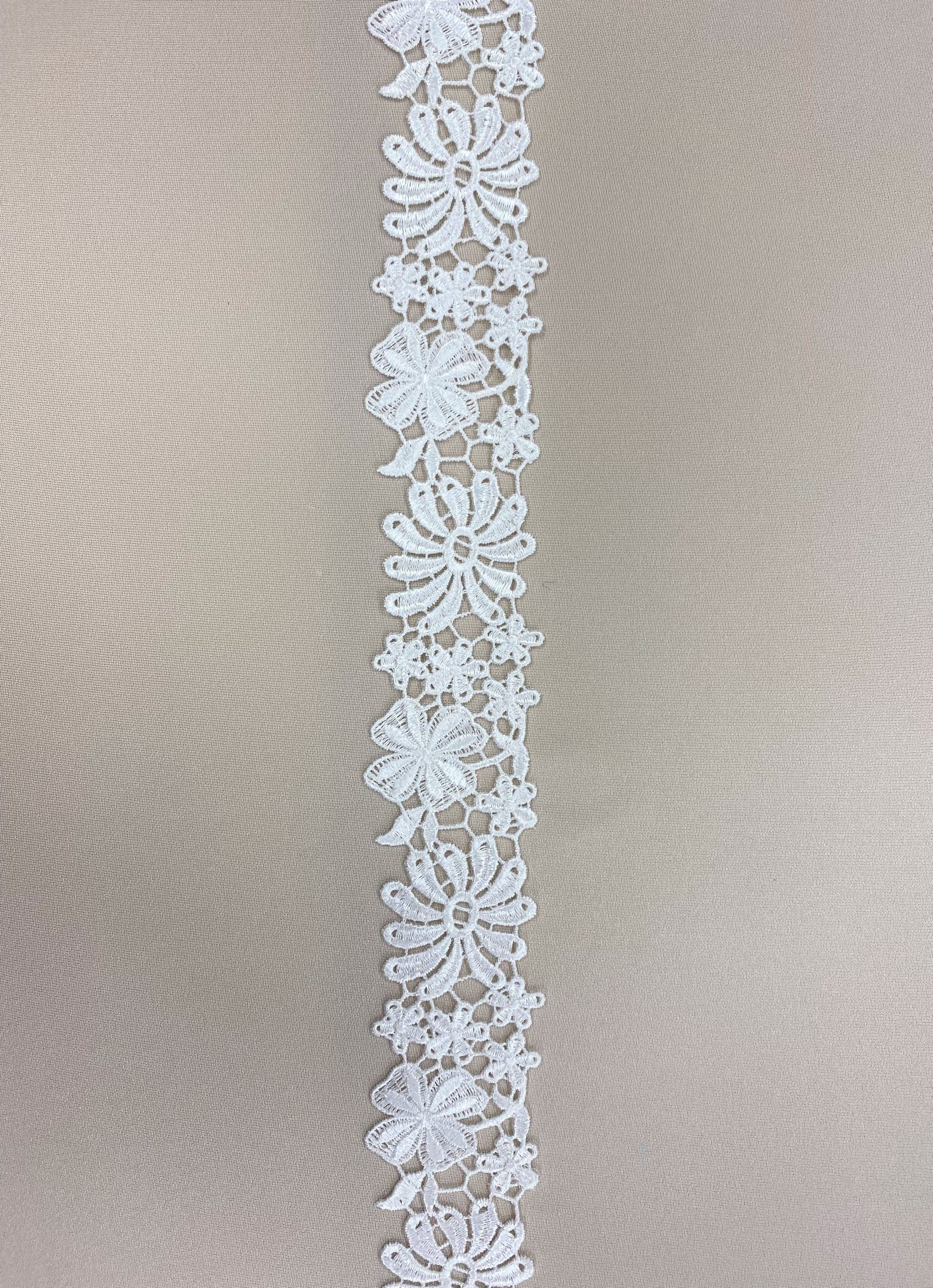
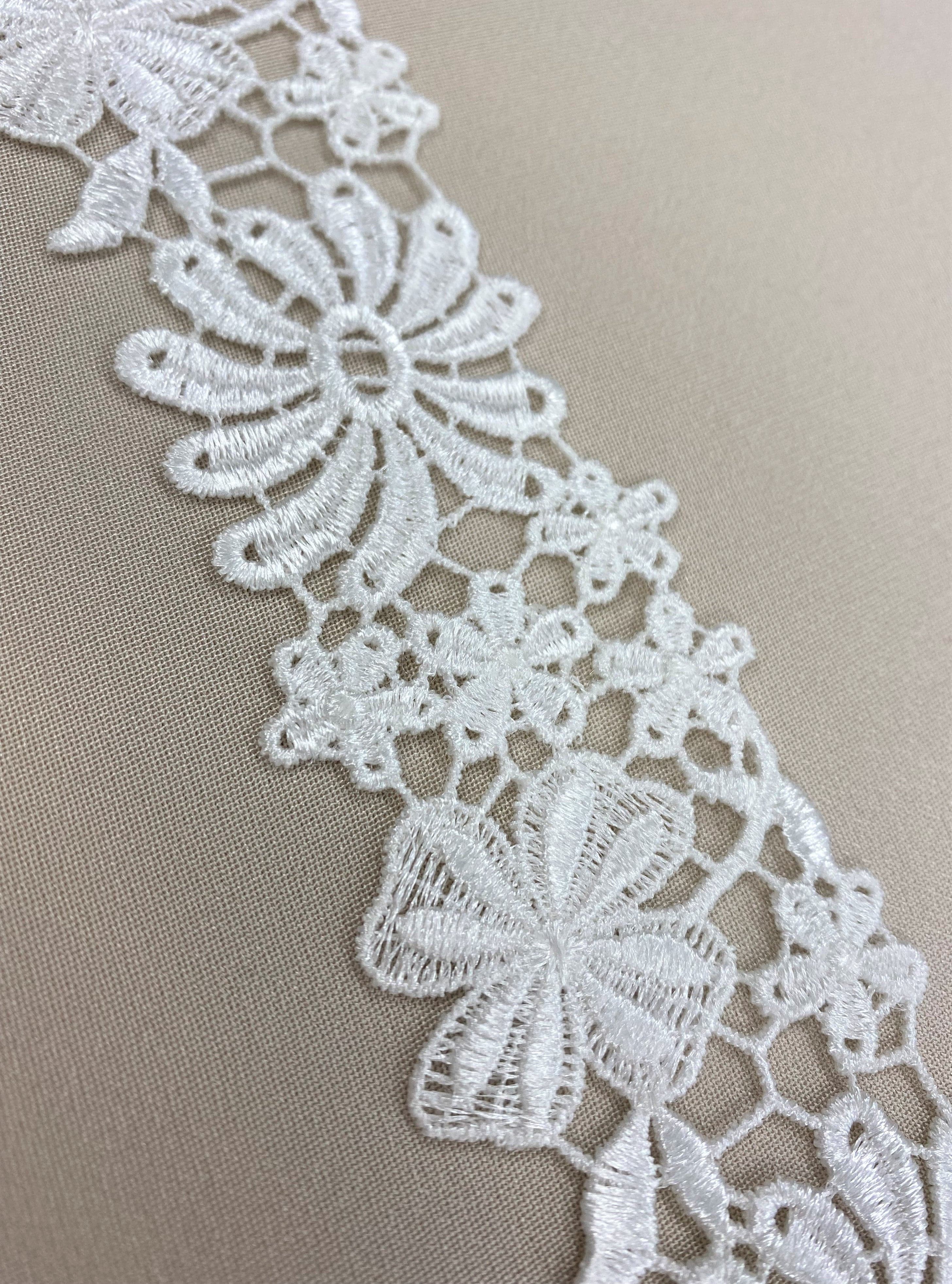
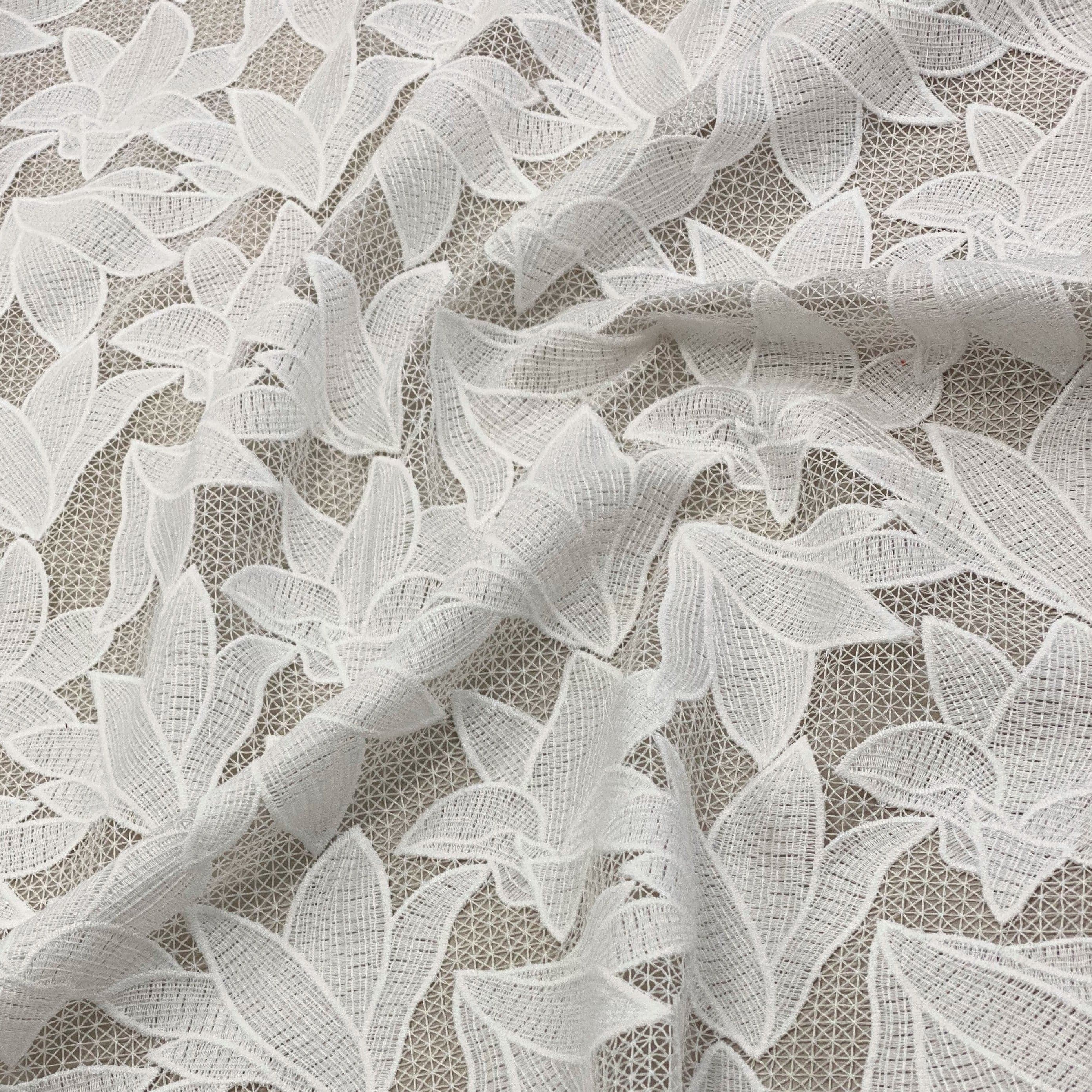
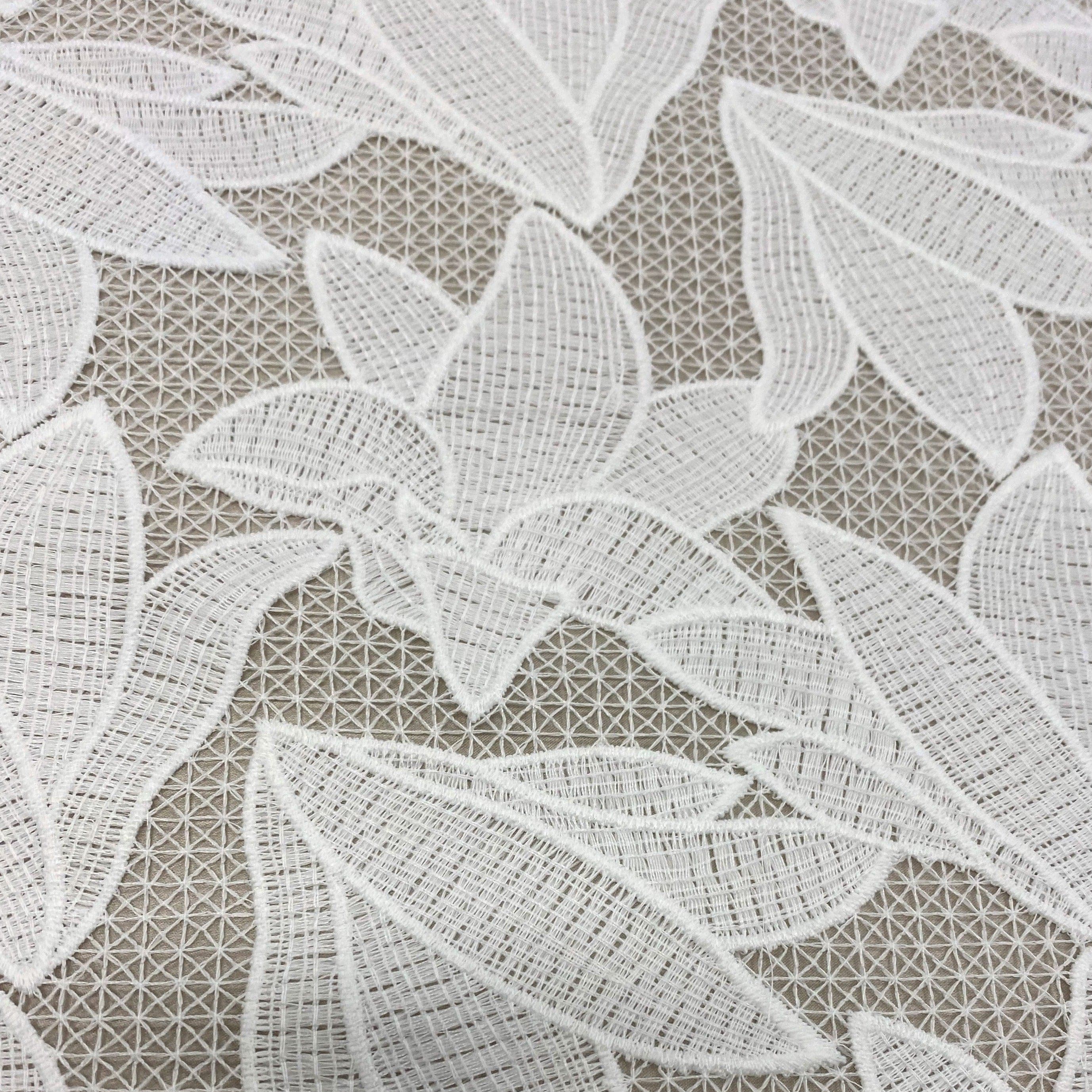
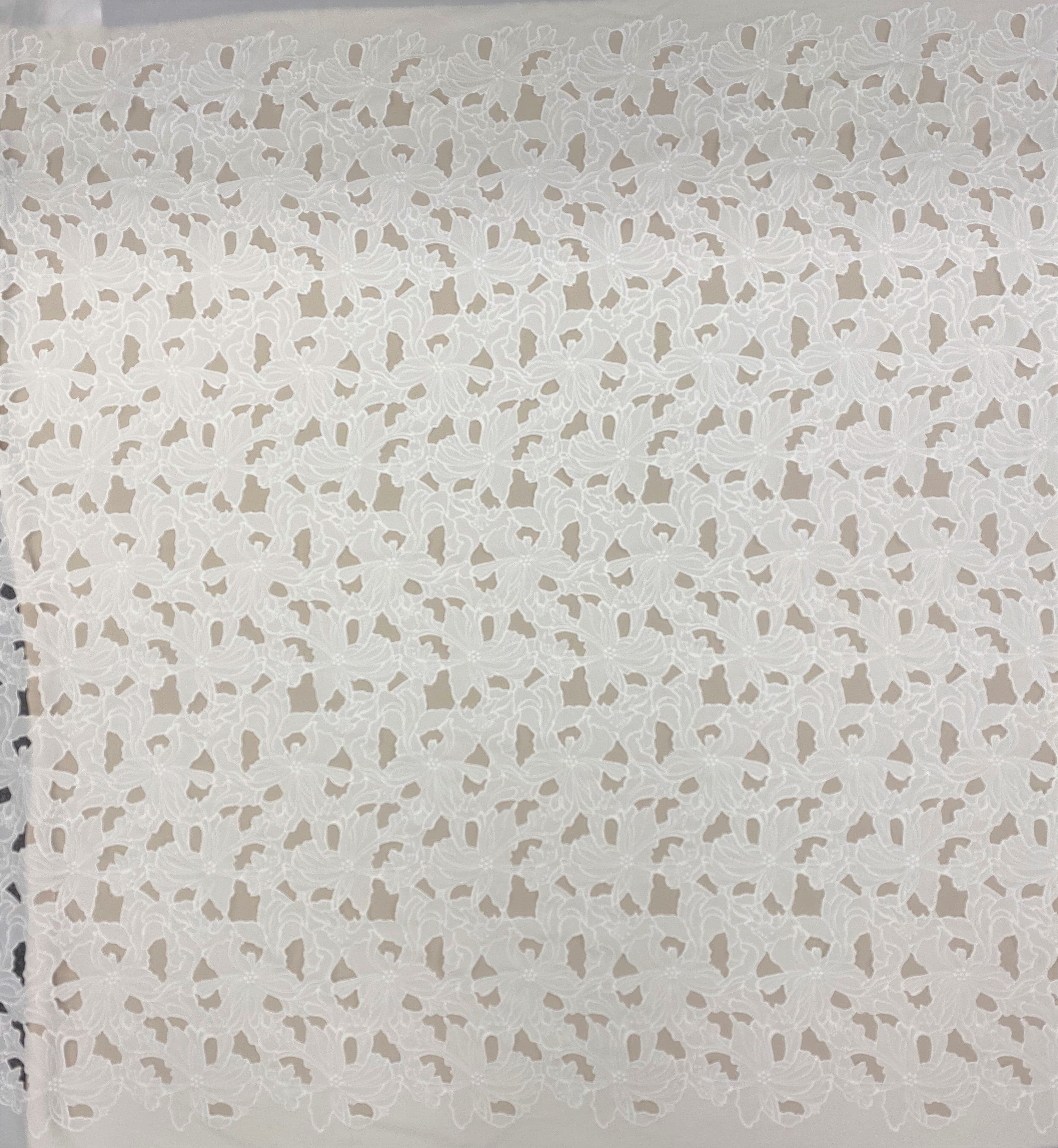
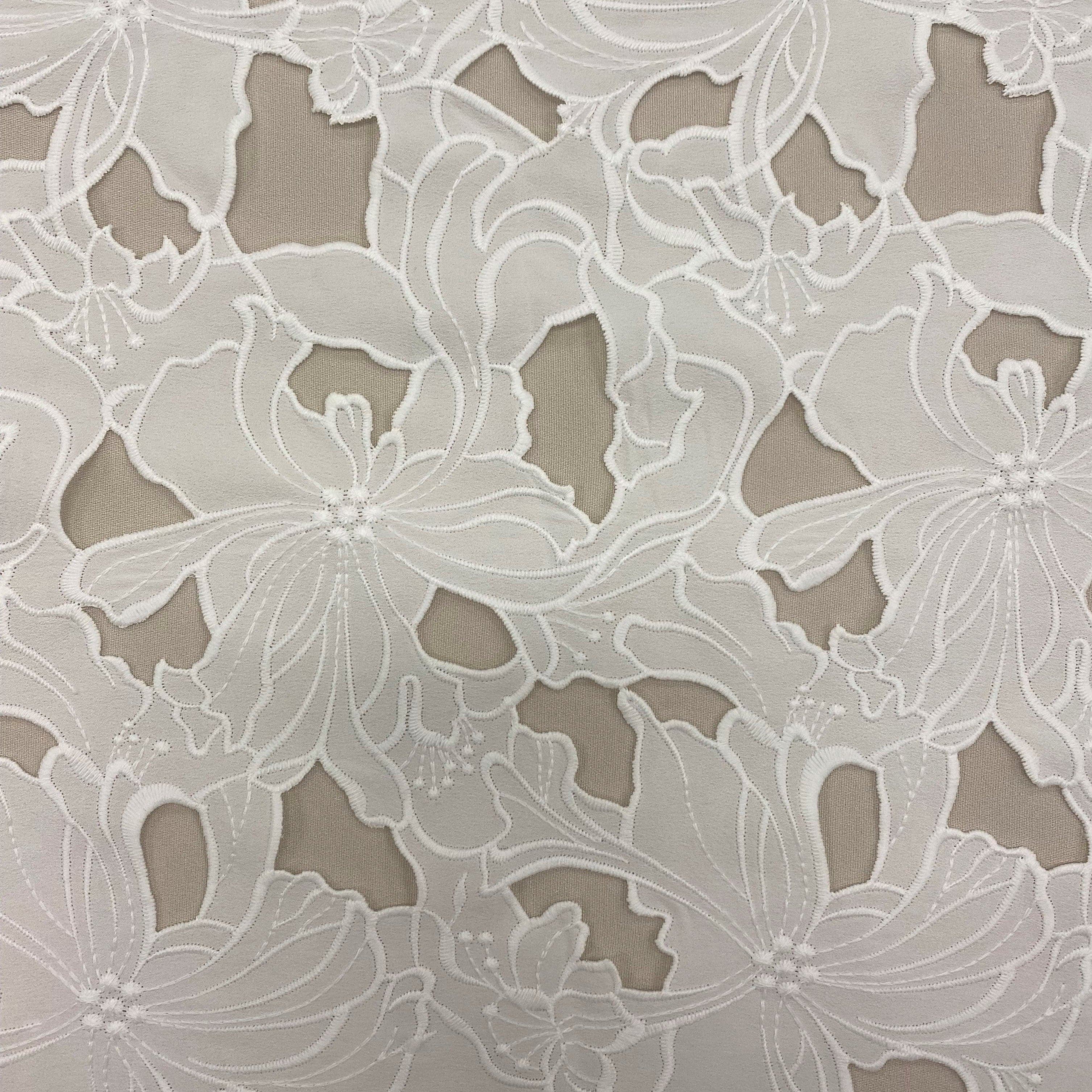
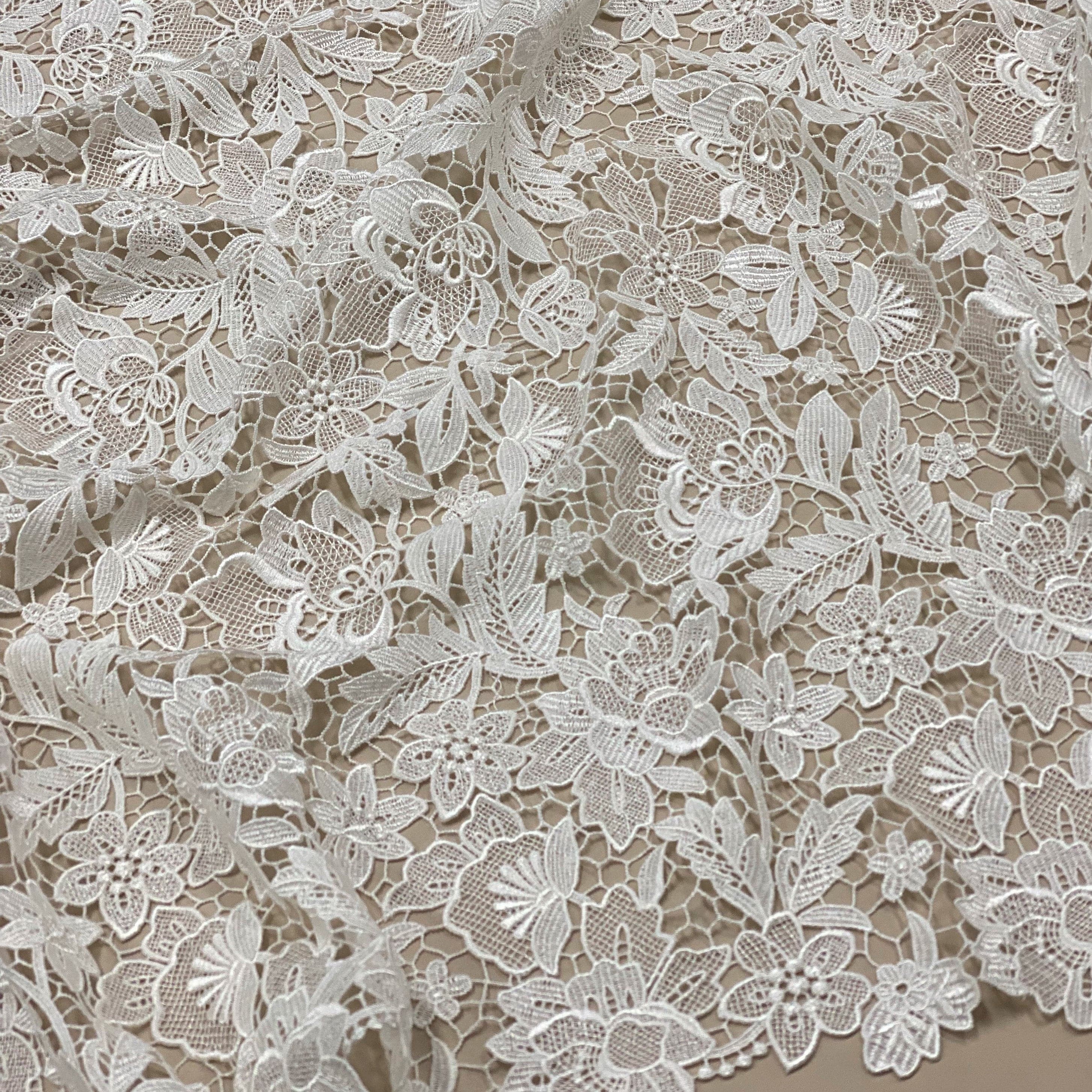
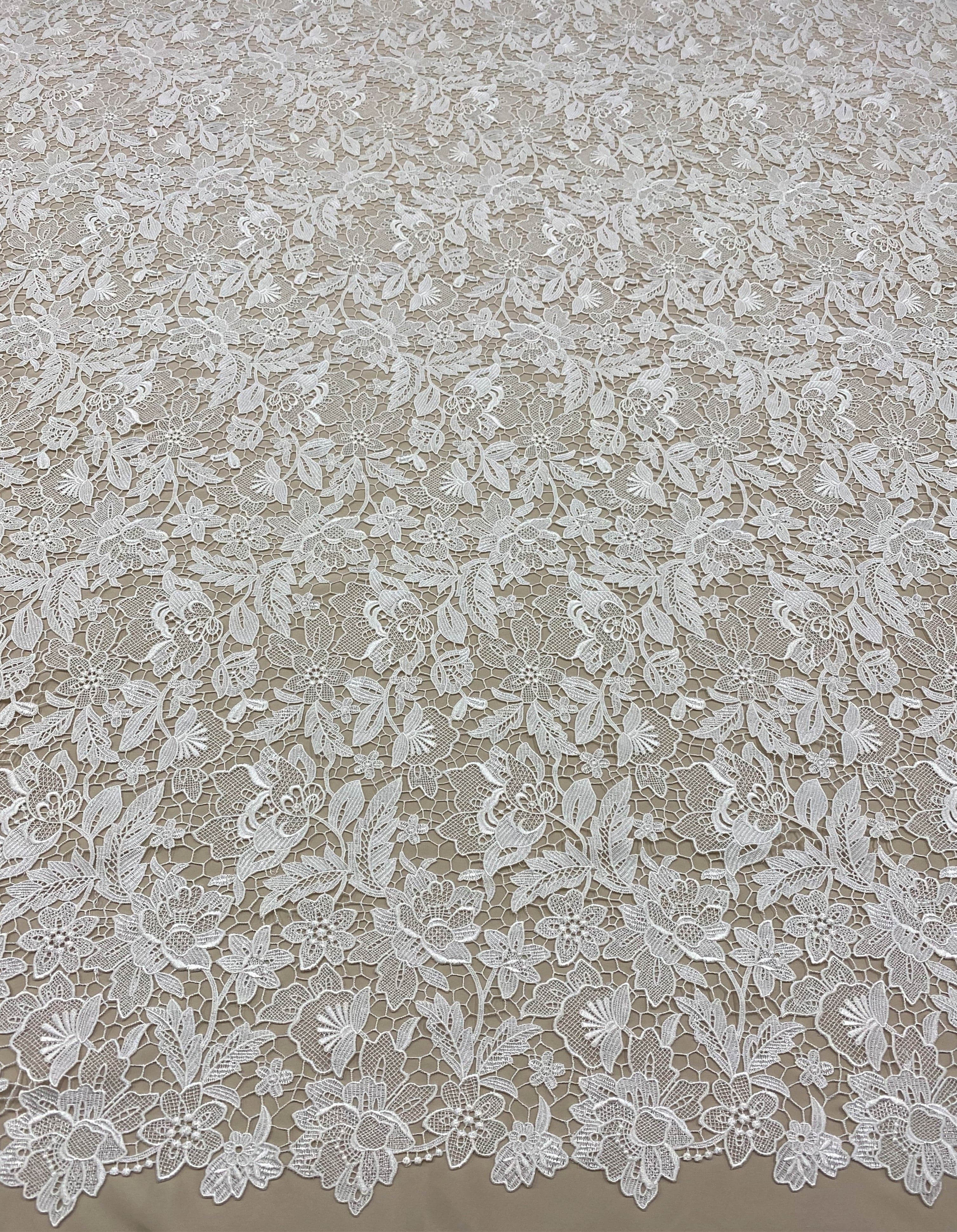
Bold lace motifs joined to each other, with open gaps and no net behind them. Heavier and firmer, for statement dresses, tops and overlays.
- Sold by the metre
- Not made in panels: longer lengths
 Sold out
 Sold out
Guide
Guipure Lace: Uses and How to Sew It
What makes guipure lace different, how it compares with our other laces, what to make with it, and step-by-step tips for sewing it.
What is guipure lace?
- Bold motifs, no net. The motifs are held together by small thread bars, with open gaps between them and no net behind.
- Heavier and firmer. It makes a strong statement on its own or over a contrast fabric that shows through the gaps.
- Not the easiest to sew. With no net or solid foundation it can shift and stretch in every direction, and the gaps between the motifs can't be sewn. The tips below help.
Lace types side by side
| Chantilly & fine | Corded | Guipure | Beaded | Stretch | |
|---|---|---|---|---|---|
| Look | Delicate motifs on a fine net | Motifs outlined with a raised cord | Bold motifs, no net | Beads, sequins or pearls | Fine lace with stretch |
| Feel | Soft and light | Defined, a bit more body | Firm and heavier | Weighty, with sparkle | Soft and stretchy |
| Sheerness | Very sheer | Sheer | Open, with gaps between motifs | Sheer net, dense beading | Sheer |
| Great for | Sleeves, overlays, soft gowns | Bridal bodices and gowns | Statement dresses and tops | Bridal and evening bodices | Fitted bodices and tops |
| To sew | Easy to moderate | Moderate | Tricky: no net, so it shifts and stretches | Trickiest: beads in the seams | Moderate: needs a stretch stitch |
Buying lace
Guipure lace isn't made in panels like most of our lace, so it comes in longer lengths.
What to make with it
- Simple, structured shapes like pencil skirts, shift dresses and fitted tops
- Overlays on a plain dress or skirt
- Collars, cuffs and necklines
- Motifs cut out and appliquéd onto a gown
Cutting
- Always cut the lace flat on the table as a single layer: don't fold it and cut double.
- Study the pattern repeat first. Decide where the lace will end at the hem, whether a motif should sit at the centre front, and where the motifs will meet at the back seams. Check where they fall over the bust too.
- Use the scalloped edge along the hem, or cut along the outline of a motif so the edge is a finished shape.
- To free a motif, snip the little thread bars that join it to its neighbours. You get a clean cut and the motif stays whole.
- Mark with tailor's tacks (a few loose hand stitches in a contrast thread), not chalk or pen, which won't show or stay on open lace.
- Don't pull or stretch it as you lay it out: guipure stretches in every direction.
Sewing
- Choose a pattern with shaped seams and darts. Gathers, tucks and pleats don't sit well in open lace.
- The couture way: mount it on a foundation. Make the garment first in your fashion fabric, so it fits. Lay the guipure over it, flat and evenly spaced, and hand tack it on with small running stitches in matching thread, in rows about 5 cm apart. Don't pull the stitches tight. This stops the lace drooping or stretching.
- Hiding darts and seams: sew the darts and seams in the fashion fabric only, without catching the lace. Then cut through the thread bars between the motifs, overlap the motifs so the lace follows the shape, trim away the extra underneath so they just overlap, and stitch the edges down by hand. The shaping almost disappears.
- Lapped seams for lace on its own: overlap the pieces so the seam lines meet, hand baste along the motif edge, then sew a short, narrow zigzag around the motif outline. On the wrong side, trim the lace underneath close to the stitching with small sharp scissors.
- A quicker seam for open lace: sew a short straight-stitch seam with a narrow strip of tulle or silk organza underneath. It bridges the gaps so the stitches have something to hold. Trim the strip back afterwards.
- Darts in lace on its own: trace the dart onto tissue paper, pin it under the lace and stitch through both, then tear the paper away. Or lap the dart the same way as a lapped seam.
- Sleeves: skip gathering stitches. Pin the ends and notches, then ease the sleeve head in by working around the motifs.
- At dart points and seam ends, leave long thread tails and tie them off by hand instead of backstitching.
- Put in zips by hand, and use small hooks and eyes or snaps: bigger fastenings can catch in the open lace. With heavy motifs, you can let a few overlap the zip and snap them closed, so the lace looks continuous.
What to put under it
Guipure looks its best over a layer that shows through the gaps, like silk satin or silk crepe satin. To keep it sheer, back it with a fine, soft tulle such as our soft tulle or silk tulle. Two layers, cut so the stretch runs in opposite directions, stop it stretching. Try the tulle colour against the lace first: a skin tone or soft grey lets the lace stand out.
Edges
Guipure doesn't fray, so you can use the scalloped edge, or cut around the motifs for a shaped edge with nothing to hem. On a lined garment, stitch the lace to the hem edge by hand with small stitches. A narrow binding also gives a neat edge that doesn't compete with the lace.
Pressing
Press face down on a thick, clean towel, on a low setting, through a pressing cloth, so the motifs sink in rather than flatten. Test on a scrap first.
Questions
Is guipure lace easy to sew?
Not really. With no net or solid foundation it can shift and stretch, and the gaps between the motifs can't be sewn. Hand tacking it onto a foundation fabric, or using lapped seams around the motifs, makes it much easier.
How do I join guipure lace?
Overlap the pieces so the motifs follow the seam, then stitch around the motif edges, by hand or with a narrow zigzag, and trim the lace underneath. The join almost disappears.
Is guipure lace sold in panels?
No. Unlike most of our lace, guipure comes in longer lengths.
Wholesale for fashion labels, bridal studios and designers buying in bulk. Apply for an account