

Care for silk, lace & bridal fabrics
Fine fabrics last a lifetime when they are cleaned, pressed and stored the right way. This guide covers every fabric we sell, from silk dupion and bridal tulle to beaded lace and metallic jacquard, and the few that need special handling.
Silk, velvet, lace and sequins are among the most rewarding fabrics to sew, and among the most demanding. A little care at each stage makes all the difference. Care starts before the first cut. Check the fibre content on the product page, test a cutting, and plan the garment's care around its most delicate part.
Please note: we approve colour samples with our mills to match every new dye lot to our own colours, but slight variation between lots is unavoidable, so buy enough for your project at once. Always test a sample or offcut first before cleaning or pressing the whole piece.
Quick guide
Before you cut
Most care problems start at the cutting table. A few minutes of testing saves a finished garment.
Read the fibre
The composition on each product page tells you how the fabric will behave. For blends, wash and press at the settings of the most delicate fibre, and follow the care line on the product page.
Test a cutting
Order a 10 × 10 cm sample with the Purchase a sample button to check colour, sheen, handle and dye bleed. Samples are too small to show shrinkage, so test a larger offcut from your own length before cutting.
Pre-shrink
If the garment will be washed, wash and dry the fabric the same way before cutting. For dry-clean-only fabrics, ask your dry cleaner to pre-shrink the length. Wool can be steamed evenly at home instead; don't steam fabrics this guide marks as no-steam.
Plan for the finished piece
A garment is only as washable as its most delicate part: a washable lining under a dry-clean-only lace makes the whole piece dry clean only. Choose linings, interfacings and threads with the same care needs as your outer fabric.
Buy from one batch
Dye lots vary slightly. Order all the metres you need together, and keep a labelled offcut for future matching.
Cut in one direction
Velvet, devoré and wool coatings have a nap. Silk cotton sateen has no nap, but its sheen changes with direction. Cut every piece in the same direction on the same grainline, or the colour and sheen will differ from panel to panel.
Quick care guide
| Fabric | Clean | Press | Watch for |
|---|---|---|---|
| Silk | Dry clean | Silk setting (2 dots), reverse side, pressing cloth | Water spots on dupion, taffeta, organza & mikado |
| Lace | Dry clean | Low, face down on a towel | Flattened cords & snagged eyelash edges |
| Plain tulle | Hand wash cold or dry clean | Lowest setting (1 dot), no steam; or a steamer at a distance | Nylon melts under a hot iron |
| Stiff net & crinoline | Specialist dry clean | Crinoline: warm iron through a cloth. Organza and metallic crinoline, stiff net: lowest setting, dry, through a cloth. No steam | Steam softens many stiff finishes |
| Beaded & embellished | Specialist dry clean | Don't iron; light steam from the reverse at a distance | Sequins cloud or curl with heat, and foil-coated sequins can peel |
| Metallic & foil | Specialist dry clean | Don't iron; light steam from the reverse at a distance | Foil lifts with heat and abrasion |
| Polyester | Gentle wash 30°C or dry clean | Medium (2 dots) with a cloth; 1 dot for stretch | Shine from a hot iron |
| Liquid & glass organza | Dry clean, or hand wash cold | Lowest (1 dot), reverse, cloth, no steam | Heat dulls the glassy finish; snags show |
| Stretch & scuba | Gentle wash 30°C, no tumble dry | Lowest setting (1 dot) | Heat weakens elastane |
| Cotton | Machine wash cold, delicate | Hot (3 dots) while damp | Shrinkage on the first wash |
| Linen | Hand wash, gentle machine wash cold, or dry clean | Hot (3 dots) while damp | Shrinkage on the first wash |
| Viscose & plant fibres | Dry clean, or hand wash cold | Medium (2 dots), reverse side | Weak and prone to shrink when wet |
| Wool | Dry clean | Medium (2 dots), steam, pressing cloth | Shine, moths |
| Velvet | Dry clean | Never iron; steam only | Crushed pile |
Reading a care label
In Australia, clothing and textiles must carry care instructions under the Consumer Goods (Care Labelling) Information Standard 2023, in words, in the international symbols below, or both. If you make garments to sell, label them for the most delicate fabric in the garment.
Silk
We recommend dry cleaning for our pure silks; silk blends such as silk cotton voile have their own care, noted below. Silk is a natural protein fibre: strong when dry, weaker when wet, and sensitive to sunlight, perspiration and alkaline detergents. Slubs and small variations in the weave are part of its character, not faults.
- Dry clean. Tell your cleaner it is silk and point out any marks.
- Some silks, such as habotai and sandwashed satin, will survive a careful hand wash, but washing changes their sheen and handle and can move the colour. Test a cutting first.
- If you do hand wash, use cool water and a pH-neutral, enzyme-free wash that says it is suitable for silk. Supermarkets stock wool and delicates washes (check the label), and yarn and craft shops stock specialist no-rinse wool and silk washes. Never use biological (enzyme) detergents or bleach, which break down silk, or fabric softener.
- Silk setting (two dots, 150°C max), on the reverse, through a silk organza pressing cloth. A metre of our silk organza makes several, and you can see the fabric through it as you press.
- Keep steam and water off dupion, taffeta, organza and mikado: drops leave marks that are hard to remove.
- Deep and bright silks, especially reds, navies and blacks, can bleed when damp, from water, steam or perspiration. Test with a damp white cloth before washing or pressing.
- Keep damp dark fabric away from white and ivory fabric, including linings and lace.
- Let perfume, deodorant and hairspray dry before dressing. Perspiration weakens and yellows silk, so dress shields help on fitted bodices.
- Prolonged exposure to the strong Australian sun can fade and weaken silk, so dry and store it out of direct sunlight.
Dupion, taffeta & mikado
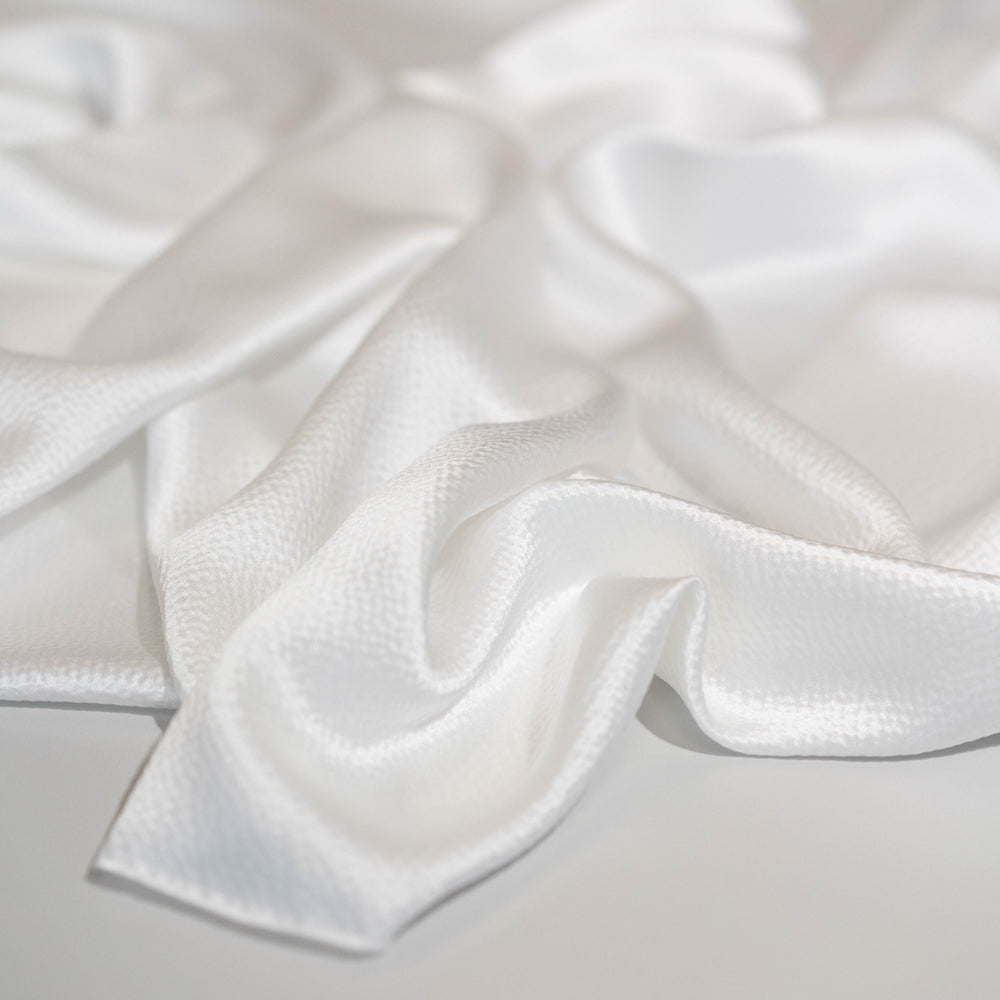
Crisp silks with a dry finish that water-spots easily. Press dry, with no steam, and don't spray to remove creases. Store rolled: sharp folds can crack the fibre over time.
Satins & hammered satin
Crepe satin, duchess, sandwashed and hammered satins mark easily under a hot iron. Press on the reverse with a cloth. Don't press hammered satin hard or you will flatten its texture. Stretch silk satin contains Lycra, so press it at a lower heat and never tumble dry it. Sandwashed satin is washed during manufacture, so its shrinkage when washed is no more than about −2%.
Chiffon, georgette & organza
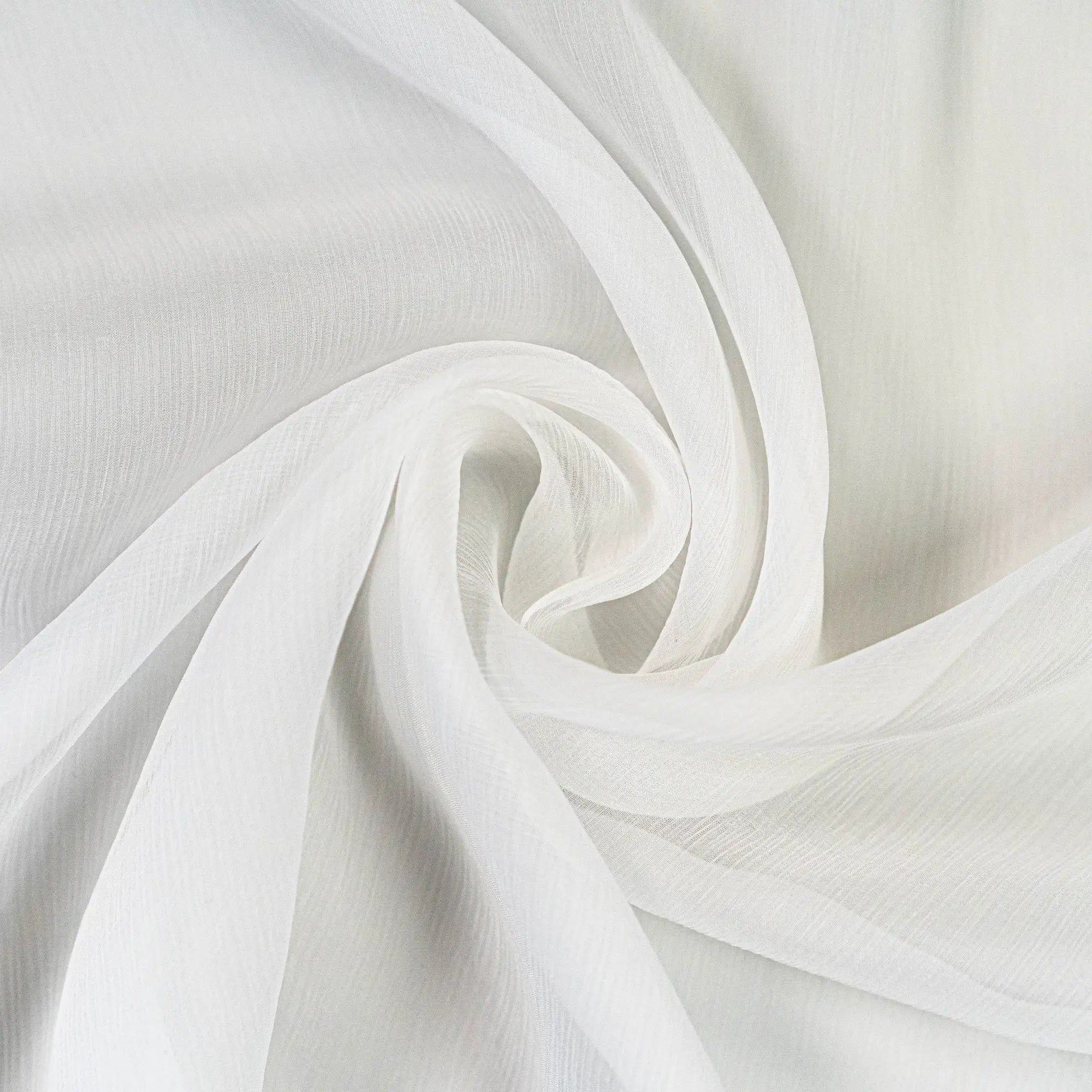
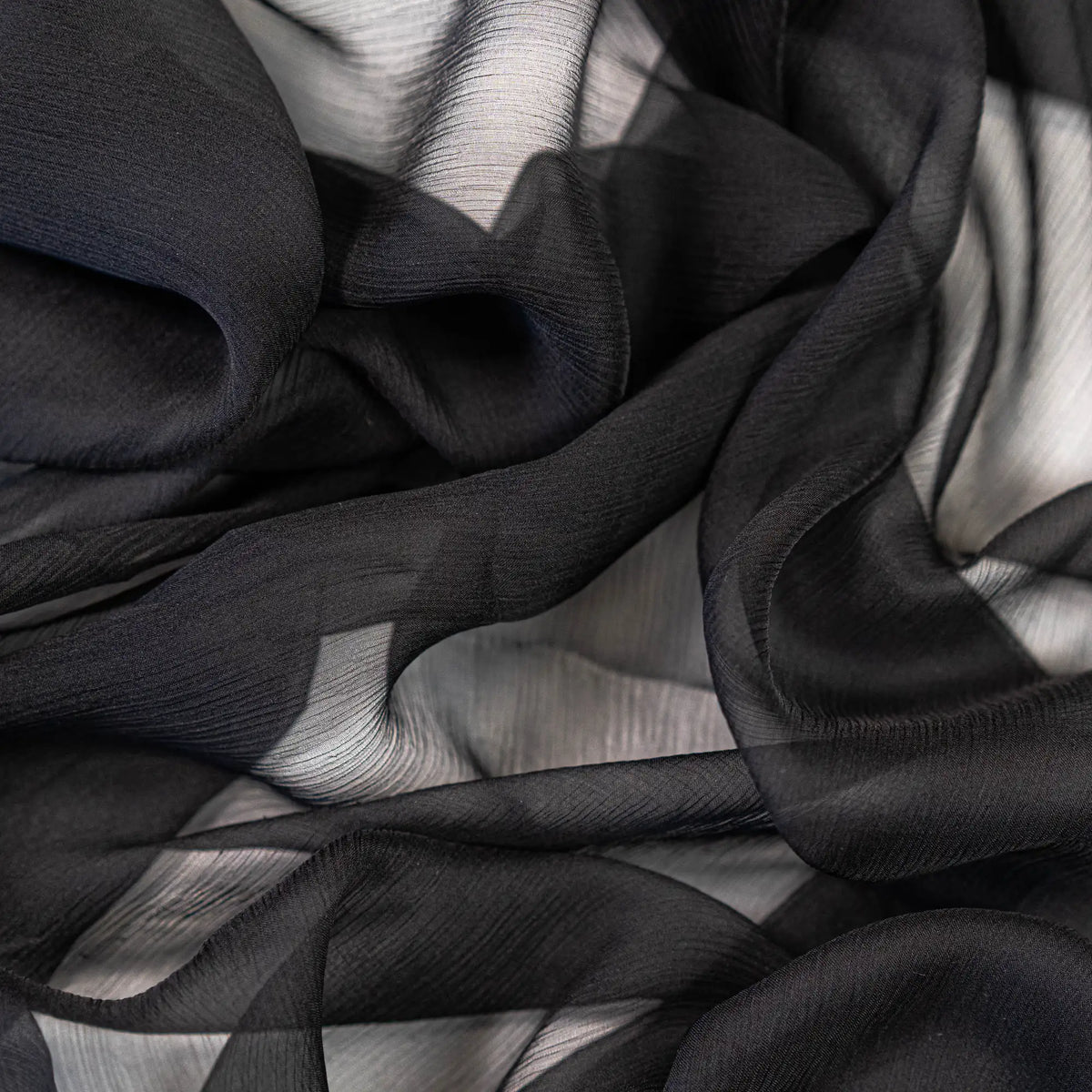
Light and loosely woven, so they shift and snag. Handle with dry hands and cut on a paper underlay. Press quickly at a low silk setting.
Crinkle chiffon
The crinkle is part of the fabric's character, so never press it flat. If it relaxes after cleaning, gently twist the damp length lengthwise, without wringing out the water, and let it dry twisted to bring it back.
Silk jersey
A knit that stretches under its own weight. Dry it flat, and store it flat and loosely folded with tissue in the folds, rather than hung or rolled tightly.
Devoré
The sheer burnt-out areas are much finer than the pile. Dry clean, steam lightly from the reverse, and never pull on the sheer ground.
CoversSilk dupion, satin, crepe satin, duchess satin, sandwashed satin, satin chiffon, hammered satin, habotai, crepe de chine, georgette, chiffon, crinkle chiffon, organza, taffeta, zibeline, jersey, devoré, jacquard, stretch silk satin. Polyester liquid (glass) organza: see Polyester & stretch. Silk tulle and silk mesh: see Tulle & net. For silk velvet see Velvet.
Lace
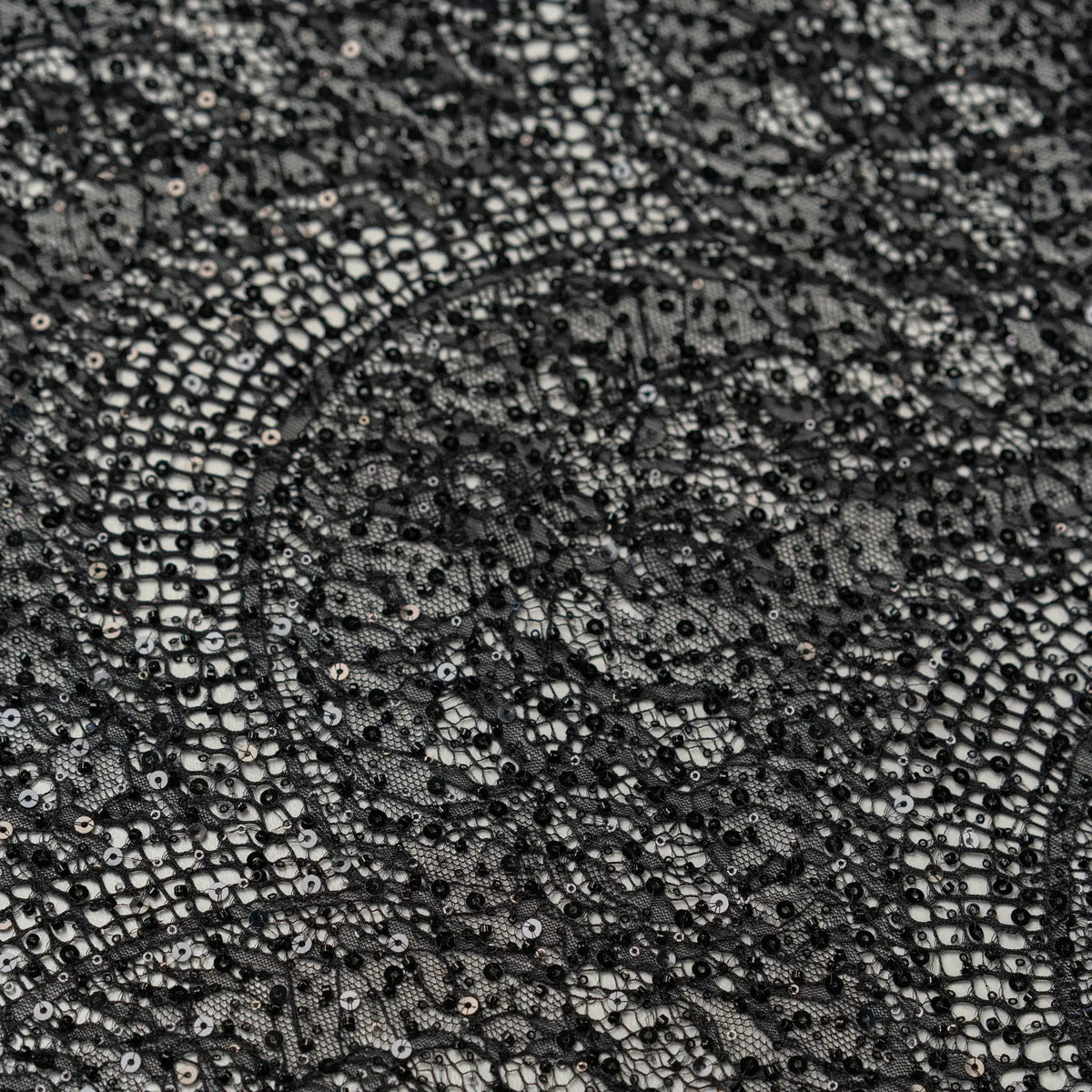
Most of our laces are dry clean only; cotton broderie anglaise is the exception, noted below. Most are nylon, polyester or viscose blends, often with corded or three-dimensional motifs that give them their relief. Care is mostly about keeping that relief and protecting the fine edges.
- Dry clean. Viscose-blend laces can shrink and distort when wet, so keep water and heavy steam off them.
- Face down on a thick, clean towel, low setting, through a pressing cloth. The towel lets the motifs sink in rather than flatten.
- Nylon lace needs the lowest setting (one dot).
- Remove rings and bracelets when cutting and fitting. Eyelash and scalloped edges catch easily.
- When cutting appliqués, cut around the motifs with small, sharp scissors and leave a few threads beyond the cord.
Corded & 3D lace
Raised cords and flowers flatten under pressure. Press only from the reverse on a towel, and store rolled with tissue, not folded.
Guipure
Has no net ground: the motifs are joined by bars. It is heavier and can stretch out of shape if hung, so store flat or rolled.
Stretch lace
Contains elastane, which heat weakens. Dry clean like our other laces, press at the lowest setting, and store flat so it doesn't grow.
Glitter & pleated lace
Glitter is bonded to the surface, so don't iron glitter lace; steam lightly from the reverse at a distance. Pleats are set with heat: press pleated lace only along the pleat lines, from the reverse.
Broderie anglaise
Our broderie anglaise is 100% cotton, so it can be washed cold and gently. Pre-wash before cutting, as cotton shrinks. Cotton-blend laces with nylon, viscose or corded motifs are still dry clean only.
Lace trims & motifs
Clean trims the same way as the garment they're sewn to. If the garment will be washed, pre-shrink the trim along with your main fabric, as trims can shrink at a different rate. Press face down on a towel, and store trims loosely wound on a card or roll, not folded, so scalloped and eyelash edges keep their shape.
CoversCorded, Chantilly, broderie anglaise, lace trims and motifs, Leavers, guipure, 3D floral, beaded lace (see also Beaded & embellished), stretch, glitter, pleated and panel laces.
Tulle & net
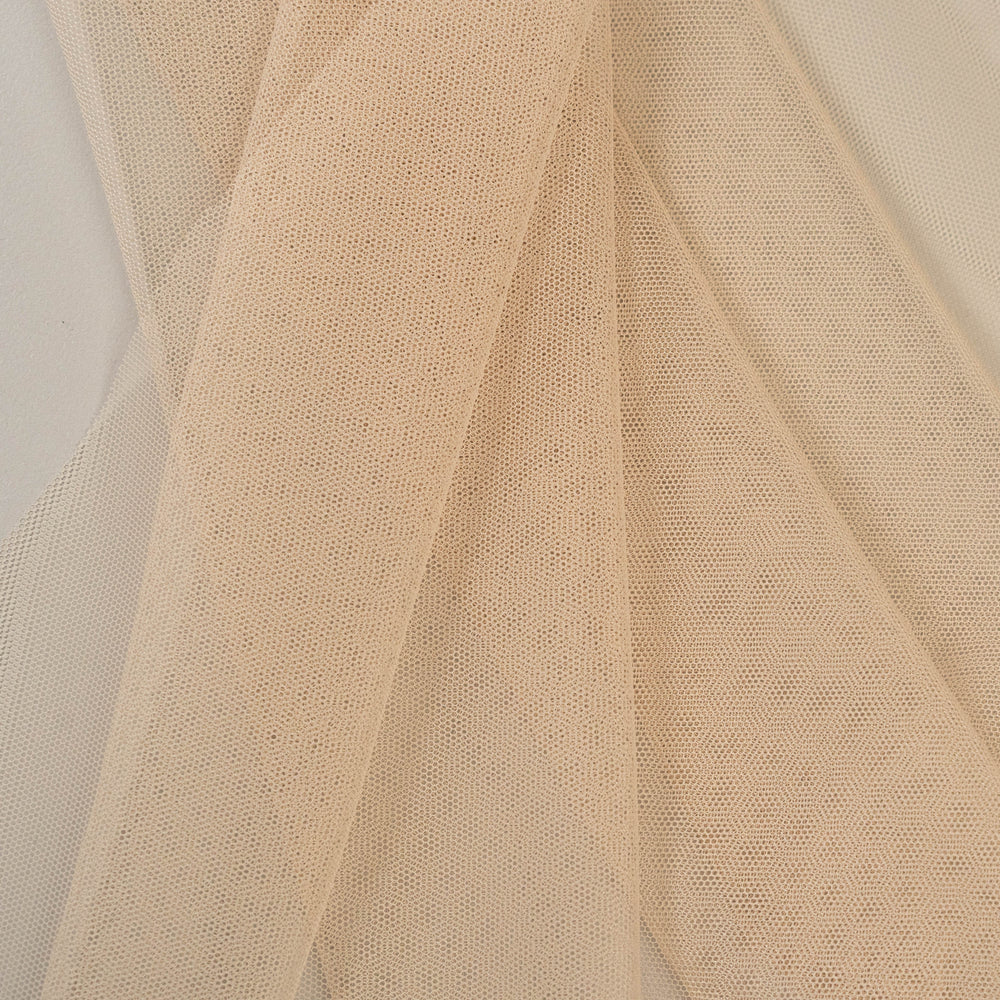
Most bridal tulles are fine nylon or polyester nets: strong and light, but sensitive to heat. Plain tulles can be washed with care; stiffened, pleated and most embellished tulles cannot. Water drop tulle has its own care, below.
- Our plain nylon and polyester tulles and nets: bridal tulle, bridal net, 1D, 2D, crystal, illusion, polyester and soft tulle.
- Blot marks straight away. If one remains, test a mild stain remover on an offcut first, then dab it on with your fingertips, following the product's directions, and rinse in cold water.
- Hand wash in cold water with a mild detergent and rinse well in cold water, or dry clean. Don't wring.
- Lay between two dry towels to take up the water, then hang to dry in an open space, out of direct sun.
- Iron at the lowest setting (one dot), without steam, through a cloth. To relax creases, a handheld steamer held at a distance or a steamy bathroom works well. A hot iron will melt nylon.
- Many stiff nets and crinolines get their body from a finish that water and steam soften. Specialist dry clean only, and no steam.
- Crinoline can take a warm iron through a pressing cloth. Organza crinoline, metallic crinoline and stiff net are more delicate: press seams only, dry, on the lowest setting, through a pressing cloth. Test on a scrap first.
- Store loosely rolled or flat, never crushed into a bag.
- Pleated and ruffled tulles are heat-set. Specialist dry clean only, and don't iron the pleats or ruffles.
- Shirred tulle is gathered with elastic thread. Don't press or stretch it, and keep it away from heat.
- Specialist dry clean only. Don't iron; if needed, steam lightly from the reverse at a distance.
- Our recycled polyester tulles, flocked spot tulle and woven spot tulle (a nylon and rayon blend) are dry clean only. Flocked spots can rub off, and rayon can shrink when wet.
- Our silk tulle (84% silk) and silk mesh (100% silk) follow our silk care: dry clean, and press on the silk setting (two dots) through a cloth.
- We recommend dry cleaning for our cotton tulle. If you do wash it, pre-wash the length first, as cotton shrinks.
- The clear droplets are resin, set into the nylon mesh. Hand wash gently in cool water with a mild detergent, without rubbing the droplets or wringing, and hang to dry out of direct sun. Talk to a specialist dry cleaner before dry cleaning.
- Don't iron. Use cool steam from a distance and keep the steamer head off the droplets, or hang it in a steamy bathroom.
- Keep perfume, hairspray and body creams off the droplets. Store it hanging or loosely rolled, away from light, so the droplets aren't crushed and clear resin doesn't yellow.
CoversBridal tulle, bridal net, 1D, 2D, crystal, illusion, polyester and soft tulles; recycled, flocked and woven spot tulles; silk tulle, silk mesh, cotton tulle, water drop tulle, stiff net, crinoline and organza crinoline, pleated and ruffled tulle, lurex, sparkle and glitter tulle, shirred tulle. Embroidered, beaded and sequined tulles: see Beaded & embellished.
Beaded & embellished
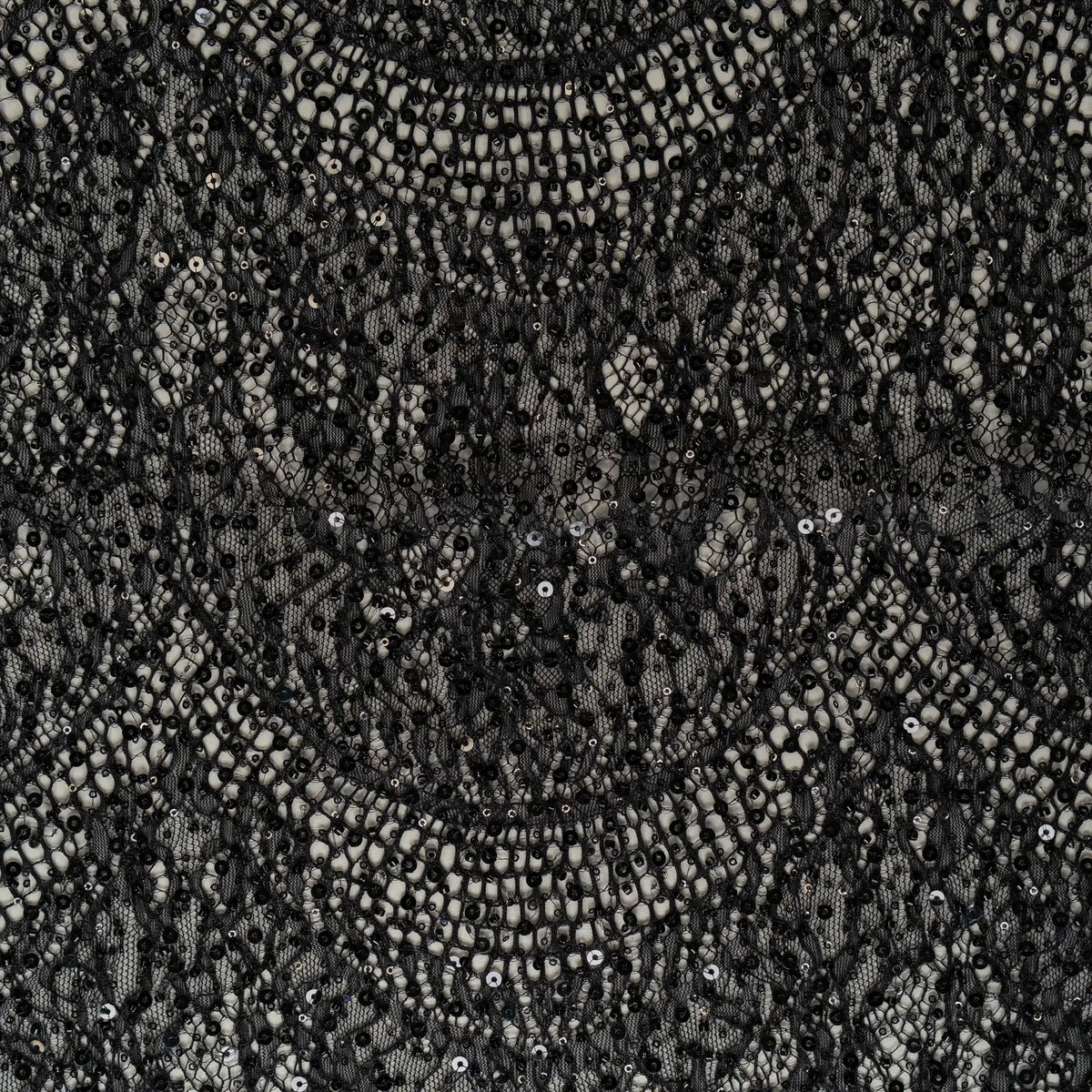
We recommend specialist dry cleaning for all our embroidered, beaded and embellished fabrics. Talk to a specialist cleaner before the garment goes in, and ask them to test an offcut first.
- Specialist dry clean only. Ask for a gentle cycle in hydrocarbon solvent (the F symbol), point out the embellishment, and ask the cleaner to test an offcut or spare sequin first.
- Sequins can cloud, curl, lose their colour or even dissolve in solvent and heat. Faux pearls can lose their coating.
- Hotfix diamanté is held on with heat-set glue. Heat, steam and stronger solvents can loosen it.
- Never iron, from either side: heat through the base cloth can melt sequins, peel the foil coating off metallic sequins and loosen hotfix glue.
- If creases must go, lay the fabric face down on a thick towel and steam lightly from the reverse at a distance, after testing an offcut. Keep steam away from feathers entirely.
- Our beaded trims are bugle or seed beads machine embroidered onto tulle. Machine beading is often held by a chain stitch that can unravel once it's cut, so secure the thread ends by hand before cutting a length.
- Stitch trims and motifs in place by hand, and store them flat or loosely wound, never folded or crushed.
- The fabric itself needs specialist dry cleaning, but you can refresh the stones between cleans. Wipe each claw-set crystal or mirror tile gently with a soft, lint-free microfibre cloth to lift dust, fingerprints and makeup. Acrylic stones scratch easily, so never use paper towel.
- On fine diamanté or rhinestone mesh the stones are too small to wipe one by one: brush them gently with a soft, dry brush instead.
- For stubborn marks, dampen a cotton bud with lukewarm water and a drop of mild, pH-neutral detergent, wipe the face of the stone only, then dry it straight away with the cloth. Keep moisture off the fabric, the claw setting and the back of the stone: water can lift or dull a foil backing and mark the fabric around it.
- Don't use alcohol, ammonia, glass cleaner or jewellery polish, and never spray anything onto the fabric. Check claw settings as you go, and don't lever or bend the claws.
- Remove beads and sequins from the seam allowances before stitching, then hand-sew a few back over the seam to hide it.
- Use a zipper foot and a new needle, and never sew over a bead: broken glass can damage the machine.
- Heavy beading stretches the base when hung. Store lengths flat or rolled with white tissue or cotton between the layers. A finished gown can hang on its hanging tapes for a short time; for long-term storage, lay it flat in a box (see Storing).
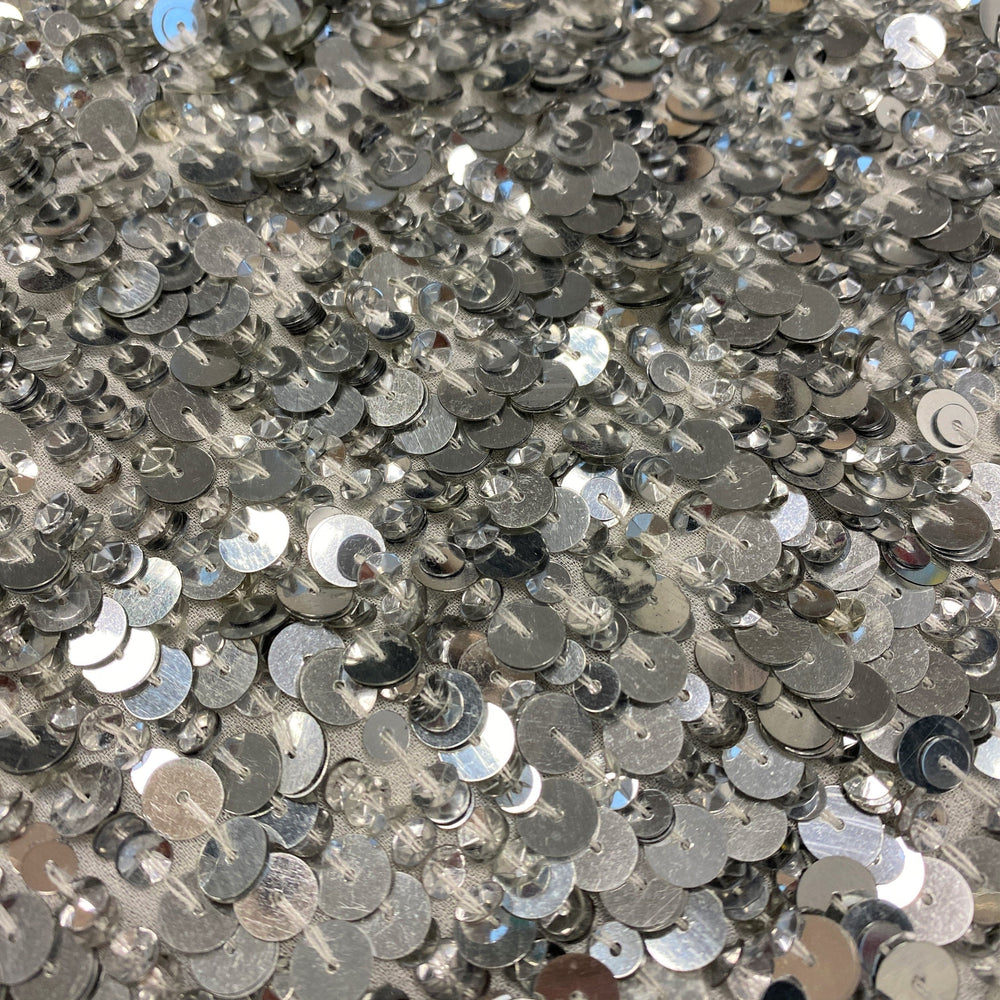
CoversEmbroidered and embellished tulles, beaded and 3D laces, sequin georgette, pearl, crystal and feather tulles, 3D appliqués and motifs, diamanté mesh, claw-set and flat-back crystals, mirror tiles, beaded and sequined trims, fringe.
Metallic & foil
Metallic yarns and foil finishes sit on the surface of the cloth, so heat, solvents and friction are what damage them.
- Specialist dry clean only. Ask for a gentle cycle in hydrocarbon solvent (the F symbol), tell the cleaner the fabric has metallic yarn or a foil finish, and ask them to test an offcut first: solvents can strip foil.
- Don't iron: heat can dull metallic yarn and lift or cloud foil. If needed, steam lightly from the reverse at a distance, after testing an offcut.
- Perspiration can tarnish metallic yarn and wear away foil, so line garments wherever the fabric would sit against skin.
- Roll rather than fold: foil can crack along a crease. Keep away from Velcro, jewellery and rough surfaces.
CoversMetallic jacquards, metallic crushed foil, metallic polyester chiffon, lurex, metallic silk velvet. Metallic crinoline: see Tulle & net.
Polyester & stretch
Polyester can be dry cleaned or washed. Fabrics with elastane (spandex) need cooler care to keep their stretch.
- Hand wash, or machine wash cold on a gentle cycle, 30°C max. Or dry clean (P).
- No chlorine and no bleach.
- Iron at two dots (medium) through a pressing cloth, or one dot for stretch polyester. Too hot an iron leaves shine on satins and dupions.
- Gentle wash, 30°C max. No tumble dryer, which breaks down elastane.
- Keep chlorine away: pool water and bleach weaken elastane, so rinse promptly after contact. Skip fabric softener, which coats the fibres.
- Dry flat or over a rail, not pegged. Press at the lowest setting through a cloth, and don't press scuba seams hard or they will imprint.
- A 100% polyester organza with a glassy, reflective finish. We recommend dry cleaning to keep its sheen. It can also be hand washed gently in cold water with a mild detergent: don't rub, wring or twist, and roll it in a towel to take up the water.
- No bleach, and no tumble dryer: hang to dry in the shade.
- Iron at the lowest setting (one dot), on the reverse, through a pressing cloth, without steam. A hotter iron can melt the fibre or dull the surface. It resists creasing; a handheld steamer held at a distance relaxes any that form.
- The surface shows snags, pin holes and needle marks: pin inside the seam allowance, sew with a fine, sharp needle, and store it rolled or hanging rather than crushed.
- Pre-wash polyester linings if the garment will be washed. Otherwise follow the care of the outer fabric.
CoversPolyester satin, liquid satin, lining, dupion, crepe, faille, zibeline (mikado) and chiffon; liquid (glass) organza; recycled polyester crepe; stretch satin, stretch crepe and stretch zibeline; power net; scuba.
Cotton & linen
- Machine wash cold on a delicate cycle with similar colours. Tumble dry low, and iron hot if needed.
- Reshape while damp to keep the shape and structure.
- Cotton can shrink on its first wash, so pre-wash before cutting.
- Our silk cotton voile is 70% cotton and 30% silk, so it needs the silk's gentler care, not the cotton's.
- Hand wash separately in cold water with a pH-neutral, enzyme-free wash suitable for silk. No bleach or fabric softener, and don't soak, rub or wring.
- Don't tumble dry. Roll in a towel to remove water, then dry flat or on a padded hanger in the shade.
- Iron on the silk setting (two dots), on the reverse, while slightly damp, with light or no steam. Pre-wash the length the same way before cutting.
- Its crispness comes from a finish that softens with washing. Hand wash cool, and press while damp to bring back some of the body.
- Iron on the reverse to protect the sheen.
- We recommend a cool hand wash. A cold, gentle machine cycle is fine too, and dry cleaning keeps deep colours at their best.
- Linen shrinks on its first wash, so pre-wash the length before cutting.
- Always dry linen reverse side out and in the shade. The sun fades it.
- Iron hot or warm, ideally while slightly damp.
CoversCotton voile, silk cotton voile, organdy, poplin, sateen, broderie anglaise; linen and linen blends.
Viscose & plant fibres
Viscose and our newer plant-based fabrics are regenerated cellulose: soft and breathable, but they lose strength when wet and can shrink.
- Dry cleaning is safest. If you hand wash, use cold water and a mild detergent, don't wring or twist, and dry flat in the shade.
- Pre-shrink a test piece before cutting.
- Medium setting (two dots) on the reverse while slightly damp.
- Banana peel fabric has a slight sheen on the face and a matt reverse, so press only on the reverse. We recommend dry cleaning for rose petal satin to keep its original quality, but it can also be hand washed gently in cold water with a mild detergent. Don't wring it, dry it in the shade, and press on a low setting on the reverse.
CoversPrinted viscose, viscose-blend laces, banana peel fabric, rose petal satin.
Wool
- Dry clean. Between wears, brush with a soft clothes brush and air the garment so you clean it less often.
- Medium setting (two dots) with steam, through a pressing cloth. Pressing straight onto wool leaves shine.
- Let the fabric cool and dry on the board before moving it, so the press holds.
- Steam bouclé lightly from above, without the weight of the iron, to keep the loops.
- Moth larvae feed on wool and silk, especially where there are food or perspiration marks. Store it clean and completely dry (see Storing). Check stored pieces regularly. Cedar and lavender don't reliably keep moths away.
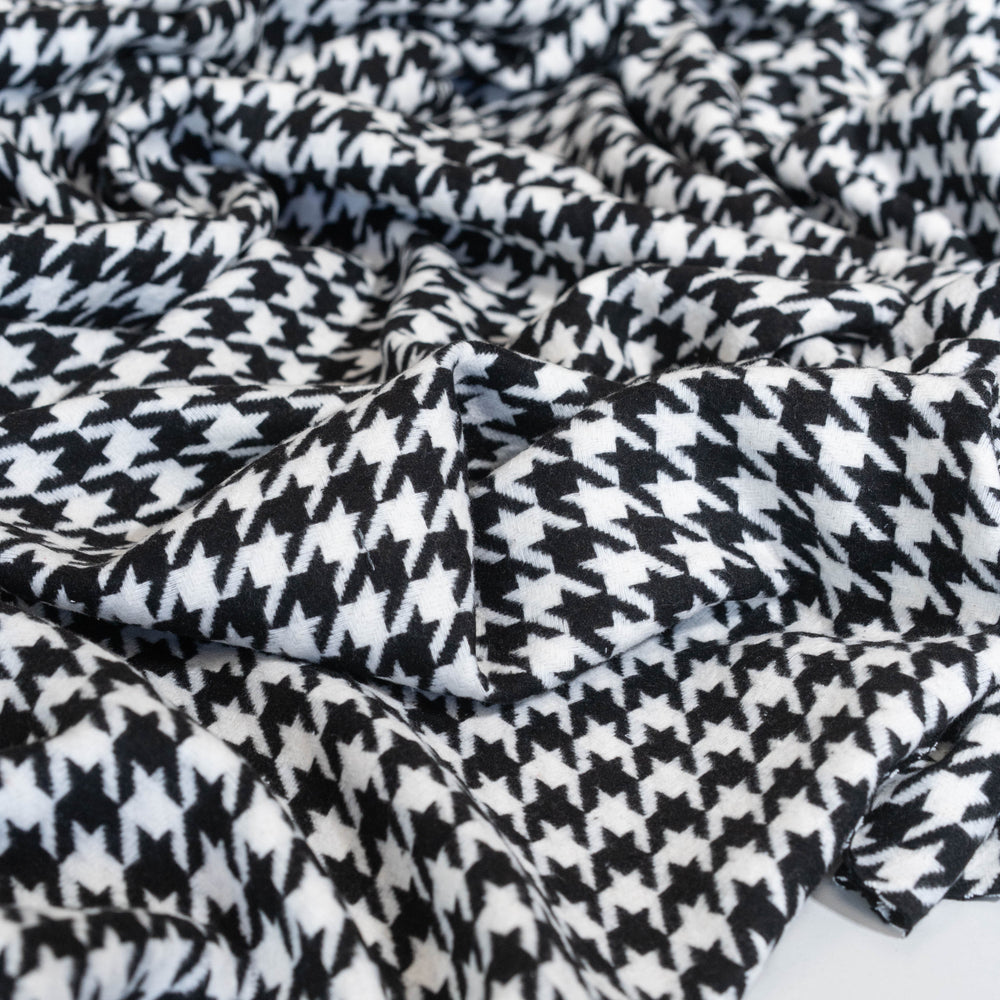
CoversItalian wool crepe, wool tweed, wool-blend bouclé, alpaca wool.
Velvet
- Dry clean only. Don't spot clean.
- Never press an iron onto velvet: it flattens the natural pile.
- Use a handheld steamer with great care to remove creases, or hang the fabric or garment in a steamy room so the creases relax.
- To press seams open, lay the velvet face down on a needle board, a spare piece of velvet (pile side up) or a thick towel. Open the seam with your fingers, then use a handheld steamer on the reverse, or hold a steam iron well clear of the fabric so only the steam reaches it.
- The iron or steamer should never touch the velvet, and never put any weight on it: pressure crushes the pile permanently.
- Store velvet rolled, not folded, with the pile facing out. Don't use clip hangers: they mark the fabric.
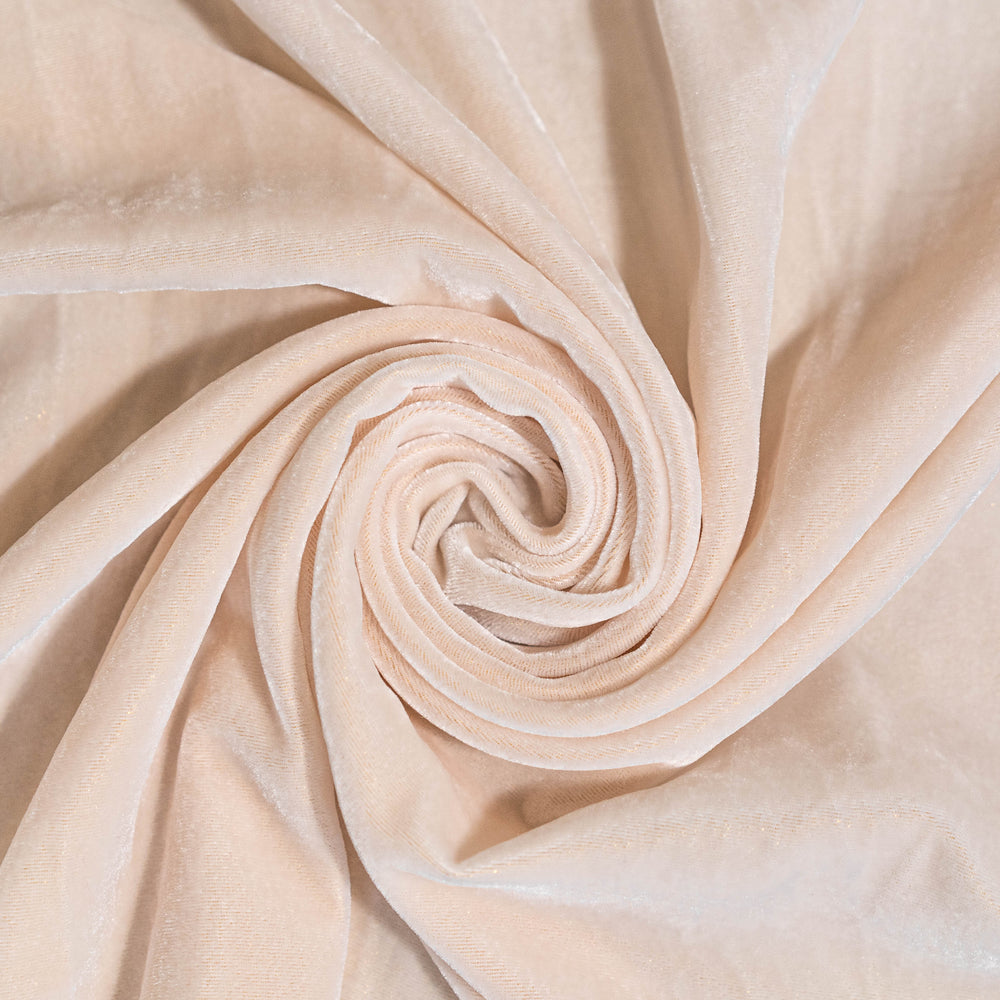
CoversSilk velvet, ruched silk velvet, metallic silk velvet.
Pressing by fibre
Always test on an offcut. For blends, use the setting for the most heat-sensitive fibre. Temperatures follow Australia's care labelling guide; labels made to the newer 2023 international standard show 120, 160 and 210°C for one, two and three dots.
| Fibre | Setting | Steam | Notes |
|---|---|---|---|
| Nylon, elastane, acetate | 1 dot · 110°C | None | Most tulles and laces. Always use a cloth. |
| Liquid & glass organza | 1 dot · 110°C | None (a handheld steamer at a distance is fine) | Reverse side, through a cloth: heat dulls the finish. |
| Silk | 2 dots · 150°C | None on dupion, taffeta, organza & mikado | Reverse side, silk organza cloth. |
| Polyester, viscose | 2 dots · 150°C | Light | Cloth to avoid shine. |
| Wool | 2 dots · 150°C | Yes | Cloth, and let it cool before moving. |
| Cotton, linen | 3 dots · 200°C | Yes | Press while slightly damp. |
| Velvet, sequins, foil, feathers | Don't iron | Light, from the reverse, at a distance (none on feathers) | Face down on a needle board or thick towel. Test an offcut first. |
Storing fine fabric
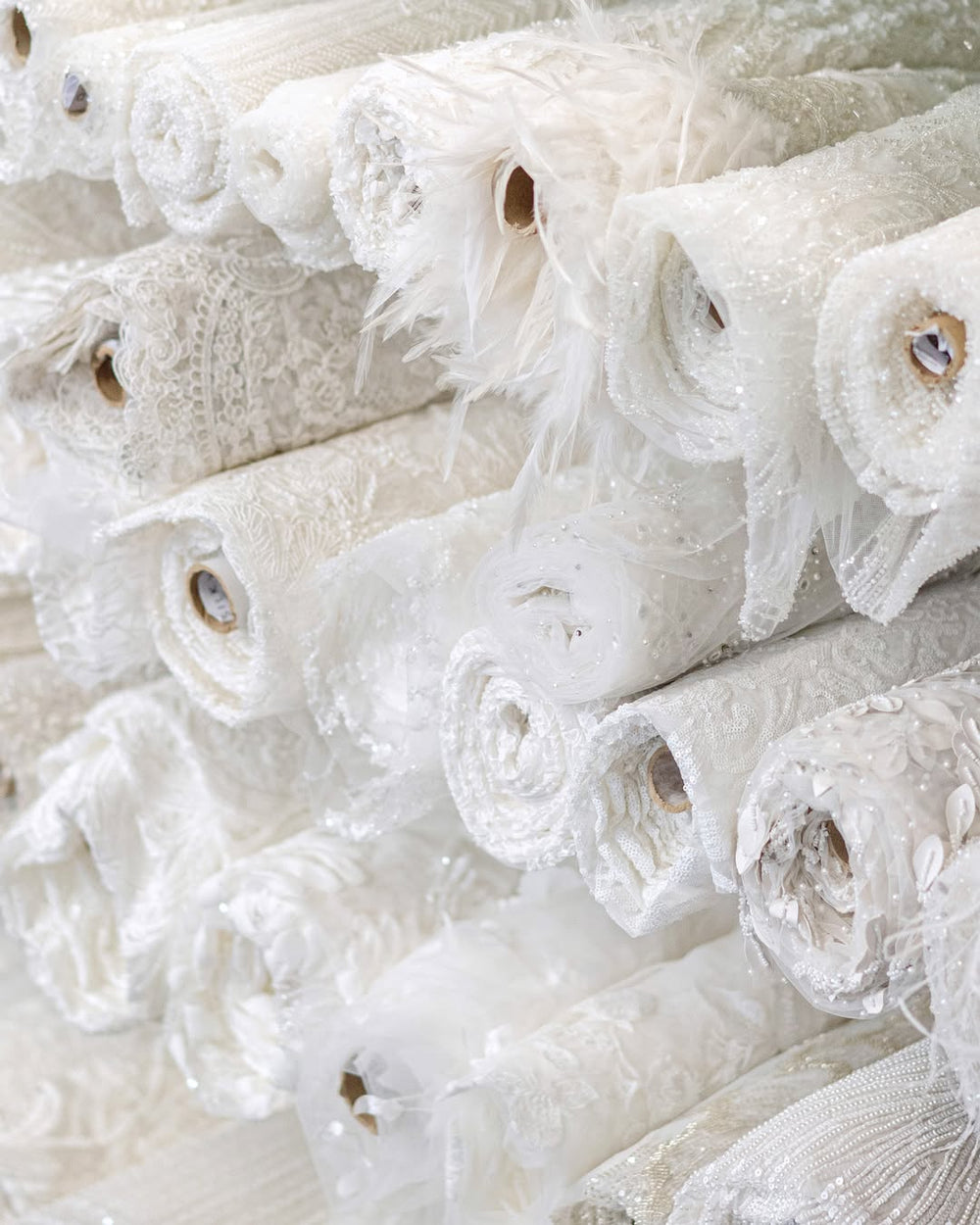
- Take your fabric out of its plastic mailer when it arrives. Roll it onto a cardboard tube, such as the one it came on or any clean tube, with a clean white cotton sheet or pillowcase between the fabric and the cardboard.
- If rolling isn't practical, fold it loosely with a layer of cotton or white tissue in the folds, and refold it now and then so the creases don't set. Knits such as silk jersey are best stored flat and loosely folded.
- Keep it in a cotton bag or pillowcase somewhere cool, dark and dry, such as a wardrobe shelf rather than a garage or roof space.
- Store them clean, because marks yellow and attract moths. Roll velvet with the pile facing out. Check silk and wool now and then for moths, and in humid weather give them some air.
- For a wedding gown or fabric you'll keep for many years, it's worth moving to unbuffered acid-free tissue and an acid-free box. These are sold by archival and conservation suppliers.
- Light fades colour and weakens silk. Store away from windows and bright lights.
- In humid parts of Australia, such as Queensland and the New South Wales coast, mould can mark stored natural fibres. Air stored fabric regularly and keep a moisture absorber in the cupboard, away from the fabric itself.
- Clean a garment before storing it. Invisible marks such as perspiration and sugary drinks yellow over time and attract moths.
- After the day, have the gown specialist cleaned promptly, then store it flat in an acid-free box, padded with unbuffered acid-free tissue at the folds. Check on it once a year and refold it along new lines.
Stain first aid
- Blot, don't rub. Work from the outside of the mark inwards so it doesn't spread.
- Some remnants carry marks or stains from weaving, dyeing or finishing at the mill, before they reach us. These may be permanent and may not come out with cleaning, so check your remnant and place pattern pieces around any marks.
- Champagne, soft drink and other sugary spills dry clear, then turn brown over time. Point out every spill to your cleaner, even ones you can't see.
- Don't iron, steam or tumble dry a stained piece. Heat sets stains.
- Avoid household stain removers and water: water leaves rings on silk. Take it to a dry cleaner.
- Rinse from the back of the stain in cold water. Hot water sets protein stains such as blood and perspiration.
- Red wine: blot straight away; on washable fabrics, then blot with cold water.
- Lipstick and makeup are oily: don't rub or add water. Leave them to your cleaner.
- Candle wax: let it harden, lift off what comes away easily, and leave the rest to your cleaner. Don't iron over it.
- Say what the stain is, when it happened and what you have already tried.
Fabric care questions
Can I wash silk at home?
We recommend dry cleaning for all our silks. Some, such as habotai and sandwashed satin, can be hand washed in cool water with a pH-neutral, enzyme-free wash labelled suitable for silk (supermarket wool and delicates washes often are), but washing can change the sheen, handle and colour. Always test a cutting first.
Can I iron bridal tulle?
Yes, carefully. Use the lowest setting (one dot), without steam, through a pressing cloth, or use a handheld steamer held at a distance. Most tulle is nylon or polyester, and nylon melts under a hot iron. Hanging it in a steamy bathroom also relaxes creases.
How should I clean beaded or sequined fabric?
Specialist dry clean only. Ask for a gentle cycle in hydrocarbon solvent (the F symbol), point out the beading, and have the cleaner test an offcut first. Never iron it, from either side. If creases must go, steam lightly from the reverse at a distance.
Should I pre-wash fabric before sewing?
Pre-wash and dry the fabric the same way you will care for the finished garment. For dry-clean-only fabrics, ask your dry cleaner to pre-shrink the length. Wool can be steamed evenly at home instead; don't steam fabrics this guide marks as no-steam.
How do I store fabric long term?
Take it out of its plastic mailer, roll it onto a clean tube with a cotton sheet or pillowcase between the fabric and the cardboard, and keep it in a cotton bag somewhere cool, dark and dry. For heirloom pieces, such as a wedding gown, use unbuffered acid-free tissue and an acid-free box.
This guide is general advice. Where a product page gives specific care instructions, follow those.
Not sure how to care for it?
Bring a cutting to our showroom in Kew or send us a message. We're happy to advise on any fabric we sell.