

Evening Wear Fabric
Fabric for evening gowns, cocktail dresses and statement pieces: fluid silk satins and crepes, sheer chiffon and organza, structured dupion and taffeta, and sequins, beads and metallics for sparkle.
- Silk satin, crepe, chiffon and organza
- Sequins, beads and metallics
- Structured dupion and taffeta


 Sold out


 Sold out


 Sold out


 Sold out


Guide
Evening Wear Fabric: How to Choose and Sew It
Which of our fabrics suits each evening look, from fluid silk satin to sequins, and tips for cutting, sewing and hemming them at home.
Which fabric for your evening look?
Our evening fabrics, grouped by the look they give.
| Fluid: drapes and follows the body | |
|---|---|
| Sandwash satin | Soft silk satin with a matte reverse. Great for: slip dresses and bias-cut gowns. |
| Crepe satin | Satin on one side, matte crepe on the other, with a weighty fall. Great for: draped and bias-cut gowns. |
| Crepe de chine | Soft and matte, with a gentle drape. Great for: dresses, tops and pants. |
| Faille | Heavy silk, matte on both sides, with a soft, weighty fall. Great for: draped dresses and skirts. |
| Stretch silk satin | Silk with 7% Lycra and a satin face. Great for: fitted gowns. |
| Sheer: sleeves, overlays and layers | |
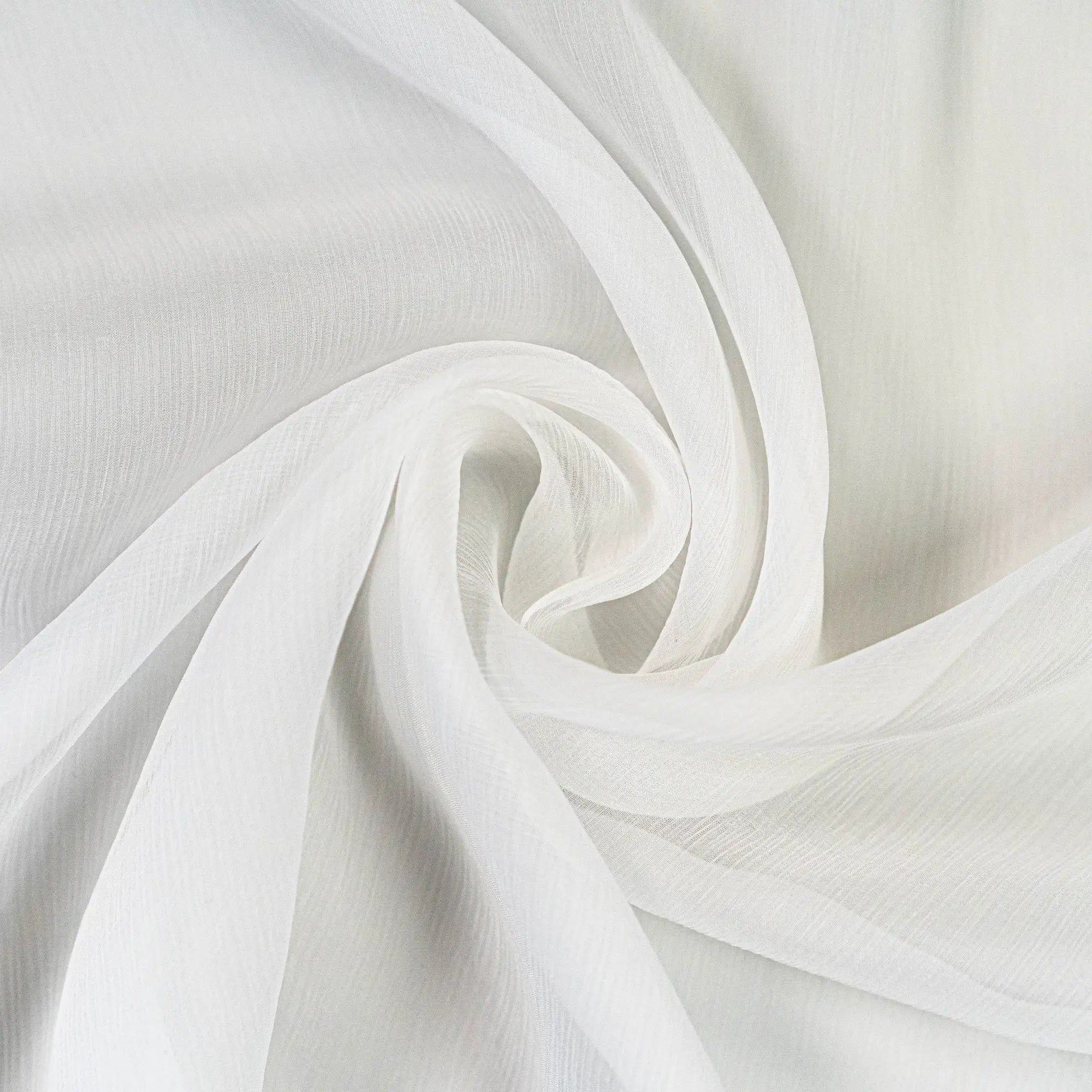
| Satin chiffon | Soft and semi-sheer, with a satin lustre. Great for: draped overlays and sleeves. |
| Georgette | Semi-sheer, with a matte crepe texture. Great for: floaty skirts and sleeves. |
| Crinkle chiffon | Feather-light, with a soft crinkle. Great for: soft layers. |
| Organza | Sheer and crisp; holds its shape. Great for: puffy sleeves and overskirts. |
| Structured: holds a shape | |
| Dupion | Crisp, with natural slubs. Great for: bodices, full skirts and jackets. |
| Taffeta | Crisp and smooth, with a rustle. Great for: full skirts and ball gowns. |
| Satin organza | Organza with a satin finish and a very sculptural hold. Great for: sculpted skirts and statement sleeves. |
| Sparkle and shine | |
| Sequinned & beaded georgette | Georgette covered in sequins or beads, with a lovely drape. Great for: evening dresses and tops. |
| Sequin & beaded tulle | Tulle with sequins, beads, pearls or 3D flowers. Great for: overlays, bodices and statement gowns. |
| Metallic jacquard | A woven pattern with metallic threads, with a stiff fall. Great for: skirts, dresses and jackets. |
| Metallic knit | A very shiny knit with stretch. Great for: close-fitting evening pieces. |
| Silk or polyester? | |
| Stretch polyester satin | A heavier satin with stretch. It doesn't breathe like silk, but it's hard-wearing. Great for: fitted dresses, skirts and pants. |
What to make with it
- Evening gowns and bias-cut slip dresses
- Cocktail dresses
- Evening tops, skirts and pants
- Sheer sleeves, capes and wraps
- Statement jackets
Cutting
- Cut slippery silks and sequinned fabrics as a single layer, flat on the table: don't fold them and cut double.
- Satin and sequins look different from each direction, so cut every piece facing the same way. Sequins lie smooth one way: run them down the body.
- Use pattern weights, or pin only inside the seam allowance, as pins can mark satin.
- Use an old pair of scissors for sequins and beads: they blunt good blades.
Sewing
- Sheer and light silks: use a fresh, fine needle (size 60 or 70) and a fine mercerised cotton thread. Polyester thread is stronger, but it can make fine silk pucker. Silk thread is lovely for tacking and hand sewing. French seams look the neatest on sheer fabric.
- Satins and structured fabrics (crepe satin, faille, dupion, taffeta, metallic jacquard): use a fresh needle (size 70 or 80) and a good-quality polyester or mercerised cotton thread. Silk thread is lovely for tacking and hand sewing.
- Stretch fabrics (stretch silk satin, stretch polyester satin, metallic knit): use a fresh stretch needle (size 70) and a good-quality polyester thread, which has a little give, so the seams stretch without snapping. Sew with a narrow zigzag or a stretch stitch, and let the fabric feed through on its own without pulling it.
- Sequins and beads: Clear the seam allowances: snip the threads holding the sequins or beads inside the seam allowance, slide them off and knot the loose thread ends so the rest stay put. Keep any beads or sequins that come loose, to sew back on. Use a zipper foot so you can stitch close to the embellishment, and sew slowly. Once the seams are sewn, stitch the sequins or beads back over them by hand. Put the zip in by hand, and line the garment so nothing scratches the skin.
Hems
- Chiffon and georgette: a hand-rolled hem; let the skirt hang overnight first, then level it.
- Sandwash satin, crepe de chine and bias-cut crepe satin: let it hang overnight, then a machine baby hem: press up 1 cm, stitch close to the fold, trim the allowance right up to the stitching, then turn it once more and stitch again.
- Dupion, faille and taffeta: a bound hem: turn up 4 to 5 cm, wrap the raw edge in a bias strip of silk habotai, and blindstitch it by hand. On a full or curved taffeta skirt, use a faced hem.
- Organza: a hand-rolled hem on floaty pieces, or a deep double hem on a structured skirt.
- Stretch fabrics: turn up once and sew by hand with a loose catch stitch, or use a stretch blind hem.
- Sequins: clear the sequins from the hem allowance, turn a narrow hem and slipstitch it by hand, then sew a few sequins back along the edge.
Colour matching
Colours look different on every screen, so we always recommend ordering samples before you buy, especially if you're pairing a sequinned or lace fabric with a silk.
Pressing
- Light silks and satins: a dry iron on the silk setting, on the wrong side, through a pressing cloth. Satin marks easily, so test on a scrap first.
- Dupion, taffeta and organza: the same, with no steam or water spray, as water drops can leave marks.
- Sequins and beads: never iron directly on them, as heat can curl or melt sequins. Press face down on a thick towel, on a low setting, through a pressing cloth.
- Metallic fabrics: a low setting, through a pressing cloth. Test on a scrap first.
Questions
What is the best fabric for an evening gown?
It depends on the look. Sandwash satin and crepe satin drape and follow the body, dupion and taffeta hold a structured shape, and sequinned georgette and tulle add sparkle.
Silk or polyester for evening wear?
Silk breathes and has a natural lustre. Stretch polyester satin is heavier and hard-wearing, and has stretch for fitted styles.
How do I sew sequinned fabric?
Cut it flat as a single layer, clear the sequins from the seam allowances, sew with a zipper foot, then stitch the sequins back over the seams by hand.
How do I match colours?
Colours look different on every screen, so order samples of the fabrics you want to pair and compare them side by side.
Wholesale for fashion labels, bridal studios and designers buying in bulk. Apply for an account