

Bridal Lace Fabric
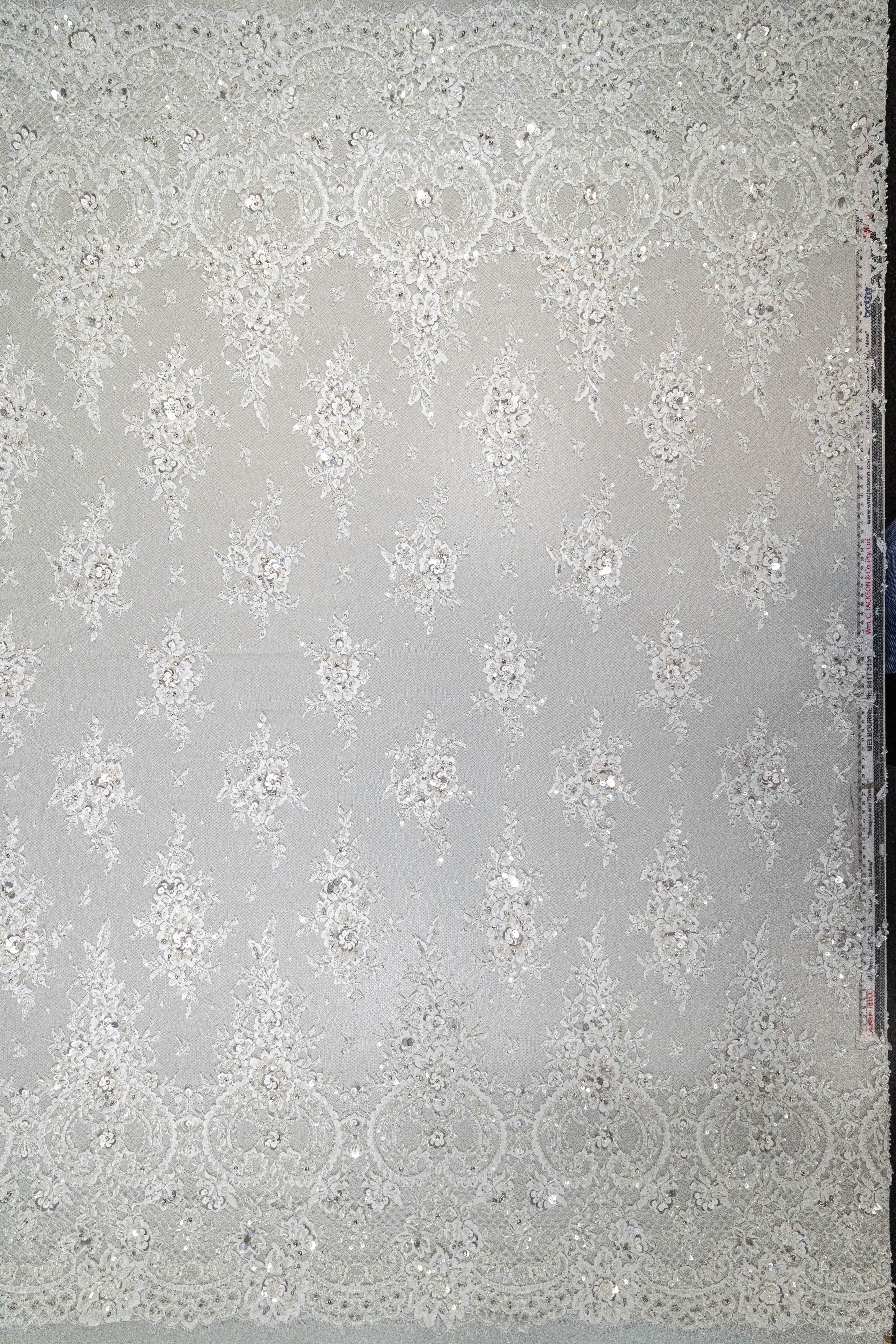
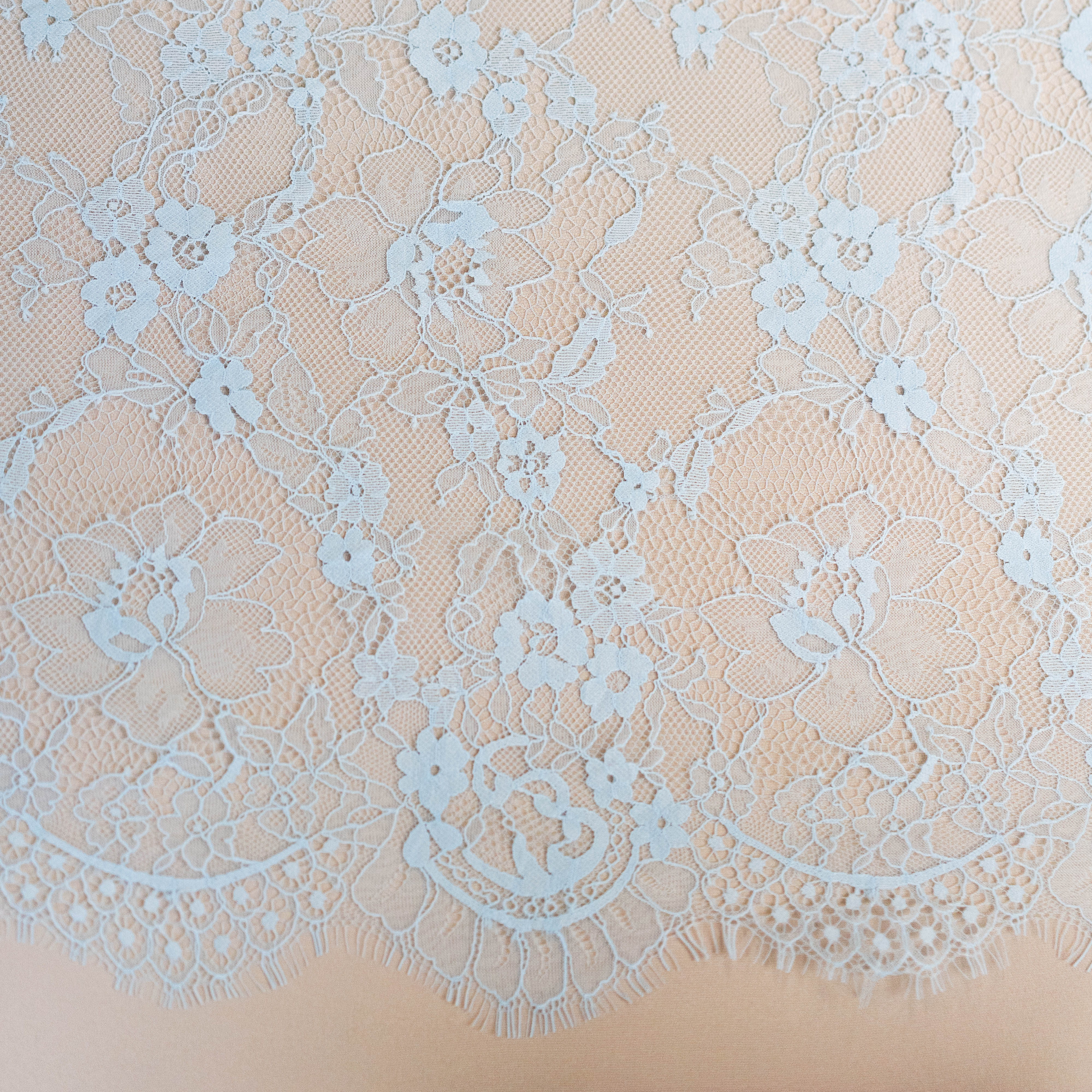
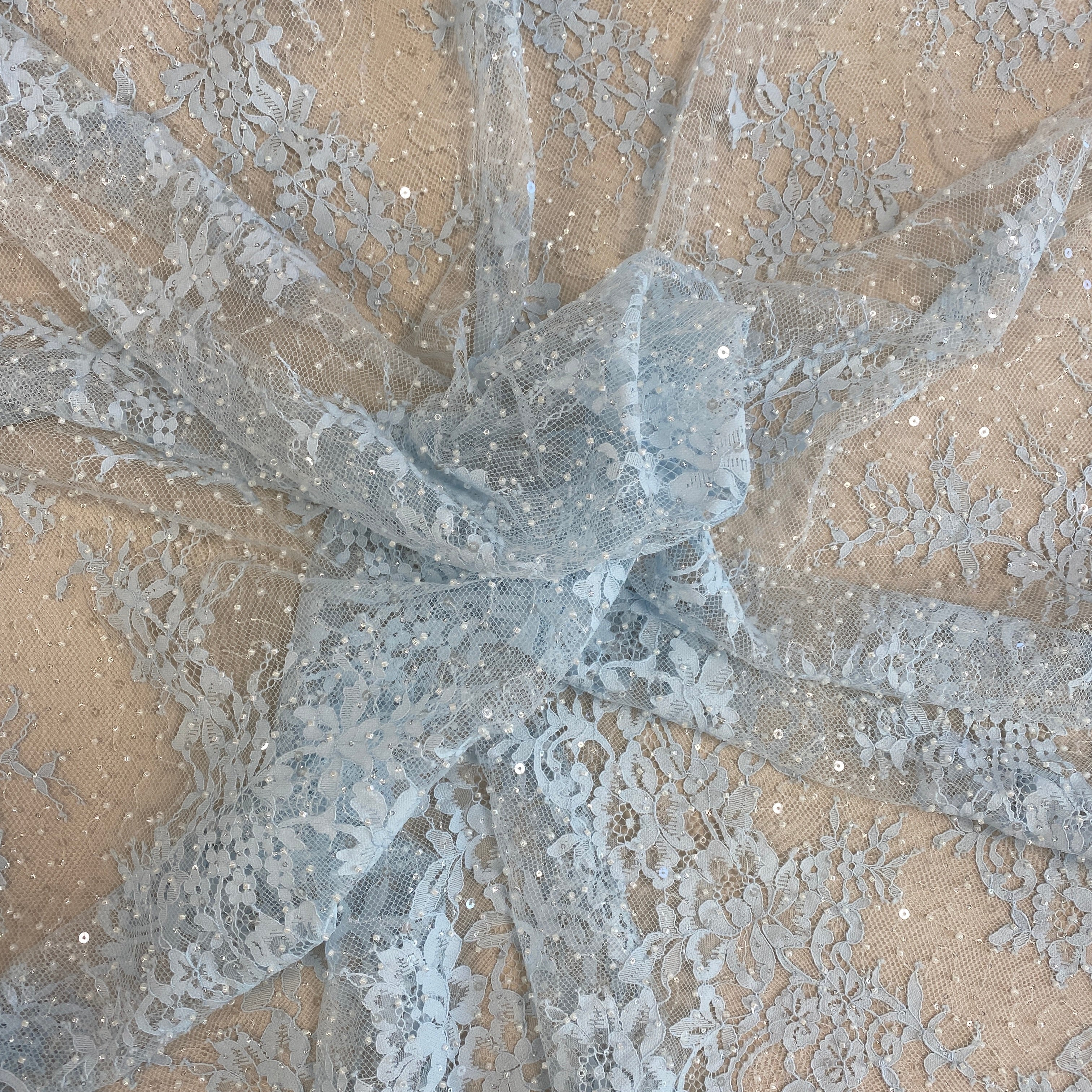
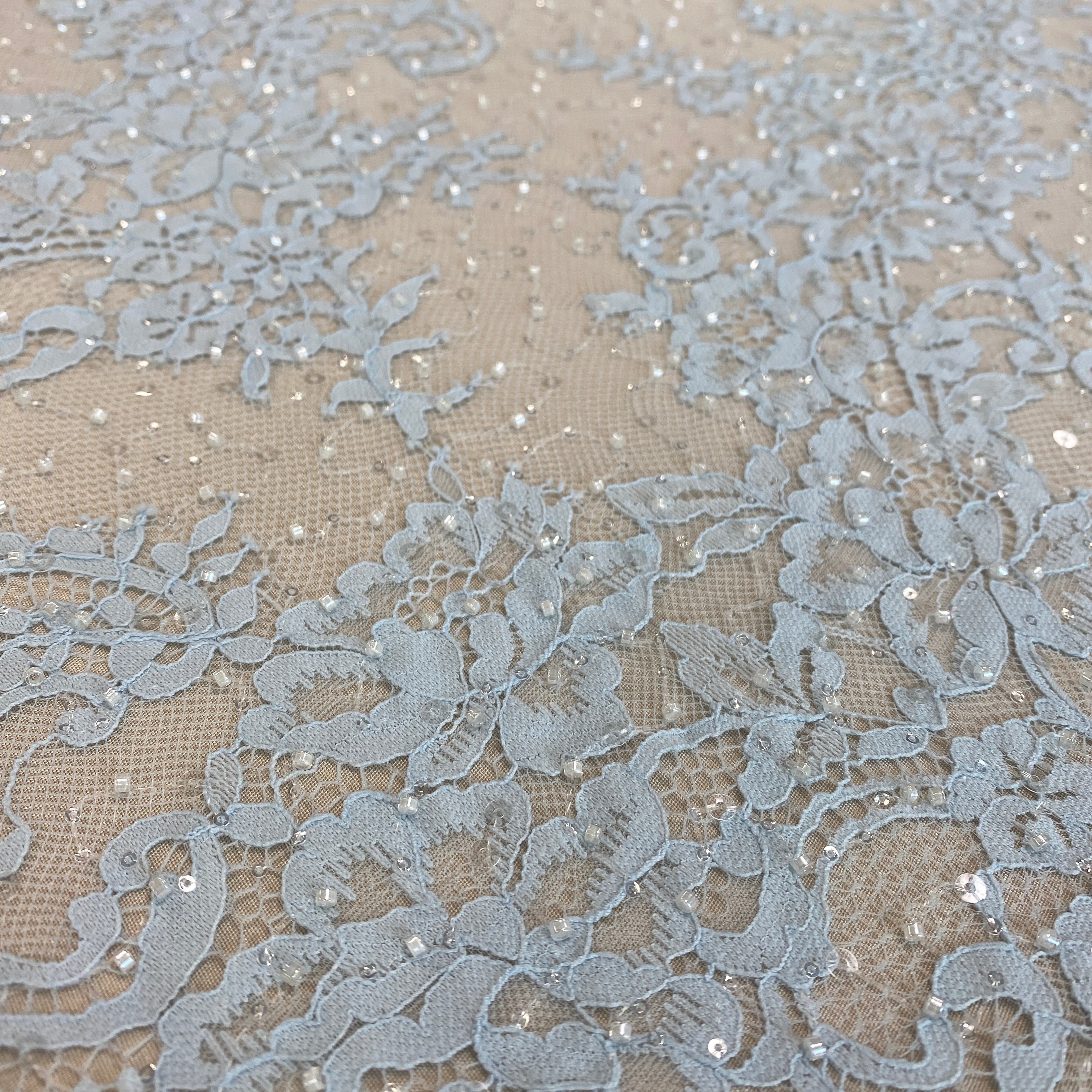
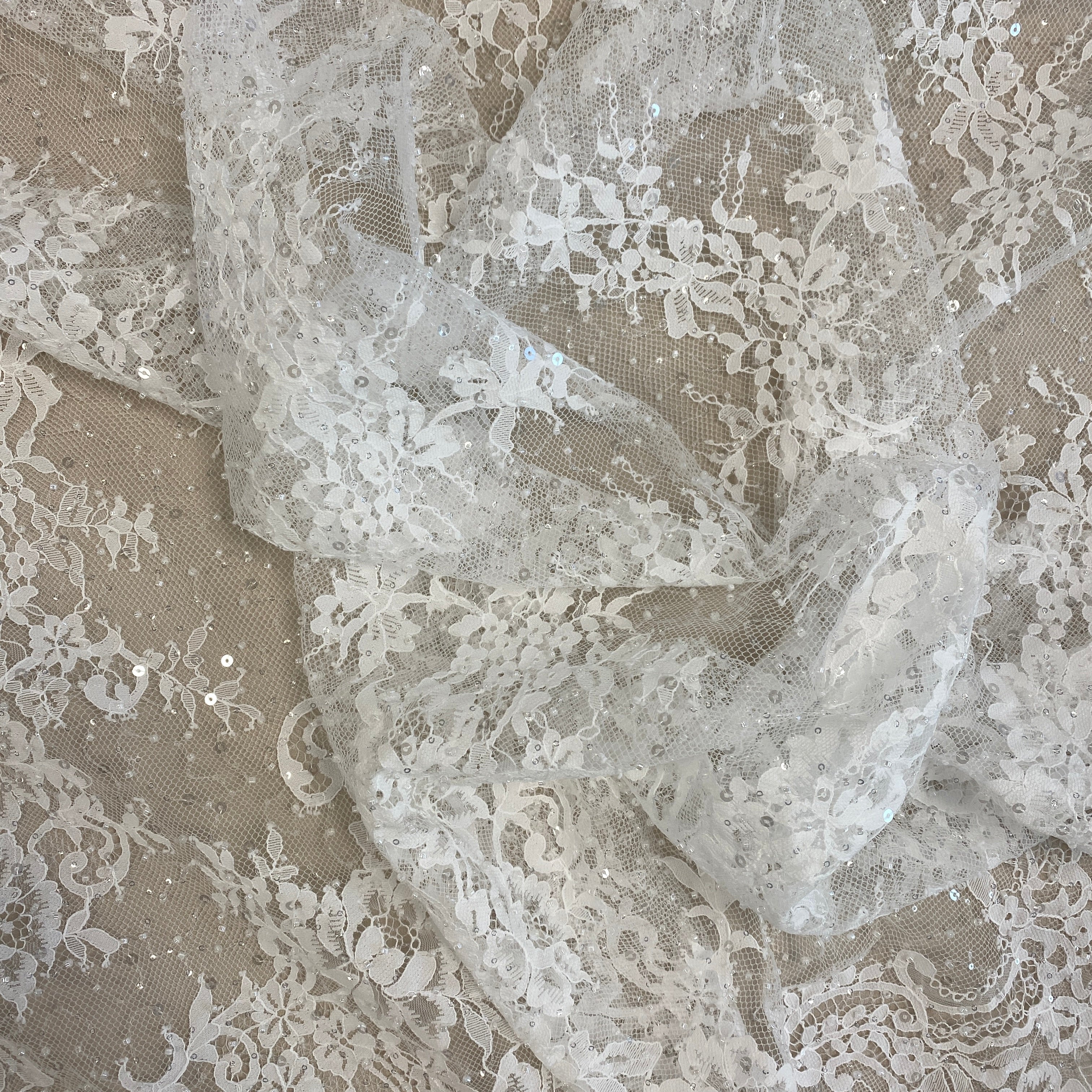
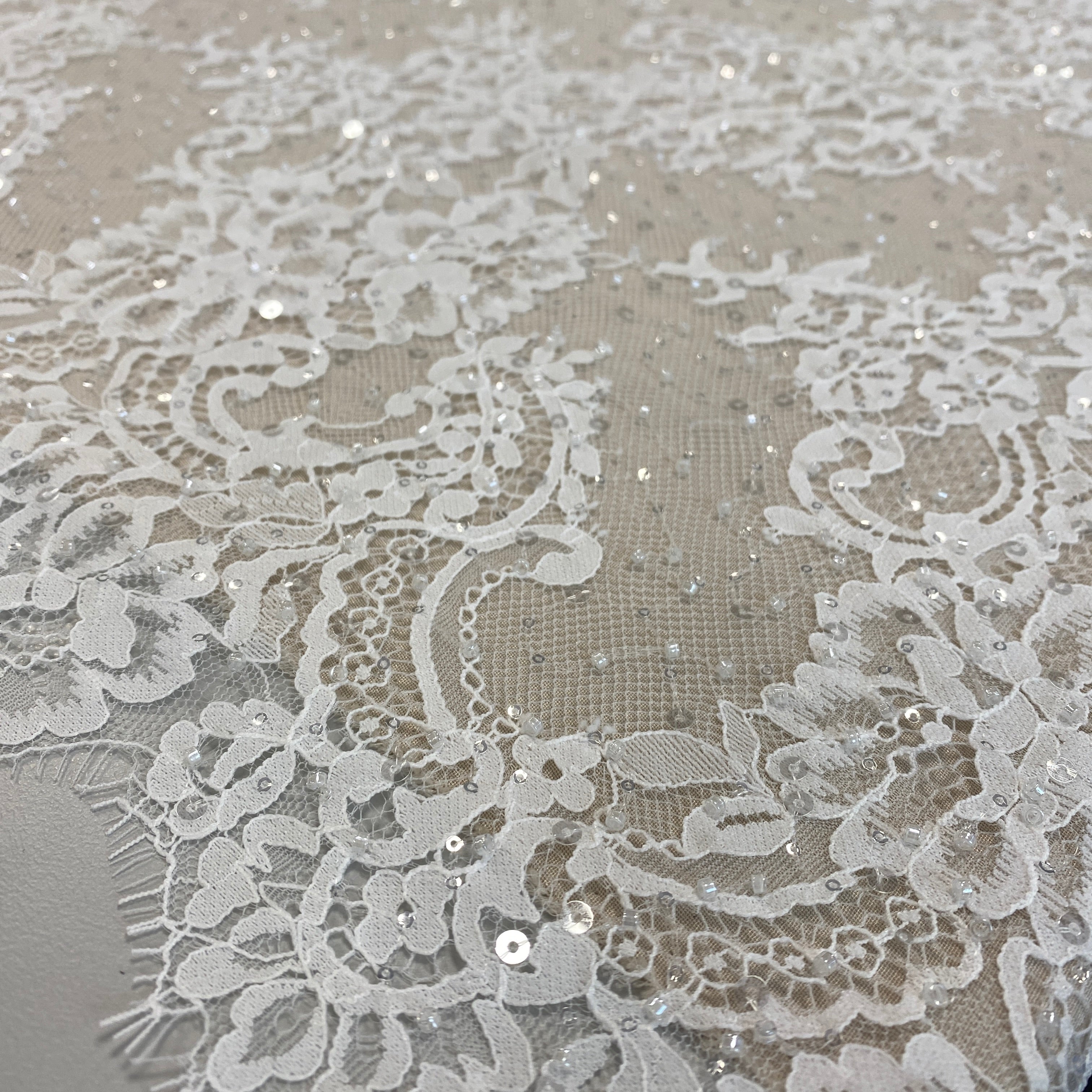
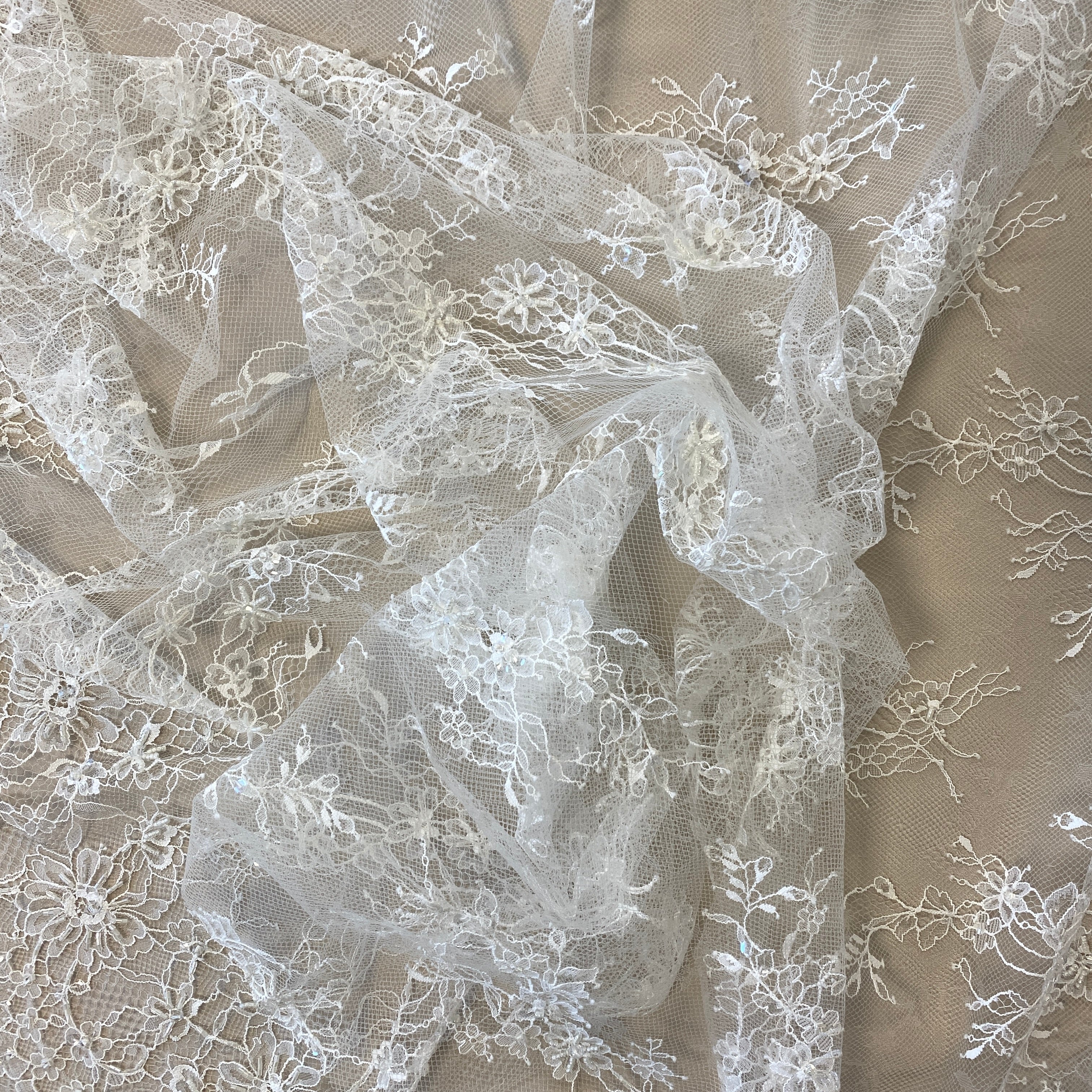
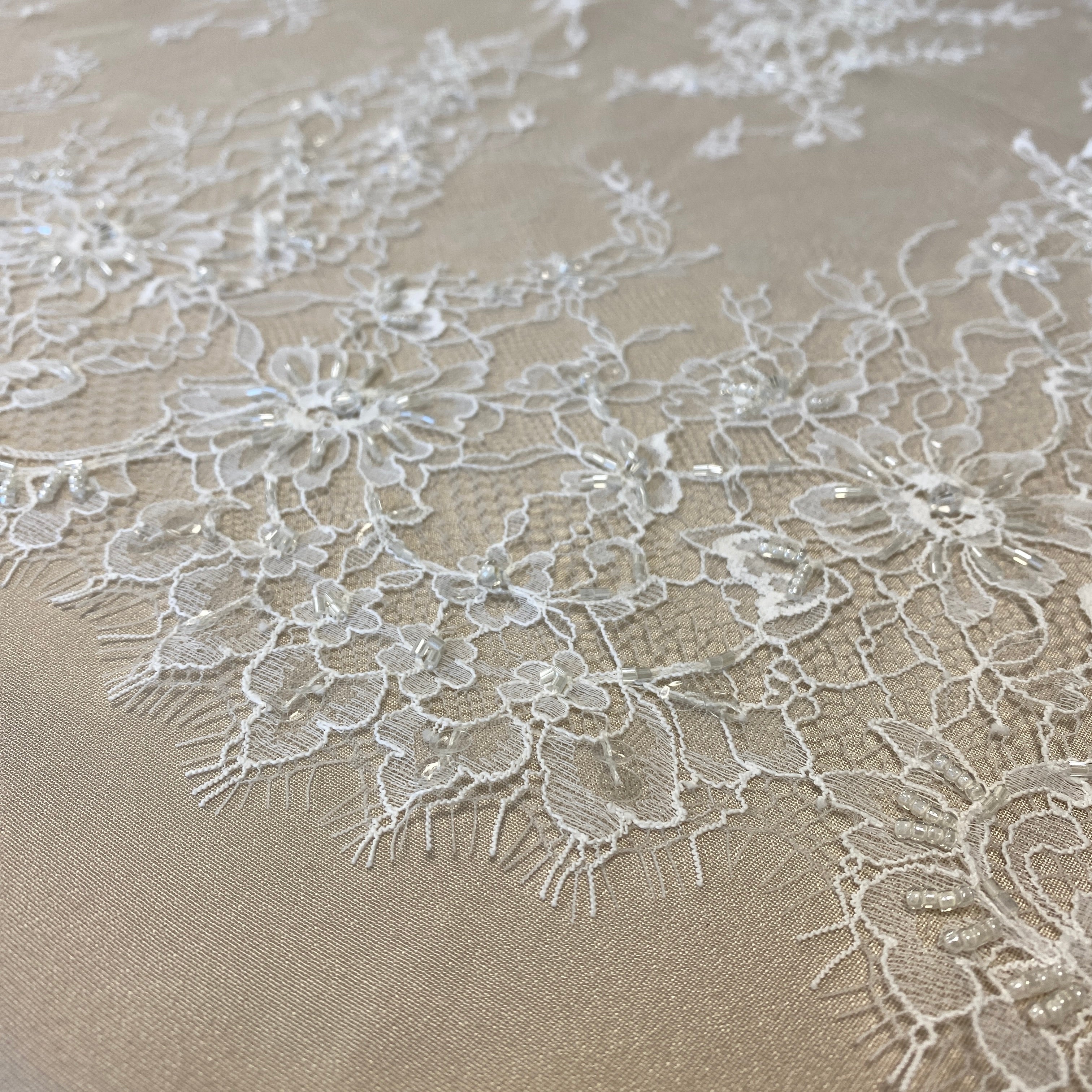
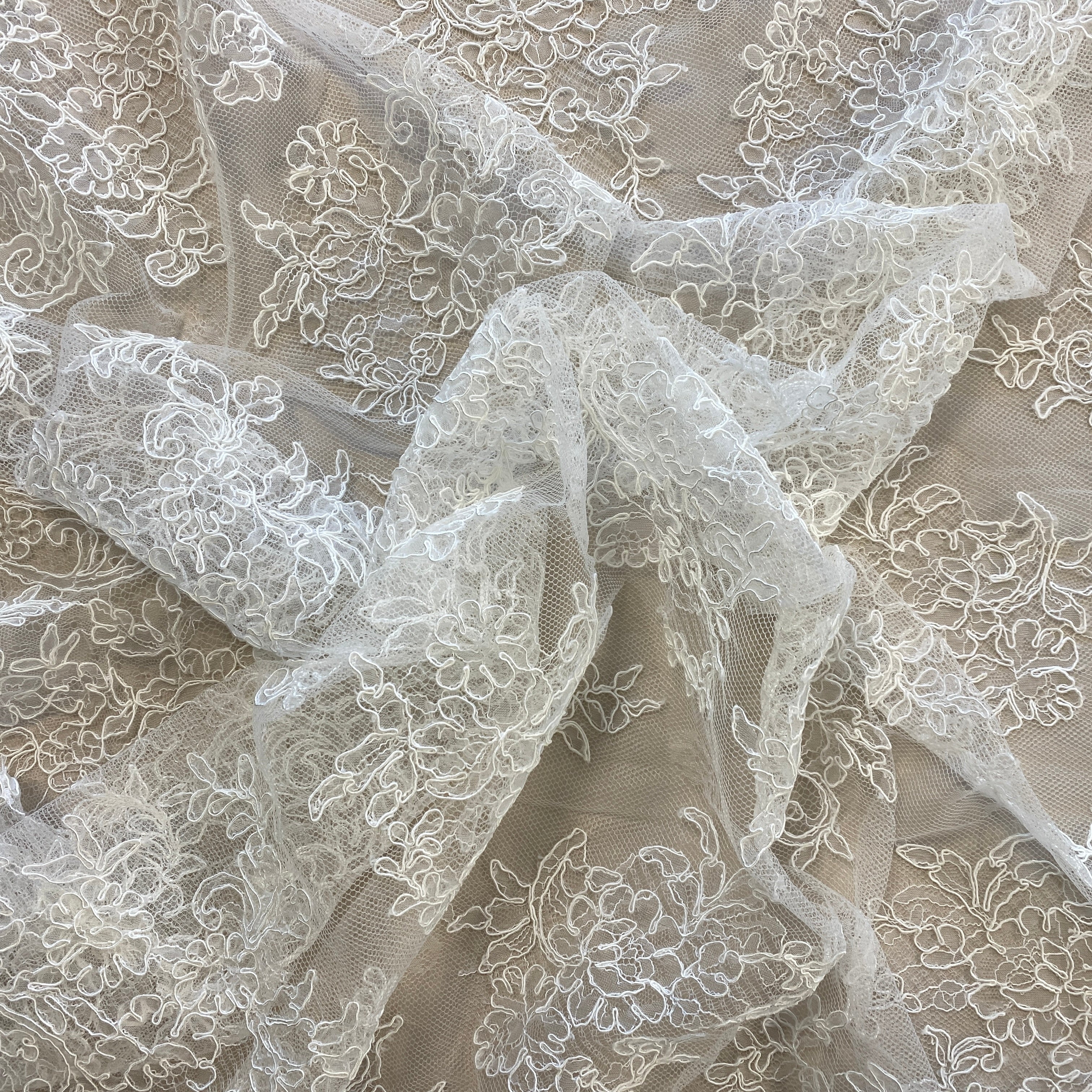
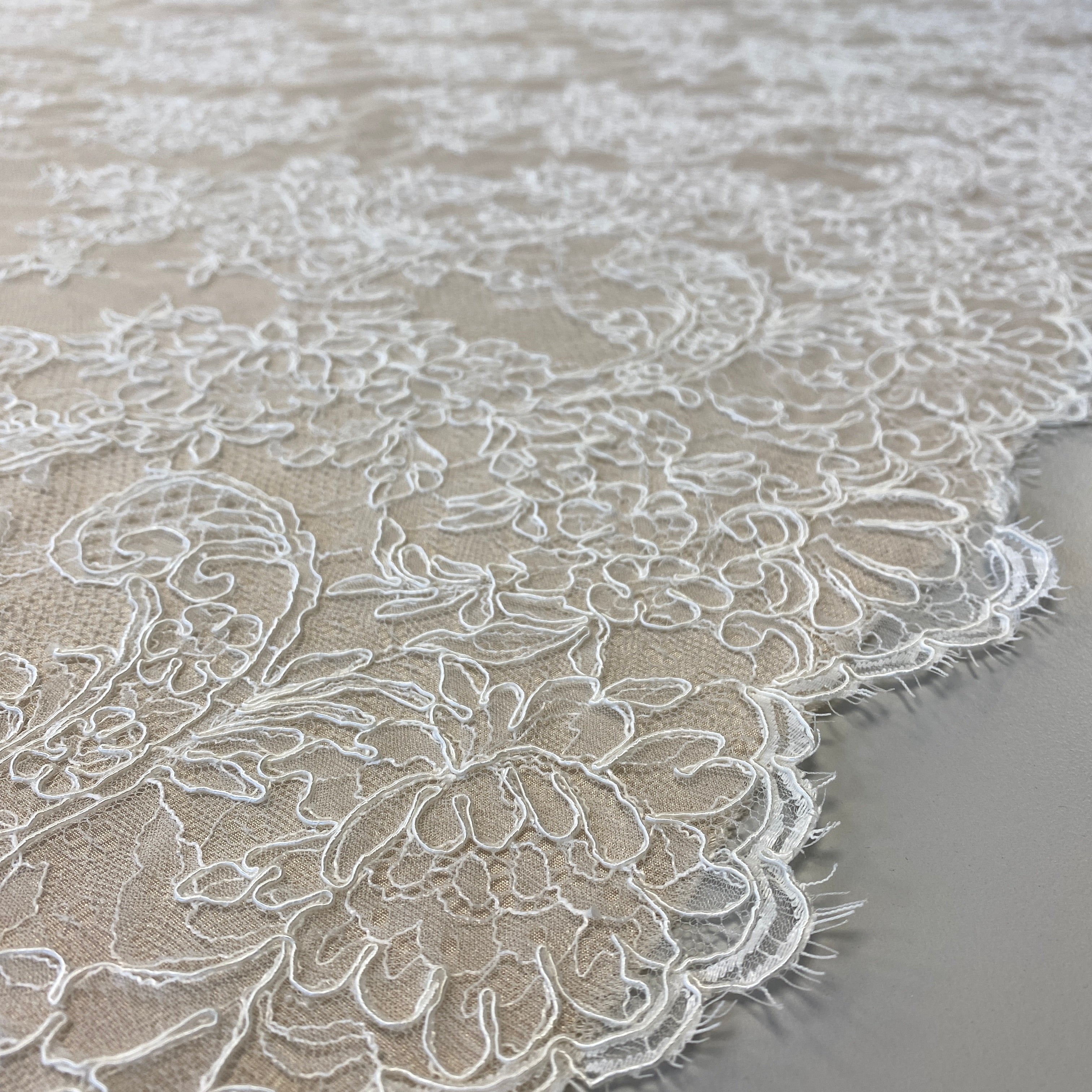
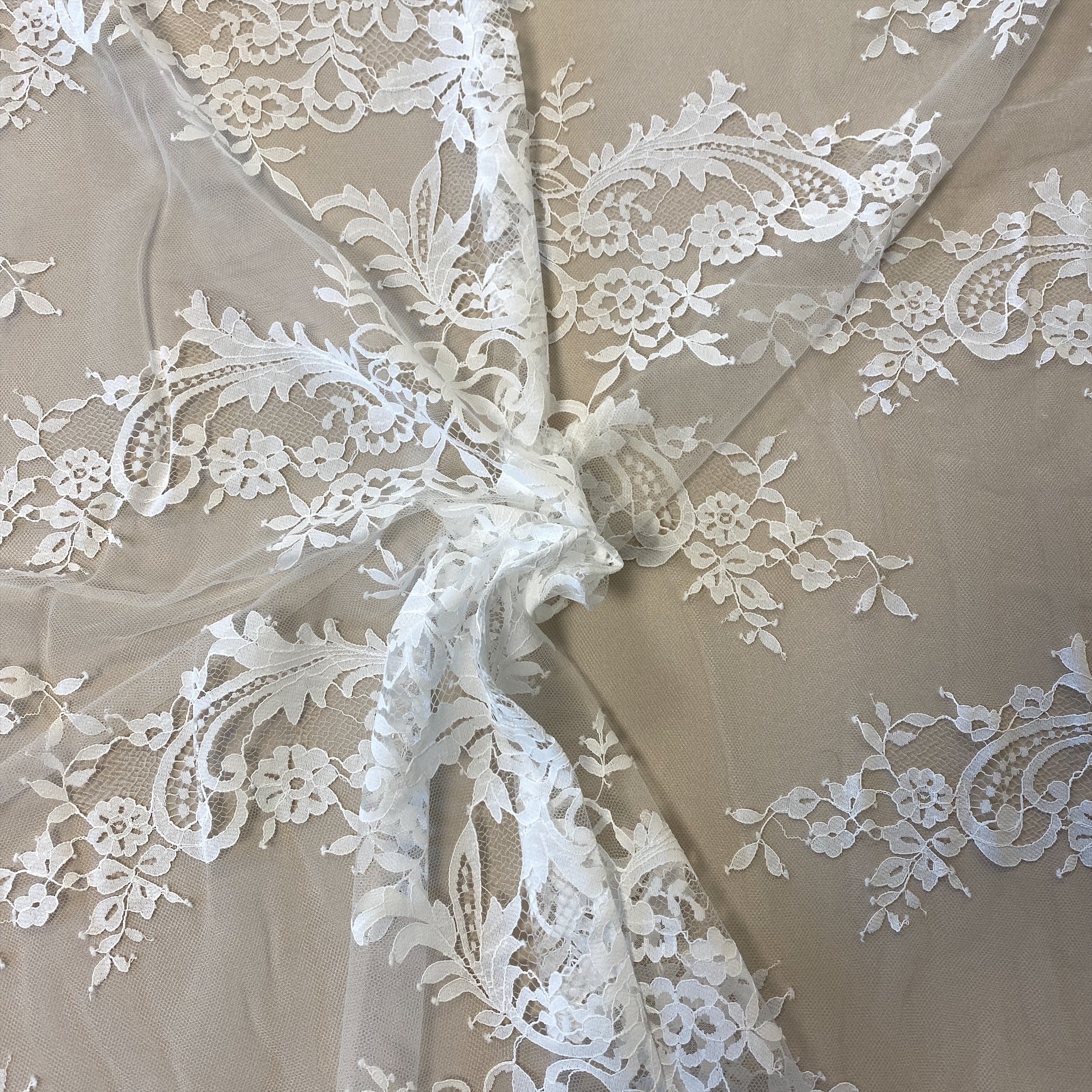
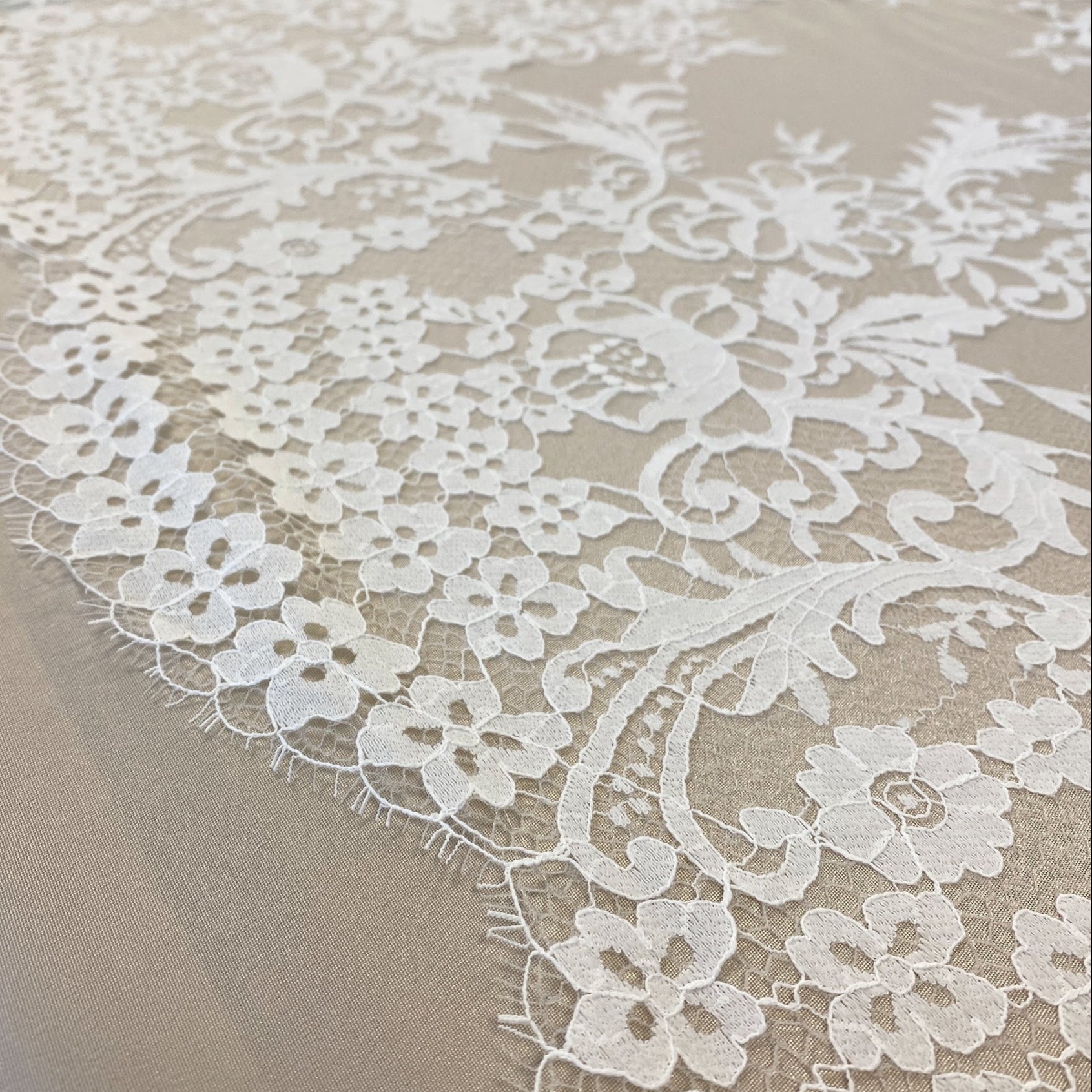
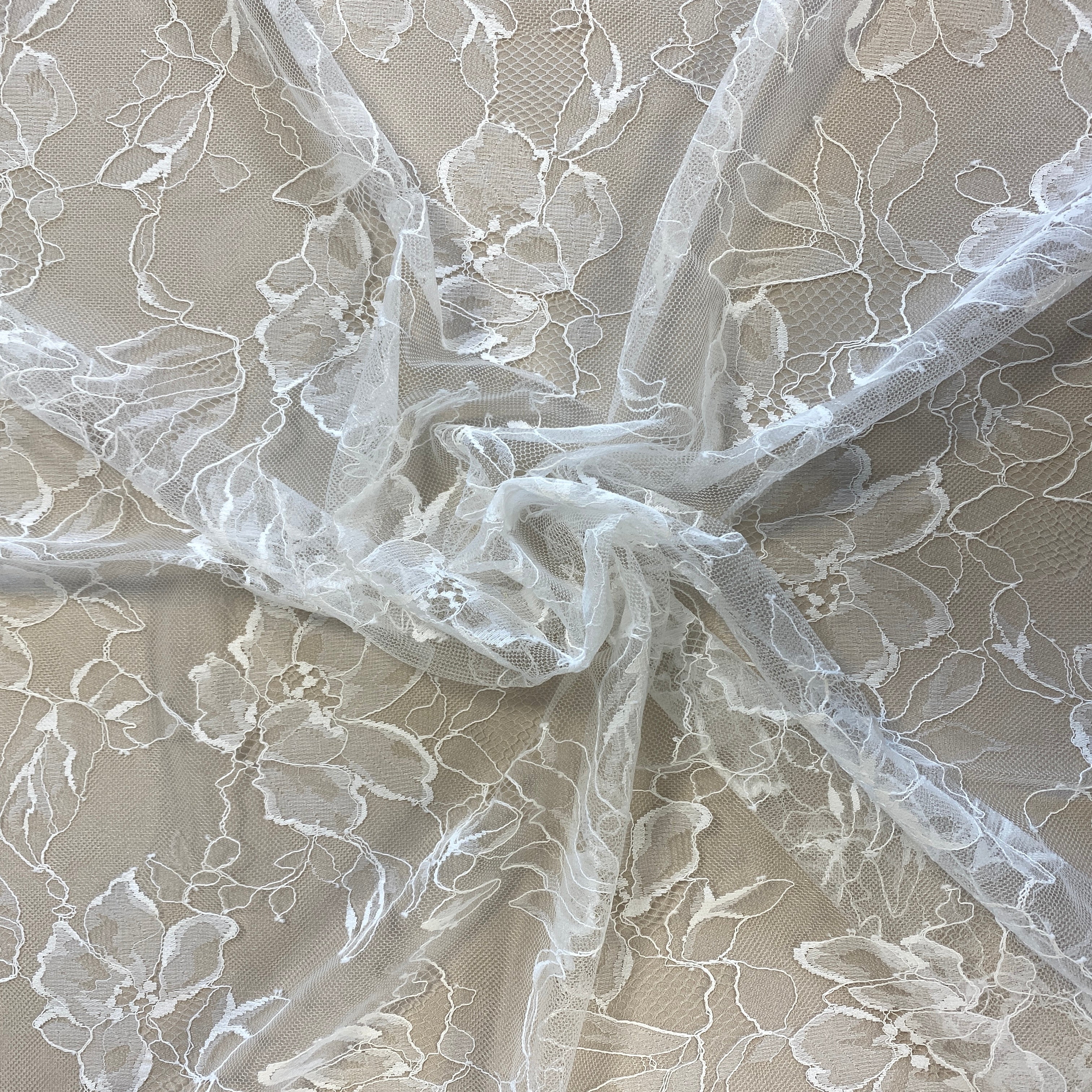
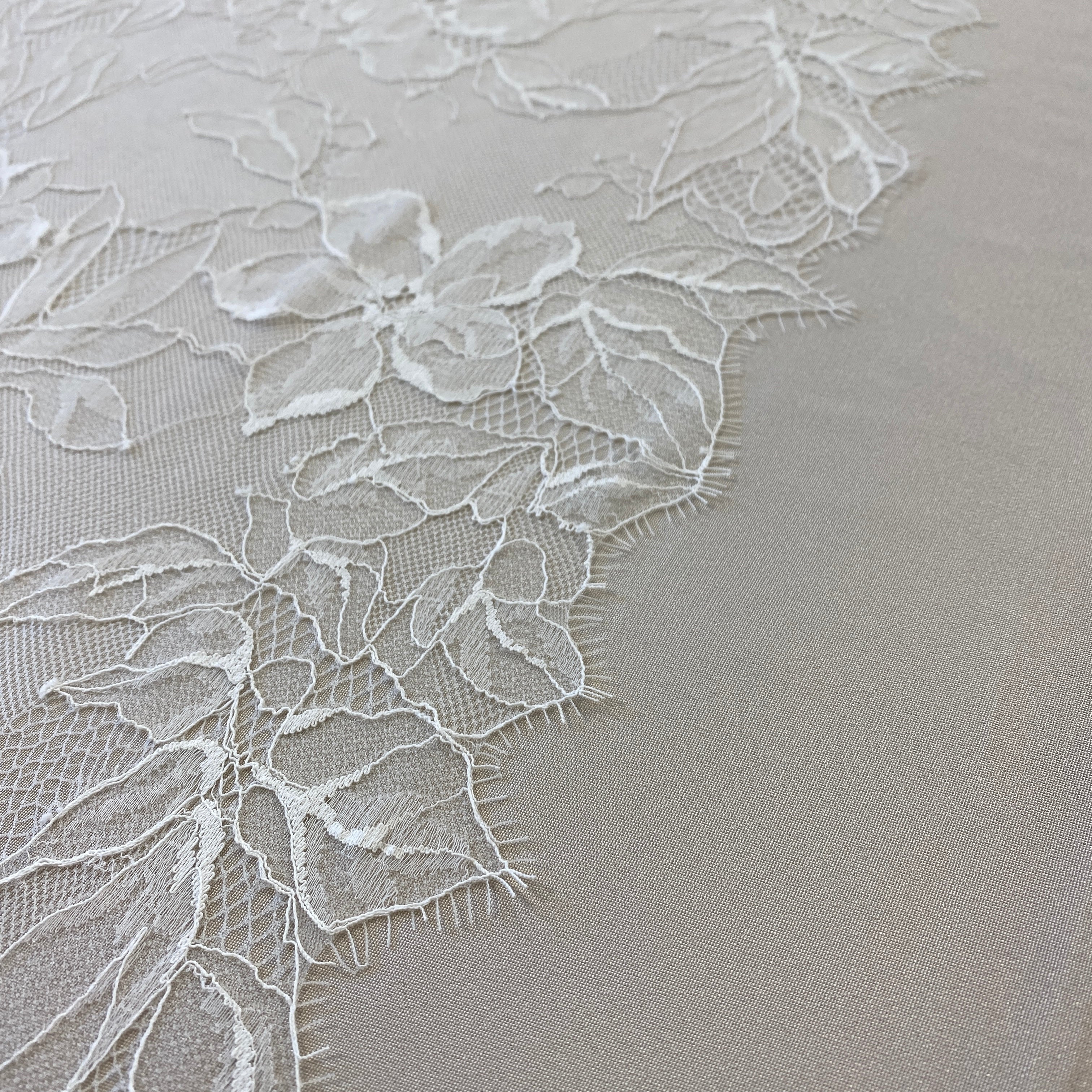
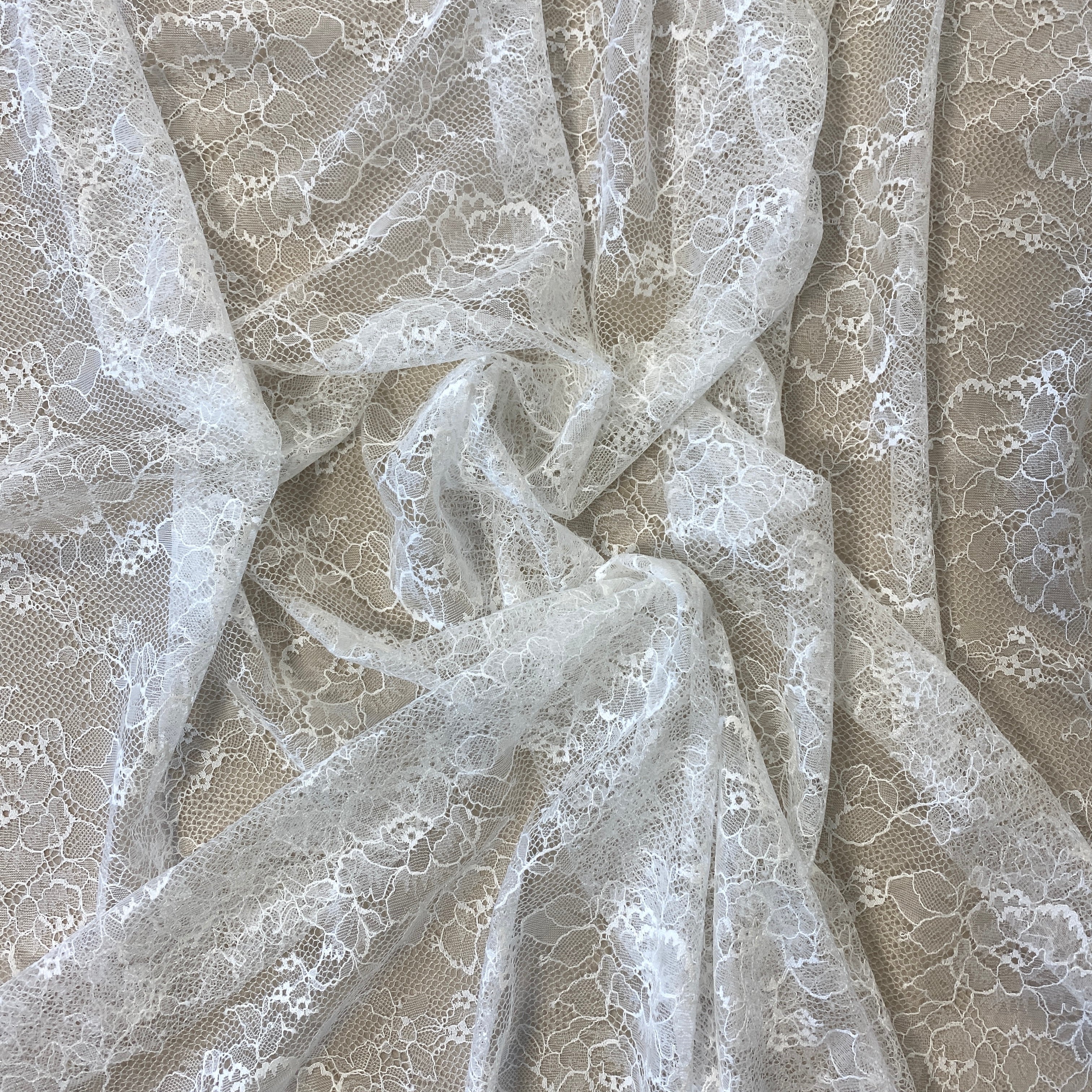
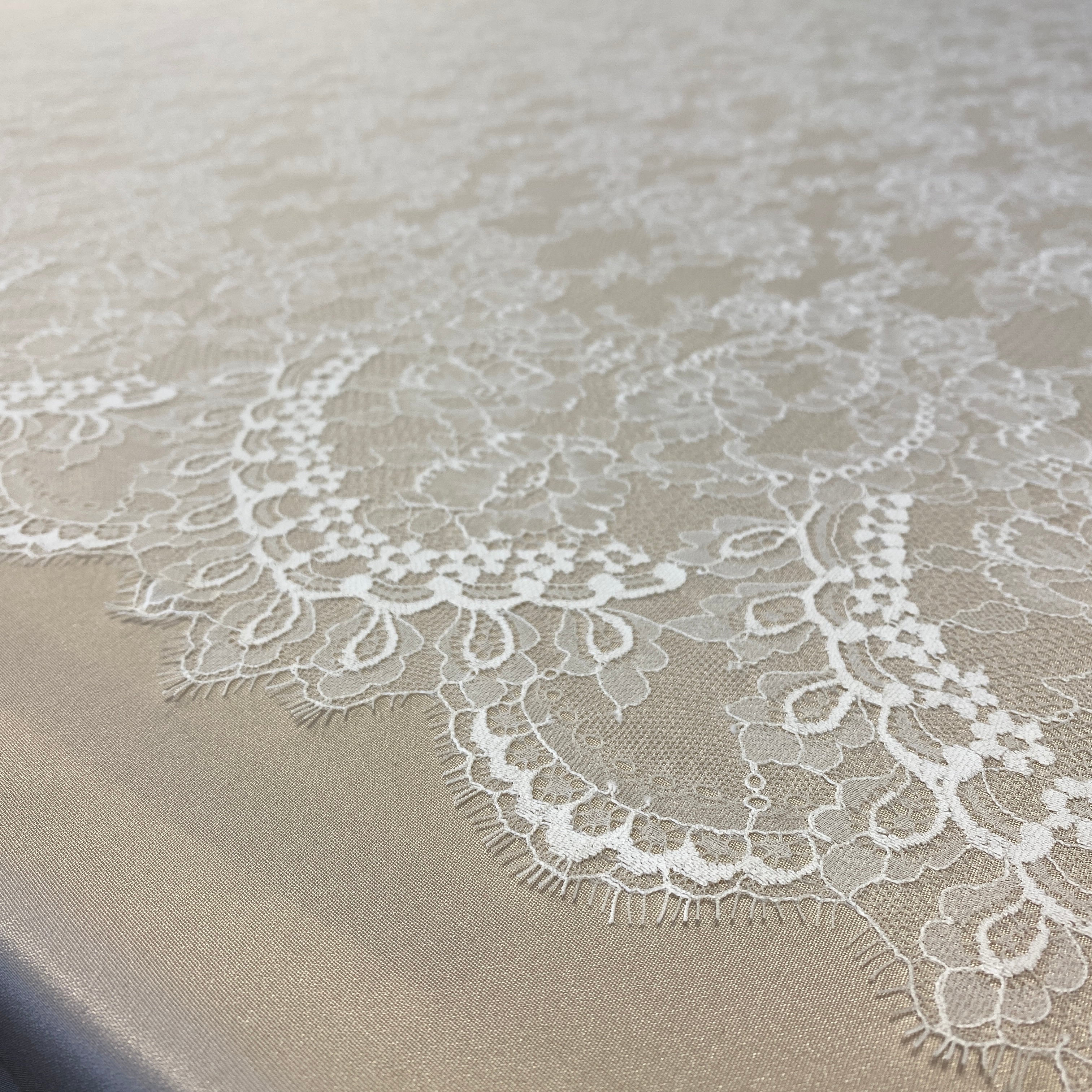
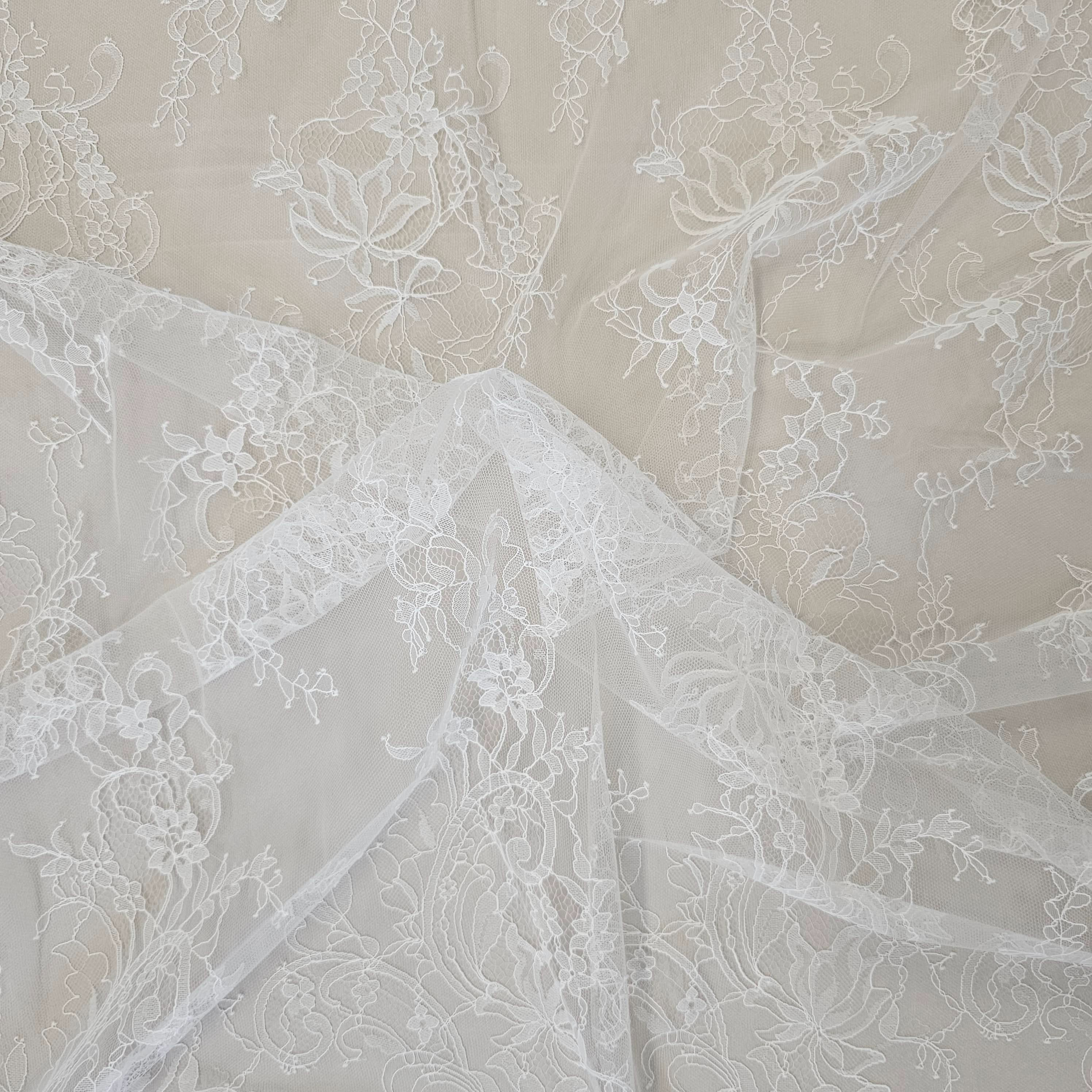
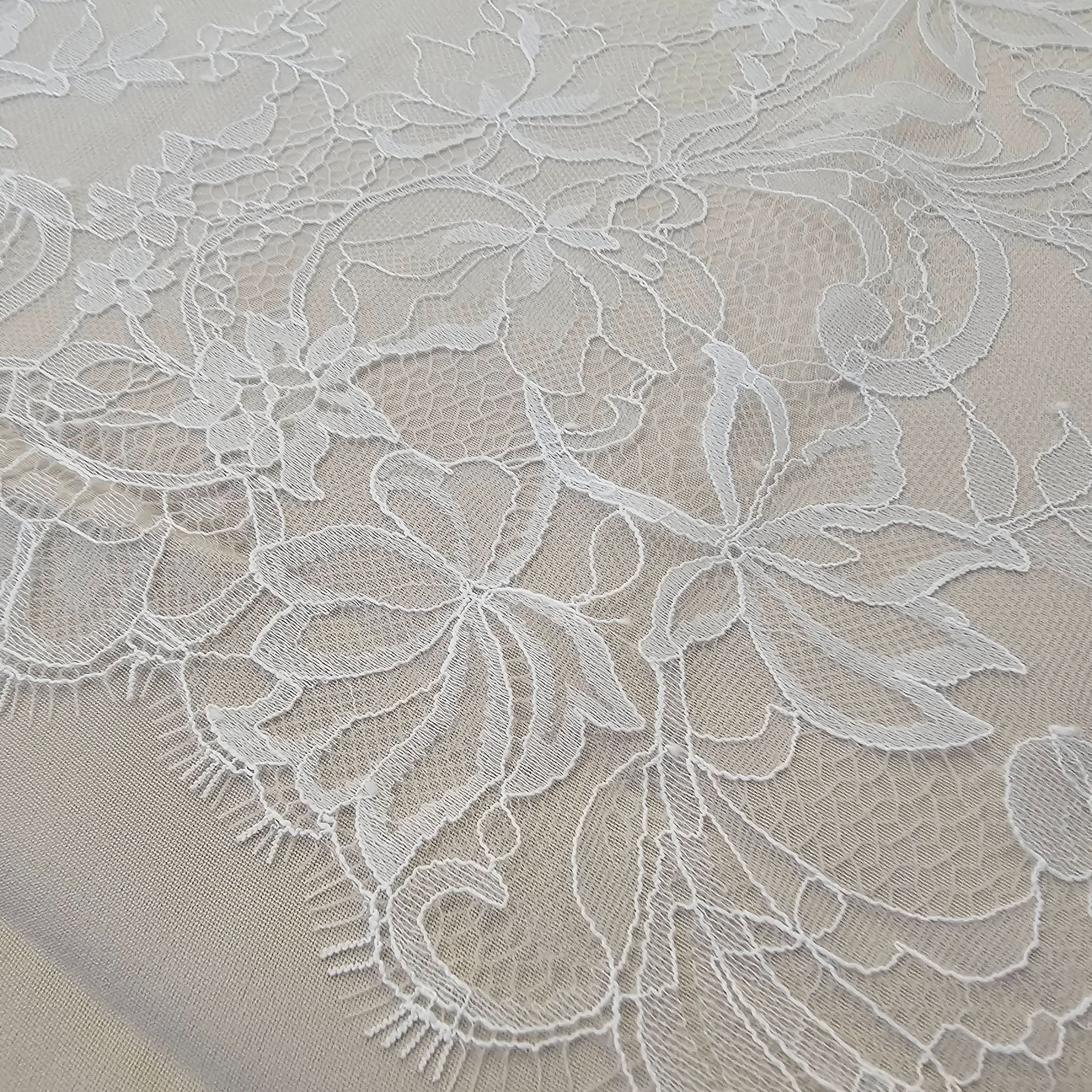
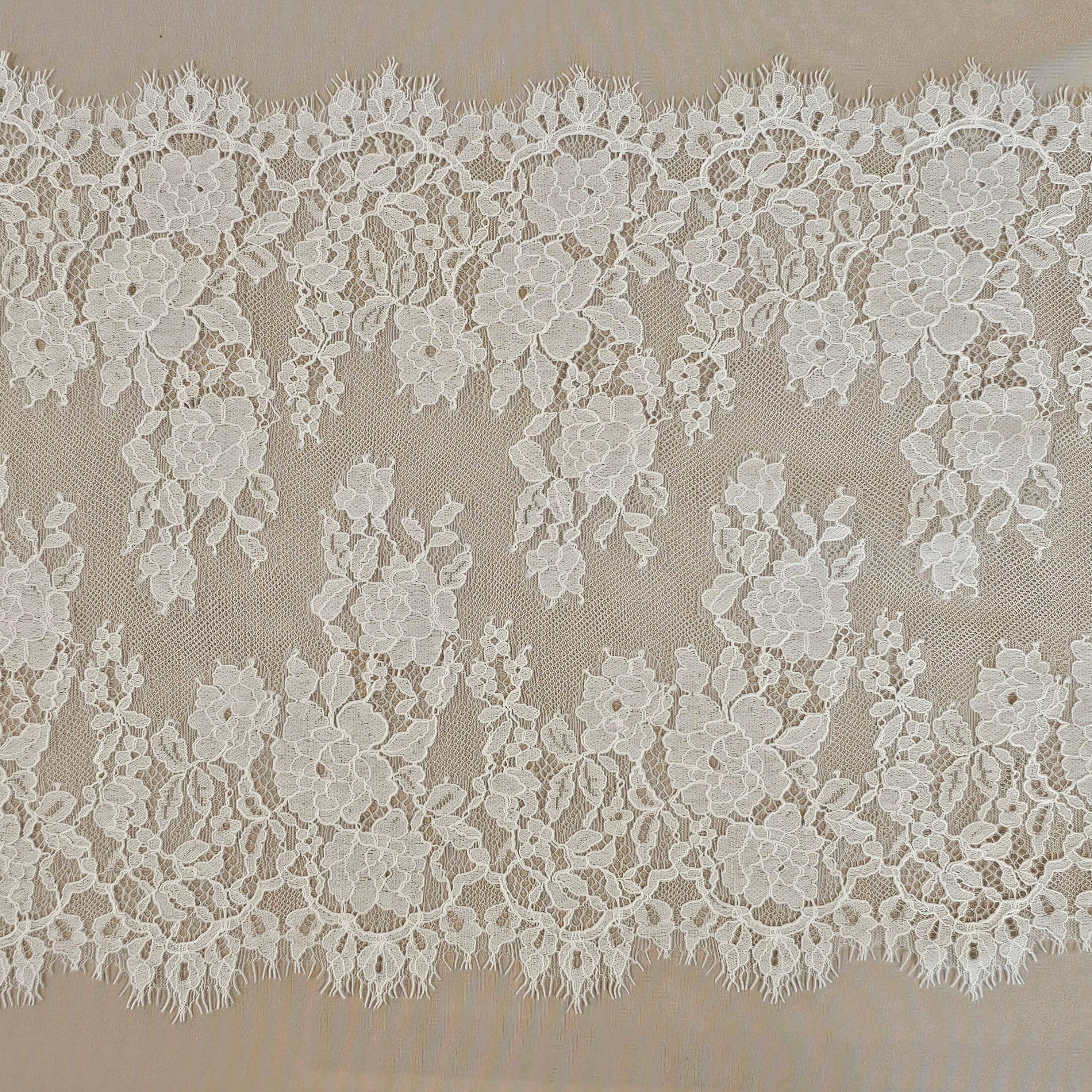
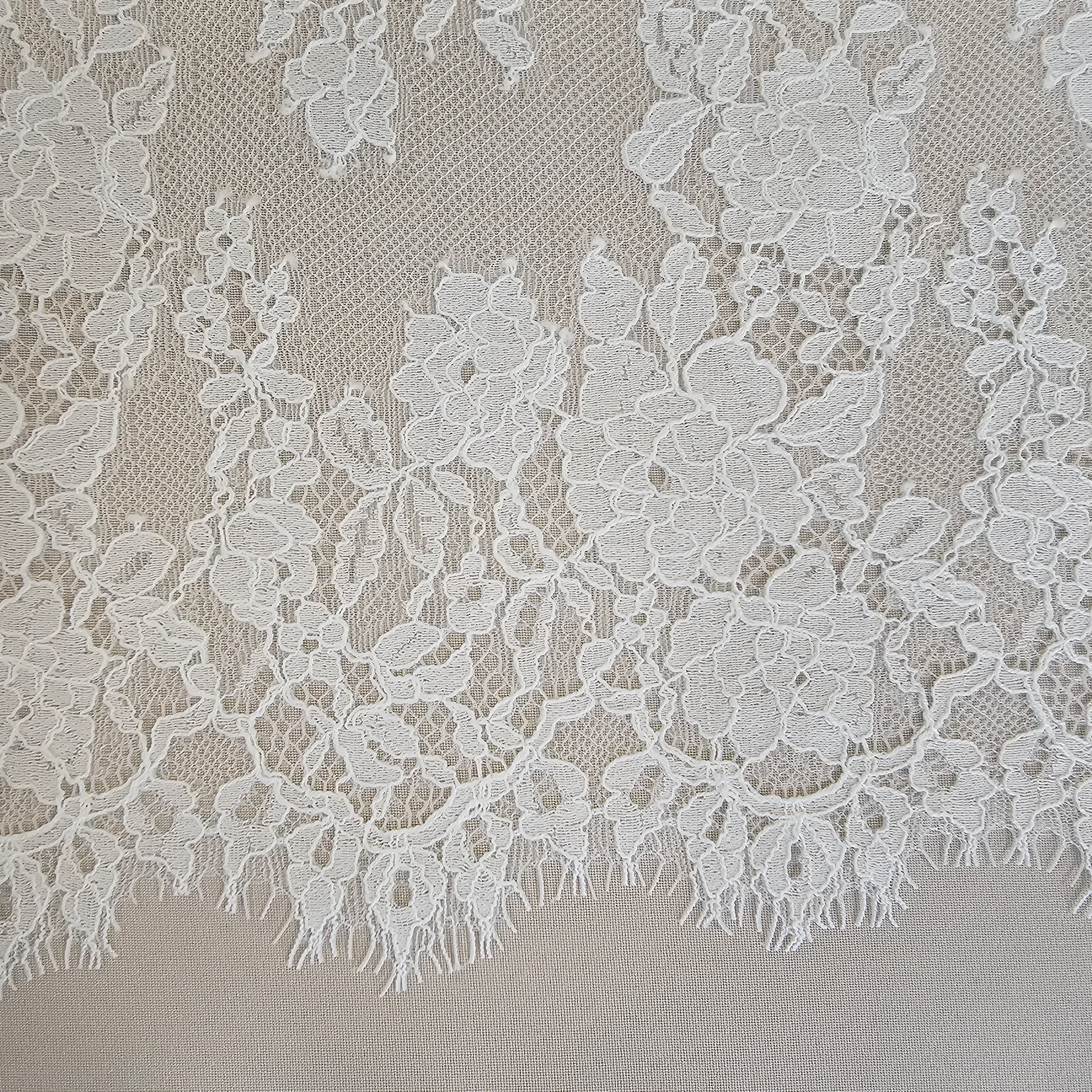
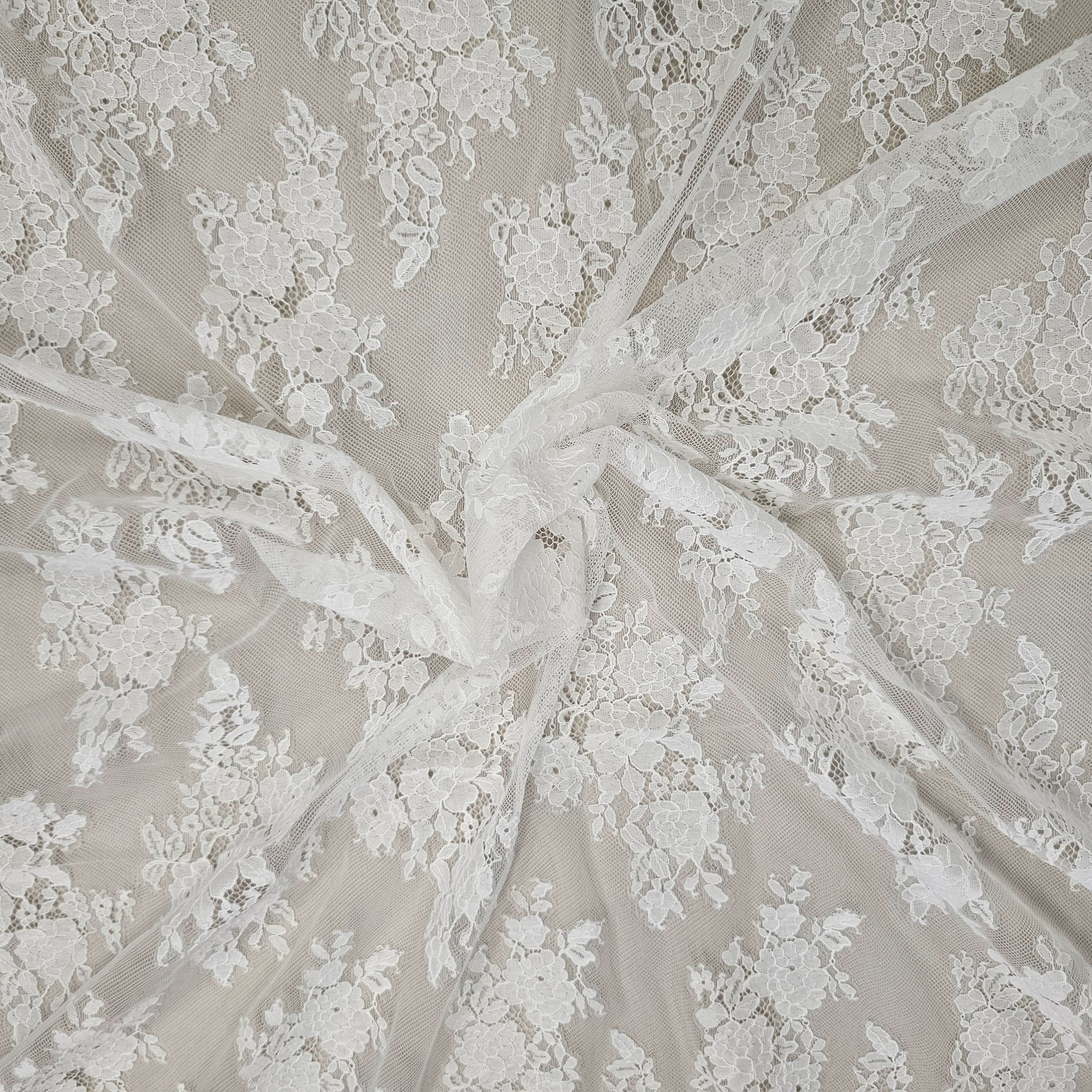
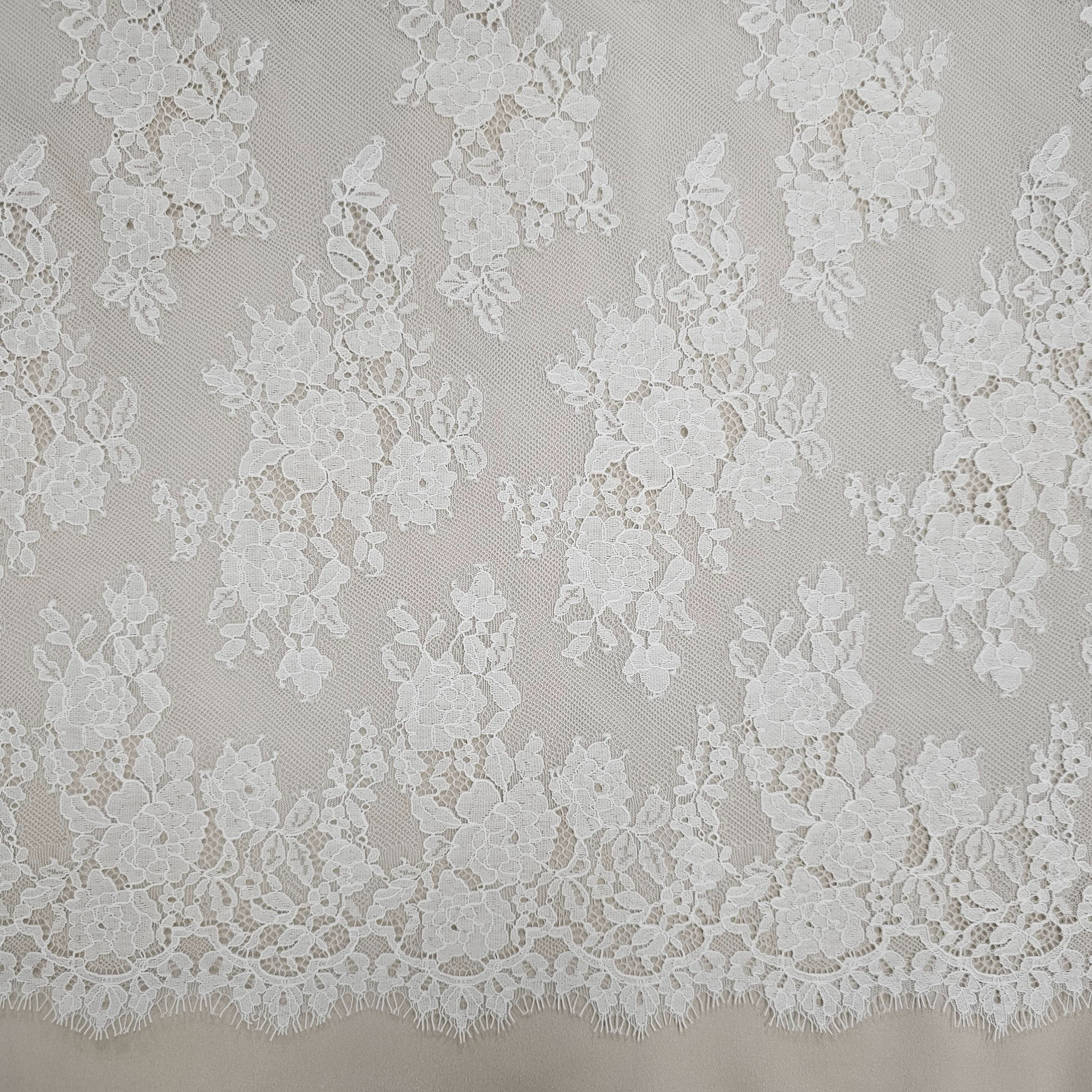
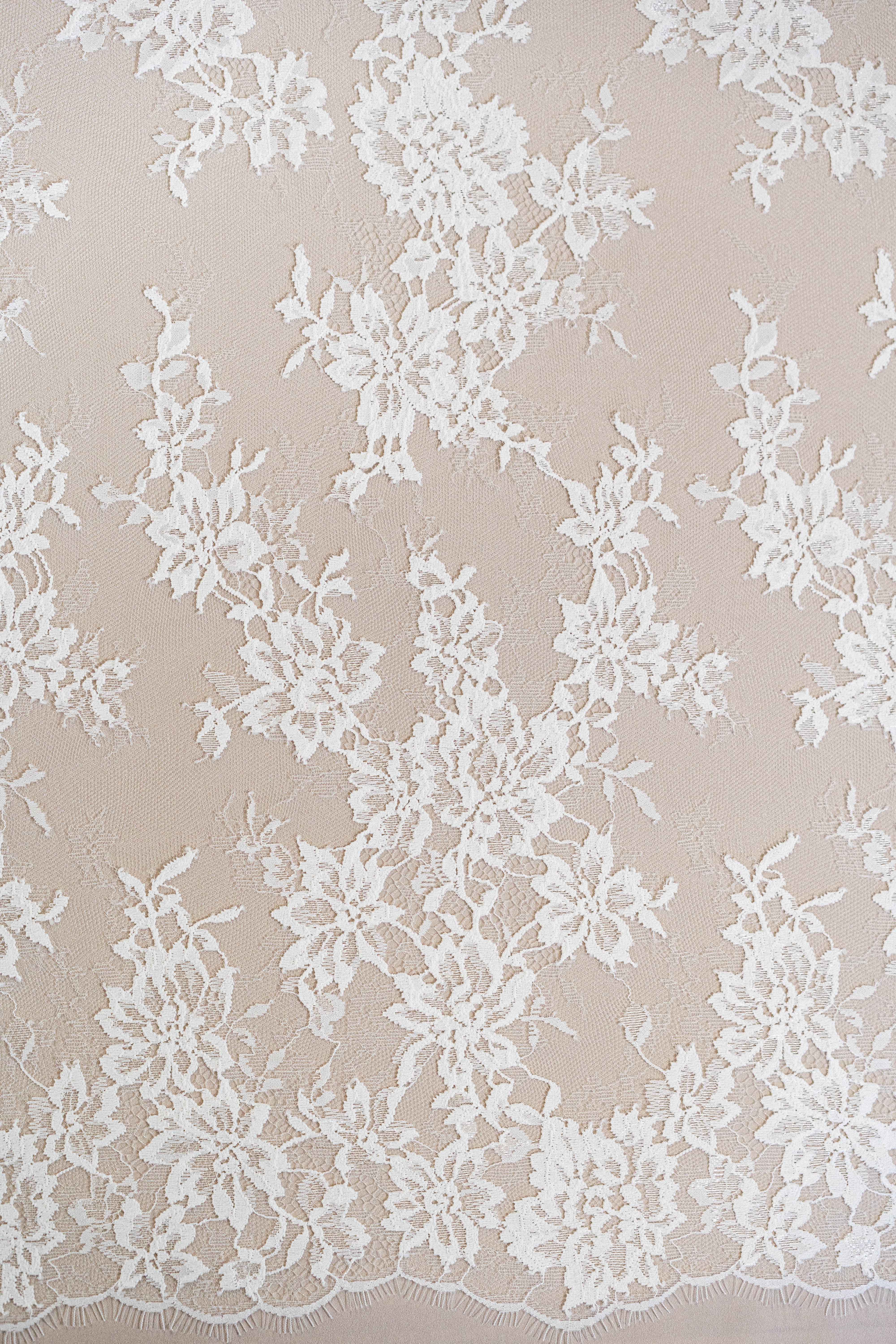
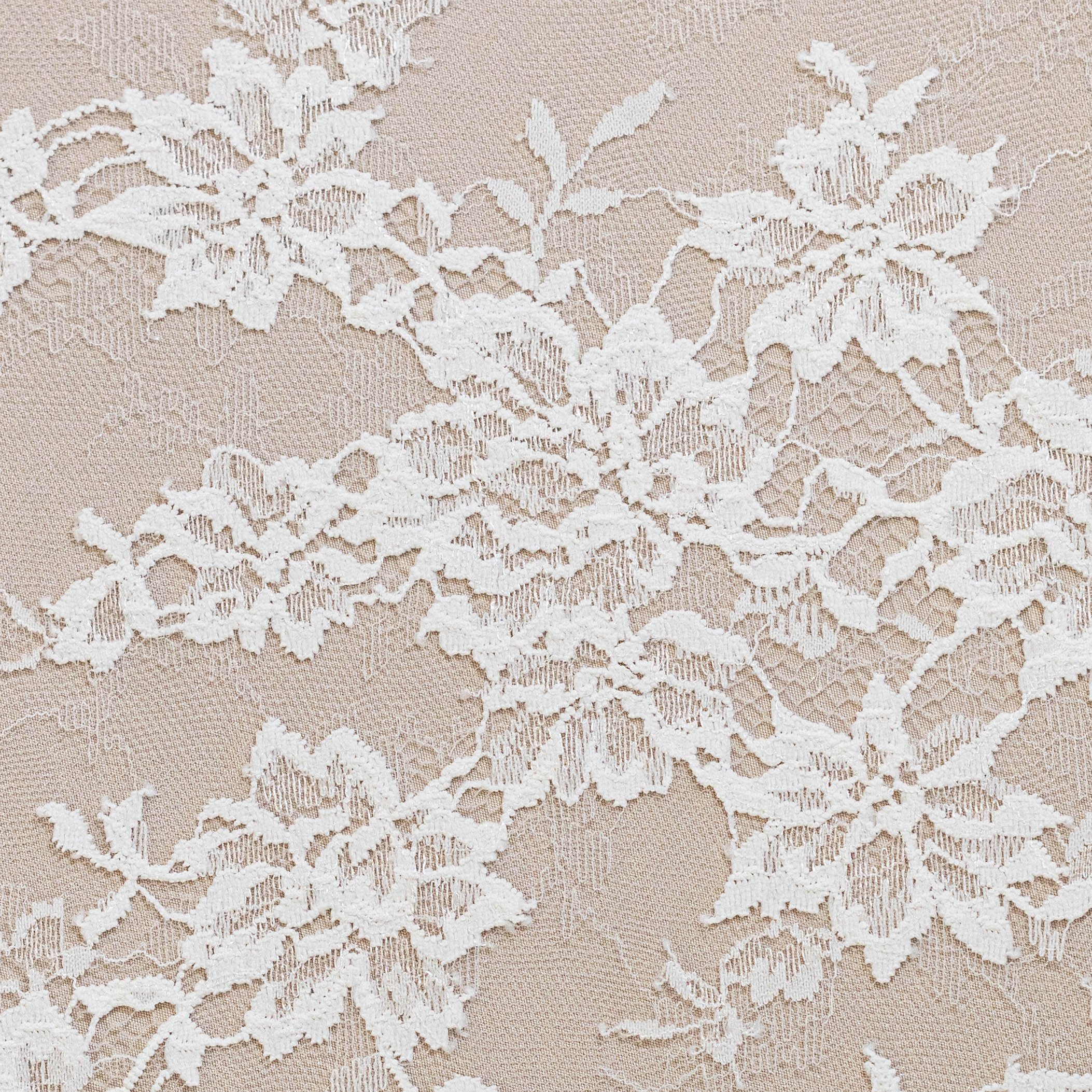
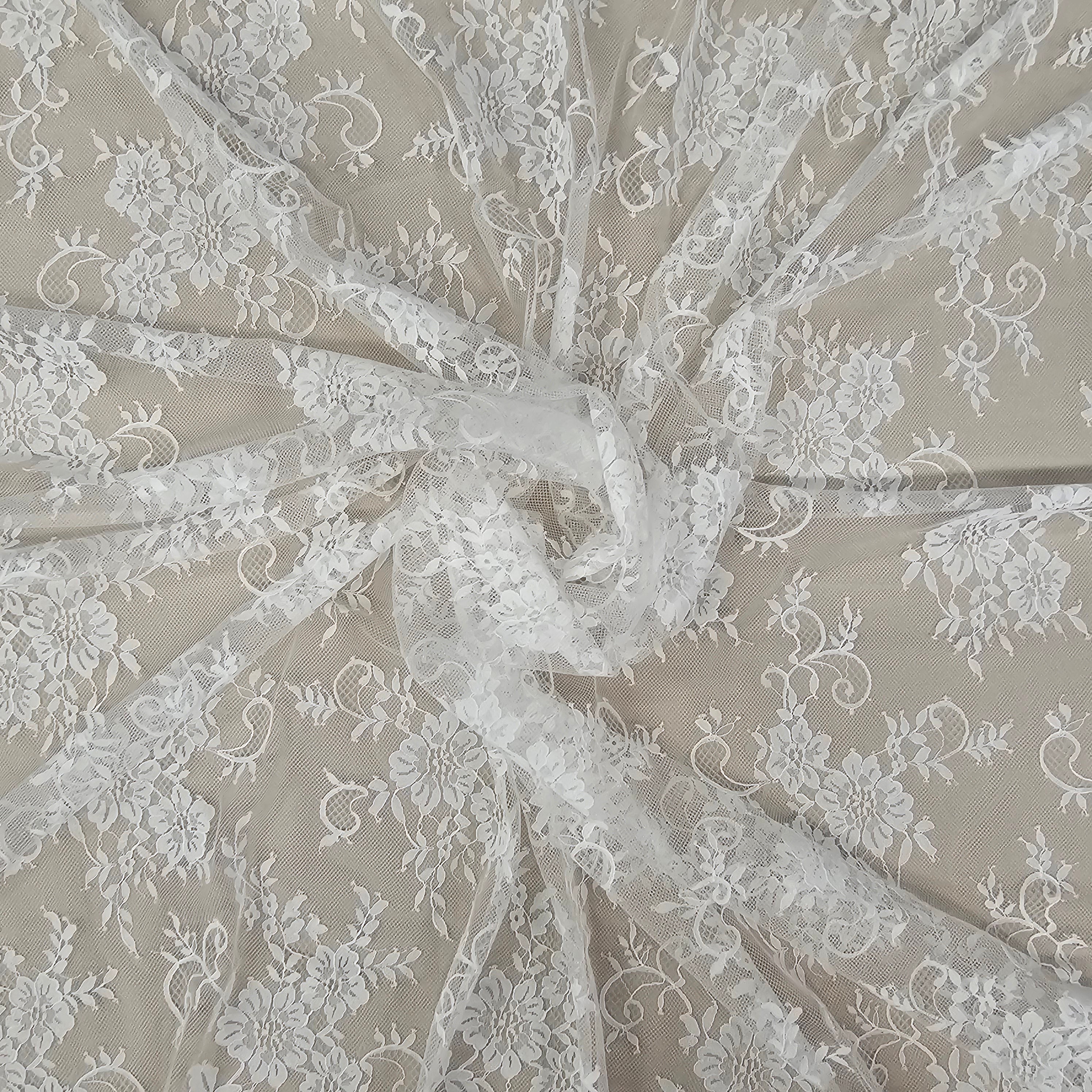
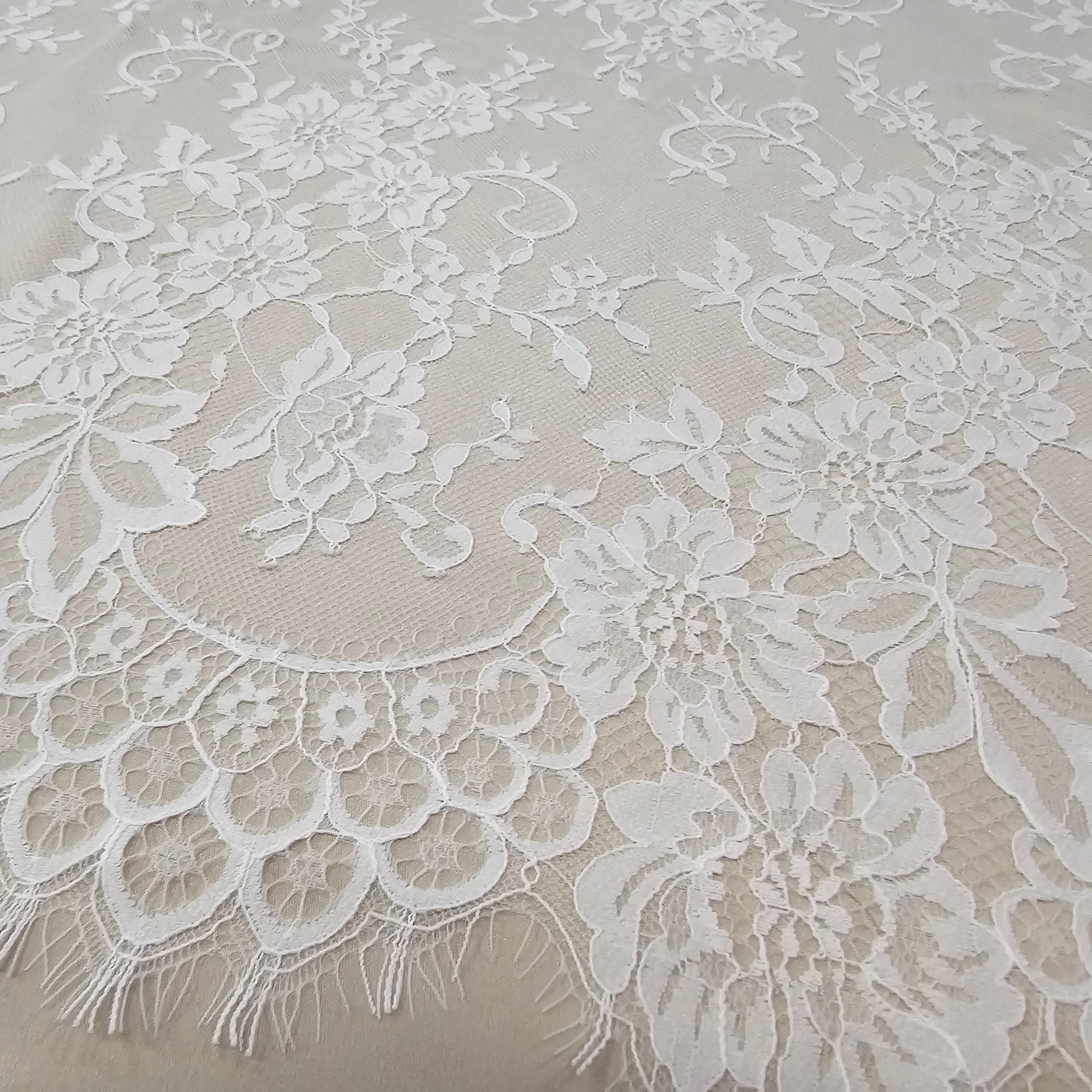
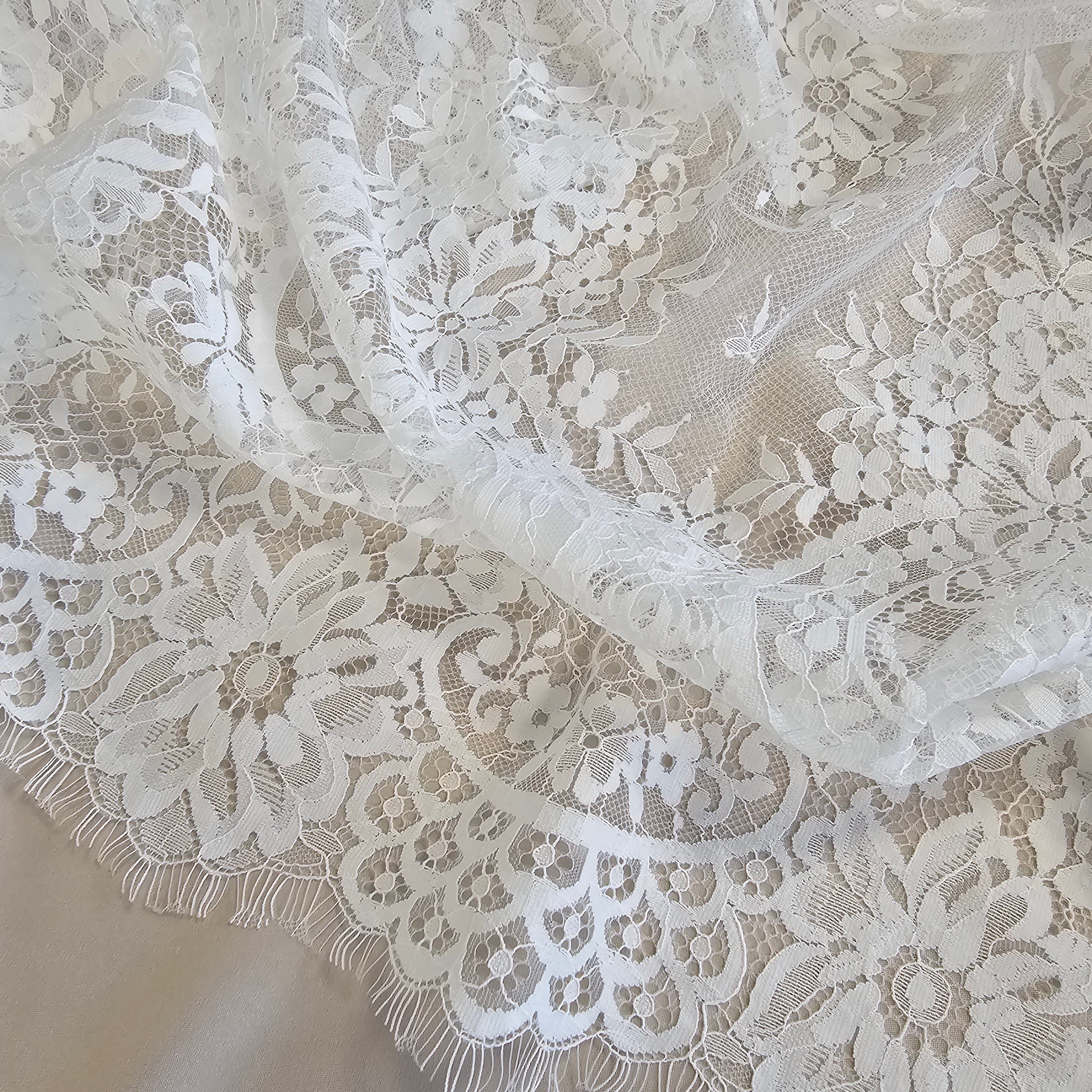
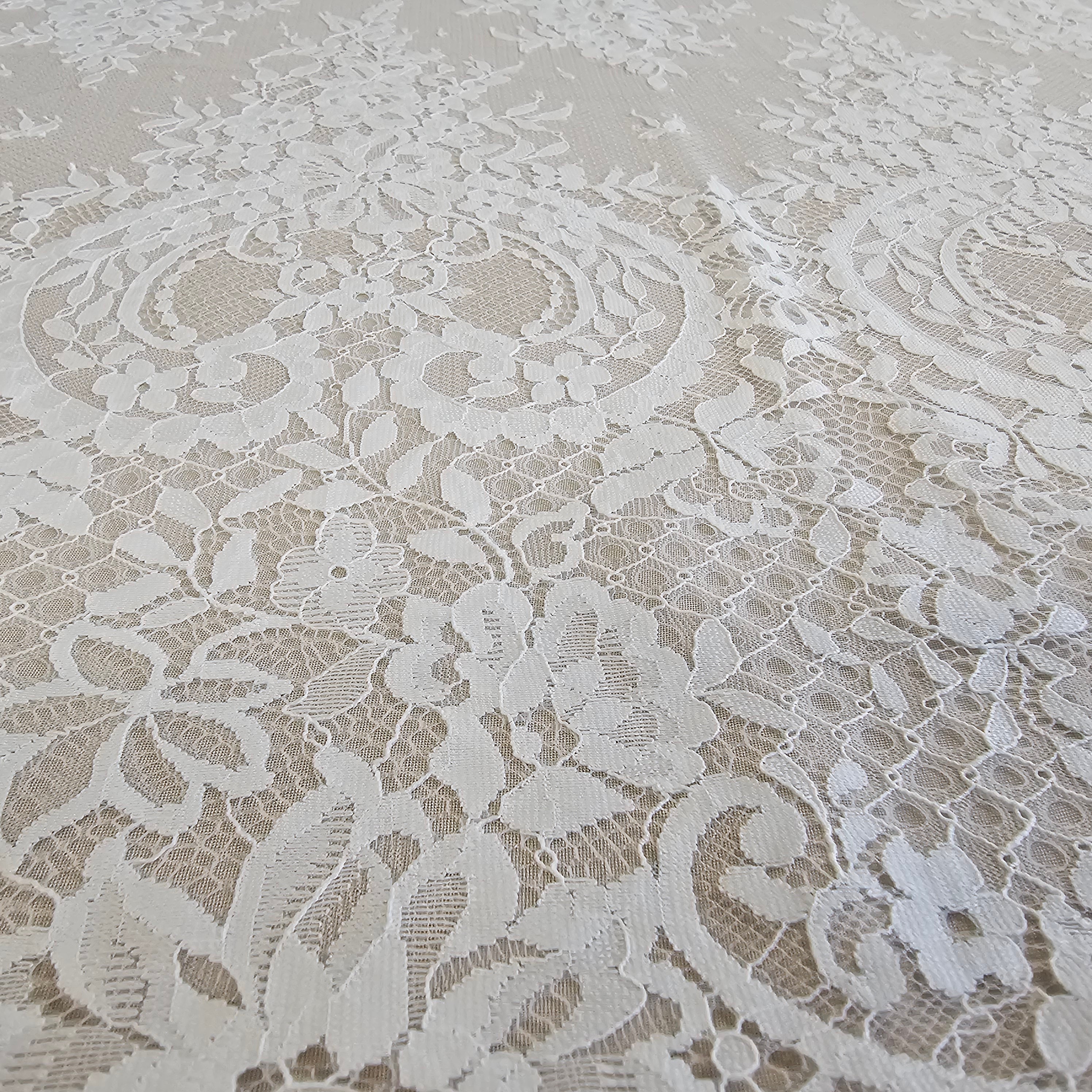
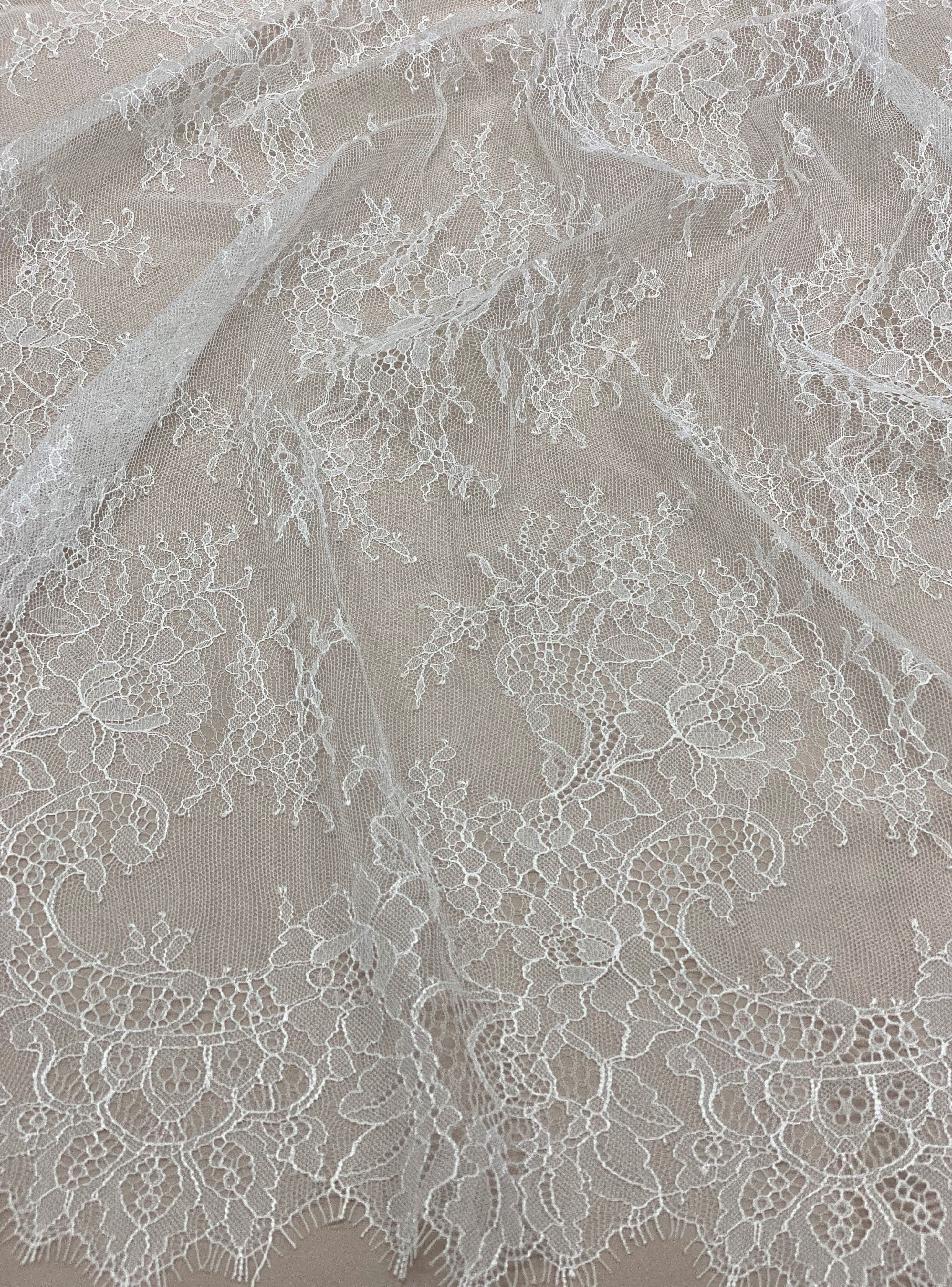
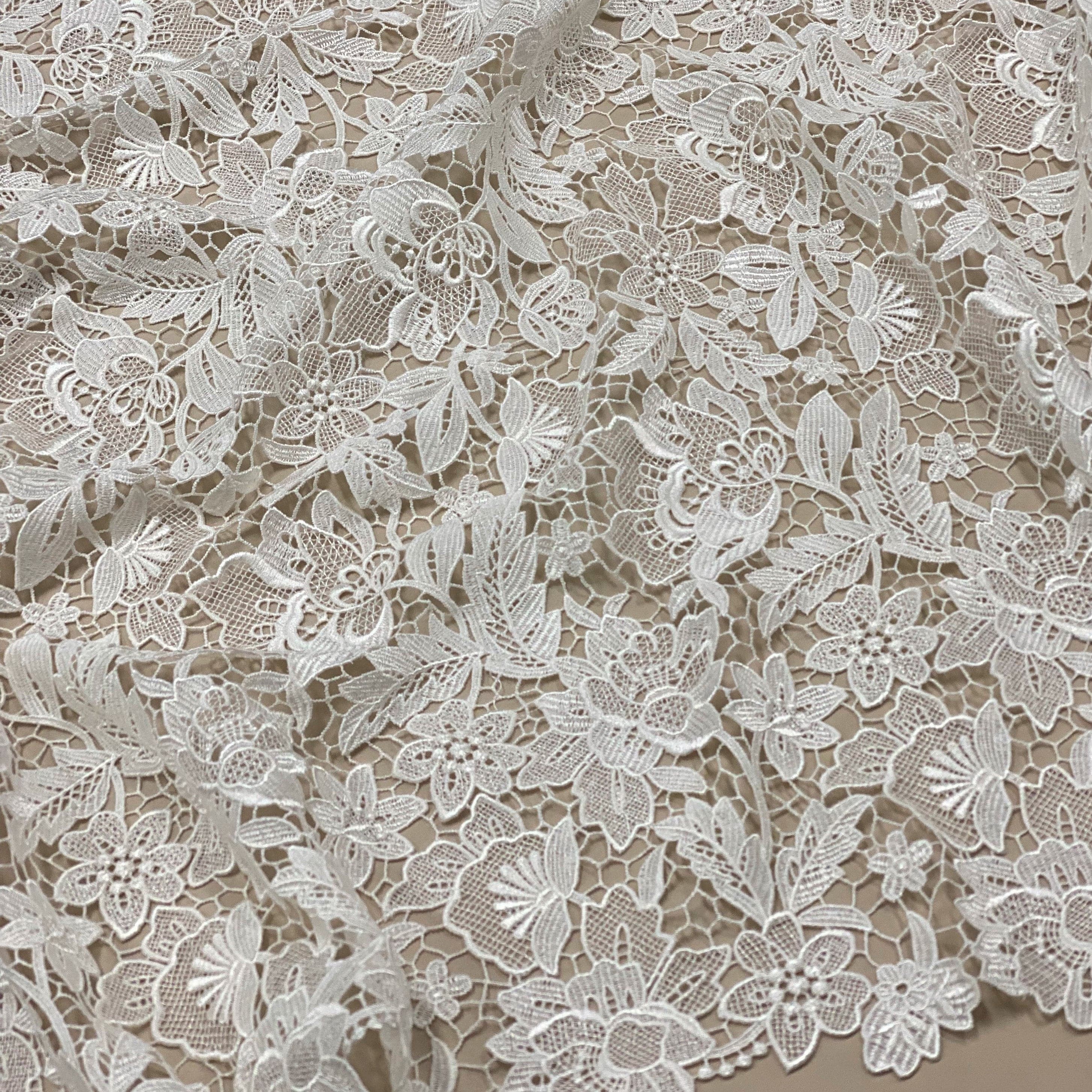
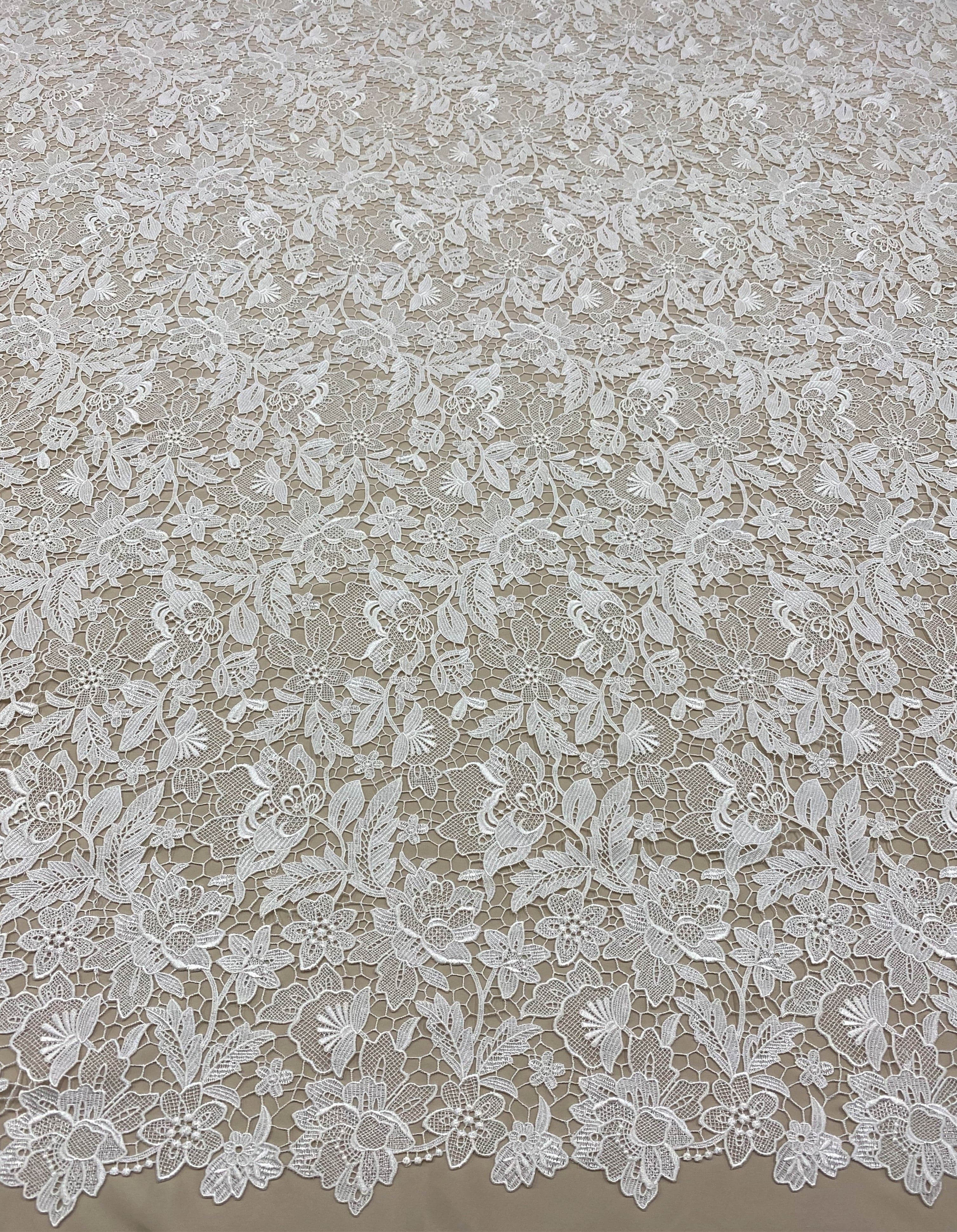
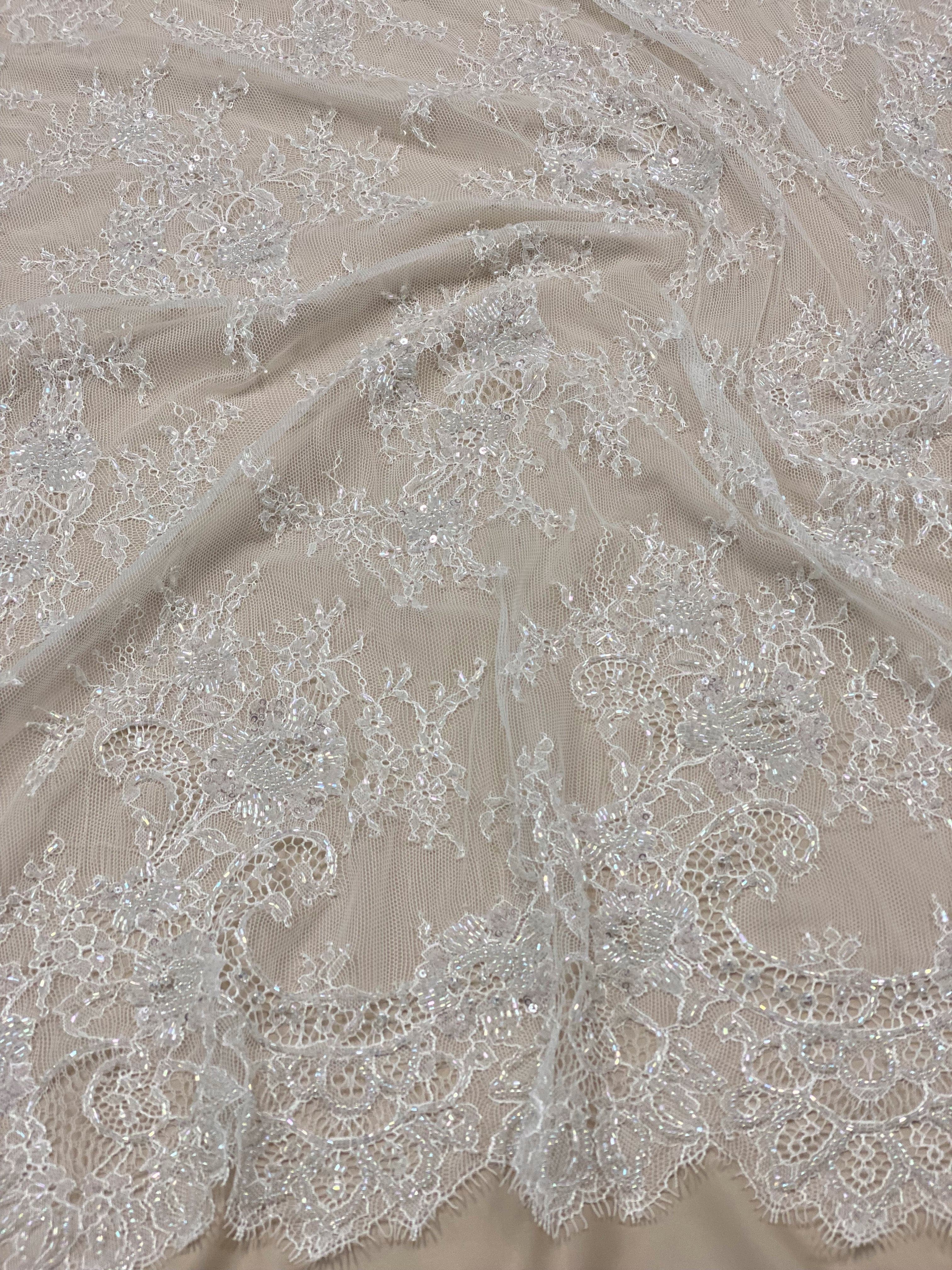
Lace for wedding gowns, sleeves and veils: soft Chantilly, classic corded, bold guipure and beaded lace, mostly in ivory and many with scalloped edges.
- Most lace sold in whole metres
- Panels about 3 m long



 Sold out
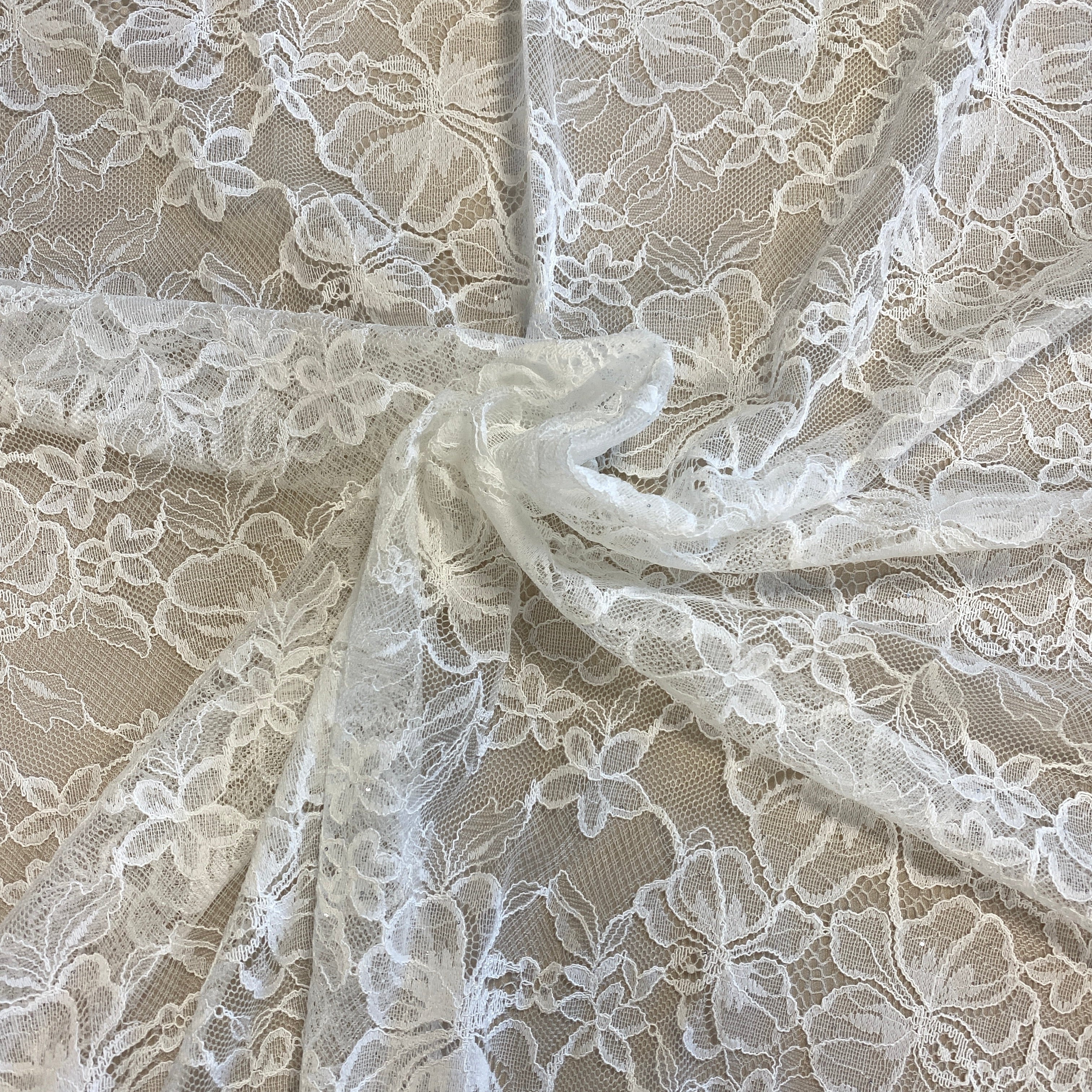
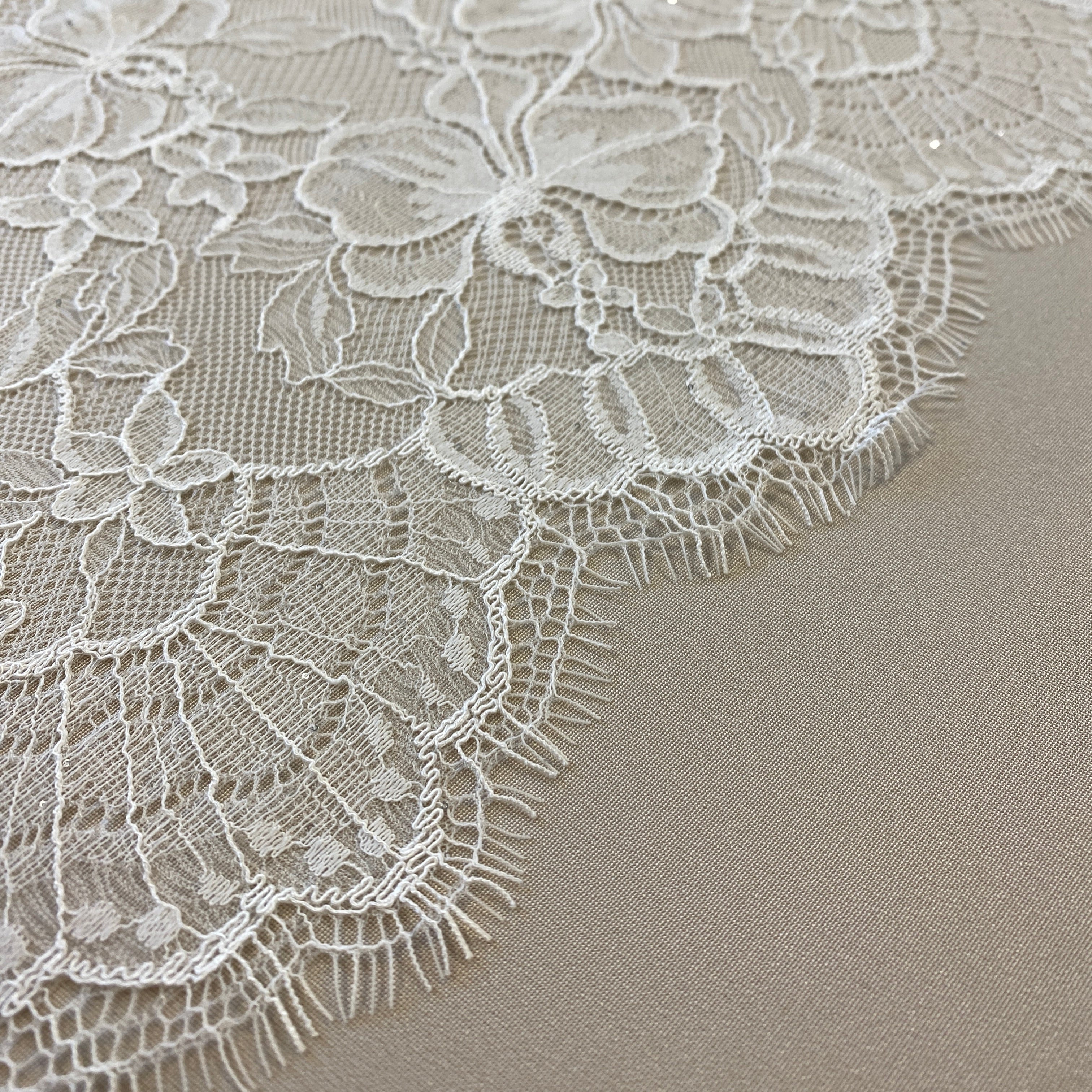
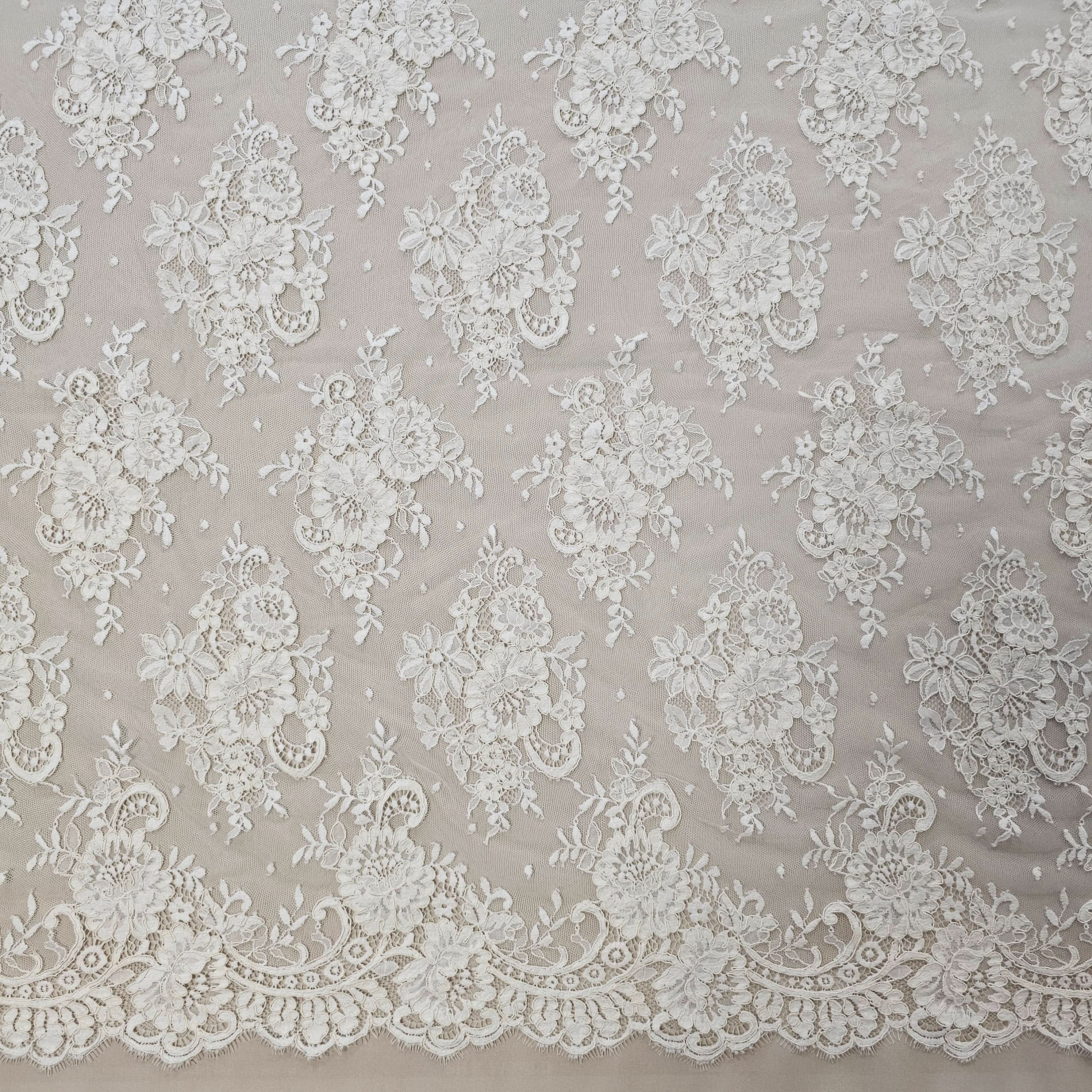
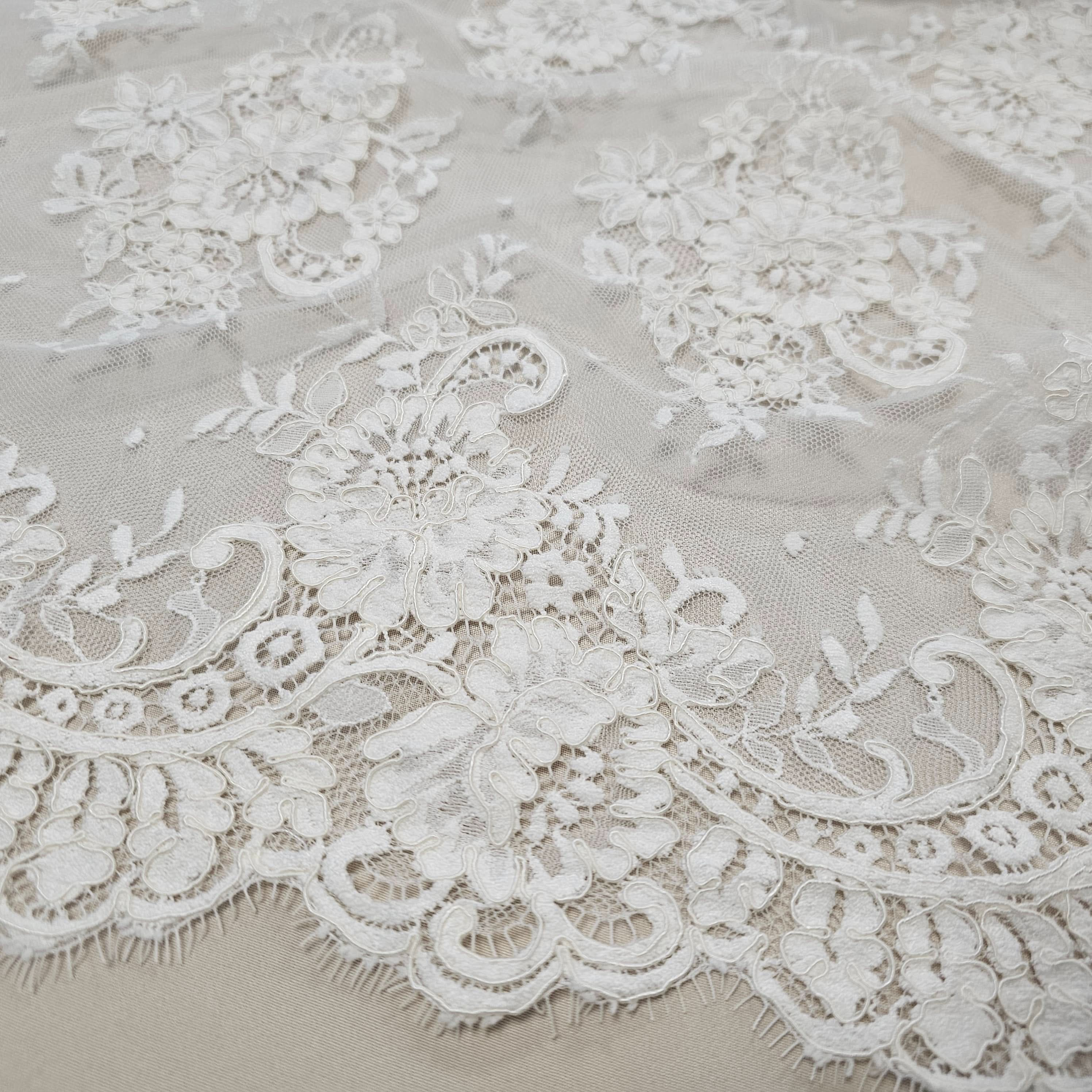
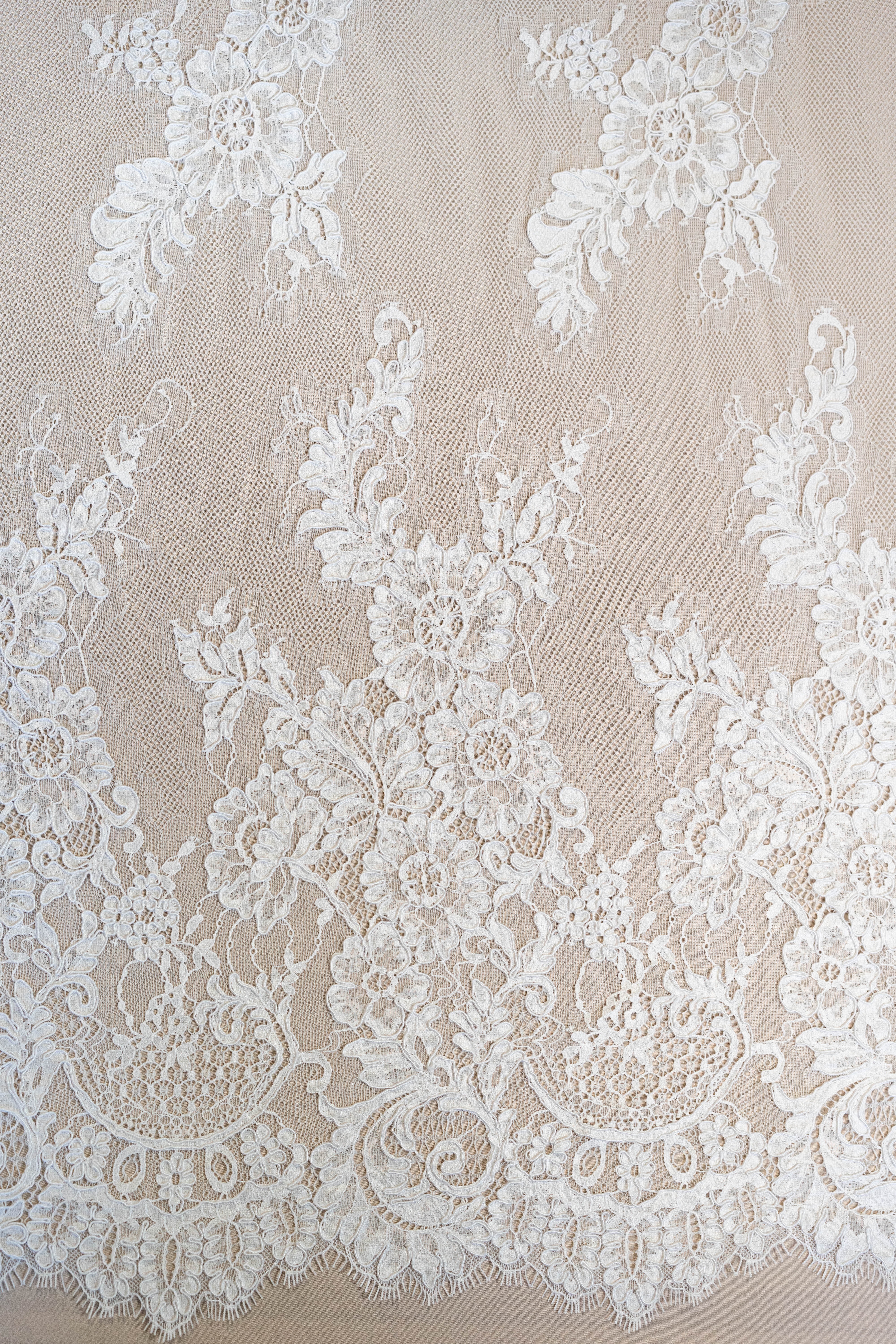
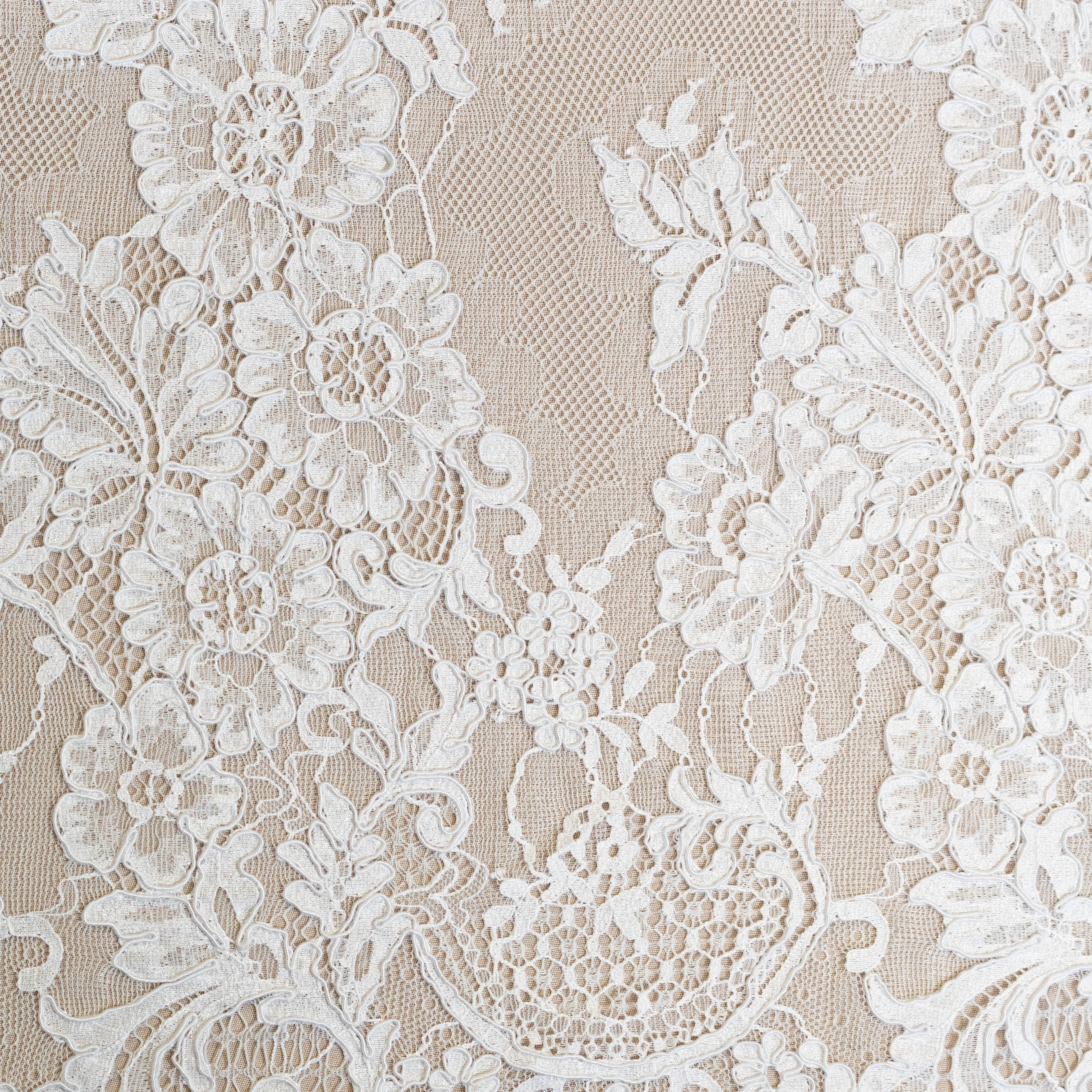
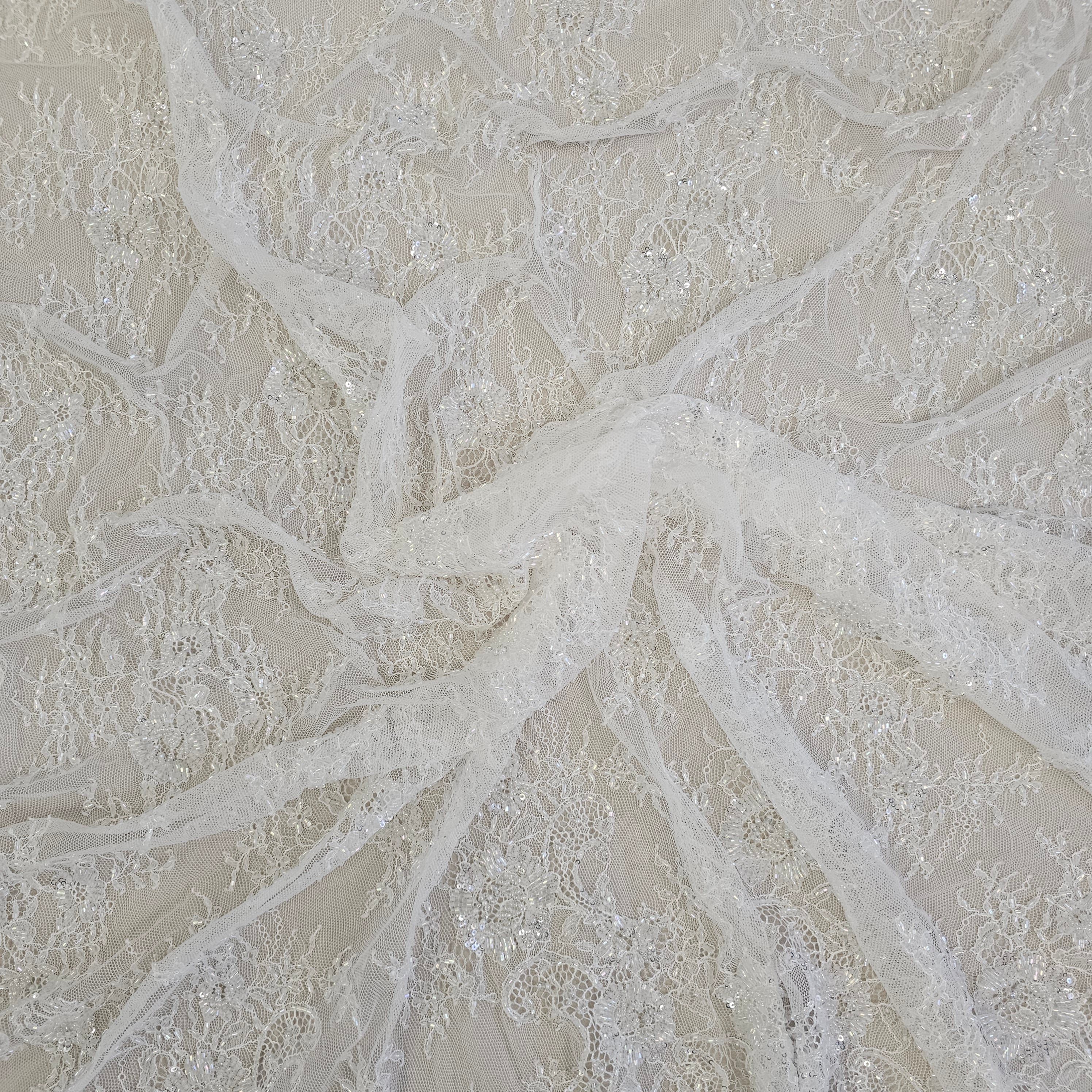
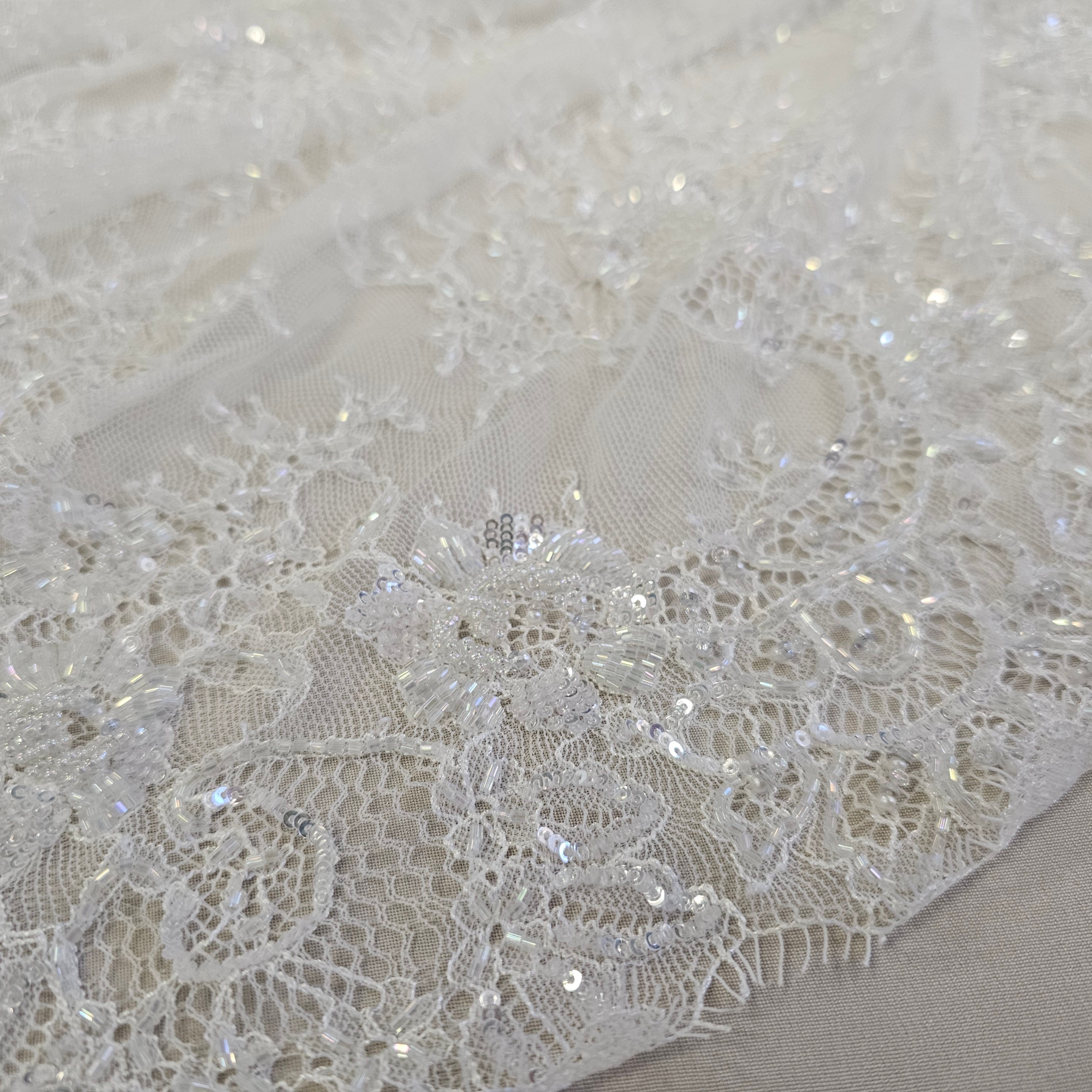 Sold out
 Sold out

 Sold out
Guide
Bridal Lace: How to Choose and Sew It
Which lace suits the look you want, where to use it on a wedding dress, and couture tips for sewing it at home.
Which lace for your wedding dress?
- Soft and romantic: Chantilly and fine lace. Delicate flowers on a fine net, often with an eyelash or scalloped edge. Lovely for sheer sleeves, overlays and soft, flowing gowns.
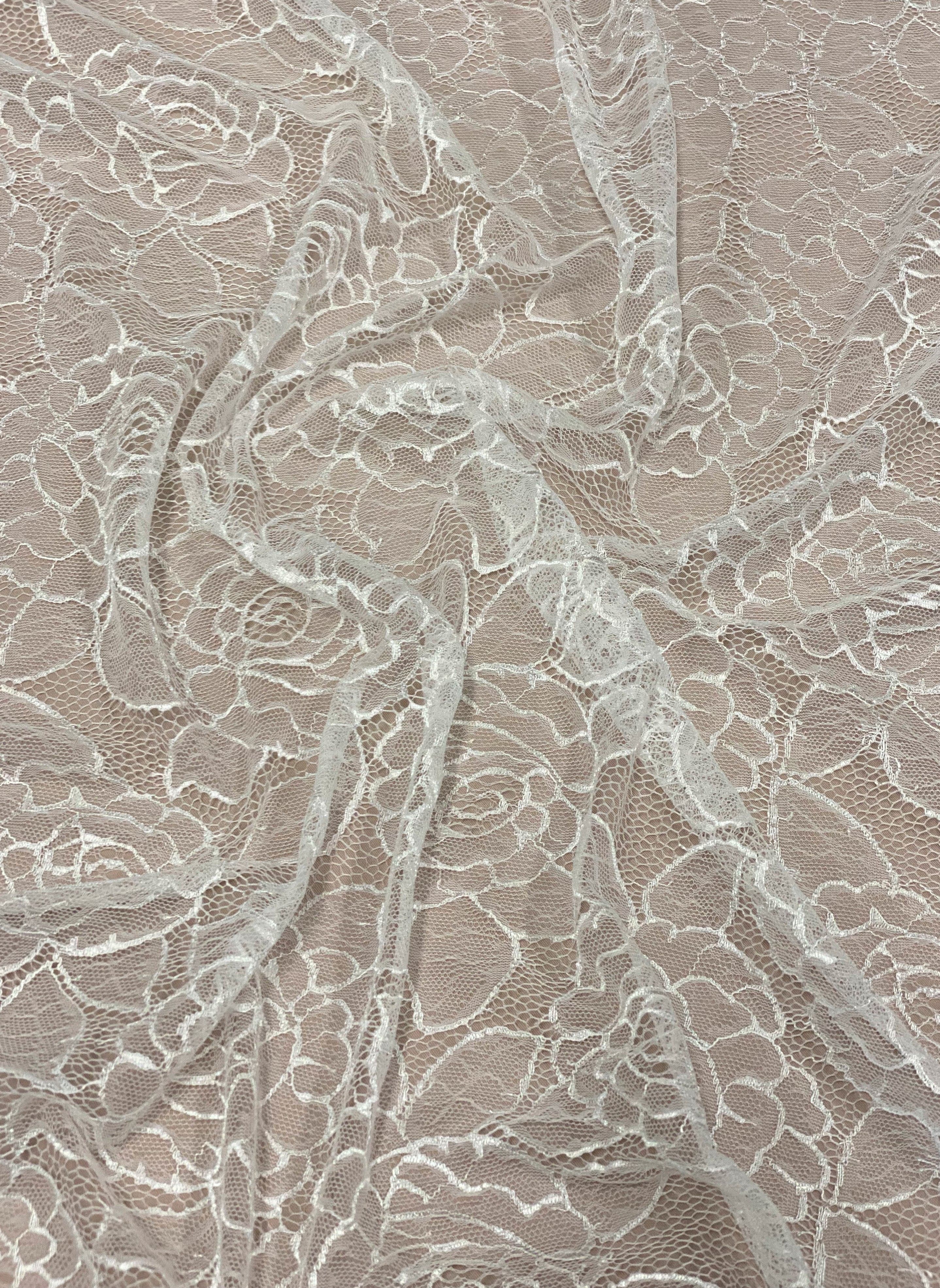
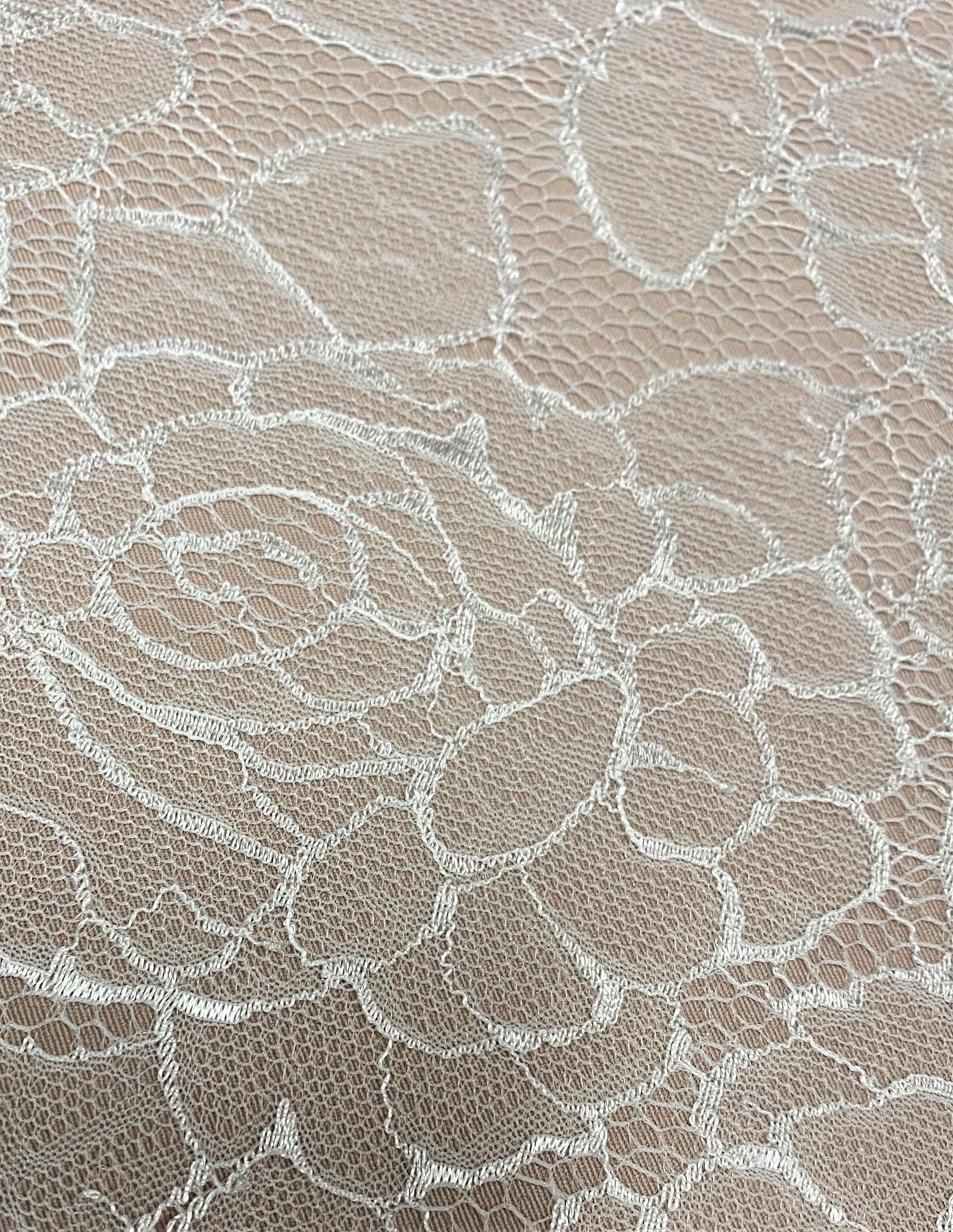
- Classic: corded lace. A raised cord around each motif, so the pattern stands out and has a little more body. A favourite for bridal bodices and full lace gowns.
- Bold and modern: guipure lace. Bold motifs joined to each other, with no net behind them. A strong statement for structured or minimal gowns.
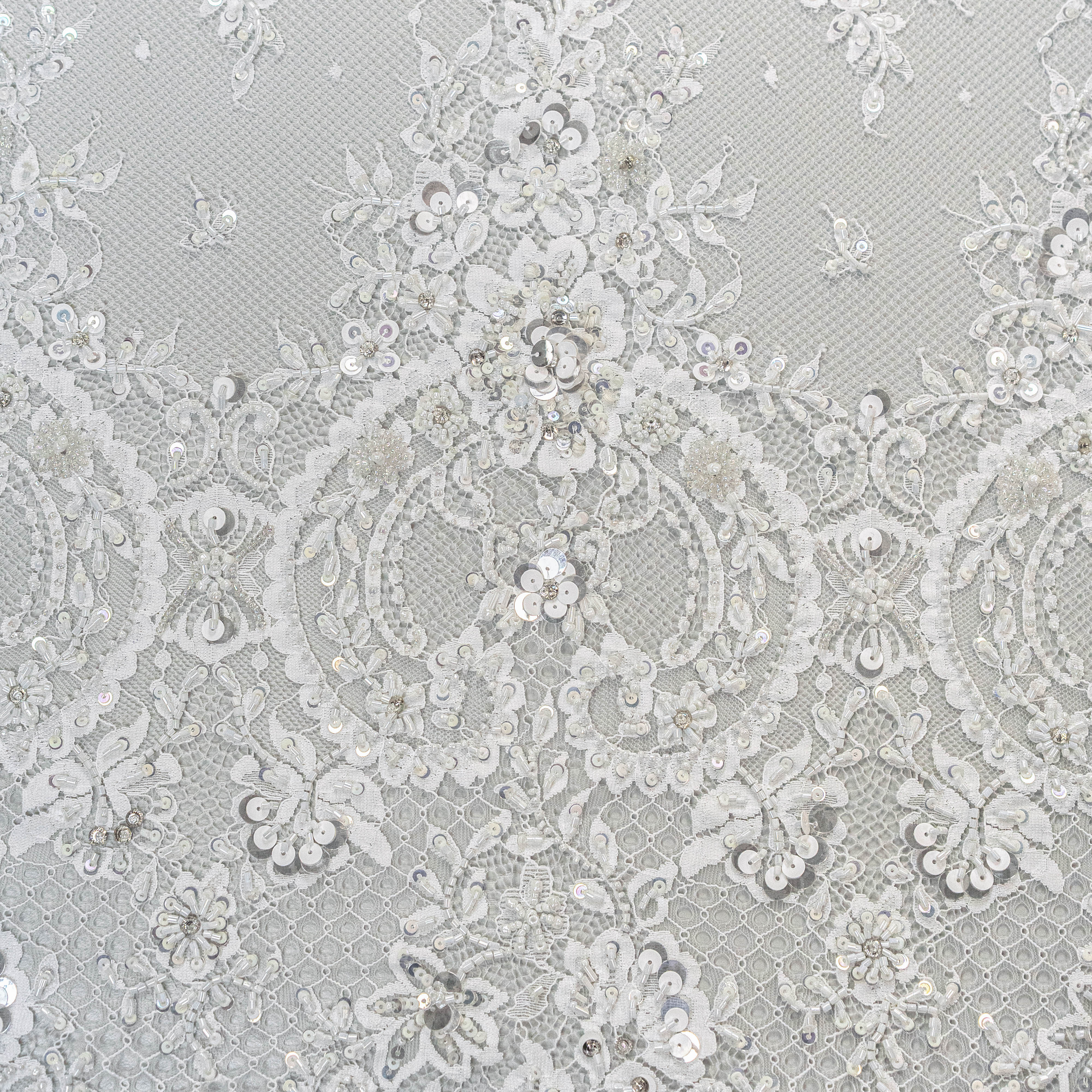
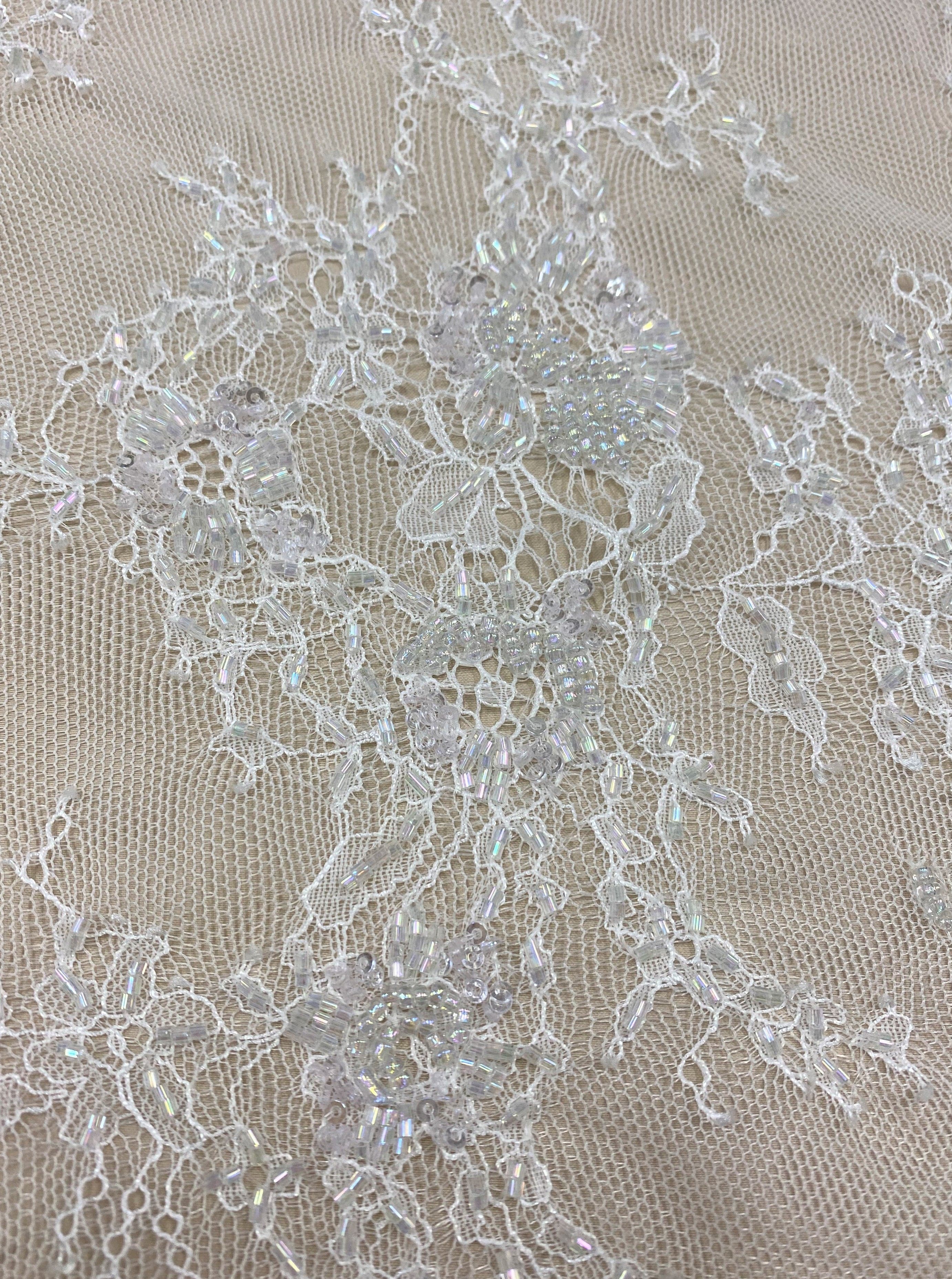
- Glamorous: beaded lace. Lace with beads, sequins or pearls that catch the light. For bodices and details you want to shine.
- Close-fitting: stretch lace. A little elastane, so it moves with the body. For fitted bodices and bodysuits.
Side by side
| Chantilly & fine | Corded | Guipure | Beaded | Stretch | |
|---|---|---|---|---|---|
| Look | Delicate motifs on a fine net | Motifs outlined with a raised cord | Bold motifs, no net | Beads, sequins or pearls | Fine lace with stretch |
| Feel | Soft and light | Defined, a bit more body | Firm and heavier | Weighty, with sparkle | Soft and stretchy |
| Sheerness | Very sheer | Sheer | Open, with gaps between motifs | Sheer net, dense beading | Sheer |
| Great for | Sleeves, overlays, soft gowns | Bridal bodices and gowns | Statement dresses and tops | Bridal and evening bodices | Fitted bodices and tops |
| To sew | Easy to moderate | Moderate | Tricky: no net, so it shifts and stretches | Trickiest: beads in the seams | Moderate: needs a stretch stitch |
Where to use lace
Lace can cover the whole gown or just frame it. Here are the most common places, and the lace that suits each.
| Part of the dress | Lace to try |
|---|---|
| Sleeves | Chantilly or fine lace, with the scalloped or eyelash edge at the wrist |
| Bodice | Corded, guipure or beaded lace over satin |
| Full lace gown | Chantilly or corded lace over silk satin, with the scallops along the hem |
| Illusion back | Lace motifs cut out and sewn onto soft tulle in a skin tone |
| Hem and edges | The lace's own scalloped edge, or a lace trim |
| Veil | Lace trim or cut-out motifs along the edge of a silk or soft tulle veil |
What to put under it
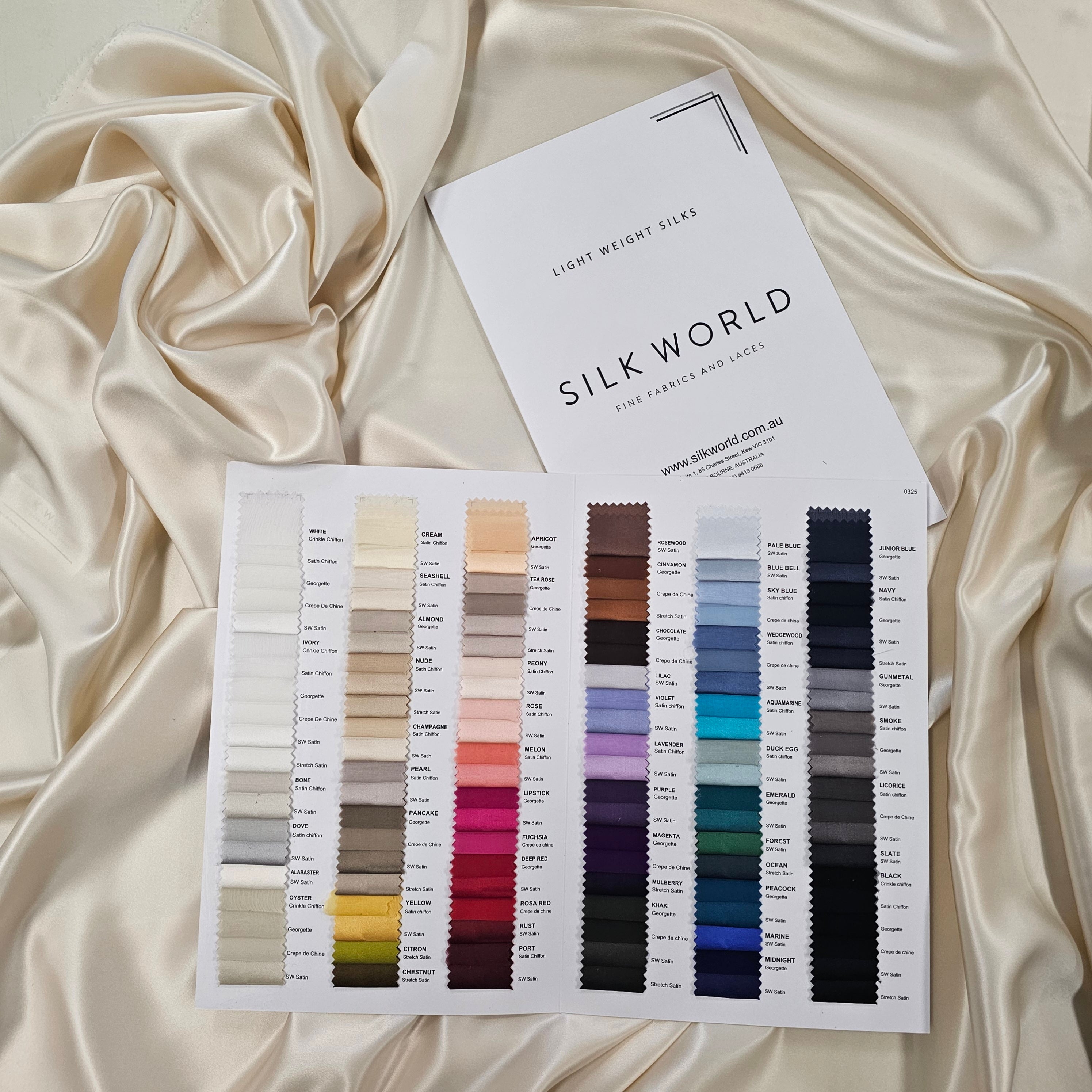
Bridal lace is usually worn over silk. Duchess satin or queen satin give a structured gown, and crepe satin a softer, draped one. Underline the lace with silk organza so it keeps its shape, and use soft tulle in a skin tone where you want a barely-there look. See our bridal guide for linings.
Ivory, white and matching
Most of our bridal lace is ivory, with some white and light ivory. Ivory varies a little from lace to lace, and from lace to silk, so it helps to see them together. You're welcome to visit our Melbourne showroom to compare them side by side, or order samples.
Buying bridal lace
Most of our lace is made in panels about 3 metres long, so it's sold in whole-metre pieces. If you order more than the length of one panel, it may come in more than one piece. Guipure and stretch lace aren't made in panels, so they come in longer lengths. Allow extra so you can match the pattern across seams and place the scallops where you want them.
What to make
- Wedding gowns, bodices and lace overlays
- Sheer lace sleeves and yokes
- Veils edged with lace or motifs
- Christening gowns
- Flower girl and debutante dresses
Cutting
- Always cut the lace flat on the table as a single layer: don't fold it and cut double.
- Lay it right side up, so you can see the pattern.
- Place the scalloped edge along hems, necklines and sleeve ends before you cut.
- Line up the main motifs across the front, back and sleeves, and allow extra for matching.
- For invisible joins, overlap two pieces, stitch around the outline of a motif, then trim away the extra lace.
Sewing
- Use a fresh, fine needle (size 70) and a slightly shorter stitch. Sew over tissue paper if fine lace catches.
- The couture way: underline with silk organza. Hand tack the organza to the wrong side of each lace piece, then sew the two as one.
- Invisible joins. Instead of a straight seam, overlap the pieces, stitch around the outline of a motif by hand or with a narrow zigzag, then trim away the extra lace underneath. The join disappears into the pattern.
- Beaded lace: unpick the beads and sequins from the seam allowances before sewing, and keep them to sew back on.
- Guipure: keep it flat and handle it gently so it doesn't stretch. See our guipure lace guide.
- Lace panels on a structured bodice or sheath gown. Lay the lace right side up over each garment piece before you sew, and pin it well in from the edges. Trim it back to the seam allowance plus about 1 cm, tack the two layers together by hand, then sew them as one, so the seams frame the lace. Choose a base with enough body to hold it, like duchess satin. It suits fitted shapes better than a full gathered or bias-cut skirt, and lace with medium to large motifs and open space lets the satin show through.
- Sew the zip in by hand for a neat finish under lace.
Edges and hems
With a scalloped or eyelash edge there's nothing to hem: just use the finished edge. Where you need a scallop somewhere else, cut one from the edge of the lace and stitch it on along the motif outline.
Pressing
Press face down on a thick, clean towel, on a low setting, through a pressing cloth, so the motifs sink in rather than flatten. Test on a scrap first.
Questions
Which lace is best for a wedding dress?
It depends on the look you want. Chantilly is soft and romantic, corded lace is a classic with a little more body, guipure is bold and modern, and beaded lace adds sparkle.
How much lace do I need?
Allow extra so you can match the pattern across seams and place the scalloped edges where you want them. If you're not sure, send us your pattern and we'll help.
Can I use lace on a veil?
Yes. Sew a lace trim or cut-out lace motifs along the edge of a silk or soft tulle veil.
Do I need to line bridal lace?
Usually, yes. Most bridal lace is worn over silk satin, and underlining it with silk organza helps it keep its shape.
How is bridal lace sold?
Most of our lace is made in panels about 3 metres long and sold in whole-metre pieces. Guipure and stretch lace come in longer lengths.
Wholesale for fashion labels, bridal studios and designers buying in bulk. Apply for an account