

Scuba Fabric
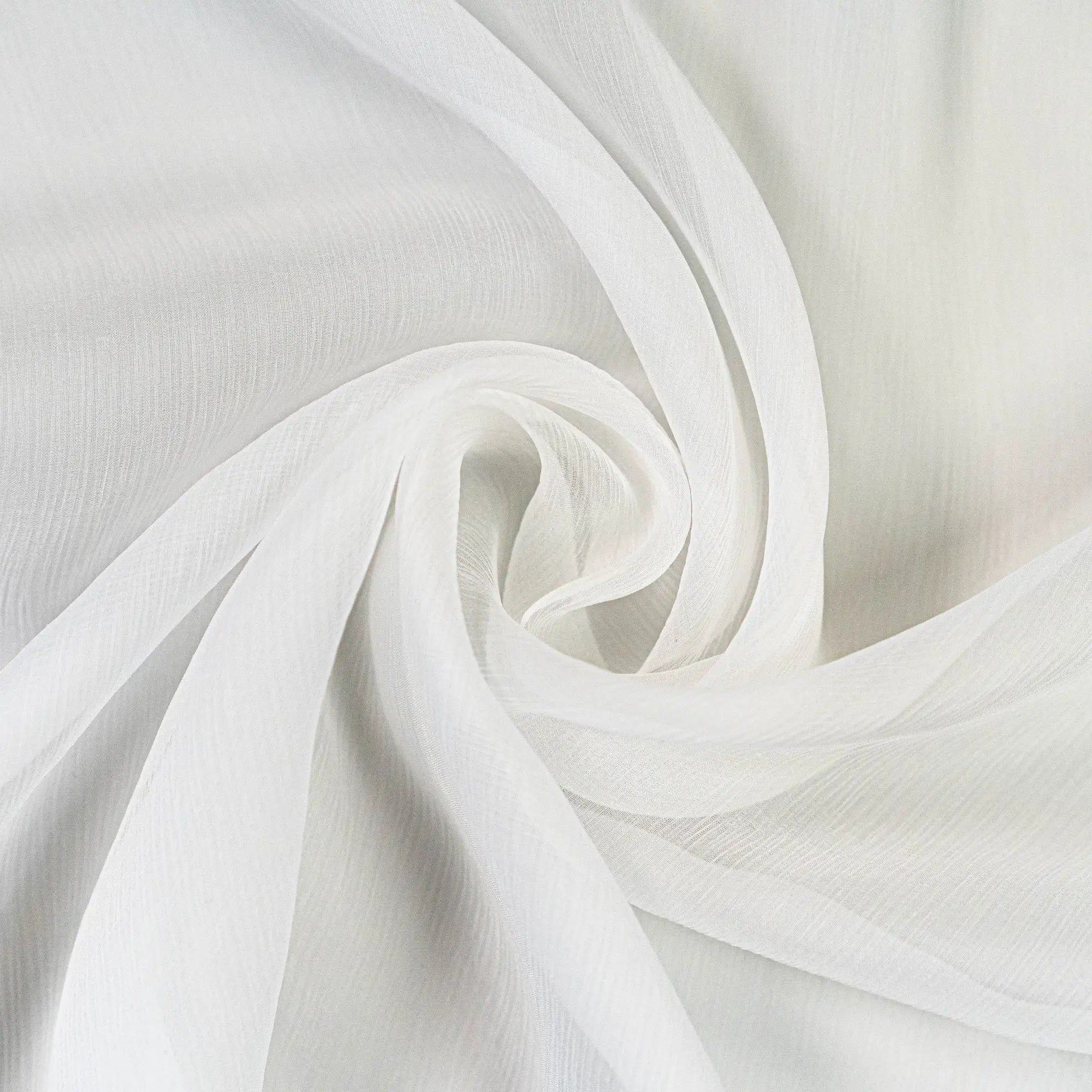
A heavy, smooth scuba with a two-way stretch, a low sheen on one side and matte on the other. Extra wide at 175 cm, so gowns and trains can be cut in one piece.
- 2 colours
- 175 cm wide
- 95% Polyester, 5% Spandex
- From $41.80 per metre


Guide
Scuba Fabric: Uses and How to Sew It
What our scuba is like, how it compares with our other polyesters, and tips for sewing it.
About our scuba
- Smooth and sculptural. A heavy, smooth knit with a low sheen on one side and matte on the other.
- Extra wide. 175 cm, so long gowns and trains can be cut in one piece.
- Two-way stretch. 328 gsm, in ivory and black.
Which polyester?
Our polyester fabrics, side by side.
| Look and feel | Weight | Stretch | Great for | |
|---|---|---|---|---|
| Polyester dupion | Crisp, with subtle, regular slubs | Mid weight | None | Bridal, skirts and jackets |
| Polyester mikado | Heavy and stiff, with a twill weave and a soft sheen | 215 gsm (stretch: 310 gsm) | None, or one-way | Structured bridal gowns, skirts and jackets |
| Polyester faille | Smooth and matte, soft but voluminous | 246 gsm | None | Bridal, evening wear and costume |
| Faux acetate satin | Delustred satin on both sides, very fluid | 170 gsm | A little mechanical stretch | Draped gowns, bias-cut slips and bridesmaids |
| Liquid satin | Ultra smooth and glossy, with a soft fall | 140 gsm | None | Evening wear, dresses, skirts and tops |
| Stretch polyester satin | Heavy, with a satin face and a matte back | 228 gsm | One-way | Fitted dresses, pants, skirts and bridal |
| Stretch polyester crepe | Heavy, with a textured matte finish | 270 to 304 gsm | Two-way or four-way | Jackets, pants, dresses and bridal |
| Scuba | Heavy and smooth, low sheen on one side, matte on the other | 328 gsm | Two-way | Sculpted gowns, trains, jackets and skirts |
What to make with it
- Sculpted gowns and trains
- Jackets
- Skirts and pants
- Fitted dresses
Cutting
- Cut with the stretch going around the body.
- Lay the fabric flat without stretching it, and use pattern weights or pins inside the seam allowance.
- Use sharp scissors or a rotary cutter.
- Scuba doesn't fray, so the edges don't need finishing.
Sewing
- Use a stretch or ballpoint needle (size 90) and a good-quality polyester thread.
- Sew with a narrow zigzag and a 3.5 mm stitch length, or an overlocker, so the seams can stretch, and use a walking foot if your machine has one.
- Scuba is thick, so grade the seam allowances and topstitch them flat if you like.
Hems
- Raw edge. Scuba doesn't fray, so a clean-cut raw edge is often the best-looking finish. Cut it with a rotary cutter for a smooth line.
- Turned hem. If you prefer a turned hem, turn it up once and sew with a stretch blind hem stitch or a twin needle so it can stretch. For a topstitched hem, use a longer stitch (4 to 5 mm) and test it on a scrap first.
- To hold the hem while you sew, use short strips of fusible web laid end to end rather than one long strip, so the hem stays flexible.
Pressing
Scuba takes more heat than most polyesters. Press seams open on a wool setting with steam, through a pressing cloth, and test on a scrap first.
Questions
What is scuba fabric?
A heavy, smooth knit with a two-way stretch that holds its shape, for sculpted gowns, jackets and skirts.
Does scuba fray?
No, so the edges don't need finishing.
How wide is it?
175 cm.
Wholesale for fashion labels, bridal studios and designers buying in bulk. Apply for an account