

Cotton Organdy
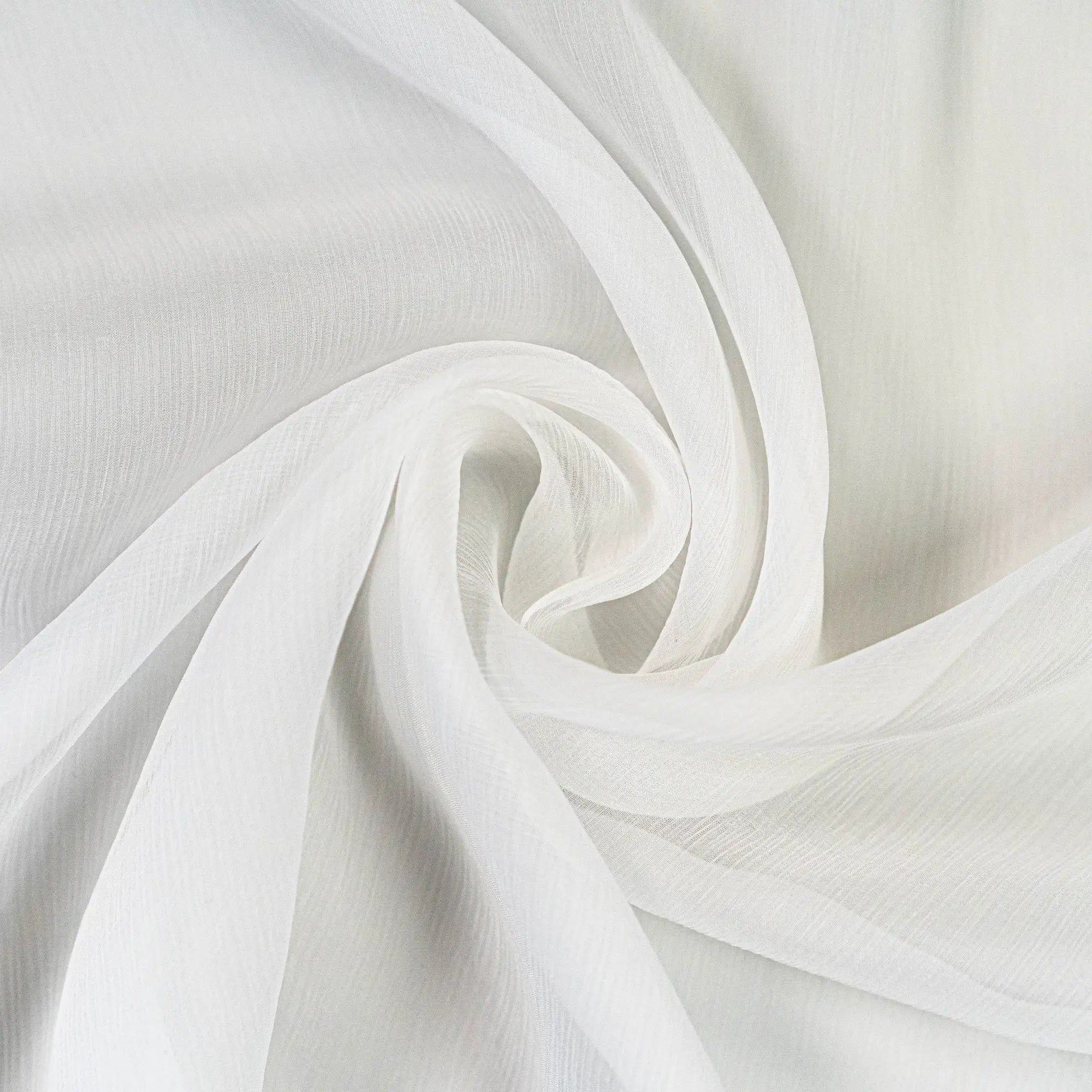
A light, semi-sheer 100% cotton with a crisp, stiff handle. In white and black, 110 cm wide, for petticoats, historical costume, crisp blouses, and as a natural sewn-in interfacing.
- 2 colours
- 110 cm wide
- 100% Cotton
- From $28.60 per metre


Guide
Cotton Organdy: Uses and How to Sew It
What cotton organdy is, how it compares with silk organza, what to make with it, and how to use it as a natural interfacing.
About our cotton organdy
- 100% cotton. Light, semi-sheer and very crisp.
- Holds its shape. Its stiff handle gives soft structure to collars, cuffs, petticoats and full sleeves.
- White and black, 110 cm wide. White and black.
Organdy or silk organza?
Both are light, crisp and see-through. Here's how they differ.
| Cotton organdy | Cotton, with a matte look and a stiff, crisp handle. Takes a hot iron. White and black, 110 cm. Great for: interfacing, petticoats, historical costume and crisp blouses. |
| Silk organza | Silk, lighter, with a subtle sheen. Crisp but finer. Many colours. Great for: sleeves, overlays and underlining silk. |
| Cotton tulle | A breathable cotton net, softer and more open. Great for: foundations and historical underpinnings. |
What to make with it
- A sewn-in interfacing for collars, cuffs, button bands and jacket fronts
- Petticoats and underskirts
- Historical costume, like soft corsets
- Crisp blouses and children's clothes
- Full, puffed sleeves
Using organdy as interfacing
- Cut the organdy from the same pattern piece as your fabric.
- Lay it on the wrong side of the fabric and hand tack around the edges, then sew the two as one.
- There's no glue to bubble or show through, and the fabric keeps a soft, natural shape.
- A bias strip of organdy inside a hem gives skirts and jackets a clean, rounded edge.
- It suits cottons, linens and wool blends: see our bouclé and tweed tips.
Cutting
- Organdy's crispness comes from a finish that softens with washing, so only pre-wash it if you'll wash the finished garment. See our fabric care guide.
- Press it before you cut, and line up the grain with the edge of your table.
- It stays put on the table, so you can cut it folded double.
Sewing
- Use a fresh, fine needle (size 70) and a fine mercerised cotton thread.
- Sew with a 2 to 2.5 mm stitch.
- French seams are the neatest finish, as seams show through the semi-sheer fabric.
- Organdy doesn't ease much, so gather sleeve caps rather than easing them in.
Hems
A narrow double-fold hem, as the hem shows through the semi-sheer fabric. Keep it even and narrow. On petticoats, a machine baby hem works well: press up 1 cm, stitch close to the fold, trim the allowance right up to the stitching, then turn it once more and stitch again.
Pressing
Cotton organdy takes a hot iron. Press it while slightly damp to bring back its crisp body. Test on a scrap first.
Questions
What is organdy?
A light, semi-sheer cotton with a crisp, stiff handle. Ours is 100% cotton.
What is the difference between organdy and organza?
Organdy is cotton, matte and stiff; organza is usually silk, lighter and with a subtle sheen.
Can I use organdy as interfacing?
Yes. Tack it to the wrong side of your fabric and sew the two as one. It gives a soft, natural structure with no glue.
How wide is it?
110 cm.
Wholesale for fashion labels, bridal studios and designers buying in bulk. Apply for an account