

Lingerie Fabric & Lace
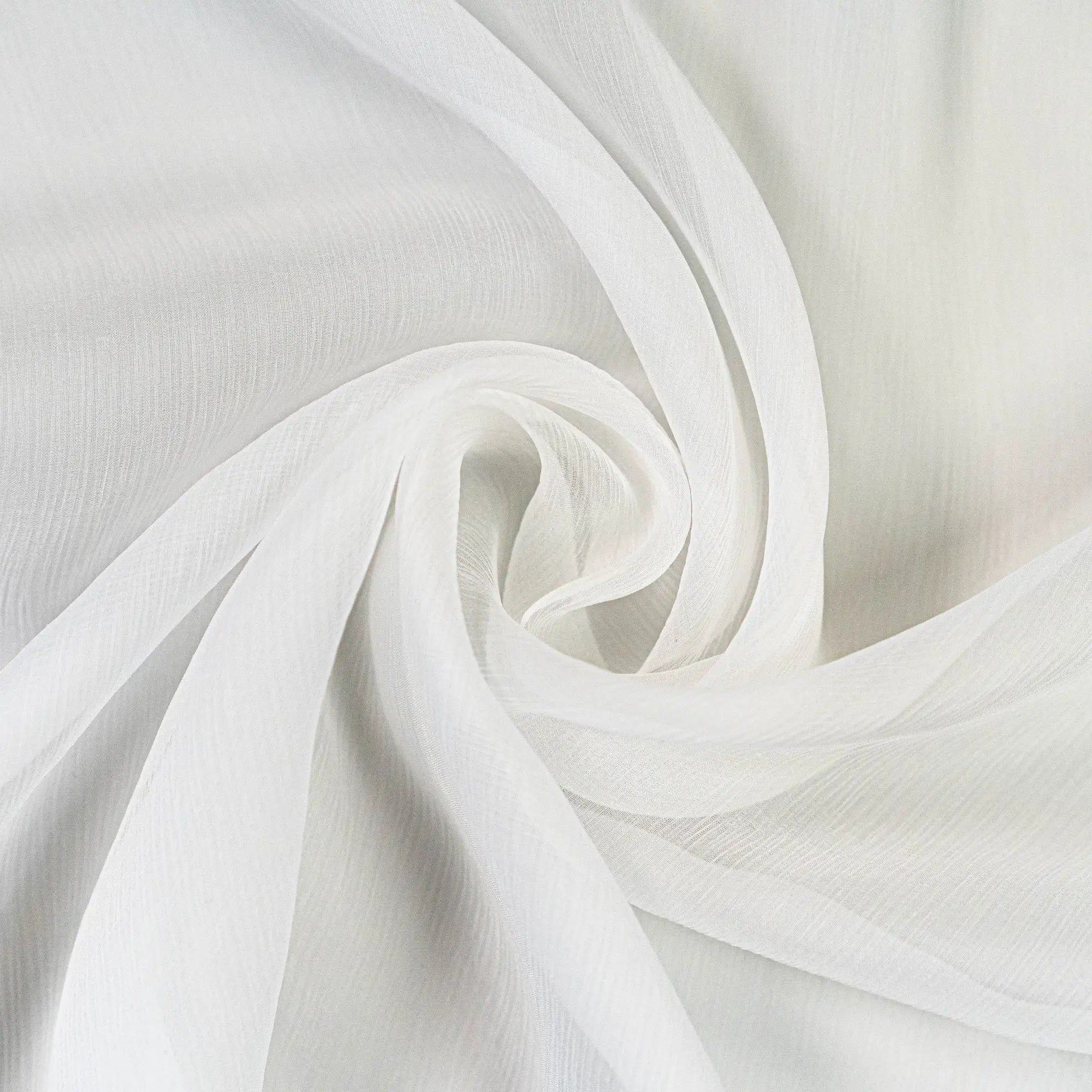
Silks and laces for lingerie: sandwash satin, stretch silk satin, crepe de chine and habotai in ivory and white, with fine and corded laces, guipure and lace trims, including a black stretch lace trim.
- Silk satin, crepe de chine and habotai
- Fine, corded and guipure lace
- Lace trims, including stretch


 Sold out


 Sold out


 Sold out


 Sold out


Guide
Lingerie Fabric and Lace: How to Choose and Sew It
Which of our silks, laces and trims suit lingerie, how to pair them, and easy tips for sewing lace lingerie at home.
Why lace for lingerie?
- Soft and light. Fine and corded laces are light and flexible, so they sit comfortably in bralettes, slips and knickers.
- Finished edges. Scalloped and eyelash edges mean many pieces need no hem at all: the edge of the lace is the finish.
- Trims to match. Some laces have a matching trim, like Bold Floral Lace (1663) with its 1663t trim in ivory and black, and Abloom Corded Lace (1268) with its 1268T trim.
- Stretch where you need it. Our Stretch Lace Trim (1558t) in black has a one-way stretch and a double scalloped edge, 20 cm wide.
Which lace for lingerie?
Our lingerie laces, side by side. Most are ivory, with some white, black and colours.
| Chantilly & fine lace | Delicate motifs on a very fine net. The softest choice. Great for: bra cups, slip insets and soft edges. |
| Corded lace | Motifs outlined in a fine cord, with more definition and a little more body. Great for: bralettes, bodysuits and scalloped hems. |
| Guipure lace | No net base: the motifs join each other, so it's bolder and firmer. Great for: straps, edgings and statement panels. |
| Stretch lace | Lace with stretch, so it moves with the body. Great for: close-fitting pieces and waistbands. |
| Lace trims | Narrow lengths of lace with a finished edge, in ivory, white and black. Great for: necklines, hems, straps and leg openings. |
Silks to pair with lace
Sandwash satin, stretch silk satin, crepe de chine and habotai in ivory and white are on this page; follow the links for every colour.
| Sandwash satin | Soft silk satin with a matte reverse; both sides can be used. Great for: slips, camisoles and knickers. |
| Stretch silk satin | Silk with 7% Lycra, a satin face and a moderate stretch. Great for: fitted slips and bodysuits. |
| Crepe de chine | Soft and matte, with a gentle drape. Great for: camisoles, slips and tap pants. |
| Habotai | Light and smooth. Great for: linings and light slips. |
| Georgette | Semi-sheer, with a soft crepe texture. Great for: robes and floaty layers. |
Buying lace
Most of our laces are made in panels about 3 metres long, so if you order more than the length of one panel, it may come in more than one piece. Our lace trims are made in lengths too, so a long order may also come in more than one piece. Guipure and stretch lace aren't made in panels.
What to make with it
- Bralettes and soft bras
- Slips and camisoles, with lace insets or edges
- Knickers, tap pants and bodysuits
- Robes and nightdresses trimmed with lace
- Bridal lingerie and garters
Cutting
- Always cut the lace flat on the table as a single layer: don't fold it and cut double.
- Lay it right side up and place the scalloped edge along necklines, hems and leg openings before you cut.
- Match the motifs on pairs, like the two cups of a bralette, and allow extra for matching.
- Cut silks as a single layer too, with pattern weights or pins only inside the seam allowance, as pins can mark satin.
Sewing
- Use a fresh, fine needle (size 70). With lace on silk, use a fine mercerised cotton thread. With stretch lace or stretch satin, use a good-quality polyester thread, which has a little give.
- Sew lace trims on with a narrow zigzag along the outline of the motifs, then trim away the fabric behind if you want a sheer edge.
- For invisible joins in lace, overlap two pieces, zigzag around the outline of a motif, then trim away the extra lace.
- Sew over tissue paper if fine lace catches, then tear it away.
- On stretch lace, use a narrow zigzag so the seams stretch with the lace.
Edges and hems
- Lace: with a scalloped or eyelash edge there's nothing to hem, so use the finished edge, or zigzag a lace trim along the edge instead.
- Sandwash satin and crepe de chine: a machine baby hem gives a fine, fluid edge: press up 1 cm, stitch close to the fold, trim the allowance right up to the stitching, then turn it once more and stitch again.
- Georgette: a hand-rolled hem; let it hang overnight first.
- Stretch silk satin: turn it up once and sew it by hand with a loose catch stitch, or use a stretch blind hem or a narrow zigzag, so the hem can stretch.
Ivory and matching
"Ivory" covers many different shades of off-white, and it varies from one lace or fabric to another, so we always recommend ordering samples of the lace and the silk you'll pair it with, and comparing them side by side.
Pressing
- Lace: face down on a thick, clean towel, on a low setting, through a pressing cloth, so the motifs sink in rather than flatten.
- Light silks and satins: a dry iron on the silk setting, on the wrong side, through a pressing cloth. Satin marks easily, so test on a scrap first.
Questions
What lace is best for lingerie?
Fine and Chantilly-style laces are the softest. Corded laces have more definition and body, and stretch lace suits pieces that need to move with the body.
What fabric goes with lace in lingerie?
Silk sandwash satin, stretch silk satin, crepe de chine and habotai are all lovely with lace.
Do you have lace trims for lingerie?
Yes. We have lace trims in ivory, white and black, including matching trims for some of our laces and a black stretch lace trim.
How is lace sold?
Most of our laces are made in panels about 3 metres long, so longer orders may come in more than one piece. Guipure and stretch lace aren't made in panels.
Wholesale for fashion labels, bridal studios and designers buying in bulk. Apply for an account