

Plain Bridal Tulle
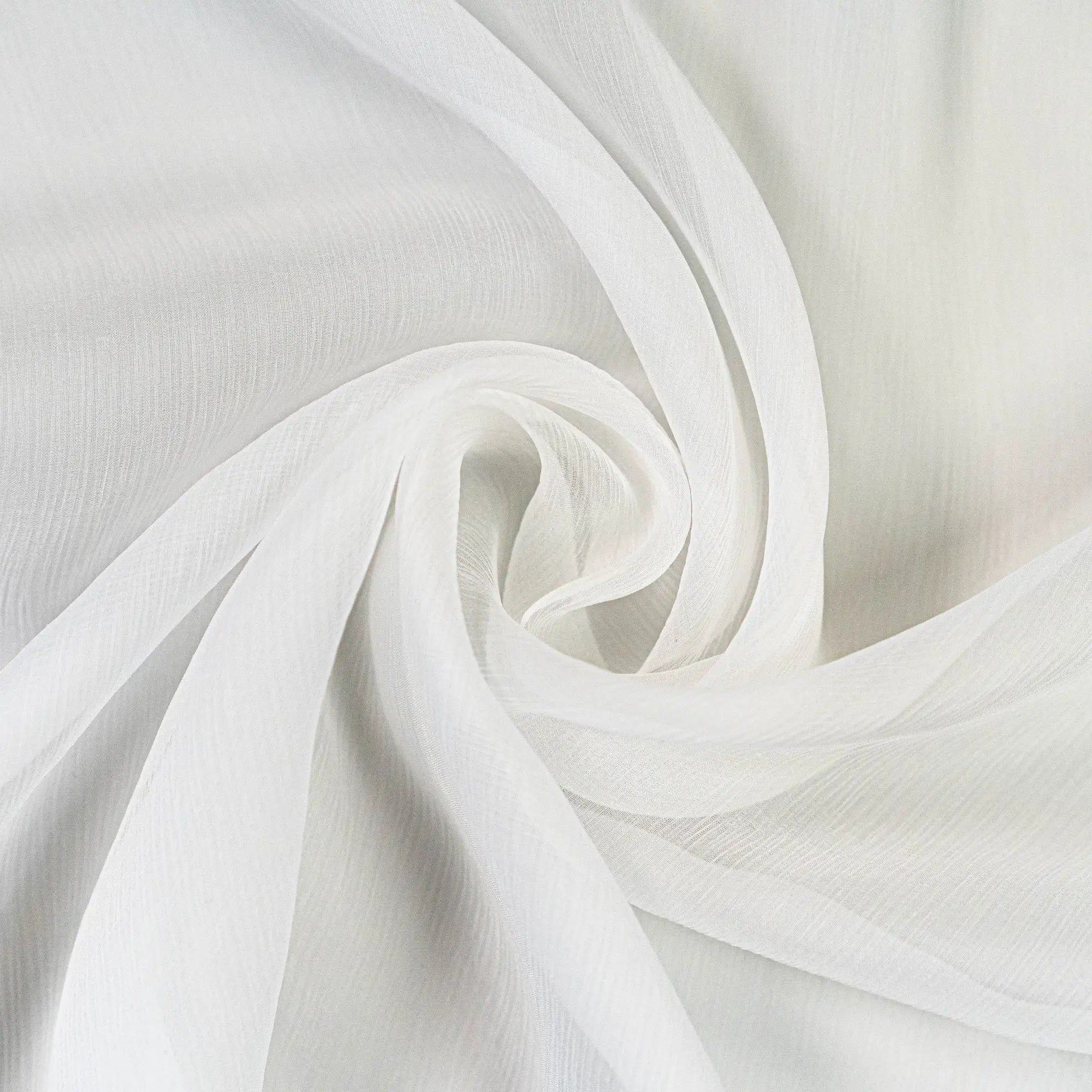
Every plain white and ivory tulle and net for bridal wear in one place: veil tulles, skirt tulles, illusion tulle, silk mesh, sparkle tulles, and stiff and bridal net for petticoats.
- White, silk white and ivory
- Veil, skirt, illusion and petticoat tulles
- Widths up to 300 cm


 Sold out


 Sold out


 Sold out


 Sold out


Guide
Plain Bridal Tulle: Which One for Each Part of the Dress
Our plain white and ivory tulles and nets for bridal wear, which one suits each part of the dress, and easy sewing tips.
Which tulle for each part of the dress?
| Veil | Silk tulle for the softest fall, soft tulle or 2D tulle for a classic veil cut to length, bridal tulle for a full veil, and crystal tulle for a subtle sparkle. |
| Skirt layers | Polyester tulle and soft tulle, built up in layers. |
| Petticoat | Stiff net or bridal net, kept under a soft lining. |
| Illusion neckline, sleeves and back | Illusion tulle, light but very strong. Nude polyester and 2D tulle suit warmer skin tones. |
| Soft sleeves and overlays | Silk tulle or silk mesh, 100% silk with a natural give. |
| Sparkle | Crystal tulle, or glitter and Lurex tulle as a layer in the skirt. |
| Texture | Pleated and ruffle tulle for full skirts and statement layers. |
White, silk white or ivory?
Most of our bridal tulles come in white, silk white and ivory, and some in pale ivory, bone or ecru. These look quite different next to a dress, and we call many off-white shades "ivory", so we always recommend ordering samples of the tulle and the dress fabric, and comparing them side by side in daylight.
Buying
Most of these tulles are sold by the metre. Bridal tulle and crystal tulle come on bolts of about 50 metres, stiff net on bolts of about 50 metres, and bridal net on bolts of about 40 metres. Each product shows its width, from 120 to 300 cm.
Cutting
- Use sharp scissors or a rotary cutter, and pattern weights instead of pins: pins slip out of tulle.
- Cut wide veil tulles on a large table or a clean floor.
- For skirts, cut long, straight panels to gather up later.
Sewing
- Use a fresh, fine needle (size 60 or 70) and a fine thread in a matching colour, or clear monofilament thread. For silk tulle and silk mesh, a fine mercerised cotton thread.
- Sew with tissue paper underneath if the tulle catches, then tear it away.
- Gather each skirt layer separately, and keep stiff nets under a soft lining.
Edges
Tulle doesn't fray, so you can leave the edges raw for a soft, invisible finish. For a defined edge, add a narrow rolled hem, or bind it with ribbon.
Pressing
Use the lowest setting, with no steam, through a pressing cloth, and test on a scrap first: a hot iron can melt synthetic tulle. Press nets only at the seams. Don't iron pleated or ruffled tulle, as the pleats are set with heat.
Questions
What is the best tulle for a wedding dress skirt?
Polyester tulle or soft tulle, in several layers, with a stiff net or bridal net petticoat underneath for extra volume.
Which tulle is best for an illusion neckline?
Illusion tulle: it's light but very strong, so it holds lace motifs without stretching out of shape.
What is the difference between white, silk white and ivory?
White is the brightest, silk white is a soft natural white, and ivory is warmer. Shades vary between fabrics, so order samples to compare.
Wholesale for fashion labels, bridal studios and designers buying in bulk. Apply for an account