

Linen Fabric
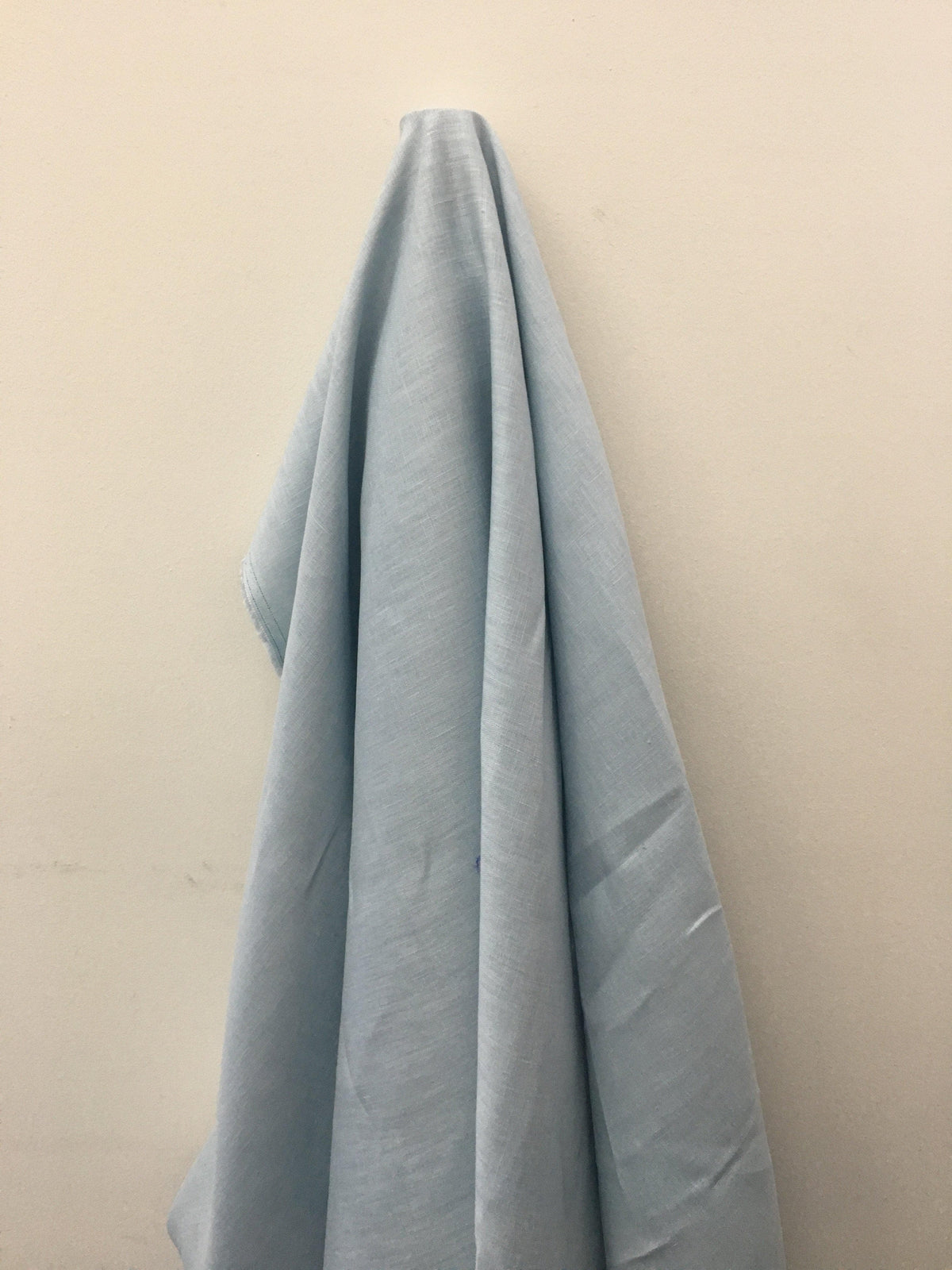
100% linen by the metre in over 30 colours, made for Australian summers. A breathable 190 gsm plain weave, 135 cm wide: crisp to sew, softer with every wear and wash.
- 35 colours
- 135 cm wide
- 100% Linen
- From $44.00 per metre


 Sold out




 Sold out

 Sold out


Guide
Linen Fabric: Uses and How to Sew It
Why our linen is made for Australian summers, what to make with it, and easy tips for sewing it at home.
Why linen?
- Made for Australian summers. Linen breathes, and its open weave lets air move through it, so it helps you stay cool on hot, humid days.
- A natural, sustainable fibre. Linen is made from the flax plant, which needs little water to grow. Our linen is 100% linen.
- Crisp to sew, soft to wear. It arrives quite crisp, so it takes a seam well and sews up neatly. It softens with every wear and wash.
- Creases less than many linens. All linen creases a little, but ours creases less than many other linens do.
- A heavier weight that hangs well. At 190 gsm it has more weight than many dress linens, so it hangs nicely on the body and flatters, while its open weave still lets air through.
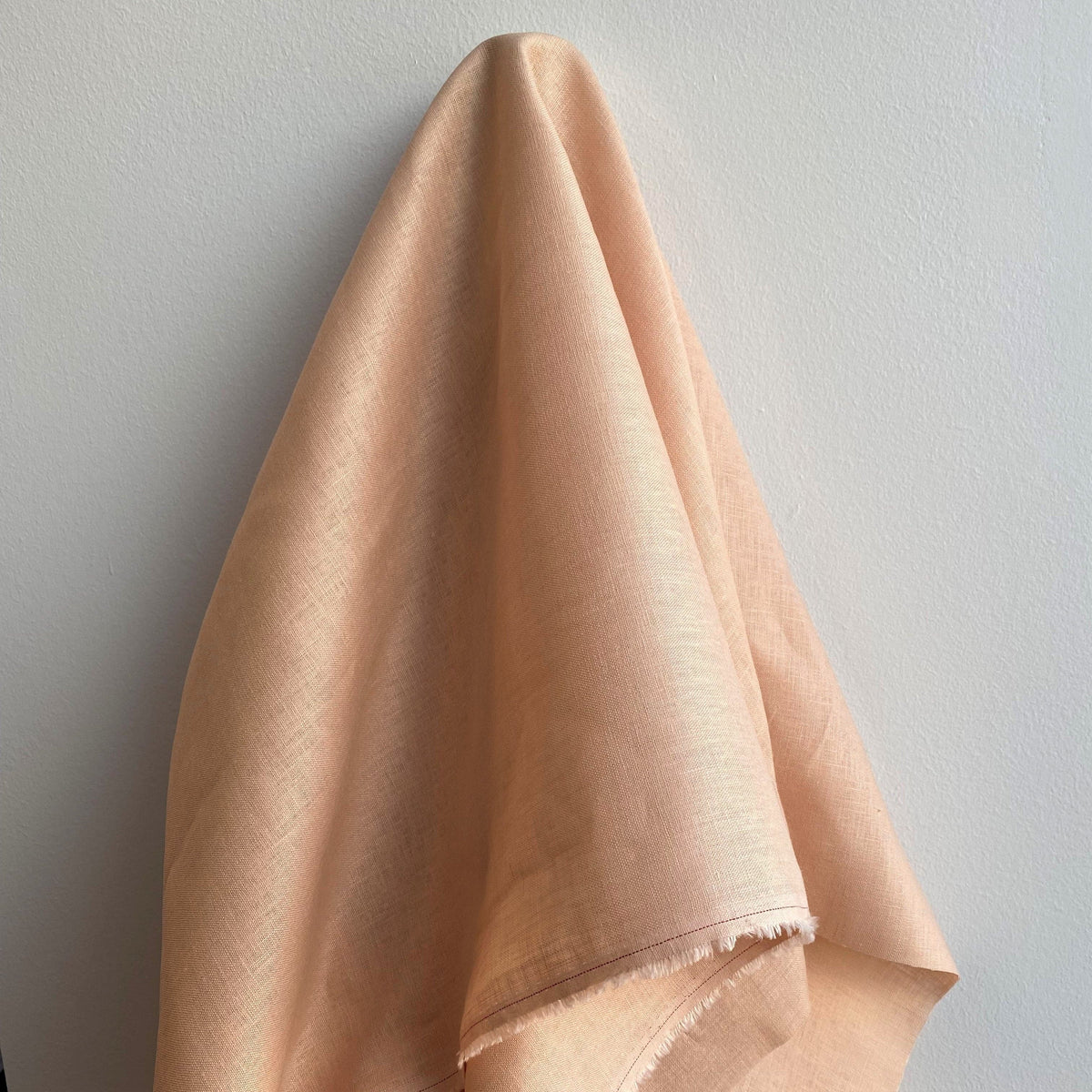
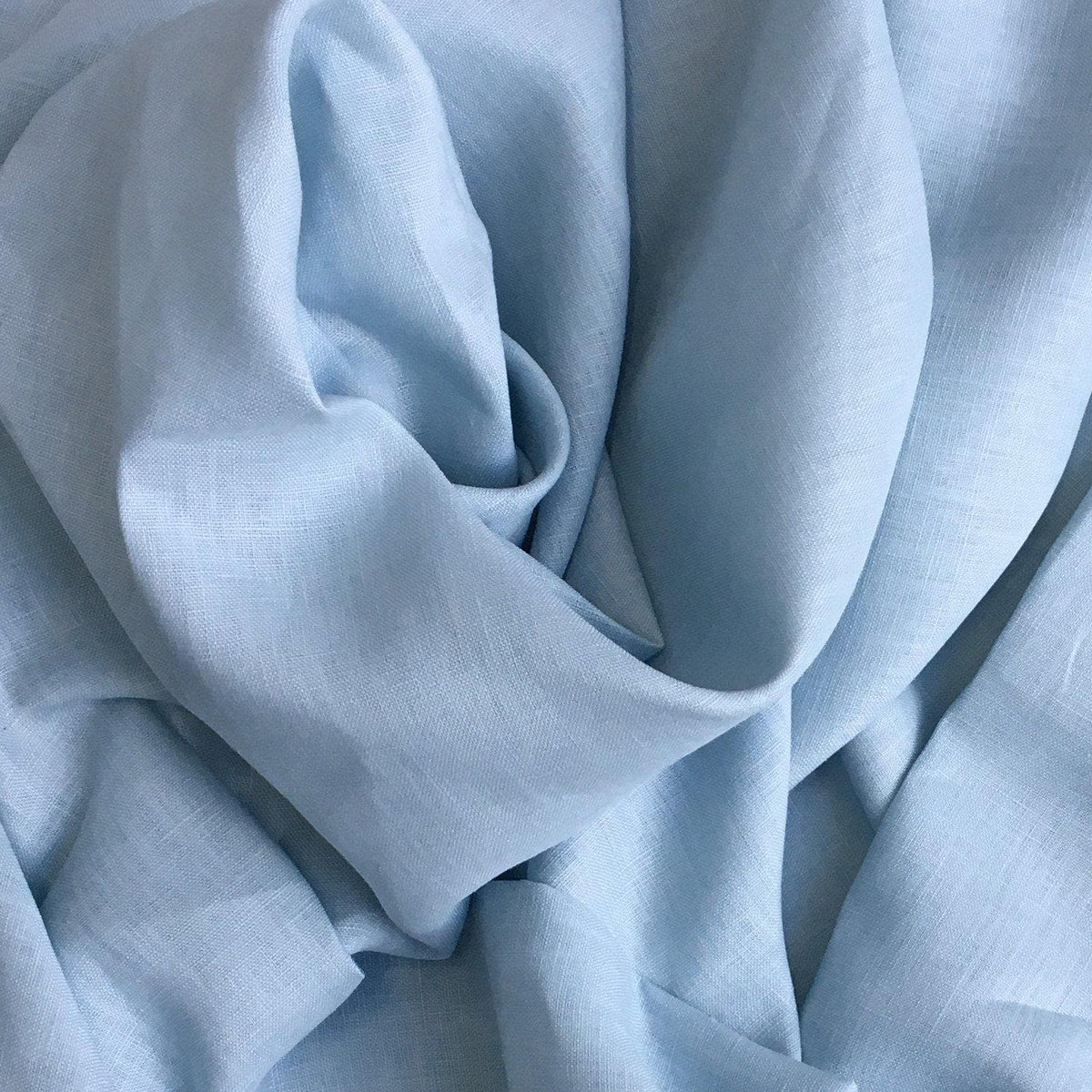
- Over 30 colours. From silk white, oat and sand to mustard, terracotta and bottle green.
What to make with it
- Wide-leg pants, shorts and skirts for summer
- Relaxed shirts and summer dresses
- Unstructured jackets and waistcoats
- Cushions
Cutting
- Linen shrinks on its first wash, so wash the length the way you'll wash the finished piece before you cut. Our fabric care guide has the details.
- Linen's grain is easy to see, so use it to line up your pattern pieces and to fold pleats straight.
- You can cut it folded double, with all the pieces facing the same way.
- Mark with tailor's chalk, tested on a scrap first.
- Linen frays, so finish the edges with an overlocker or zigzag soon after cutting.
Sewing
- Use a fresh needle (size 80 or 90) and a good-quality polyester thread. For decorative topstitching, use a topstitching thread and a slightly longer stitch.
- Sew with a 2.5 mm stitch.
- Finish the seam allowances with an overlocker or zigzag. On unlined jackets, binding the edges with bias strips gives a neat inside.
- Flat-felled seams make a strong, neat finish on shirts and pants. Test one on a scrap first, as they can be bulky on a heavier linen.
- To interface collars and cuffs, use a sewn-in layer of silk organza or cotton organdy, or a fusible interfacing that can take a hot iron.
- For summer, leave jackets unlined, or half-lined, so they stay cool.
Hems
Linen frays, so a double-fold hem is the right finish here: turn up 1 cm, then 3 to 4 cm, and mitre the corners at slits and vents for a flat, neat finish. Topstitch it on shirts and casual wear, or slipstitch it by hand for an invisible finish on a dress or skirt.
Pressing
Linen likes a hot iron and steam. Press while the fabric is slightly damp for a crisp result, on the wrong side or through a pressing cloth so it doesn't go shiny. Test on a scrap first.
Questions
Is linen good for Australian summers?
Yes. Linen breathes and has an open weave that lets air move through it, so it's one of the most comfortable fabrics to wear in hot, humid weather.
Is your linen 100% linen?
Yes. It's a 100% linen plain weave, 190 gsm and 135 cm wide.
Does linen crease?
All linen creases a little, but ours creases less than many other linens. It also softens with every wear and wash.
Is linen sustainable?
Linen is a natural fibre made from the flax plant, which needs little water to grow.
What thread should I use on linen?
A good-quality polyester thread for the seams. For decorative topstitching, use a topstitching thread.
Wholesale for fashion labels, bridal studios and designers buying in bulk. Apply for an account